
Business
Dangote Hands Dangote Cement Over to Ikazoboh

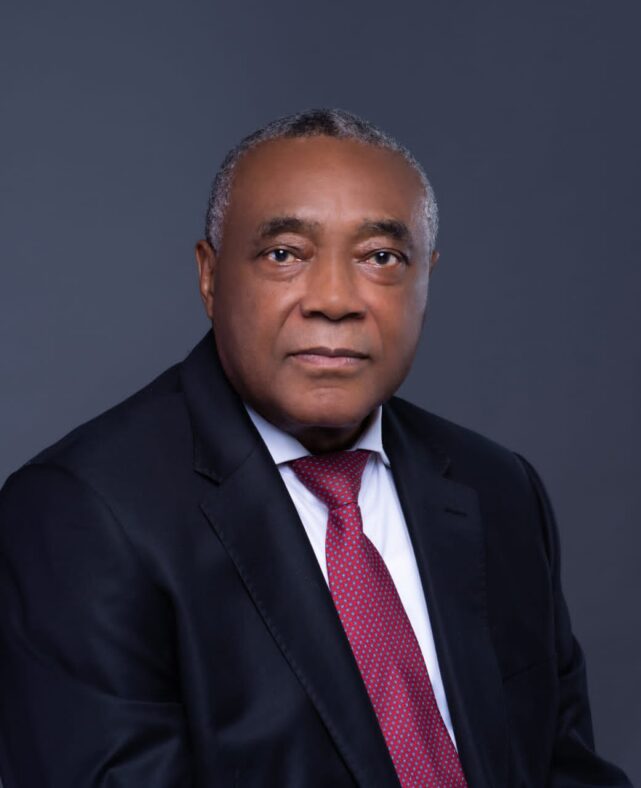
Foremost entrepreneur and founder of Dangote Cement Plc, Aliko Dangote has announced his retirement as a Director and the Chairman of the Board of Directors, effective July 25, 2025. His place would be taken by Emmanuel Ikazoboh.
According to a statement from the Dangote Industries’ Group Chief, Branding & Communications Officer, Anthony Chiejina, Africa’s richest man is relinquishing his position as chairman and retiring from the board so as to focus more attention on the Refinery, Petrochemicals, Fertiliser and Government Relations, in order to drive the company’s five-year business trajectory to a superlative height.
He stated, “The board of Dangote Cement Plc has therefore announced the appointment of Mr. Emmanuel Ikazoboh, an independent non-executive director, as the new Chairman, Board of Directors.
“In the same vein, Hajiya Mariya Aliko Dangote was also appointed to the Board of Directors of the Company while Prof. Dorothy Ufot retired from the Board.”
Reputed as Africa’s leading investor, Aliko Dangote leaves giant footprints as he retires from the board. His vision and tenacity redefined not just a company, but the entire cement industry landscape by becoming Africa’s largest cement producer and largest exporter of cement and clinker in Sub Saharan Africa.
ALSO READ: Tinubu Reassures Okpebholo
Dangote’s journey with cement began with a bold dream: to make Nigeria and Africa self-sufficient in cement production. Through strategic investments in state-of-the-art plants, and a commitment to local content, he not only met that goal but exceeded it.
Dangote Cement Plc has 52.0Mta capacity across the African continent with Nigeria accounting for 35.25Mta.
Currently, additional greenfield plants are coming up in Cote Ivoire (3.0Mta) and Itori, Nigeria (6.0 Mta) and on completion this year will push total capacity to 61.0Mta.
Under his visionary leadership, Dangote Cement Plc recorded the highest revenue and Earnings Before Interest, Taxes, Depreciation, and Amortization (EBITDA) in the history of the company. According to the unaudited results for the six months ending 30th June 2025, the group revenue went up by 17.7 percent, from N1,760 billion at the same period in 2024 to N2,071.6 billion, representing the highest revenue in the history of the company.
Group Earnings Before Interest, Taxes, Depreciation, and Amortization (EBITDA) grew by 41.8 percent to N944.900 billion from N666.22 billion. EBITDA (Nigeria Operations) grew by 82.4 percent to N845.4 billion. Profit before tax went up from N292.96 billion to N730 billion indicating 149 percent increase while profit after tax surged by 174.1 percent to ₦520.5 billion, in contrast to N189.90 billion in the same period at the preceding period. In the six months, export volumes from Nigeria increased by 18.2 percent, with 18 successful clinker shipments made to Ghana and Cameroon.
Aliko Dangote’s legacy will be counted in the millions of jobs created, the infrastructure built, and the confidence restored in African industrial potential. He has proven that Africa can produce, compete, and lead on the global stage.
It is on record that subsidiaries under Dangote Group paid over N402 billion in taxes in 2024, making it the highest taxpayer in the country.
The new Chairman of the Board of the Company, Emmauel Ikazoboh in his acceptance speech, said he is truly honoured to accept the role of Chairman of Dangote Cement Plc while pledging to uphold the highest standards of leadership and dedication in this role.
He described the company as a beacon of African enterprise, which has consistently demonstrated resilience, innovation, and a commitment to excellence.
Over the years, Dangote Cement Plc has not only become the continent’s leading cement producer but has also played a vital role in driving economic growth and development across numerous African nations.
Giving an insight into what his tenure holds for the company, he said, “my vision for Dangote Cement Plc is built upon a foundation of sustainable growth, operational efficiency, and unwavering commitment to our core values. We will continue to focus on the following key priorities, Operational Excellence, Strategic Expansion, Sustainability, Innovation and Community Engagement.
Part of the strategies he intends to introduce include driving down costs through the implementation of robust cost-reduction strategies to navigate inflationary pressures and enhance competitiveness.
The company, he stated will accelerate efforts to adopt alternative fuels and technologies, reducing reliance on fossil fuels and contributing to a more sustainable future.
Regarding staff welfare, he promised that the company will continue to invest in training and development, fostering a culture of excellence and empowering employees to reach their full potential.
Ikazoboh was previously the Group Chairman of Ecobank Transnational Inc., the Pan-African banking group. He started his professional career at Akintola Williams Deloitte. He first became the Managing Partner for francophone offices in Cameroon and Côte d’Ivoire and later became the Managing Partner of the Deloitte firm in West and Central Africa until 2009.
In 2010 he was appointed by the Securities and Exchange (SEC) as an Interim Administrator to carry out capital market reforms of the Nigerian Stock Exchange (NSE) and the Central Securities Clearing System Plc. (CSCS).







Nigeria’s state oil major, the Nigerian National Petroleum Company Limited (NNPC Ltd) has assured that it can measure, report and verify its methane emissions to international standards.
This was contained in a message delivered by Chinedu Igwe, Managing Director, NNPC Foundation Ltd/Gte, to international energy producers, financiers and climate institutions at the ongoing 31st Conference of the Parties to the United Nations Framework Convention on Climate Change (COP31) in Antalya, Türkiye.
During a session convened by the Oil and Gas Decarbonisation Charter (OGDC) on “Accelerating Global Methane Mitigation in Emerging Economies,” held at the World Green Economy Organisation (WGEO) in the Blue Zone, Igwe joined other panellists from Petrobras and PETRONAS to present NNPC Limited’s progress report on the emission mitigation agenda.
READ ALSO: Shell Bags Best IOC Award at NAPE Confab
He explained that through credible data and culture change across its operations, the Company had moved its methane reporting from Level 1 to Level 3 of the Oil and Gas Methane Partnership (OGMP 2.0) standard.
The progress, Igwe added, has made NNPC Limited a reference point for partners and operators across Africa, showing that the region can put a quality system in place to measure, report, and reduce emissions.
“Reporting gives us a clear story to tell management and a practical tool for engaging our operators. Our report is on the MiST platform developed by Carbon Limits for independent feedback, and we have carried out leak detection and repair (LDAR) on one of our assets, which is now close to Level 4. This allows us to track our carbon footprint from where we were to where we are and where we are headed,” he noted.
Panellists in the session agreed that it is possible to reduce methane emissions to near zero while delivering energy security, sustainability and affordability, without forcing countries to choose between energy sources in ways that harm their economies.
On the sidelines of the conference, NNPC Limited, led by the Chief Strategy and Sustainability Officer, Hauwa Mshelia, held an exploratory meeting on project financing and development with representatives of the Inclusive Climate Action Fund (ICAF) and ANTAN Producing Limited. Managing Director of NNPC New Energy Limited (NNEL), Haruna Abdurrahman, was also at the meeting.
The OGDC also launched its 2026 emissions mitigation status report at COP31. The report reviews member companies’ interim ambitions, action plans on methane and flaring, and their progress on measurement and delivery.
The NNPC Limited’s contribution to the report shows that within 12 to 18 months, the Company built the capacity to measure its carbon footprint through a credible reporting and verification system.
The NNPC Limited joined the Oil & Gas Decarbonization Charter (OGDC) at COP28 in Dubai, UAE. The Charter was conceived by the Oil and Gas Climate Initiative (OGCI) to enable oil and gas companies to collaborate and share knowledge and technical expertise on emission reductions through credible reporting.
At the Nigerian Pavilion, the NNPC Limited headlined a high-level panel session on “Decarbonising Africa’s Value Chain: The Role of National Energy Companies, Finance and Strategic Partnerships”. Philemon Yilleng, Manager, Sustainability Strategy, Standards and Policy, the NNPC Limited, presented natural gas as the Company’s mechanism for the energy transition and explained that the company gives full priority to gas development while strengthening its operations to reduce emissions.
He said the Company is investing in parallel, not sequentially, by expanding gas production and utilisation, investing in renewables, and working with regulators, joint venture partners, and financiers to integrate sustainability into its operations.
Stephanie Saunier, Managing Director of Carbon Limits and a panellist, commended the NNPC Limited’s emissions measurement, reporting and verification system for the credible data it provides investors.
The NNPC Limited also took part in the Boston Consulting Group (BCG) Leaders Roundtable on “Delivering Methane Emissions Reduction Across Waste and Energy”.
At the roundtable, Ikechukwu Aturuobi, Manager, Sustainability Partnerships, NNPC Limited, joined other leaders to discuss practical ways of reducing methane emissions in the waste and energy sectors.
The NNPC Limited’s sustainability agenda is guided by its theme, “Action Not Words”. The Company’s pathway to net zero is anchored on its verified emissions baseline.
By 2030, the NNPC Limited aims to eliminate routine gas flaring and reduce methane emissions. By 2050, it plans to adopt low-carbon technologies, electrify its operations, use renewable energy and deploy carbon capture and storage.
The award of the Best IOC (international oil company) Exhibitor award at the 44th Annual International Conference and Exhibition of the Nigerian Association of Petroleum Explorationists (NAPE), was won by Shell Nigeria
Biztellers reports that the company’s employees also got recognition for technical presentations.
Executive Vice President and Country Chair, Shell Nigeria, Elohor Aiboni, addressed the opening session of the conference during which she commended the reforms in the oil and gas industry as a right step in Nigeria’s aspiration to unlock more barrels of oil.
READ ALSO: Shettima, Wife Depart Abuja for Jos as Tinubu–Shettima Campaign Takes Rally to Plateau
Senior Production Geologist with Shell Nigeria Exploration and Production Company Limited (SNEPCo), Abidemi Belgore, and her team won the 1st runner-up prize for the Dr Olagundoye Olatunbosun Best Petroleum Geology Paper at the closing dinner ceremony.
Also, SNEPCo’s Asset Opportunity Development Lead, Oludayo Fakunle had earlier received a plaque for Lead Technical Presentation for his paper on Bonga, Nigeria’s first deepwater well which began operation 21 years ago. Incoming NAPE President, Anthony Ofoma, who handed over the plaque to Oludayo, said the paper was insightful and aligned with the theme of the conference; “Unlocking More Barrels: Driving Reserves Growth through Exploration, Local Capabilities and Adaptive Technology.”
At the dinner, NAPE also conferred its Fellow award on seven members in recognition of their outstanding contributions to the development of the professional body and Geosciences generally. Outgoing NAPE President, Cecilia Olajumoke-Ajayi, thanked members of the association and sponsors for their support which ensured the success of the conference.
Shell was a major sponsor of the conference in keeping with its longstanding commitment to the development of the oil and gas industry in Nigeria and complemented its support with an exhibition on its businesses in Nigeria, including deepwater production, renewables, and integrated gas as well as social investments.

Nigeria’s bakery industry is facing mounting pressure as rising energy costs, expensive raw materials, high borrowing rates and declining consumer purchasing power threaten the survival of businesses across the country.
The growing strain on the sector has raised concerns about the future of local bread production, employment and the affordability of one of Nigeria’s most widely consumed food products.
The scale of the challenge became clearer following a disclosure by the Premium Breadmakers Association of Nigeria (PBAN) that it had lost approximately 40 per cent of its membership over the past two years as operators struggled to cope with worsening economic conditions.
SEE MORE: 40% of Breadmakers Shut Down as Atiku Accuses Tinubu of Economic Failure
The disclosure has raised fresh concerns about the sustainability of local food production, employment and the affordability of bread, one of the food products widely consumed by Nigerian households.
Speaking at the association’s fourth Day-Out Exhibition and Masterclass in Lagos on Thursday, November 12, 2026, PBAN President, Emmanuel Onuorah, described the situation facing bakery operators as extremely difficult.
He said the industry had experienced significant business closures due largely to rising energy expenses and the increasing cost of doing business.
“Business in these past years has been very tough. It’s been terrible. Words cannot even say how we feel. Businesses are going down; my members are closing,” Onuorah said.
He identified energy costs, expensive credit facilities and rising prices of production materials as major challenges threatening the industry’s survival.
Energy costs are squeezing bakery operators
One of the biggest challenges confronting Nigerian bakeries is the cost of powering production facilities.
Bakeries depend heavily on electricity, diesel and other energy sources to operate ovens, mixers, refrigeration equipment and other machinery.
However, unreliable electricity supply has forced many operators to depend on generators and alternative energy sources, adding significantly to their operating expenses.
PBAN Financial Secretary, Adijat Olaniyi-Olopade, disclosed that energy accounts for approximately 50 per cent of bakery production costs.
She illustrated the pressure by revealing that her bakery’s monthly diesel expenditure had increased from about ₦9 million to ₦19 million, despite the business being unable to increase bread prices.
The situation highlights the difficult position facing operators who must contend with higher production expenses while dealing with consumers whose purchasing power has weakened.
For many businesses, passing additional costs to customers could result in further reductions in sales, while absorbing the increases threatens profitability.
The result is a difficult balancing act between keeping bread affordable and maintaining business operations.
Expensive loans make survival and expansion difficult
Access to affordable financing has also emerged as a major obstacle.
According to Onuorah, bakery operators seeking funds to improve their businesses or invest in alternative energy systems are confronted with borrowing costs that are difficult to sustain.
He disclosed that a bank offered him a ₦12 million loan for a solar energy project at an interest rate of 34 per cent, alongside a 20 per cent counterpart funding requirement.
The PBAN president also estimated that a small bakery could require between ₦40 million and ₦50 million to install a hybrid energy system capable of operating on diesel and compressed natural gas.
Such investment requirements place smaller operators at a disadvantage, particularly when their existing businesses are already struggling with rising expenses.
Olaniyi-Olopade also argued that the industry’s financial position was becoming increasingly difficult because borrowing costs were higher than the profit margins available to many operators.
She put the average cost of funds at approximately 33 per cent, compared with bread sales profit margins of below 30 per cent.
This gap raises questions about how smaller bakeries can obtain the financing required to modernise their operations without exposing themselves to further financial difficulties.
Declining production signals a wider economic problem
The crisis is not limited to bakery owners.
The effects are spreading across the wider wheat-flour value chain, including flour millers, suppliers, distributors, transport operators and workers whose livelihoods depend on the industry.
At the Lagos gathering, Onuorah illustrated the decline in production by citing a bakery that previously processed 120 bags of flour daily but now processes only 40 bags.
That represents a reduction of approximately 67 per cent in the bakery’s daily flour consumption.
The example provides an indication of how rising operating costs and weaker consumer demand are affecting production capacity.
PBAN Deputy President, Abayomi Awe, also disclosed that bread sales had declined by 50 per cent or more in recent years, while revealing that about 50 bakery operators known to him had shut down.
Although these figures represent industry leaders’ accounts rather than a comprehensive nationwide survey, they point to serious difficulties within the sector.
When bakeries reduce production or shut down completely, the consequences extend beyond business owners to employees, suppliers and other small businesses that depend on their activities.
What does the crisis mean for ordinary Nigerians?
For Nigerian households, the challenges facing bakeries could translate into more expensive bread, smaller product sizes or fewer affordable options.
Bread remains an important part of the diets of many households, particularly families seeking relatively convenient and accessible food.
However, declining purchasing power means consumers are increasingly sensitive to price changes.
The Guardian reported that PBAN’s president had observed that some customers who previously purchased two loaves could now afford only one, while others had stopped buying altogether.
This creates a difficult situation for the industry.
Increasing prices may help bakeries recover some production expenses, but it could further discourage purchases. Keeping prices unchanged, on the other hand, may leave operators with insufficient revenue to cover their costs.
The pressure is therefore not simply about the price of bread. It reflects the broader relationship between household income, food affordability and the cost of local production.
Government intervention and the search for sustainable solutions
PBAN has called on the Federal Government to support bakery operators through grants, affordable financing and policies that reduce energy costs.
Onuorah specifically advocated single-digit interest loans to help businesses invest in alternative energy systems and improve production efficiency.
The association has also encouraged operators to explore solar energy and compressed natural gas as possible alternatives to expensive conventional energy sources.
However, the high initial investment required to adopt these technologies remains a major barrier.
The challenge for policymakers is to ensure that support reaches genuine businesses, particularly small and medium-sized enterprises that may not have the financial capacity to independently undertake expensive energy transitions.
Improving electricity supply, expanding access to affordable credit and addressing the costs of essential production inputs could help ease the pressure on the industry.
The Central Bank of Nigeria’s second-quarter 2026 economic report also highlighted the relationship between energy costs and food inflation, reporting that year-on-year food inflation rose to 17.52 per cent in the second quarter from 14.31 per cent in the first quarter.
This reinforces the importance of addressing production and transportation expenses as part of wider efforts to improve food affordability.
A warning beyond the bakery industry
Nigeria’s bakery crisis raises a bigger question about the ability of local businesses to survive in an environment where production expenses continue to put pressure on profit margins.
The reported loss of 40 per cent of PBAN’s membership in two years is a significant warning from an industry that plays a role in food supply, employment and small-scale manufacturing.
While the association’s figures should not be mistaken for a nationwide census of bakery closures, the accounts of reduced production, declining sales and rising operating expenses demonstrate the difficulties facing operators.
The immediate concern is whether more bakeries will be forced to close if the cost of production remains high and affordable financing remains difficult to access.
For the government, the issue goes beyond the survival of individual businesses. It touches on employment, food security, household purchasing power and the broader ambition of strengthening domestic production.
Ultimately, keeping bread affordable will require more than appeals to bakers to hold down prices.
It will depend on creating an economic environment in which producing and distributing bread can remain commercially viable without placing an unbearable burden on consumers.






IEA Sees Oil Supply Average of 108.1mbpd in 2027

Navy Destroys Two Illegal Refining Sites, Recover Stolen Crude

NNPC Ltd Assures on Int’l Standard Measurement, Methane Transparency

Shell Bags Best IOC Award at NAPE Confab
How Rising Costs Are Pushing Nigerian Bakeries to the Brink

FULL LIST: 18 Nollywood Actors and Actresses Who Died in 2026

Trump’s Family Unveils New Cryptocurrency Platform

Senate Denies Receiving Petitions Against Tinubu’s Ambassadorial Nominees

Dangote Cement Lights Up Benue Host Communities With CSR Initiatives

Reps Recommend 3-year Jail Term For Aviation minister

Tems Sets New Record On Billboard Hot 100 Chart

Its like you read my mind! You seem to know a lot about this, like you wrote the book in it or something. I think that you could do with a few pics to drive the message home a bit, but instead of that, this is great blog. A great read. I’ll definitely be back.
I not to mention my guys were actually digesting the great key points located on your website and so all of a sudden I had a terrible feeling I had not expressed respect to the website owner for them. These men ended up so passionate to see all of them and have now clearly been tapping into these things. I appreciate you for being so kind and also for figuring out such superb guides millions of individuals are really desirous to understand about. Our own honest regret for not expressing appreciation to sooner.
You have brought up a very fantastic details , regards for the post.
Superb website you have here but I was curious about if you knew of any user discussion forums that cover the same topics talked about in this article? I’d really love to be a part of community where I can get feedback from other experienced individuals that share the same interest. If you have any recommendations, please let me know. Bless you!
My programmer is trying to convince me to move to .net from PHP. I have always disliked the idea because of the expenses. But he’s tryiong none the less. I’ve been using Movable-type on various websites for about a year and am anxious about switching to another platform. I have heard good things about blogengine.net. Is there a way I can transfer all my wordpress posts into it? Any kind of help would be greatly appreciated!
What i do not realize is if truth be told how you’re now not really a lot more neatly-preferred than you might be right now. You are so intelligent. You know therefore considerably with regards to this matter, produced me individually imagine it from numerous various angles. Its like men and women don’t seem to be fascinated except it is one thing to accomplish with Girl gaga! Your own stuffs outstanding. All the time take care of it up!
I view something genuinely special in this internet site.
I’m not that much of a online reader to be honest but your blogs really nice, keep it up! I’ll go ahead and bookmark your site to come back later. Cheers
I am really loving the theme/design of your web site. Do you ever run into any browser compatibility issues? A number of my blog audience have complained about my website not working correctly in Explorer but looks great in Firefox. Do you have any advice to help fix this issue?
After study a couple of of the weblog posts in your web site now, and I really like your approach of blogging. I bookmarked it to my bookmark website record and will be checking again soon. Pls try my site as properly and let me know what you think.
I like what you guys are up also. Such intelligent work and reporting! Carry on the superb works guys I have incorporated you guys to my blogroll. I think it’ll improve the value of my web site 🙂