
Business
Dangote Optimistic Projected $30bn Revenue Will Boost Naira Value

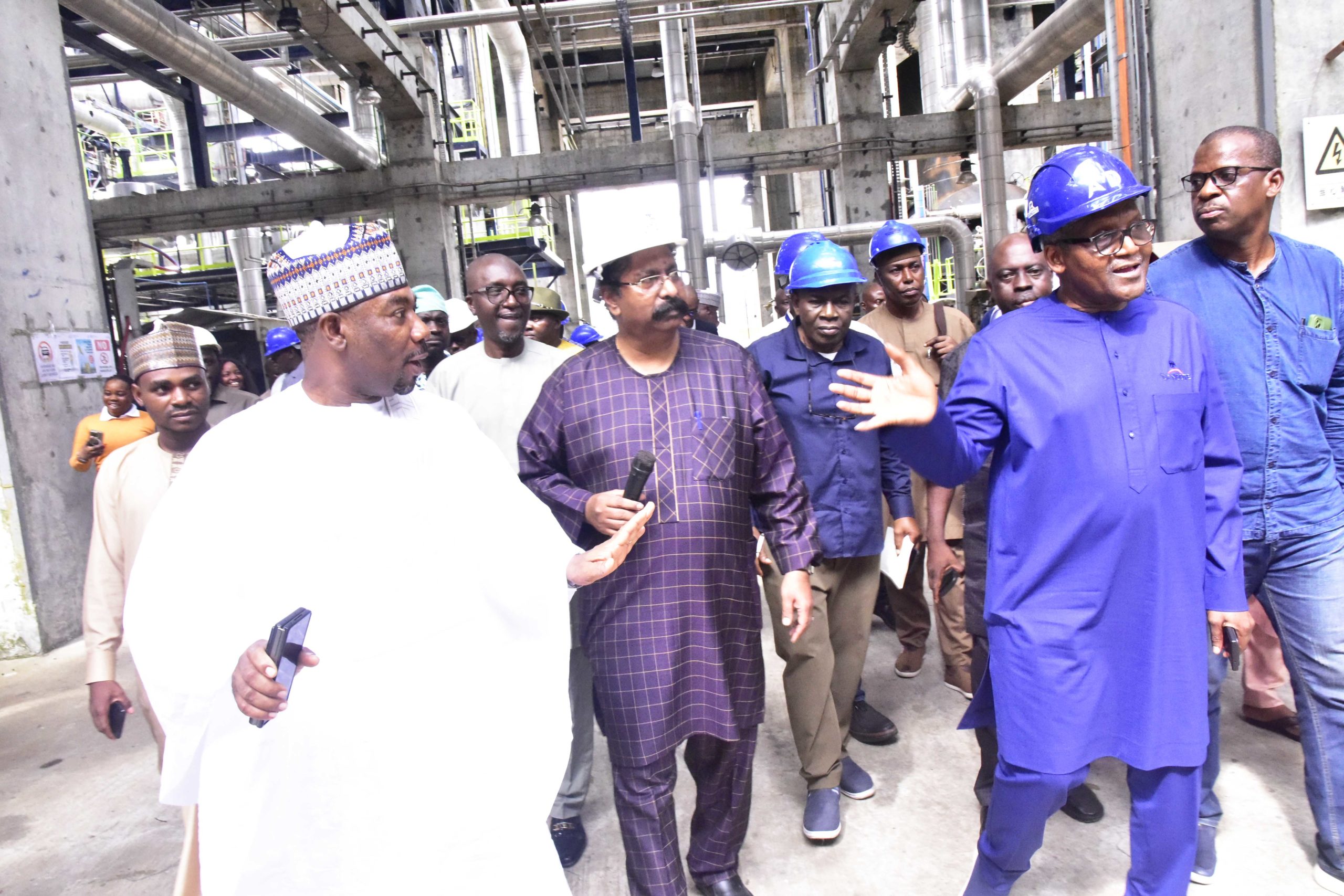
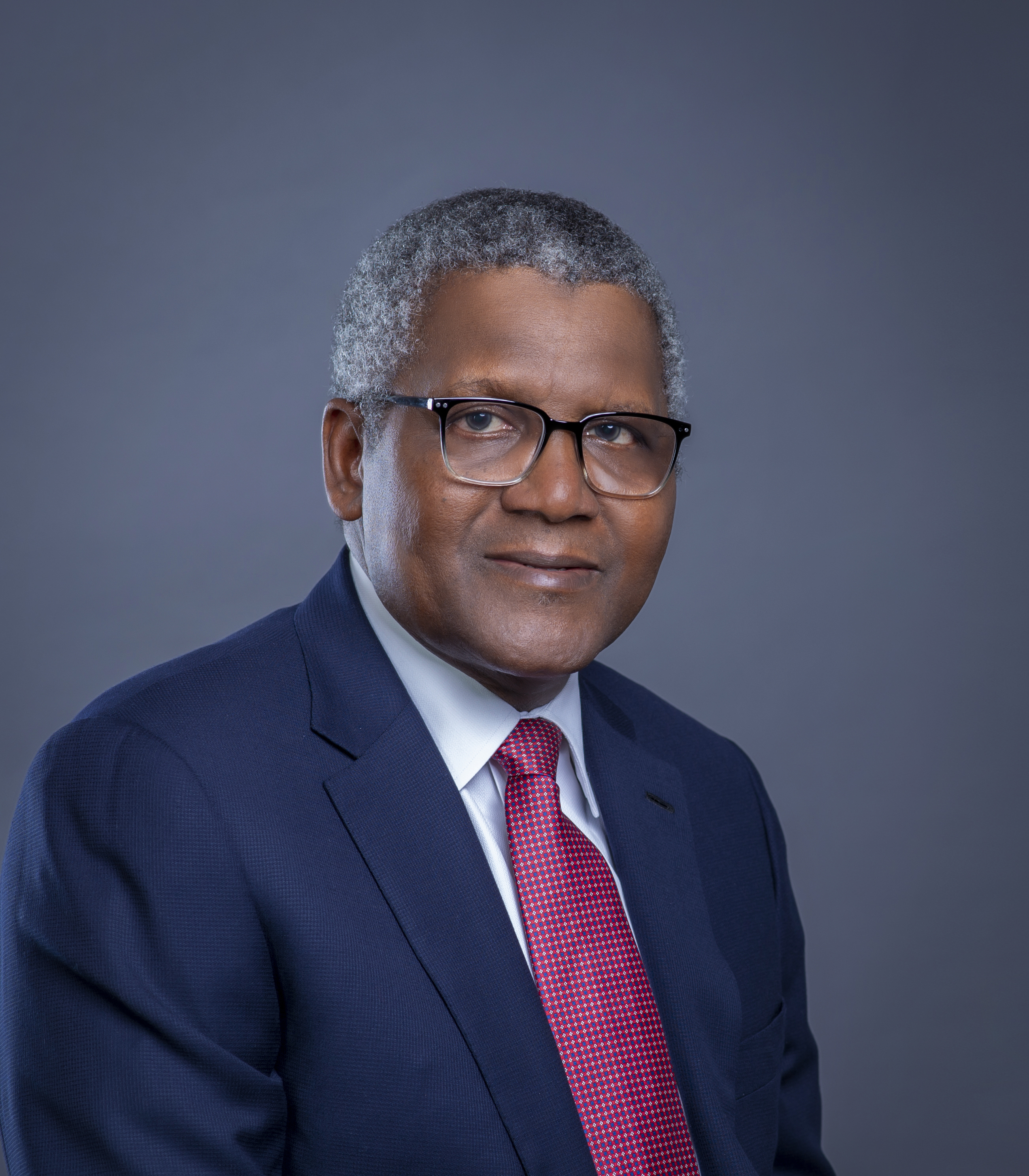
President of Dangote Group, Aliko Dangote, on Sunday declared that his company’s aim is to become the leading supplier of Foreign Exchange in the domestic market soon.
This is even as his company targets $30 billion in revenues by the year 2025.
Dangote bared his mind during a tour of the Dangote Petroleum Refinery & Petrochemicals and Dangote Fertiliser Limited with media executives at the weekend.
According to him, the plan is to attain independence from the Central Bank of Nigeria (CBN) in forex sourcing, highlighting a strategic shift in revenue composition within the cement business from the current 75 percent to 15 percent in the future.
The expected significant inflow of forex into Nigeria through his businesses, will automatically boosts the value of our local currency and make Naira regain its value in the comity of international currencies all over the world.
ALSO READ: Shell Nigeria Explores Opportunities With Dangote Refinery
He maintained that the refinery began full operations in 2024, initially focusing on refining intermediate products such as polypropylene, naphtha, RCO, gasoline, diesel, and jet fuel.
He explained that the refinery entered its steady-state production phase in March 2024.
Additionally, he anticipates production ramping up to 500,000 barrels per day (bpd) with 15 crude cargoes per month by August, increasing to 550,000 bpd by the end of the year, and aiming for 650,000 bpd by the first quarter of 2025.
“Petrol production is to commence in July with sales from August,” assured Dangote.
Dangote also hinted that the group intends to list both Dangote Petroleum Refinery & Petrochemicals and Dangote Fertilizer Limited on the Nigerian Exchange Group in the first quarter of 2025.
He said that this initiative would enable Nigerians to participate in the ownership of these companies.
“Due to the nature of our business with both the refinery and the fertilizer, we are aiming to list them by the end of this year. However, depending on circumstances, worst-case scenario, we anticipate listing them before the end of the first quarter of next year. This will allow us to offer shares for sale and enable Nigerians to participate as shareholders,” Dangote stated.
The Dangote Refinery, which will process 650,000 barrels per day (BPD) at full capacity, stands as Africa’s largest oil refinery and the world’s largest single-train facility, while the Dangote Fertiliser Limited operates Africa’s largest Granulated Urea Fertiliser complex. Presently, Dangote Cement is Nigeria’s most capitalised company.
While noting that the total storage capacity of the refinery is 4.5 billion litres, sufficient to cover 20 days of Nigeria’s crude requirement and store products equivalent to 15 days of Nigeria’s petrol consumption, he stressed that the refinery would produce 53 million litres of petrol per day and 1.1 million tonnes per day.
He added that the refinery is equipped with dedicated loading gantries featuring 86 loading bays, alongside specialized marine facilities for the offloading of crude and the loading of petroleum products.
Additionally, the facility, he said, includes a 900-kilotonne per annum polypropylene plant, with production capacities of 36,000 tonnes per annum for sulphur and 585,000 tonnes per annum for carbon black.
He pointed out that over the past four decades, the operations of the Dangote Group have evolved significantly from a commodity trading company to a diversified conglomerate.
Dangote emphasised that this transformation was driven by the overarching goal of achieving self-sufficiency in key sectors and bolstering Nigeria’s economy.
He noted that the group, which began as a trading company in 1978, has expanded into a diversified conglomerate with investments spanning cement, agriculture, fertilizer, petrochemicals, oil & gas, auto assembly, infrastructure, and other sectors.
He said the group is driven by the idea that Africa’s future prosperity hinges on its ability to harness its own resources and capabilities. Dangote stressed that the continent inadvertently imports poverty and exports jobs by exporting raw materials and importing finished goods.
The Vice President, Oil and Gas, Dangote Industries Limited, Devakumar Edwin, reiterated the commitment of the company in enhancing local capacity in critical sectors of the economy.
He said Dangote Industries Limited has empowered young Nigerians to assume key roles across its operations, with many even becoming expatriates in other nations.
Edwin stressed the refinery’s status as the world’s largest single train complex constructed entirely by a Nigerian company, highlighting a significant achievement in local engineering and construction capabilities.
Noting that most refineries were built by foreign companies, he said it is a thing of pride that a Nigerian company, acting directly as Engineering, Procurement, and Construction (EPC) contractor, designed and built the world’s largest single train refinery complex. He said this has enhanced the capacity of many Nigerians involved in the process and that a Nigerian company can build a refinery anywhere in the world.
“It is a thing of pride that the largest single train refinery in the world is 100% designed, engineered, and constructed by a Nigerian company as EPC contractor,” he said.
While expressing gratitude to the media executives, Group Executive Director of Commercial Operations at Dangote Industries Limited, Fatima Dangote, reiterated the company’s dedication to creating a positive impact on the economy. She commended Aliko Dangote’s steadfast commitment to advancing the continent’s development.
“He (Dangote) is committed to ensuring the success of Nigeria and Africa as a nation and a continent. Our focus extends beyond profit to solving problems and achieving self-sufficiency across all sectors in Africa. By meeting global standards, we have positioned ourselves to export our products to every continent in the world,” she said.
Fatima pointed out that the group is not only the largest private employer of labour but also consistently ranks as one of the top taxpayers in the country each year, adhering to all relevant tax laws and regulations.
“We are known as one of the largest employers of labour. However, we are also conscious of ensuring our workers enjoy a good living standard. This is reflected in our inclusion in the list of top paying firms in the country. Our impact on employment generation extends to creating thousands of indirect jobs in the various communities that we operate in,” she added.






Sahara Energy Geneva has highlighted the power of business collaboration to deliver lasting impact, with Mercy Ships Cargo Day celebrating more than $20 million raised over the past decade to support healthcare interventions in Africa.
More than 500 guests from over 150 shipping and trading companies gathered in Geneva recently for the 10th anniversary Gala of Mercy Ships Cargo Day, celebrating a decade of industry support for the international charity.
David Walker, Head of Chartering at Sahara Energy Geneva and Chairman of the Cargo Day Geneva Committee, joined industry leaders at the event, where he thanked the global shipping community, sponsors, media partners and Cargo Day committees in Geneva, London, Houston, Dubai and Singapore for supporting the initiative.
Cargo Day brings together charterers, shipowners, shipbrokers, and other shipping professionals who contribute through pledges, cargo commissions, and address commissions to support the work of Mercy Ships.
READ ALSO: 30 Nigerians Bag Postgraduate Scholarship from NNPC Ltd, Eni
Kola Motajo, Director, Sahara Geneva said Sahara’s involvement reflects the company’s belief in the ability of enterprise and partnerships to deliver impact beyond business.
“At Sahara, our focus is always on impact and lives transformed. Cargo Day demonstrates what is possible when businesses and individuals unite around a shared purpose. The $20 million milestone reflects the collective commitment of the global shipping community to improving healthcare in Africa. As Sahara looks Beyond XXX, we remain committed to building connections that create lasting value and possibilities for generations to come,” Motajo said.
Reflecting on Cargo Day’s growth, Walker said: “Ten years ago, we raised $300,000 and there were 70 people at the Gala. Today, we have more than 500 people coming from around the world to support such a great cause.”
Cargo Day 2025 raised more than $2.5 million, with 93 companies participating, including charterers, brokers, shipowners, and other partners.
Mercy Ships operates two hospital ships supporting patients in Africa with free life-changing surgeries, while also providing training and mentoring for local healthcare professionals. Cargo Day funding contributes to expenses associated with operating the hospital ships.
The 2026 Cargo Day campaign begins November 4 and will run through November and December, with companies participating through Mercy Cargoes, address commissions and pledges.

Up to 30 Nigerian graduates have bagged postgraduate scholarships to pursue further studies both locally and in the Diaspora.
According to the Nigerian National Petroleum Company Limited (NNPC Ltd) and Italian energy company, Eni have awarded postgraduate scholarships
The beneficiaries emerged from more than 3,000 applicants following assessments of their academic records and performances in a recently conducted computer-based test (CBT).
The awards are under the 2026/2027 Postgraduate Scholarship Scheme of Nigerian Agip Exploration Limited (NAE), an Eni subsidiary, on behalf of the NNPC-NAE Production Sharing Contract (PSC) partners.
In a statement, NAE’s Vice Chairman and Managing Director, Maurizio Pinna, said the initiative was designed to develop local talent and equip young Nigerians with skills relevant to the oil and gas industry. Pinna congratulated the beneficiaries, noting that the scholarships would enable them to pursue their academic ambitions and achieve their career goals.
According to NAE, the programme reflects its commitment to education, innovation and capacity building in Nigeria.
The company urged the beneficiaries to make good use of the opportunity by acquiring valuable knowledge and skills that would contribute to national development, particularly in the energy sector.
Ten of the awardees will undertake postgraduate studies in universities abroad, including Imperial College London, Robert Gordon University in Aberdeen, Newcastle University, the University of Aberdeen and the University of Hull in the United Kingdom.
READ ALSO: Navy Recovers 98,000 Litres of Suspected Stolen Crude in Rivers
The remaining 20 beneficiaries will study at Nigerian universities in fields including engineering, geosciences, petroleum and environmental technology, energy economics, renewable energy and energy transition.
Established in 2007, the NNPC-NAE PSC postgraduate scholarship scheme is part of the partners’ human capital development programme aimed at promoting specialised knowledge and addressing skills shortages in Nigeria’s deep offshore oil and gas operations.
NAE said 380 Nigerian graduates had benefited from the scheme since its inception, gaining knowledge and skills required by the oil and gas industry.
Beyond education, Eni, through NAE, has implemented sustainability initiatives in Nigeria covering healthcare, access to water, infrastructure and community empowerment.
Eni has operated in Nigeria since 1962 and currently has an equity production of about 55,000 barrels of oil equivalent per day. The company also holds a 10.4 per cent stake in Nigeria LNG.
NAE was incorporated in 1996 to manage Eni’s deep offshore exploration and production assets. It became the first oil and gas company in Nigeria to produce oil from the country’s deep offshore when its Abo floating production, storage and offloading (FPSO) vessel began operations in 2003.
The company has interests in nine offshore blocks in Nigeria, either as operator or co-venturer, including PML 102 and PML 103, where the Zabazaba-Etan fields are being developed.
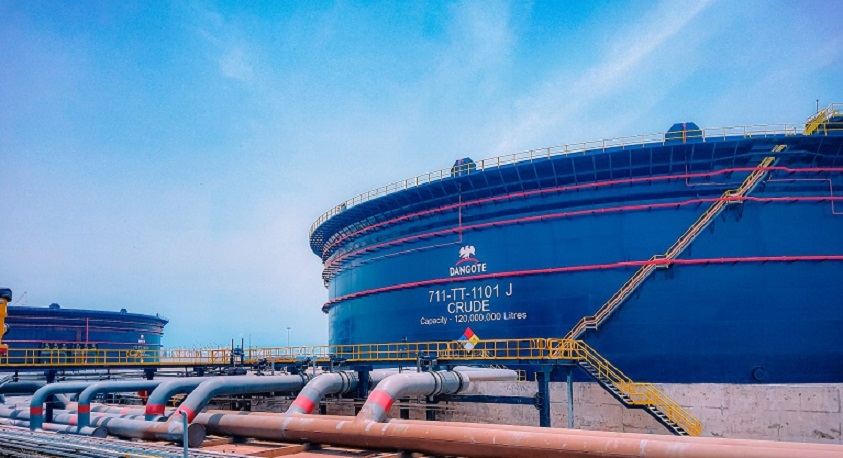
The Dangote Petroleum Refinery and Petrochemicals’ (DPRP) decision to seek leave to appeal a Federal High Court (FHC) judgment directing the Nigerian Midstream and Downstream Petroleum Regulatory Authority (NMDPRA) to continue issuing petroleum product import licences to three major oil marketers is being backed by the Energy Watchdog.
This was detailed in a statement by Martins Tayo, which considers the move as necessary to protect Nigeria’s domestic refining industry and reduce dependence on imported petroleum products.
The judgment, delivered on September 28, 2026, by Justice Inyang E. Ekwo in Suit No. FHC/ABJ/CS/1363/2026, ordered the NMDPRA to continue issuing import licences to Matrix Energy, AA Rano and AYM Shafa.
The Energy Watchdog argued that the ruling undermined the objectives of the Petroleum Industry Act (PIA) and threatened investments in domestic refining capacity.
“We completely reject and condemn in totality the judgment of the lower court. It is a deeply flawed decision that disregards the clear intent of the Petroleum Industry Act and the national interest in building a robust domestic refining industry,” the statement said.
READ ALSO: NNPC Petrol Discount: Oyedele Explains How Lower Margins Could Boost Profits
The group further cited a reported decline in petrol imports in the first quarter of 2026, alongside increased supplies from local refineries, particularly the Dangote facility, as evidence of the country’s growing domestic refining capacity.
It argued that sustaining import licences despite rising local production could undermine efforts to achieve self-sufficiency in refined petroleum products and weaken investor confidence in the sector.
According to the organisation, Dangote Refinery’s decision to seek leave to appeal as an interested party was timely, given the potential implications of the judgment for the future of Nigeria’s downstream petroleum industry.
“The lower court’s decision amounts to a judicial endorsement of continued importation irrespective of local capacity.
“We condemn it without reservation because it threatens to reverse the hard-won gains of the last few years,” Tayo stated
The Energy Watchdog maintained that the Petroleum Industry Act was designed to encourage investment in midstream and downstream infrastructure, warning that allowing the ruling to stand could send a negative signal to investors who have committed substantial resources to domestic refining projects.
The group urged the Court of Appeal to grant the DPRP leave to appeal and ultimately set aside the FHC’s order, describing the case as significant to Nigeria’s energy security and the development of its refining industry.
“Any judgment that forces the continued importation of fuel products when local refineries can supply the market is a setback for Nigeria.
“We condemn the lower court ruling in the strongest terms and fully support the appeal filed by Dangote Refinery,” the statement concluded, “The Court of Appeal must correct this error and reaffirm that the era of automatic import licences is over.”





Sahara Champions Global Shipping Collaboration for $20m Mercy Ships Healthcare Impact

30 Nigerians Bag Postgraduate Scholarship from NNPC Ltd, Eni

2027: ‘Algorithms Will Not Decide Election Results’, INEC Chairman Declares

Navy Recovers 98,000 Litres of Suspected Stolen Crude in Rivers

DPRP’s Appeal Against Fuel Import Licence Ruling Earns Stakeholder Backing

State Govs, Wike Endorse One-Party State, Join APC Campaign Council

Trump’s Family Unveils New Cryptocurrency Platform

Senate Denies Receiving Petitions Against Tinubu’s Ambassadorial Nominees

Dangote Cement Lights Up Benue Host Communities With CSR Initiatives

Reps Recommend 3-year Jail Term For Aviation minister

Tems Sets New Record On Billboard Hot 100 Chart

480942 214603Delighted for you to discovered this site write-up, My group is shopping more often than not regarding this. This can be at this moment certainly what I are already seeking and I own book-marked this specific website online far too, Ill often be keep returning soon enough to look at on your distinctive weblog post. 239052
62960 673319Really educating story, saved your web site for hopes to read much more! 152546
362935 641180Yay google is my king helped me to find this fantastic web site ! . 529945
967131 156871Wow, fantastic weblog layout! How long have you been blogging for? you make blogging appear easy. The overall appear of your web site is great, let alone the content material! 507051
296640 357871I see something actually particular in this internet web site . 659034