Business
Dangote Revives Olokola Free Trade Zone, Resumes $800m Cement Factory In Ogun

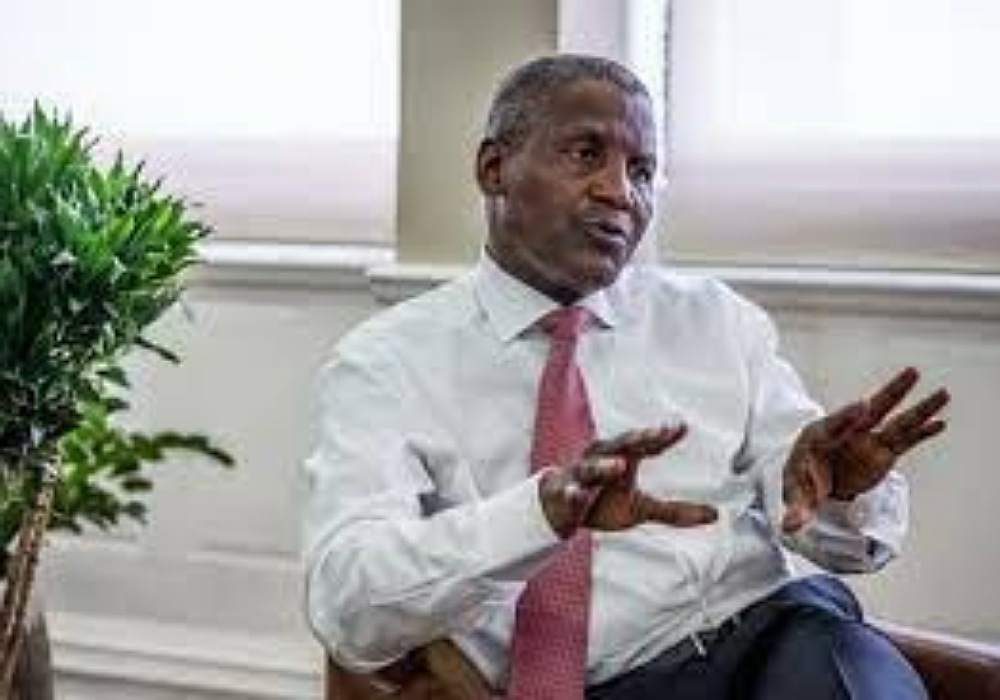
Ogun State is set to witness a major economic transformation as Africa’s richest man, Aliko Dangote, has announced the return of Dangote Industries Ltd to the Olokola Free Trade Zone (OKFTZ) in Ogun Waterside Local Government Area for the construction of Nigeria’s largest seaport.
Dangote made the disclosure on Monday during a visit to Governor Dapo Abiodun, where he also inspected the ongoing construction of a 6-million-metric-ton-per-annum cement factory at Itori in Ewekoro Local Government Area.
The project, which had suffered setbacks under the previous administration of Governor Ibikunle Amosun, is now slated for completion in November 2026.
READ ALSO: NNPC Ltd Clarifies Naira-Crude Contract With Dangote Refinery
The billionaire industrialist expressed regret over the long delay of the Itori cement project, initially planned for completion years ago.
He revealed that the project, valued at nearly $800 million, faced strong opposition from former Governor Amosun, who twice demolished the factory, forcing Dangote to halt work.
“When we started building the new cement factory at Itori, former Governor Amosun demolished it. We came back again and restarted the project, but Governor Amosun also came again and demolished the factory and even the fencing, so we left,” Dangote recounted.
However, he credited Governor Abiodun for creating a more investor-friendly climate, which encouraged him to restart the project.
“Because of my brother, Governor Dapo Abiodun, we are back on site, and you will be surprised at the level of work ongoing there,” he added.
The Itori cement plant, sitting on 533 hectares of land, is expected to add to the already existing 12-million-metric-ton-per-annum Dangote Cement Plant in Ibese.
Upon completion, Ogun State will boast a total cement production capacity of 18 million metric tons per annum, making it the highest-producing region in Africa.
Dangote also revealed plans to revive his abandoned investment in the Olokola Free Trade Zone, citing Governor Abiodun’s pro-investment policies as the reason for his decision.
“We earlier abandoned our vision of investing in the Olokola Free Trade Zone, but because of Governor Dapo Abiodun’s policies and investor-friendly environment, we are back. We are going to work with the government to construct the largest port in the country,” Dangote declared.
Dangote highlighted his company’s role in making Nigeria self-sufficient in cement production and transforming the nation into a cement-exporting country.
He noted similar achievements in fertilizer production and petroleum refining, where Nigeria has moved from being a net importer to an exporter of refined petroleum products.
“We rolled out automotive gas oil (AGO) in January 2024 and Premium Motor Spirit (PMS) in September 2024 from our 650,000-barrel-per-day refinery in Ibeju-Lekki,” he said, emphasizing that the refinery is capable of meeting Nigeria’s domestic demand for refined petroleum products while exporting surplus.
Governor Abiodun, in his remarks, praised Dangote for his unwavering commitment to Nigeria’s industrialization and for returning to Ogun State despite previous challenges.
He described Dangote’s visit as historic and a testament to the state’s improved investment climate.
He also lauded the industrialist for the ongoing construction of the Sagamu Interchange to Papalanto Road, a critical infrastructure project that will boost Ogun’s economic growth.
“Our administration will continue to create an enabling environment to attract more investors,” Abiodun assured, reaffirming his government’s commitment to economic development.




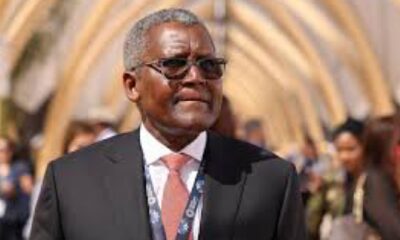


The President and Chief Executive of the Dangote Group, Alh Aliko Dangote, has been appointed to the World Bank’s Private Sector Investment Lab.
Biztellers reports that his see the business mogul joining a select group of global business leaders tasked with driving investment and job creation in emerging economies.
The development was revealed in a statement in which he confirmed his acceptance, where the African industrialist reaffirmed his commitment to fostering sustainable economic growth through private sector-led investment, noting the transformative potential of such initiatives in developing markets.
“I am both honoured and excited to accept my appointment to the World Bank’s Private Sector Investment Lab, dedicated to advancing investment and employment in emerging economies,” Dangote said.
ALSO READ: Ministry Appoints New Director For DUFUTH, Uburu
“This opportunity aligns with my long-standing commitment to sustainable development and unlocking the potential of developing economies. Drawing inspiration from the remarkable successes of the Asian Tigers, which have demonstrated the power of strategic investment and focused economic policy, I am eager to collaborate with fellow leaders to replicate such outcomes across other regions.”
The Dangote Group, founded by Aliko Dangote, is the largest conglomerate in West Africa and one of the largest on the African continent. With interests spanning cement, fertiliser, salt, sugar, and oil, the Group employs over 30,000 people and is the largest taxpayer in Nigeria—contributing more in taxes than all of Nigeria’s banks combined. It is also the country’s largest employer after the government.
The $20 billion Dangote Petroleum Refinery & Petrochemicals, the Group’s flagship project, stands as the largest single private investment in Africa.
In addition to his business interests, Dangote leads the Aliko Dangote Foundation (ADF), the largest private foundation in sub-Saharan Africa, with the largest endowment by a single African donor. The Foundation primarily focuses on child nutrition, while also supporting interventions in health, education, empowerment, and disaster relief.
The World Bank announced Dangote’s appointment on Wednesday as part of a broader expansion of its Private Sector Investment Lab, which now enters a new phase aimed at scaling up solutions to attract private capital and create jobs in the developing world.
Joining Dangote in the elite group are Bill Anderson, CEO of Bayer AG; Sunil Bharti Mittal, Chair of Bharti Enterprises; and Mark Hoplamazian, President and CEO of Hyatt Hotels Corporation.
The World Bank said the expanded membership brings together business leaders with proven track records in generating employment in developing economies—supporting the Bank’s sharpened focus on job creation as a central pillar of global development.
“With the expanded membership, we are mainstreaming this work across our operations and tying it directly to the jobs agenda that is driving our strategy,” said World Bank Group President Ajay Banga. “This isn’t about altruism—it’s about helping the private sector see a path to investments that will deliver returns, and lift people and economies alike. It’s central to our mandate.”
The global bank said that over the last 18 months, the Lab brought together leaders from global financial institutions to identify the most pressing barriers to private sector investment in developing countries and to test actionable solutions.
The statement said that the work had now been consolidated into five priority focus areas that were being integrated across the bank operations, including regulatory and policy certainty.
The Lab’s founding members included senior executives from AXA, BlackRock, HSBC, Macquarie, Mitsubishi UFJ Financial Group, Ninety-One, Ping An Group, Royal Philips, Standard Bank, Standard Chartered, Sustainable Energy for All, Tata Sons, Temasek, and Three Cairns Group. The Lab is chaired by Shriti Vadera, Chair of Prudential plc.

Nokia has reported a net loss of €68 million for the first quarter of 2025, a sharp decline from the €438 million profit recorded during the same period last year.
The Finnish telecoms equipment maker attributed the downturn to global trade disruptions and recently imposed tariffs by the United States.
The company’s net sales dropped slightly to €4.4 billion, down by one percent year-on-year.
READ ALSO: Trade War: China Strikes Back Wth 125% Tariffs On U.S. Goods
Tariff-related challenges were highlighted by Nokia’s President and CEO, Justin Hotard, who acknowledged the broader economic pressures affecting the industry.
“We are not immune to the rapidly evolving global trade landscape,” Hotard stated. “However, based on early customer feedback, I believe our markets should prove to be relatively resilient.”
He also noted the potential short-term financial impact, saying, “Based on what we see today, we currently expect a EUR 20 to 30 million impact on our comparable operating profit in the second quarter from the current tariffs.”
Earlier this month, U.S. President Donald Trump introduced a 10 percent tariff on global imports, while pausing plans for steeper duties, including a proposed 20 percent levy on products from the European Union.
Despite the quarterly setback, Nokia expressed confidence in its growth prospects.
The company is looking to its Network Infrastructure, Cloud and Network Services, and Mobile Networks divisions to drive sales in the year ahead.
In a sign of continued momentum in the mobile segment, Nokia also announced on Thursday that it had extended its contract with T-Mobile US.
The company said it is continuing “to see positive signs of stabilization” in Mobile Networks.
The pull of market forces which moved the hands of the Nigerian National Petroleum Company Limited (NNPC Ltd) to reduce the price of Premium Motor Spirit (petrol) to N880 per litre in Lagos and N935 in Abuja appears to be a source of torture to independent markets.
Biztellers reports that the latest price review on Easter Monday saw NNPC retail outlets in Lagos drop from N925 to N880, while those in Abuja adjusted from N950 to N935.
The NNPC Ltd’s price reduction came barely a week after the Dangote Refinery lowered its ex-depot price from N865 to N835 per litre.
ALSO READ: BREAKING: Again, Dangote Cuts Petrol Price To N835 per Litre
In addition, the $20bn refinery also directed its partners like MRS, Heyden, and Ardova to sell a litre of petrol at the rate of N890 instead of N920 in Lagos, N900 in the South West, N910 in the South-South, and N920 in the North East.
Consumers can smile because with the reaction, the NNPC Ltd’s new price in Lagos is N10 lower than what the Dangote Refinery is selling at, which might lead to another reaction, as the price war between the two companies.
Though some NNPC Ltd’s retail outlets were observed selling at the old rate in Lagos, it was gathered that they were given the liberty to exhaust old stock before adjusting to the new prices.
Market sources are of the view that the current price war was ignited by the Federal Government’s implementation of the Naira-for-crude policy.






Corps Members Safe In Benue, Gov Alia Assures As Orientation Kicks Off

JUST IN: Reps Committee Finally Meets Rivers Sole Administrator After Delays
World Bank Appoints Aliko Dangote To Elite Group

Ministry Appoints New Director For DUFUTH, Uburu

CVFF- House of Reps Backs Marine & Blue Economy Ministry