
NEWS
Despite N2.3tn health budgets, Buhari spends 201 days on foreign medical trips

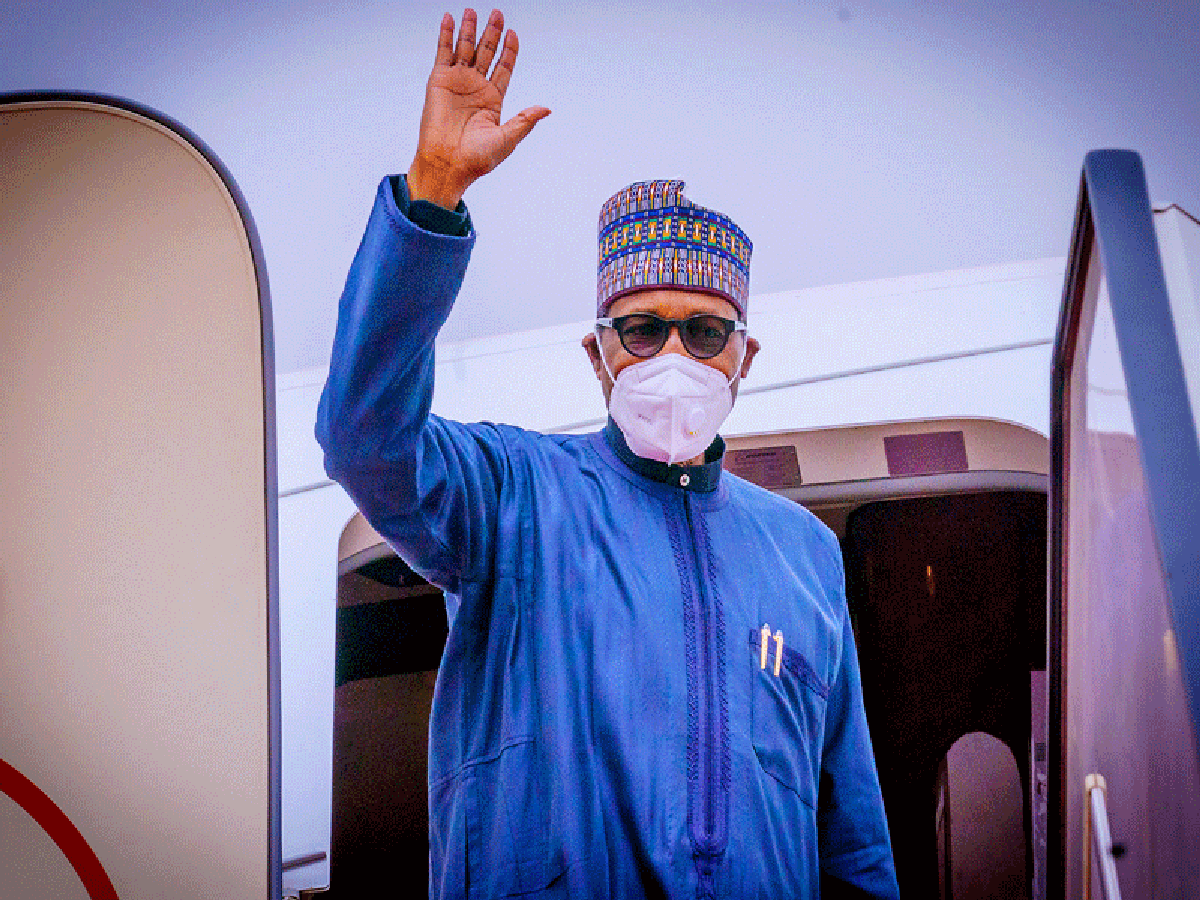
• Aso Villa clinic gulps N6.2bn in six years, doctors knock FG
Six years and two months since his regime began on May 29, 2015, the President, Major General Muhammadu Buhari (retd), has spent a total of 201 days on medical leave as of Sunday, based on information made public by the Presidency.
Despite Buhari’s preference for foreign medical care, the Federal Ministry of Health has consumed a total of N2.3tn from 2016 to date, while the State House Medical Centre has received N6.2bn, according to the respective appropriation acts available on the website of the Budget Office of the Federation.

Aso Rock Clinic, Abuja Nigeria
The presidential clinic caters for the President, Vice President, their families and members of staff of the Presidential Villa, Abuja.
In 2016, the Ministry of Health received N250bn, while the State House Medical Centre got N2.8bn In 2017, N304.1bn was allocated to the Ministry of Health and N331.7m to the State House Medical Centre.
The 2018 budget indicated that the ministry had N356.4bn, while the presidential clinic received N1bn. In 2019, N372.7bn went to the ministry and the Villa medical centre got N798.8m.
In 2020, N414.4bn was budgeted for health as against N598.6m for the State House Medical Centre. The 2021 budget allocated N549.8bn to the Ministry of Health and N641.1m for the presidential clinic.
Additionally, the recently signed 2021 Supplementary Appropriation Act allocated to the ministry N83.5bn for National Primary Healthcare Development Agency, as well as N1.68bn for National Agency for the Control of AIDS.
Buhari left for the UK on June 6, 2016, for his first medical vacation, following reports that he had an ear infection. He returned on June 19, 2016.
On January 19, 2017, the President again travelled to the UK on medical leave and returned on March 10, 2017, after spending 51 days.
Barely 40 days after, Buhari travelled again to the UK for medical attention on May 8, 2017 and remained there till August 19, 2017, spending 104 consecutive days, a record which surpassed that of the late President Umaru Yar’Adua.
After attending the 72nd UN General Assembly, on September 21, 2017, he travelled from the US to the UK for medical purposes and returned to Abuja on September 25, 2017.
On May 8, 2018, four days after arriving in Nigeria, Buhari returned to the UK for medical reasons and he returned on May 11.
The President again travelled to London on a working leave on August 3, 2018 and returned on the 18th, spending a total of 16 days. His handlers said during interviews that “he may just see his doctors briefly during the visit.”
On April 25, 2019, Buhari arrived in the UK for a 10-day “private visit,” returning on May 5, 2018, though information was not given on the purpose of the trip.
Again, on November 2, 2019, he proceeded on a 15-day “private visit” to London, following bilateral talks in Saudi Arabia. He returned to the country on November 17.
In 2020, the President did not leave the country for a single medical trip, presumably due to travel restrictions resulting from the COVID-19 pandemic.
But on March 30, 2021, he resumed his medical visits with two-week trip to London.
On June 24, the President postponed another planned medical trip to the UK. He, however, departed the country for London on Monday to attend an education summit and have a check-up. He is expected to return in the second week of August.
The Special Adviser to the President on Media and Publicity, Femi Adesina, in an appearance on Channels Television last Monday, stated that his boss preferred to have his check-up in the United Kingdom as Nigerian doctors did not have his medical profile.
He said, “President Buhari has been with the same doctors and medical team for upward of 40 years,” he said when asked why the President couldn’t have been treated in Nigeria.
“It is advisable that he continues with that who knows his medical history and that is why he comes to London to see them. He has used the same medical team for over 40 years. Once you can afford it, then stay with the team that has your history.”
NMA, NARD react
The Nigerian Medical Association and the National Association of Resident Doctors, in separate interviews with Sunday PUNCH, expressed displeasure at the neglect suffered by the health sector amid the President’s frequent medical trips.
The General Secretary of the NMA, Dr Philip Eke, credited the private sector for a majority of the development recorded in the health sector.
He said, “We could have committed more funds to make the health sector better. But unfortunately, it is even the private sector that is improving the health sector, not the public sector, because the government is not even buying equipment.
“It may seem as if the workers are paid relatively higher, but that money is nothing when the cost of food is very high. By and large, I don’t think there is much improvement in the health indices in the country as expected. The private sector has done a whole lot trying to improve the health sector.
“But one thing again is that the behaviour of the public office holders tells you that there has not been any improvement in the health sector because if they had improved the health sector, they would have the confidence to stay and get treated.”
Noting that there was not outright immorality in seeking medical care abroad, Eke argued that there were available professionals in the country. According to him, the neglect in the health sector had led to brain drain to Canada, UK and other developed countries.
The NMA general secretary said, “What is the illness that the President has that we don’t have the personnel or manpower in Nigeria to treat such that he has to travel out of the country? “That tells you that even if he does not trust the system and if the President does not trust the system, it means he is not leading by example and means other public office holders will also leave.
“I am not saying we should not seek health care outside the country, especially if it is something that is beyond our capacity. But even basic primary health care is not really working. Despite the fact that the basic health care provision fund was released — kudos to the government for that — we have not seen the effect in making sure that the states improve on health insurance.
“They only did that because they wanted to collect some of that money. It’s not functional, it’s just structural. We are still waiting as the Speaker of the House of Representatives is still pushing so that the President can give assent to the bill that will make national health insurance mandatory. Once that happens, there will be a lot of money in the health sector.”
The NARD President, Dr Uyilawa Okhuaihesuyi, also decried the lack of standard health infrastructure in the country, saying the blame should be laid at the feet of not only the President, but all elected officials.
According to him, the primary, secondary and tertiary levels of the health sector are plagued by poor planning on the part of researchers, members of the state houses of assembly, the House of Representatives, governors and commissioners, among others.
Okhuaihesuyi said, “We gave an ultimatum in May concerning our strike notice. We are currently in Umuahia (Abia State) to reappraise and reassess the MoU signed with the government. As it stands, I hope it’s not going to be a coincidence if NARD will be on strike.
“On infrastructure, you and I know that global best practices dictate that our healthcare systems must have a better budget. We should have (at least) a standard hospital in all the six (geopolitical) zones in the country. We should have the basic things that a hospital needs to function properly.
“But there is no hospital in Nigeria presently that I can say adopts global best practices. The ones that are close to adopting best practices are those owned by private individuals, not the government. If the government pays more attention to the health system in Nigeria, it would go a long way in ensuring that one can stay in one’s country and get the best health care any person deserves as a human being.”
President’s medical trips wasteful, says Okei-Odumakin
In the same vein, the President of Campaign for Democracy, Dr Joe Okei-Odumakin, in a text message, stated that the attraction to foreign health care demonstrated the failure of leadership.
She said, “There has been no improvement whatsoever in the health sector, based on a lack of commitment by successive administrations in the country.
“Sadly, the continued patronage of foreign hospitals by privileged Nigerians, including the President and his immediate family, has increased the lack of confidence in the sector, thereby increasing medical tourism and wastage of public funds on such adventures.”
-PUNCH



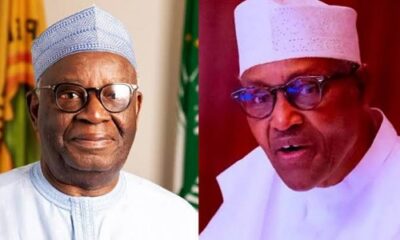




Former Delta State Governor, Dr Emmanuel Uduaghan, has reportedly died, according to sources said to be close to his family.
The sources confirmed the development on Monday, October 19, 2026, although details surrounding the circumstances of his death remained unclear as of the time of filing this report.
“Uduaghan is no more; he is dead,” one of the sources reportedly said.
SEE ALSO: Document reveals Akpoti-Uduaghan demanded N10b damages from husband before marriage, firm reacts
The reported death comes months after claims that the former governor had died circulated on social media before being dismissed by his media aide, Henry Unini.
In June, reports of Uduaghan’s alleged death spread across Facebook and WhatsApp, prompting Unini to publicly debunk the claims and assure the public that the former governor was alive.
“I can tell you for a fact that Dr. Emmanuel Uduaghan is alive,” Unini said at the time.
“Frankly, I don’t know where the writer got his information from. The death of someone is not something you take and write about casually,” he added.
Unini acknowledged at the time that Uduaghan had been experiencing health challenges but maintained that he was receiving medical attention.
“It is now common knowledge that Dr. Emmanuel Uduaghan has been sick, but he is receiving proper medical care,” the media aide said.
He also stated that the former governor was recuperating, assuring the public that there was no immediate cause for concern.
“There is no cause for alarm whatsoever,” Unini said.
The media aide thanked friends, well-wishers and residents of Delta State who contacted the family to verify the former governor’s condition. He also urged the public to avoid spreading unverified information.
“The rumour was uncalled for,” he said while addressing the earlier reports.
As of the time of filing this report, further details about the circumstances surrounding Uduaghan’s reported death had yet to emerge.
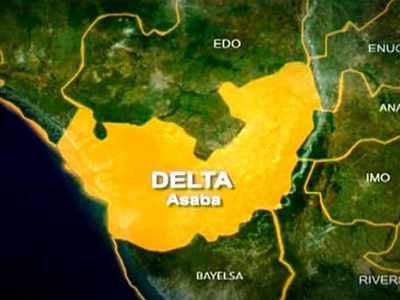
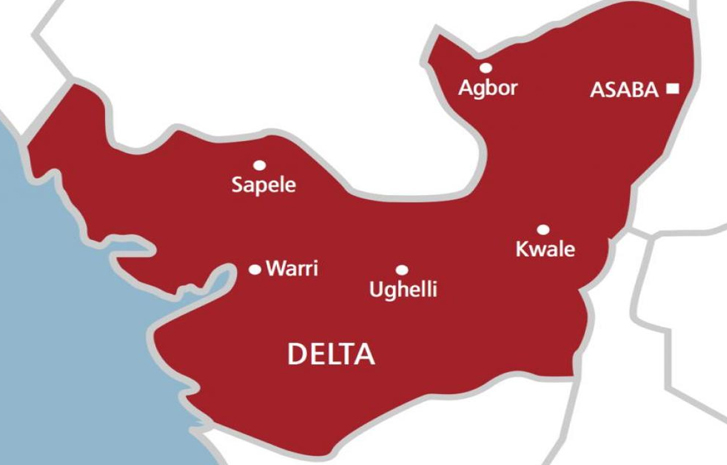
The Delta State Government has commenced a ₦5 billion grassroots empowerment programme targeting 100,000 small-scale business owners and other beneficiaries across the state’s 500 wards.
The initiative, announced on Monday, will see each beneficiary receive ₦50,000 to support small businesses, strengthen household finances and stimulate economic activities across the state.
SEE ALSO: Two Arrested as Delta Police Uncover Cache of Illegal Weapons
The Executive Assistant to the Governor on Public Enlightenment (Projects and Policies), Mr Olisa Ifeajika, disclosed this while speaking with journalists in Asaba.
Ifeajika explained that the programme was designed to complement the state government’s investments in critical infrastructure with direct financial assistance to residents.
According to him, Governor Sheriff Oborevwori directed local government councillors to facilitate the distribution of the funds, with each of the 500 wards expected to reach at least 200 beneficiaries.
He added that the initiative reflects the administration’s commitment to improving livelihoods and expanding economic opportunities for Deltans, in line with the people-centred objectives of the MORE Agenda.
The Minister of Education, Dr Maruf Tunji Alausa, has commended Alhaji Aliko Dangote and the Aliko Dangote Foundation for plans to acquire Initial Public Offering (IPO) shares of Dangote Refinery on behalf of eligible Nigerian tertiary institution students.
Alausa described the initiative as an innovative approach to promoting financial literacy, youth empowerment and wealth creation among young Nigerians.
According to a press release issued by the Federal Ministry of Education on Monday, October 19, 2026, the initiative is expected to benefit up to four million students aged 18 and above, with each eligible student expected to receive 10 IPO shares without requiring prior investment or share purchase.
The minister said the programme would expose students to capital markets, responsible investing and long-term financial planning, preparing them for greater economic participation and financial independence.
He noted that the initiative aligns with the Nigeria Education Sector Renewal Initiative (NESRI) and President Bola Ahmed Tinubu’s Renewed Hope Agenda by connecting education with enterprise, human capital development and inclusive economic growth.
According to Alausa, the initiative reflects the importance of partnerships between the education sector and private organisations in equipping young Nigerians with the knowledge and skills needed to participate in the economy.
He said the Federal Ministry of Education remained committed to strengthening private-sector partnerships to improve educational quality, relevance, equity and efficiency while preparing learners for a changing economy.
While appreciating the foundation’s contribution to youth development, the minister clarified that the ministry’s commendation was based on the initiative’s educational and developmental value.
He stressed that the ministry’s position “does not constitute an endorsement of any particular investment decision.”
Alausa also encouraged other corporate organisations to support similar initiatives that promote financial awareness, economic productivity and entrepreneurship among young Nigerians.
He urged businesses to support NESRI and the Renewed Hope Agenda in building a financially informed and economically productive generation.





Petrol Price Hike Looms as Oil Hits $110/barrel

NIPCO Gas Licences, NNPC Ltd Management Face Reps Probe
UNDC Assures on Readiness to Protect Oil, Gas Pipelines

JUST IN: Ex-Delta Governor Emmanuel Uduaghan Is Dead

Delta Begins ₦5bn Empowerment Scheme for 100,000 Beneficiaries
Alausa Hails Dangote Foundation’s Plan to Give Four Million Students IPO Shares

Trump’s Family Unveils New Cryptocurrency Platform

Senate Denies Receiving Petitions Against Tinubu’s Ambassadorial Nominees

Dangote Cement Lights Up Benue Host Communities With CSR Initiatives

Reps Recommend 3-year Jail Term For Aviation minister

Tems Sets New Record On Billboard Hot 100 Chart
