
International News
DR Congo Ebola Crisis Deepens as Frontline Health Workers Threaten Strike Over Unpaid Salaries

The fight against the deadly Ebola outbreak in the Democratic Republic of Congo (DRC) faces a major setback as frontline health workers have threatened to embark on an indefinite strike over months of unpaid salaries and allowances.
The protest comes as the World Health Organization (WHO) warned that the true scale of the outbreak could be between two and four times higher than official figures.
SEE ALSO: Panic in Europe as France Records First-Ever Ebola Case
According to the latest official data released on Tuesday, the outbreak, which was declared on May 15, has claimed more than 700 lives, with nearly 2,000 confirmed infections across the country.
Health workers stationed at the Ebola treatment centre in Rwampara, one of the hardest-hit areas in Ituri Province, staged a protest on Monday by burning tyres and temporarily blocking access to the facility.
“We’ve been treating Ebola patients without pay since May 15. We continue to do so because that is our oath but we are working in very difficult conditions,” doctor Pascal Bahoya said.
Medical personnel at the treatment centre warned that they would begin a “full-scale strike” without maintaining minimum services if authorities fail to honour their 48-hour ultimatum demanding payment of salaries and bonuses.
During a recent visit to Ituri, Health Minister Samuel Roger Kamba admitted that there had been delays in salary payments and assured health workers that the organisational issues responsible for the delay would be resolved.
The outbreak has placed enormous pressure on the country’s fragile healthcare system. According to the National Public Health Institute (INSP), at least 112 healthcare workers have contracted the virus, while 35 have died.
WHO also raised concerns that the epidemic may be significantly larger than official records suggest. Speaking in Geneva, WHO emergencies director Chikwe Ihekweazu said the agency’s modelling indicates “the scale of the outbreak is at least two to four times the number of cases that we have found.”
The Bundibugyo strain of Ebola responsible for the current outbreak has no approved vaccine or specific treatment, although a clinical trial involving two experimental treatments is currently underway.
The disease has spread beyond its epicentre in Ituri to North Kivu, South Kivu, Tshopo and Haut-Uele provinces, while neighbouring Uganda has also recorded 20 cases, including two deaths.
As of July 12, authorities said 727 patients were receiving treatment in Ebola treatment centres across affected regions.
Eastern DRC continues to grapple with decades of armed conflict, mass displacement and poor sanitation, factors that have complicated efforts to contain the virus.
Despite the challenges, the international community has mobilised approximately $1.5 billion to support the country’s Ebola response, although officials say the DRC’s chronically underfunded healthcare system remains under severe strain.







Federal agents raided the Washington, D.C., home of Democratic Congresswoman Ilhan Omar early Monday morning as part of an ongoing federal criminal investigation, the United States Department of Justice (DOJ) has confirmed.
Homeland Security Investigations agents arrived at the Minnesota congresswoman’s residence at about 6:00 a.m. Eastern Time, according to a report by Fox News.
SEE MORE: Trump Sparks Outrage With Shock Proposal to Rename New Mexico
The report said both the Department of Homeland Security (DHS) and the DOJ are involved in the investigation.
A DOJ spokesperson confirmed the operation, stating: “Today in the Washington, D.C. area, Homeland Security Investigations executed a judicially authorized search warrant secured by the Department of Justice.”
The spokesperson added: “This enforcement action is part of an ongoing federal criminal investigation.”
Details later……….
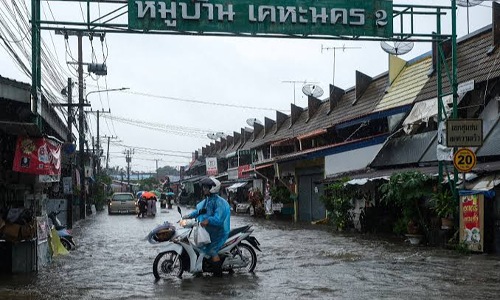
Heavy rains have triggered severe flooding across parts of Bangkok, Thailand, forcing nearly 4,900 residents to evacuate to shelters as floodwaters swept through roads and residential areas.
The flooding has disrupted movement across parts of the Thai capital, with motorists and pedestrians forced to navigate submerged roads and seek alternative routes.
SEE ALSO: NAFDAC Warns Nigerians As Fake Cowbell Milk Floods Market
According to the Bangkok Metropolitan Administration, about 52,000 households have been affected by the flooding, prompting authorities to declare a flood disaster and intensify emergency response efforts.
Emergency teams have been deployed to assist affected communities and move residents from vulnerable areas to safer locations as water levels rise.
Bangkok is accustomed to seasonal heavy rainfall, but intense downpours can overwhelm drainage systems, particularly in low-lying areas, resulting in widespread flooding and disruption.
Authorities are continuing to monitor affected locations while coordinating evacuations and other emergency measures.
For thousands of residents, the immediate priority remains securing safe shelter and protecting homes and livelihoods as authorities work to manage the situation and restore normal activities once the floodwaters recede.
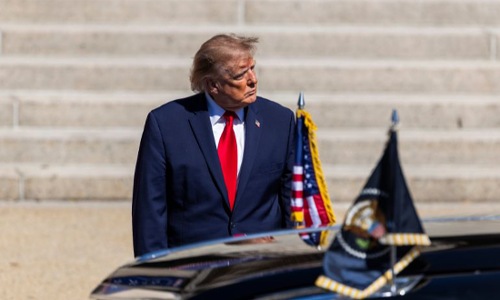
US President Donald Trump has explained his decision to reject Iran’s latest proposal to reopen the Strait of Hormuz, saying Tehran was seeking an agreement because it was losing revenue.
Speaking to reporters at the White House, Trump said Iran wanted to immediately reopen the strategically important waterway but argued that the proposal was not acceptable to his administration.
“They want to make a deal, and I think that’s fine. I like making a deal, too, but that deal would not be acceptable,” Trump said.
SEE ALSO: How the Strait of Hormuz Attack Could Trigger a Fresh Global Oil Shock
According to the US president, Iran’s push to reopen the strait was driven by the economic pressure it was facing.
“What they want to do is immediately open the Hormuz Strait. Do you know why? Because they are dying,” Trump said.
“You know why they’re dying? Because they have no money coming in, because they get their money from the Hormuz Strait.”
Trump also claimed that the US had established an unprecedented naval blockade against Iran, describing it as “a wall of steel.”
“So they outsmarted themselves. We put up the greatest blockade ever in military history. It’s a wall of steel,” he said.
“And guess what? They don’t have any money now because they wanted to close the strait.”
The Strait of Hormuz is a major global energy shipping route, and disruption to traffic through the waterway has significant implications for international oil markets and countries that depend on energy imports.
Trump’s remarks came amid continued tensions between Washington and Tehran over the reopening of the strategic waterway and negotiations involving Iran.





Fears of Fresh US Strikes on Iran Fuels Crude Price Surge

Navy Uncovers 132,000 Litres of Stolen Crude Oil in Bonny

Delta Police Arrest School Bus Driver Over Alleged Kidnap, Rape of 14-Year-Old Student

₦2.3tn Kaduna Rally Claim: APC Accuses Atiku, ADC of Fake News Plot

Dangote Identifies Power, Financing as Possible Keys to Africa’s Industrial Revolution

Dangote Calls for Stronger Protection of Local Industries, Unveils Pan-African Energy Distribution Network

Trump’s Family Unveils New Cryptocurrency Platform

Senate Denies Receiving Petitions Against Tinubu’s Ambassadorial Nominees

Dangote Cement Lights Up Benue Host Communities With CSR Initiatives

Reps Recommend 3-year Jail Term For Aviation minister

Tems Sets New Record On Billboard Hot 100 Chart
