
International News
Tragedy Strikes Algeria: Orphanage Fire Kills 11, Injures 19

A devastating fire has claimed the lives of at least 11 people, including several children, after an orphanage in Algeria’s capital, Algiers, was engulfed in flames in the early hours of Thursday.
The deadly incident occurred in the Mohammadia suburb as Algeria continues to grapple with an intense heatwave that has triggered hundreds of wildfires across the country’s northern regions.
Firefighters responded to the scene before dawn and battled the blaze for hours in an effort to contain the flames.
SEE MORE: Firefighters Avert Disaster as Fire Guts Laundry Shop in Kwara
A nearby resident, Abdessalam Merrah, recounted the horrifying moments when the fire broke out.
“At around 3 a.m., we heard the fire engines arriving and the children screaming,” he said.
“We helped as much as we could, but unfortunately we were told that 11 people had already died.”
Authorities said the death toll is provisional, while 19 other people were injured in the fire. The cause of the blaze has not yet been established.
Images from the scene showed blackened window frames and heavy fire damage to the orphanage.
A witness said firefighters had to use a chainsaw to cut through metal window bars to gain access to parts of the building during the rescue operation.
Rachid Belhadj, head of the forensic medicine department at Mustapha Bacha Hospital, said several of the victims were burned beyond recognition, making DNA testing necessary to confirm their identities.
Algerian President Abdelmadjid Tebboune later confirmed that “several children” were among those killed in the tragedy.
National television also broadcast footage of Prime Minister Sifi Ghrieb visiting survivors receiving treatment at two hospitals in Algiers.
932 Fires Recorded in One Week
The orphanage tragedy comes as Algeria battles a severe heatwave that has fuelled widespread wildfires across the country.
According to the Civil Defence, 932 fires were recorded between July 8 and July 15, with the majority already extinguished while a handful remain active.
The worsening fire crisis has also claimed the life of a municipal worker who died while battling a wildfire in the northern province of Setif earlier this week.
To contain the fires, authorities have deployed more than 19,000 emergency personnel, over 700 fire trucks, six helicopters, and 12 water-bombing aircraft.
Residents have also been evacuated from several affected provinces, including Bejaia, Guelma, Bouira, and Mila, as emergency teams continue to battle the blazes.
Northern Algeria is hit by forest fires almost every summer, with experts pointing to prolonged drought and climate change as major factors behind the worsening outbreaks.
Authorities have also said they suspect some of the fires were deliberately started, with several suspects already taken into custody.






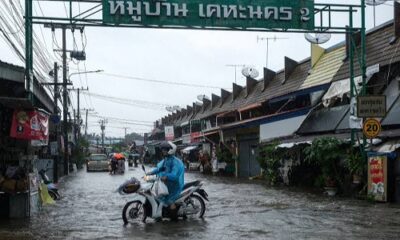




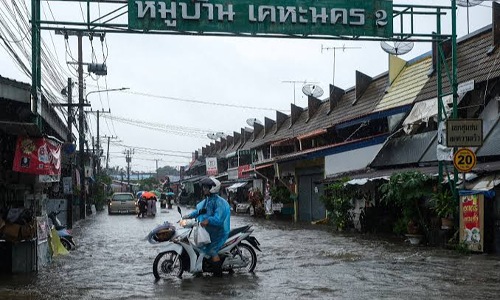
Heavy rains have triggered severe flooding across parts of Bangkok, Thailand, forcing nearly 4,900 residents to evacuate to shelters as floodwaters swept through roads and residential areas.
The flooding has disrupted movement across parts of the Thai capital, with motorists and pedestrians forced to navigate submerged roads and seek alternative routes.
SEE ALSO: NAFDAC Warns Nigerians As Fake Cowbell Milk Floods Market
According to the Bangkok Metropolitan Administration, about 52,000 households have been affected by the flooding, prompting authorities to declare a flood disaster and intensify emergency response efforts.
Emergency teams have been deployed to assist affected communities and move residents from vulnerable areas to safer locations as water levels rise.
Bangkok is accustomed to seasonal heavy rainfall, but intense downpours can overwhelm drainage systems, particularly in low-lying areas, resulting in widespread flooding and disruption.
Authorities are continuing to monitor affected locations while coordinating evacuations and other emergency measures.
For thousands of residents, the immediate priority remains securing safe shelter and protecting homes and livelihoods as authorities work to manage the situation and restore normal activities once the floodwaters recede.

US President Donald Trump has explained his decision to reject Iran’s latest proposal to reopen the Strait of Hormuz, saying Tehran was seeking an agreement because it was losing revenue.
Speaking to reporters at the White House, Trump said Iran wanted to immediately reopen the strategically important waterway but argued that the proposal was not acceptable to his administration.
“They want to make a deal, and I think that’s fine. I like making a deal, too, but that deal would not be acceptable,” Trump said.
SEE ALSO: How the Strait of Hormuz Attack Could Trigger a Fresh Global Oil Shock
According to the US president, Iran’s push to reopen the strait was driven by the economic pressure it was facing.
“What they want to do is immediately open the Hormuz Strait. Do you know why? Because they are dying,” Trump said.
“You know why they’re dying? Because they have no money coming in, because they get their money from the Hormuz Strait.”
Trump also claimed that the US had established an unprecedented naval blockade against Iran, describing it as “a wall of steel.”
“So they outsmarted themselves. We put up the greatest blockade ever in military history. It’s a wall of steel,” he said.
“And guess what? They don’t have any money now because they wanted to close the strait.”
The Strait of Hormuz is a major global energy shipping route, and disruption to traffic through the waterway has significant implications for international oil markets and countries that depend on energy imports.
Trump’s remarks came amid continued tensions between Washington and Tehran over the reopening of the strategic waterway and negotiations involving Iran.
International News
‘Another Oil Shock Is Coming’ — Badenoch Calls for North Sea Drilling Amid Middle East Supply Disruptions

Conservative Party leader Kemi Badenoch has warned that another global oil shock could be looming amid disruptions to key energy infrastructure and shipping routes in the Middle East.
Badenoch made the warning in a post on X on Sunday, September 20, while pointing to the recent drone attack on Saudi Arabia’s East-West oil pipeline, restrictions affecting the Strait of Hormuz and threats to shipping around the Red Sea.
“Saudi Arabia’s East-West oil pipeline has been damaged by drone attacks. The strait of Hormuz is restricted, Houthi bandits threaten shipping routes into the Red Sea. Another oil shock is coming,” Badenoch wrote.
SEE MORE: Middle East Crises Pump Fuel Prices Upwards with Attacks on Iran, Saudi Arabia
She criticised the UK government’s handling of the situation and argued that Britain should increase domestic oil and gas production.
“Yet our Prime Minister and his Cabinet are behaving like a flock of ostriches, heads buried so deep in the sand they could strike oil themselves,” she added.
“The answer is simple: DRILL OUR OWN OIL AND GAS IN THE NORTH SEA.”
Saudi oil pipeline hit by drone attack
The warning comes after Saudi Arabia’s critical East-West oil pipeline was damaged in a drone attack earlier this month.
The 1,200-kilometre pipeline, operated by Saudi Aramco, transports crude oil across Saudi Arabia to the Red Sea port of Yanbu, providing an alternative export route when shipping through the Strait of Hormuz is disrupted.
Saudi officials said the September 11 attack involved drones coming from Iraq. No group had claimed responsibility for the attack in initial reports.
A subsequent Reuters analysis of satellite imagery found that three pumping stations, rather than two previously identified, had been damaged.
Industry sources disclosed that repairs could take between five and six weeks, although partial operations could resume sooner.
The pipeline had been carrying around 4 million to 5 million barrels of crude oil per day, equivalent to approximately 4% to 5% of global oil supply. Its shutdown has therefore raised concerns about additional pressure on already-disrupted global energy supplies.
The attack also affected Saudi oil exports.
Reuters reported on September 18 that Saudi Aramco had informed at least two European refining customers that they would receive no Saudi crude deliveries in October, following the pipeline disruption.
Hormuz and Red Sea disruptions
The pipeline attack has occurred against the backdrop of continuing disruption around the Strait of Hormuz, a major route for global oil shipments.
The East-West pipeline had become particularly important because it allowed Saudi Arabia to move crude to the Red Sea without relying entirely on the Strait of Hormuz. Reuters reported that the pipeline had served as a major alternative route while the strait was largely shut by the ongoing conflict.
Shipping through the Red Sea is also facing renewed security concerns following advances and attacks by Yemen’s Iran-aligned Houthi movement.
According to report on September 17, there is continued tensions involving the Houthis and Saudi Arabia were adding to concerns over regional energy infrastructure and shipping.
Earlier today, there are fresh Houthi claims of missile and drone attacks targeting strategic sites in Riyadh, with the developments contributing to renewed pressure on Saudi and Gulf markets.






Yenagoa Hosts NCDMB 2026 Content Forum

IPO: ADF Opens Wealth Creation Pathway for 2m Vulnerable Nigerian Women

2027: Tinubu Will Beat Atiku, Obi by Wide Margin, Says Bwala

‘Dem Dey Use Stick Dey Flog Women’ — Nigerians in India Camp Cry Out

2027: I’ll Bring Petrol Price Down to ₦300, Says Donald Duke
2027: INEC Must Prove Nigerians Wrong on Election Credibility — Donald Duke

Trump’s Family Unveils New Cryptocurrency Platform

Senate Denies Receiving Petitions Against Tinubu’s Ambassadorial Nominees

Dangote Cement Lights Up Benue Host Communities With CSR Initiatives

Reps Recommend 3-year Jail Term For Aviation minister

Tems Sets New Record On Billboard Hot 100 Chart
