Connect with us

Business

Emefiele Confirms Repayment Of 70% Loan Taken By Dangote To Build Refinery

Published

on

Emefiele Confirms Repayment Of 70% Loan Taken By Dangote To Build Refinery
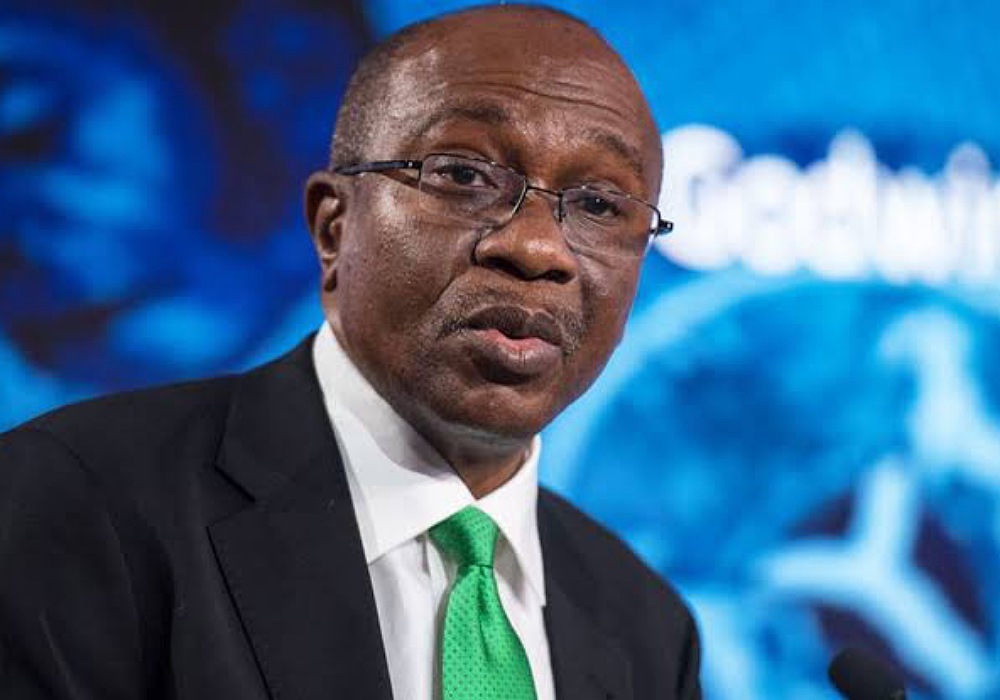
 

Godwin Emefiele, the Governor of the Central Bank of Nigeria, has revealed that the Dangote Group has effectively reimbursed 70 percent of the loans granted by the apex bank for the development of its oil refinery.


Emefiele disclosed this during the commissioning of the refinary held today, May 22.


He explained that the majority of the project’s commercial loan portion was financed by domestic banks, with the remaining funds being provided by foreign banks.


He further revealed that the Central Bank of Nigeria facilitated the project by contributing approximately N125 billion to cover domestic currency requirements and ensuring the availability of foreign exchange (FX) to cover payments for imported equipment.


In his words, “We have it on good authority that the Dangote Group has paid off some portion of these commercial loans even before this commissioning today,” Emefiele said.


“Today, total loans outstanding have dropped from over $9 billion when this project started to N2.7 billion. This reflects the astute credit worthiness and commercial capability of the group and its chairman, Alhaji Dangote.


“I must at this juncture appreciate all the participating local Nigerian banks, who did not only partner with the project through effective financing but were keenly aware of the importance of the project for our nation.


“They provided immense support and exceptional understanding, even when interest payments and principal repayment had fallen due.”

Business

NMDPRA Licenses LCFE for Petroleum Liquids Trading

Published

on

The Nigerian Midstream and Downstream Petroleum Regulatory Authority (NMDPRA) has licensed the Lagos Commodities and Futures Exchange (LCFE) to be facilitating the trading and clearing of petroleum liquids.

Expectations are that the development would deepen price discovery, transparency and investment in Nigeria’s energy market.

The approval provides LCFE with the regulatory foundation to establish a structured marketplace for petroleum liquids, linking the physical petroleum market with Nigeria’s capital market through regulated trading, clearing and settlement infrastructure.

The licence was unveiled in Abuja on Tuesday at a stakeholder event attended by senior representatives of the NMDPRA, the Securities and Exchange Commission (SEC), S&P Global Ratings, the Central Securities Clearing System (CSCS), Alliance Law Firm, and other capital and energy market operators.

Already, no fewer than ten petroleum liquid traders have committed to participating in the exchange, providing an initial pool of market participants for the development of the new trading ecosystem.

READ ALSO: NUPRC Dispels Recruitment Rumours

At the event, the Managing Director and Chief Executive Officer of LCFE, Akin Akeredolu-Ale, said the approval marked a defining moment for Nigeria’s commodities market, noting that the infrastructure required to support petroleum liquids trading was falling into place.

He said, “The issuance of this licence marks a defining moment for Nigeria’s commodities market. It gives us the regulatory foundation to bring petroleum liquids into a transparent, structured, and technology-enabled marketplace, connecting the physical energy market with Nigeria’s capital market.”

Akeredolu-Ale pointed out that the emerging market architecture would incorporate technology-enabled trading, two-way quotations, contract trading and settlement, as well as licensed collateral managers to strengthen oversight and risk management.

The development comes as Nigeria’s petroleum industry undergoes significant structural changes following the implementation of the Petroleum Industry Act (PIA), full deregulation of the downstream market and the commencement of operations at the Dangote Petroleum Refinery and Petrochemicals (DPRP).

On his part, the Chief Executive of NMDPRA, Rabiu Umar, noted that the authority’s priority was to create a predictable, equitable and transparent regulatory environment capable of attracting investment and supporting sustainable growth in the energy sector.

According to him, the PIA, market deregulation and the emergence of large-scale domestic refining capacity have fundamentally altered Nigeria’s position in the global energy landscape.

Also speaking, the Director-General of SEC, Dr Emomotimi Agama, commended LCFE for pursuing the initiative, describing it as a transformative opportunity for Nigeria’s commodities and capital markets.

On her part, S&P Global Ratings’ Managing Director, Africa Research & Analytics and Country Head, South Africa, Samera Mensah, stressed the importance of credible market infrastructure, transparent pricing benchmarks and credit ratings in building investor confidence.

She added that S&P’s reclassification of Nigeria from a frontier market to an emerging market aligns with the Federal Government’s target to expand the economy to $1tn.

Similarly, the Division Head, Business Services & Client Experience at CSCS, Onome Komolafe, assured stakeholders that the financial market infrastructure provider would support the new market through its depository, clearing and settlement capabilities, including digital asset recording.

In his remarks, the Founder and Managing Partner of Alliance Law Firm, Uche Obi, described the licence as a major legal and regulatory milestone that underscores the regulatory and institutional capacity backing the platform.

Market watchers have described the NMDPRA approval as a landmark step in LCFE’s broader vision to transform Nigeria’s commodities landscape and position the exchange as a premier energy trading hub in Africa.

Continue Reading

Business

NNPC/Shell Vision First Initiative Impact over 10,000

Published

on

The Vision First initiative of the Nigerian National Petroleum Company Limited (NNPC) and Shell Nigeria Exploration and Production Company Limited (SNEPCo) has continued to impact lives across Nigeria with more than 10,000 people benefitting from outreaches since its inception in 2022.

The latest outreach holds this week in Badagry Local Government Area of Lagos State.

“Vision First is more than an outreach programme—it is a promise. A promise that quality healthcare should not be limited by geography, income, or circumstance,” SNEPCo Managing Director Ronald Adams said in an address read by General Manager Corporate Relations, Abubakar Ahmed at the opening ceremony yesterday.

ALSO READ: Africa Needs More Refineries to Complement DPRP — Lokpobiri

Vision First which is part of the Health-in-Motion programme of NNPC/SNEPCo, takes eyecare to underserved communities, with the health team also providing cardiovascular screening, consultations and treatment for mild and chronic illnesses, laboratory tests and pharmaceutical services and distributing insecticide-treated nets.

Hundreds of people in Badagry and from adjoining communities are attending the 6th edition of Vision First which is being hosted in collaboration with Kolmarg Eyesight Foundation, the Lagos State Ministry of Health, and Badagry Local Government Council.

Ron said: “As we celebrate the impact of this outreach, let us remember that behind every consultation, every treatment, and every pair of glasses provided is a human story. It is a mother who can care for her family with confidence, a father who can continue to provide, a student who can see clearly in the classroom, and a child whose future has become a little brighter.”

Chief Upstream Investment Officer, NNPC Upstream Investment Management Services (NUIMS), Olanarenwaju Igandan said in remarks delivered by Advisor, Community Relations Mr. Usman Mohammed Bello: “I urge parents, elders, workers, traders, teachers and all residents to participate actively and encourage others to do the same. Early detection and treatment of health conditions can significantly improve quality of life and prevent avoidable complications.”

Permanent Secretary, Lagos State Ministry of Health, District 5, Dr Asiyanbi Oladapo and Chairman Badagry Local Government Council Babatunde Hunpe commended NNPC and SNEPCo for their longstanding support for the programme. Executive Director Kolmarg Eyesight Foundation, implementing partner of Vision First, Prof. Olukorede Adenuga advised the people to take advantage of the outreach as “a simple intervention can make a profound difference.”

Supported by NNPC and co-venturers, SNEPCo has implemented social investment projects across Nigeria in health, education, and human capital development among others, since its establishment in 1993. The company continues to power progress in Nigeria by efficiently producing oil and gas in deepwater, developing human capital, promoting Nigerian content, and improving lives.


Continue Reading

Business

Europe, Mediterranean Crises Shouldn’t Affect Africa’s Petroleum Price Benchmark – FG

Published

on

The Federal Government, through the Nigerian Midstream and Downstream Petroleum Regulatory Authority, has said crises in Western Europe and the Mediterranean should not automatically determine petroleum product prices in Nigeria and other African countries, arguing that West Africa needs a regional benchmark that reflects its own market realities.

It said West Africa could no longer afford a situation where disruptions in Western Europe or the Mediterranean automatically influence the prices of petroleum products in African markets, even when the factors behind those disruptions have little or nothing to do with the region.

The Authority Chief Executive, Rabiu Umar, said this on Tuesday at the second West Africa Refined Fuel Market Conference in Abuja, where regulators, refiners, traders, financiers and other industry stakeholders renewed efforts to establish a transparent regional pricing system for refined petroleum products.

The conference is jointly hosted by the Authority, S&P Global Commodity Insights and West Africa Regulator Forum, with the theme: “Funding West Africa Infrastructure & Distribution to Create a Transparent Market for Regional Price Benchmarks.”

The conference is aimed at moving the region from discussions about price discovery to the actual development of a functioning petroleum trading and pricing hub.

Umar said the continued use of external price references meant that petroleum consumers in Nigeria and other West African countries could be affected by disruptions that occurred thousands of kilometres away and were unrelated to the fundamentals of their own markets.

READ ALSO: Oil Prices Jump Further as Hopes for Hormuz Deal Fade

He said the situation was no longer sustainable, particularly as West Africa’s refining landscape was changing rapidly and Nigeria was emerging as a major supplier of refined petroleum products to the region.

The NMDPRA boss, who also doubles as the WARF Chairman, said, “If we look at the refining capacity on the continent and how it has been increasing, it simply doesn’t make sense that if there is a problem in Western Europe or in the Mediterranean, it is going to affect our pricing in Africa.

“There may be issues which have absolutely nothing to do with what is going on here. And prices should be determined on the basis of geopolitical issues, demand and supply, and complexities within the market. So we feel this is a great opportunity for Africa, and West Africa in particular, to really have something that is specific to us. If we have a problem, it is reflected in the pricing. If we don’t have a problem, then we are to be shielded to an extent, I would say, from what is going on in other locations.”

The call comes against the backdrop of renewed volatility in international energy markets following the crisis around the Strait of Hormuz, one of the world’s most important oil shipping routes. The latest tensions around the strait have pushed Brent crude sharply higher, with the benchmark reaching above $90 per barrel at points in recent days before easing as markets weighed diplomatic efforts between Iran and Oman.

That distinction, he argued, is at the heart of the campaign for a West African reference market.

He said, “If we look at the refining capacity on the continent and how it has been increasing, it simply doesn’t make sense that if there is a problem in Western Europe or in the Mediterranean, it is going to affect our pricing in Africa. There may be issues which have absolutely nothing to do with what is going on here in the continent. But prices are determined on the basis of geopolitical issues, demand and supply, and complexities within the market. So we feel this is a great opportunity for Africa, and West Africa in particular, to really have something that is specific to us.

“If we have a problem, it is reflected in the pricing. If we don’t have a problem, then we are shielded to an extent, I would say, from what is going on in other locations.”

He explained that the roadmap required reliable financing, refinery capacity, stronger logistics and storage networks, interconnected ports, roads, rail and pipelines, harmonised product regulations and standards, transparent and comparable market data, stronger cross-border cooperation and the mobilisation of regional and international capital.

“A reference price is not by itself a trading hub. A conference is not a market. Regulatory cooperation, important as it is, cannot substitute for physical infrastructure, commercial liquidity, market information, and operational excellence on which a credible trading hub must stand. Africa possesses resources. Africa possesses demand. Africa possesses refining capacity, and that is also expanding. What we must now build is the infrastructure that efficiently connects all three”, he added.

Umar also urged West African countries to stop duplicating infrastructure and instead develop assets based on their comparative advantages.

He said, “This is also why we must think regionally. Not every country needs to replicate every asset that we have. So for example, Nigeria today stands as one of the most tanked countries. If you look at the number of tanks we have versus the consumption that we have, there is absolutely no point.

“If you look at Europe, for example, our region is a trading hub for oil and gas, for all the refined products. Why? The other countries could also have invested in similar infrastructure, which would have led to duplication. The most important thing is what each country’s specific advantage is relative to the region, so that way everybody is doing what they are really, really good at. And this is why we must think regionally. We have to think regionally.”

He also identified differences in petroleum product specifications across countries as another major obstacle to cross-border trade. According to him, varying specifications make it difficult to move products seamlessly from one West African market to another and undermine the development of a single regional market.

“We also have the second issue of what is the quality of products. What is the specification of products from one country to another? We cannot have from here to Nigeria, to Ghana, to the United Republic, even our right-next-door neighbours having different products and specifications. What that does is that it makes trading across the border very, very difficult.”

Umar said regional integration would therefore help optimise existing infrastructure, reduce duplication and direct scarce capital towards projects capable of delivering the greatest regional impact.

“Capital will go where projects are bankable. Risks are understood, regulation is predictable, and returns can be sustained. Our responsibility as governments, regulators, and players is therefore to create the conditions that allow capital to move confidently. For investors, predictability matters. For operators, efficiency matters. For consumers, affordability matters, and reliability. For regulators, safety, integrity, competition, and compliance matter. A sustainable market must accommodate all four”, he stated.

The NMDPRA boss further identified reliable market data as a critical requirement for credible regional price discovery.

He said a benchmark could not be trusted if it was based on an opaque market with limited transactions and unreliable information on supply, demand, inventories and product availability.

“A credible benchmark cannot emerge from an opaque market. Price discovery requires sufficient transactions, willing participants, reliable reporting, and confidence that market information indeed reflects actual commercial activity.

“We must therefore develop a culture in which reliable information on supply, demand, inventories, infrastructure, availability, and legitimate transactions can support better commercial decisions and effective regulation.”

He said the West Africa Regulators Forum had a major role to play in creating an environment where different national markets could operate with sufficient regulatory compatibility to facilitate cross-border trade.

“We do not need every country to have identical laws. We need sufficient compatibility to allow trade to occur safely, transparently, and efficiently. And this is the difference, really, between regulatory uniformity and regulatory integration.”

Umar said the regional roadmap beyond 2026 would focus on five key areas, including improving physical market mobility, financing strategic infrastructure, optimising product standards and regulations, strengthening market data and transparency, and building a complete trading ecosystem.

He said a mature regional market would require refiners, traders, terminal operators, ship owners, marketers, banks, insurers, commodity exchanges, data providers and regulators to operate within an environment of commercial trust.

“And when these elements come together, the benchmarks will learn to be imposed. The market itself will produce the benchmark,” he said.

He said the ultimate objective was to transform West Africa from a region that largely consumes petroleum products priced elsewhere into an increasingly influential centre of price discovery, trading, investment and value creation.

“In 2025, we developed the roadmap. In 2026, we must finance and execute it. In the years ahead, our major success must be a West African market in which products move more efficiently, supply is more secure, investors have greater confidence, regional trade expands, and prices increasingly reflect the fundamentals of our own markets.”

Courtesy – The Punch

Continue Reading

Copyright © 2022. Biztellers, powered by Alphaxristi.

0
Would love your thoughts, please comment.x
()
x