
Business
Empowerment: 30 Host Community Youths Graduate from Dangote’s Training Programme

… As Ibese Plant Donates Solar-powered Borehole
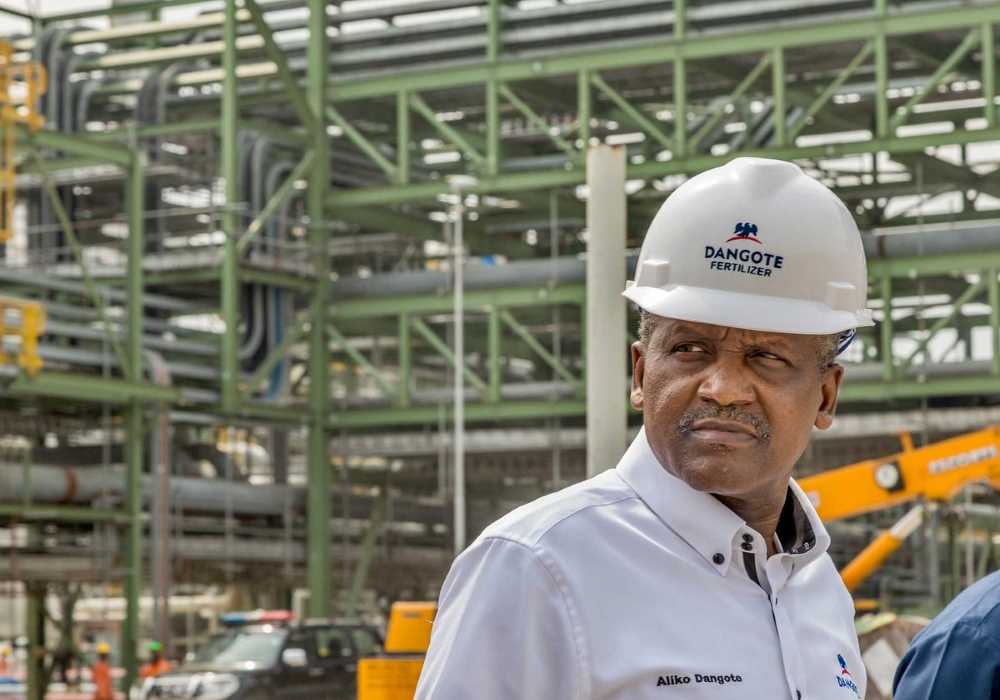
No fewer than 30 youths from communities around Ibese in Ogun State have graduated from a training programme put together by Dangote Cement Plc, Ibese Plant as a way of transforming society and providing employment opportunities for the youths.
The empowerment programme which afforded the youths the opportunity to be trained on domestic electrical installation, wiring and maintenance is aimed at accelerating social and economic development of host communities and in line with the United Nation Sustainable Development Goal.
In the same vein, the Cement plant commissioned a solar-powered Borehole in Abule Oke in Yewa North Local Government, Ogun State in fulfilment of its promises made to the communities during its Community Day celebration last December.
The youths were also presented with start-up tools for immediate commencement of their vocation after the training which was put in place by the Ibese Plant in partnership with Industrial Training Fund (ITF).
Addressing the beneficiaries at the closing ceremony of the programme, the Dangote Cement, Ibese Plant Director, Azad Nawabuddin, described the empowerment initiative as a demonstration of the Company’s commitment to the continued socio-economic development of the host communities in line with the Community Development Agreement signed in 2022.
According to him, the Company’s social development strategy “does not support giving people fish to eat but focuses on teaching people how to fish saying the Company was being proactive by engaging the communities members, especially the youths with so much energy and vigour. “Rather we empower them to be self-sufficient and self-reliant”.
Azad reeled out past empowerment initiatives of the Plant aimed at reducing unemployment gaps in the local communities and ultimately improving the standard of living, which include training in catering and event management, tailoring and fashion design and Acutherapy, from which 275 indigent youths have so far benefitted.
He commended the beneficiaries for their determination and zeal to learn new skills to better their lives, and urged them to apply the technical and entrepreneurial knowledge garnered during the training in building sustainable businesses, while committing to continued development of their skills and expertise in line with global trend.
Deputy Area Manager, Industrial Training Fund Abeokuta Area Office, Funmi Coker, commended Dangote Cement Plc Ibese Plant for devoting resources to develop the capacity of the Youths in relevant trade areas to make them useful for themselves and their immediate communities. She further appreciated the Company’s consistent collaboration to achieve the Nation’s training objectives, while charging other corporate bodies to follow suit.
Dayo Ogunyinka, Vice Chairman, Community Joint Consultative Committee also expressed delight for the Company’s annual empowerment initiative.
He enjoined the beneficiaries to see the gesture as a life changing opportunity with the capability to take them to the pinnacle of success and ensure that the starter packs received are used for the intended purpose.
One of the beneficiaries, Elegbede Ganiyat, from Iboro host community appreciated Dangote Cement for considering it worthy to invest in the development of the youths and described her experience during the training as enriching and everlasting. She assured that the beneficiaries have been well prepared to calve a niche for themselves in the electrical services market in their locality and beyond.
Meanwhile, the Cement Company has handed over a multi-million naira solar-powered bore hole to the people of Abule-Oke, a host community at a ceremony witnessed by the Olu of Imasayi, Oba Lukman Kuoye; the Baale of Abule Oke, Chief Ramoni Akinsanya other community leaders, youths, women and other indigenes.
Speaking during the hand-over, the Plant Director, Azad Nawabuddin emphasized the essentiality of water to the survival of humans and advised the community to make good use of the borehole facility and put up a framework to ensure its security, maintenance and sustenance as their equity contribution to the project.
The Olu of Imasayi commended the Management of Dangote Cement for “being the transformer illuminating the entire Yewaland’’, while acknowledging the commitment of the Company to improving the standard of living of people in its host communities. He charged the people of Abule Oke to ensure that the borehole facility is sustained such that coming generations can benefit from the project, as only the judicious use of the facility can encourage the Company to invest more in infrastructural developments in the community.
The people of Abule Oke were full of gratitude to the Company for the provision of the water facility, as expressed by the youth leader, Mr. Rafiu Akinola who declared that the intervention was timely and value adding, especially considering the fact that it is powered by Solar thus saving the community of the cost of fueling and maintenance of generator.






A prominent royal father has mounted a spirited defence of the Dangote Petroleum Refinery and Petrochemicals Limited (DPRP), dismissing criticisms of the Initial Public Offering (IPO) and challenging detractors to replicate its scale by raising the estimated $22 billion required to build a competing refinery.
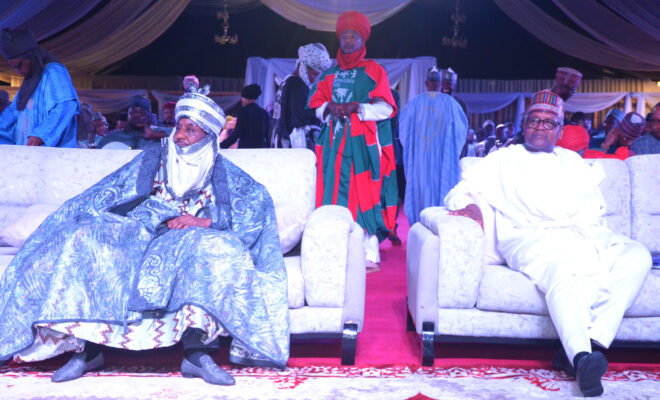
The Emir of Kano, His Royal Highness Khalifa Muhammadu Sanusi II, on Thursday made the remarks during the DPRP’s “People’s IPO” roadshow in Kano, where he passionately advocated broader Nigerian participation in the IPO as a pathway to wealth creation and economic inclusion.
Addressing a gathering of investors, business leaders, professionals and members of the public, the former Central Bank Governor described the refinery as one of the most significant industrial projects in Africa’s history and urged Kano residents to seize the opportunity to become shareholders.
According to the Emir, equity ownership represents one of the most effective means through which ordinary citizens can participate directly in national economic growth and build long-term financial security.
“Kano is a commercial city with a long tradition of trade, investment and entrepreneurship. Our people understand business, and they should understand the value of owning shares in productive enterprises,” he said.
READ ALSO: The Soludo, Obi Spat – When Brothers Fight to the Finish
Drawing from personal experience, Sanusi recounted his interactions with Aliko Dangote during his banking career in the late 1990s when Dangote Group was evolving from a trading company into a manufacturing powerhouse.
The Emir revealed that many observers at the time questioned Dangote’s strategy of deploying short-term financing to support long-term industrial investments. However, he noted that what critics considered risky was actually a demonstration of strategic foresight and a deep commitment to transforming Nigeria’s productive capacity.
Recalling the philosophy that drove the company’s industrial expansion, the monarch said the vision was anchored on a simple principle: producing domestically what Nigerians consume daily instead of relying excessively on imports.
“Somebody needs to produce the petrol for your cars, somebody needs to produce the cement for your houses, somebody needs to produce the food that you eat. We are importing these things from Asia, Europe and America. Our strategy is to produce those things here,” he stated.
The Emir described the Dangote Refinery as a game-changing investment that could fundamentally alter the structure of the Nigerian economy by reducing dependence on imported petroleum products and preserving foreign exchange.
Drawing on his experience at the nation’s apex bank, Sanusi explained that Nigeria had historically earned foreign exchange through crude oil exports only to expend a substantial portion of it importing refined fuel.
“What Aliko has done is disrupt that model,” he said.
According to him, the emergence of a world-class refinery on Nigerian soil positions the country not merely as an exporter of crude oil but as a major supplier of refined petroleum products to regional and international markets.
As evidence of the refinery’s growing global relevance, he cited reports that European airlines had sourced aviation fuel from the facility during recent supply disruptions linked to tensions around the Strait of Hormuz, underscoring its ability to compete effectively on the global stage.
Sanusi also addressed concerns raised by critics who have accused the refinery of seeking market dominance. The monarch firmly rejected such claims, arguing that competition remains open to anyone willing to undertake the financial and operational challenges associated with large-scale refining.
“There is no monopoly if a monopoly is not protected by law,” he declared.
“Anybody who wants to build a refinery, anybody who wants to raise $22 billion, invest and go through what Aliko went through is welcome to do so.”
The comment drew applause from participants at the roadshow, many of whom viewed the statement as a direct response to persistent criticism of the refinery’s market influence.
The Emir stressed that Nigeria’s economic future depends on encouraging more investments in productive industries capable of creating jobs, generating exports and strengthening local value chains. He warned against a culture that prioritises speculation and the accumulation of overseas assets at the expense of domestic industrial development.
He therefore described the Dangote Refinery IPO as a historic opportunity for millions of Nigerians to own a stake in one of Africa’s most strategic industrial assets.
“It is the shareholders who own it. It is the shareholders who take the returns. It is the shareholders who own the profits,” he said.
While encouraging broad participation, the respected traditional ruler advised prospective investors to approach the market responsibly. He urged citizens to invest only funds they could afford to commit for the long term and not resources earmarked for essential family needs.
In his closing remarks, Sanusi called on Kano residents and Nigerians generally to embrace the capital market and take advantage of the IPO, arguing that widespread ownership would democratise wealth generation and deepen public participation in national economic development.
He said broader participation in the Dangote Refinery IPO would not only reward investors financially but also strengthen local ownership of critical national infrastructure, expand financial inclusion and ensure that the benefits of industrialisation are shared more widely across the country.
“The opportunity is here. The question is whether you will participate,” the Emir told the audience.
The DPRP IPO roadshow, tagged “Kano Grand Homecoming,” brought together leading figures from Nigeria’s business, investment and financial sectors, including Aliko Dangote, President of Dangote Industries Limited; Bismarck Rewane, Managing Director of Financial Derivatives Company; Adetilewa Adebajo, CEO of CFG Advisory; and other capital market stakeholders.
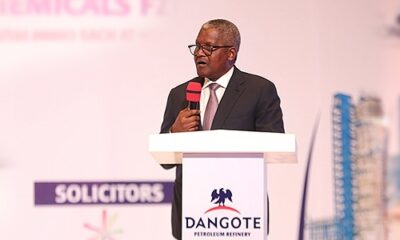
Photo Caption – From Left: Emir of Kano, His Highness, Muhammadu Sanusi II (Special Guest of Honour & Chairman); President/CE, Dangote Industries Limited, Aliko Dangote, at the Dangote Petroleum Refinery IPO Roadshow tagged “Kano Grand Homecoming” in Kano on Thursday, September 17, 2026.

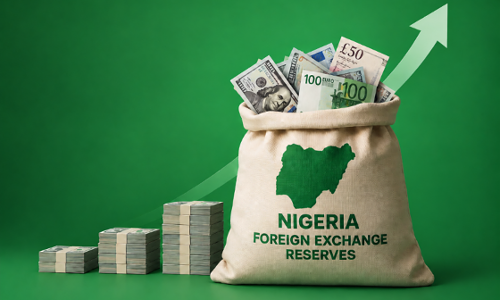
Nigeria’s gross foreign exchange reserves have risen to $54.61 billion in 2026, representing a $12.76 billion increase from the $41.84 billion recorded a year earlier.
The latest figure, recorded as of September, represents a 30.5 per cent year-on-year increase and continues a steady accumulation of Nigeria’s external reserves that became more pronounced from the middle of the year.
But how did Nigeria build up such a substantial reserve position within months?
Available data and analysis point to a combination of stronger oil-sector earnings, increased foreign capital inflows, diaspora remittances, non-oil export proceeds and changes in foreign exchange and monetary management.
Oil production and earnings
One of the factors supporting the improvement has been stronger crude oil production.
SEE ALSO: Nigeria Beats 2026 Foreign Reserves Target, Hits $53.1b
Analysis of Central Bank of Nigeria (CBN) data by Nairametrics showed that reserves stood at $49.80 billion on June 1 before crossing the $50 billion mark on June 4. By July 3, the balance had risen to $51.53 billion and subsequently moved above $52 billion in August.
Earlier CBN data analysis also showed that crude oil and condensate production averaged about 1.68 million barrels per day in April, 1.73 million barrels per day in May and 1.72 million barrels per day in June, before standing at about 1.68 million barrels per day in July.
The stronger production has coincided with higher oil-sector revenues. Nairametrics reported that NNPC revenue rose from N2.57 trillion in January to N2.68 trillion in February and N2.77 trillion in March, before jumping to N4.97 trillion in April. It subsequently stood at N4.34 trillion in May, N4.39 trillion in June and N3.09 trillion in July.
Aminu Gwambe, President of the Association of Bureaux De Change Operators of Nigeria, also attributed part of the reserve improvement to higher crude oil prices and increased production.
According to Gwambe, reduced volatility in the Niger Delta and lower crude oil theft have helped improve production and, consequently, foreign exchange receipts.
Foreign capital inflows surge
Another major development has been the increase in foreign capital entering Nigeria.
Nigeria attracted $10.37 billion in foreign capital in the first quarter of 2026, representing an 83.8 per cent increase from the $5.64 billion recorded in the corresponding period of 2025, according to National Bureau of Statistics data.
Portfolio investment accounted for the overwhelming majority of the inflows, reaching $9.86 billion, or 95.09 per cent of total capital imported during the quarter.
The banking sector attracted $7.55 billion, representing 72.79 per cent of total capital imported, while the financing sector received $2.43 billion.
The United Kingdom was the largest source of the foreign capital, contributing $5.08 billion, followed by the United States with $3.18 billion and South Africa with $983.83 million.
The increase in portfolio inflows has been linked by analysts to improved conditions in Nigeria’s foreign exchange market and the attractiveness of Nigerian financial assets and yields.
However, the composition of the inflows is significant because portfolio investments can be more easily reversed than longer-term foreign direct investment.
Remittances and non-oil exports
The reserve buildup has also been linked to stronger diaspora remittances passing through official channels.
Gwambe pointed to increased remittance flows following Nigeria’s foreign exchange reforms, as well as growing dollar liquidity through licensed fintech channels.
Higher non-oil export proceeds have also contributed to the country’s foreign exchange earnings, while improvements in fiscal and monetary management have supported the broader accumulation.
These sources are important because they provide foreign exchange beyond crude oil, although their contribution must be viewed alongside the much larger role still played by oil and financial-market inflows.
Foreign investors show greater interest
Chief Executive Officer of the Centre for the Promotion of Private Enterprise, Dr Muda Yusuf, linked part of the improvement to stronger foreign investor confidence and increased portfolio inflows.
Yusuf said, “It takes a lot of confidence in an economy for foreign inflows to come in,” while also pointing to improving export performance.
A source at the CBN disclosed that interest from foreign investors in Nigerian government securities had increased, with the apex bank receiving enquiries from foreign investors seeking information about Nigeria’s long-term bonds.
The development suggests that some investors are showing greater interest in holding Nigerian financial assets, although the extent to which such inflows remain in the country over the longer term remains uncertain.
FX and monetary reforms
Changes in Nigeria’s foreign exchange management have also played a role in the changing external position.
Analysts have linked stronger inflows partly to reforms aimed at improving liquidity and reducing distortions in the foreign exchange market.
The improvement in reserves has occurred alongside a period of relative stability in the naira.
The currency closed at N1,329.50/$ on September 15, compared with N1,328/$ on September 10, with the naira remaining within a narrow range over four consecutive trading sessions.
The stronger reserve position gives the CBN a larger external buffer with which to respond to temporary foreign exchange pressures and manage excessive volatility.
The numbers show how quickly reserves have accumulated
The pace of accumulation has accelerated during 2026.
Reserves stood at $50.03 billion in March and reached $49.80 billion on June 1. They crossed $50 billion on June 4 and reached $51.53 billion by July 3.
By August 14, reserves had risen to $52.32 billion.
They then climbed to $53.90 billion on September 1, $54.08 billion on September 3 and finally $54.61 billion on September 14.
That means Nigeria added about $707.75 million to its reserves during the first 14 days of September alone, while the balance increased by about $2.28 billion between August 14 and September 14.
The current position is also above the approximately $51.04 billion reserve level projected by the CBN for the whole of 2026.
Sustainability remains a concern
Despite the sharp increase, analysts have cautioned that the composition of the reserves matters as much as the headline figure.
A former Access Bank Treasury official noted that it is difficult to attribute the buildup to one particular source because several channels contribute to reserve accumulation.
Portfolio inflows can strengthen Nigeria’s foreign exchange liquidity, but they can also leave quickly when global interest rates, exchange-rate expectations or investor sentiment change.
Similarly, oil remains vulnerable to fluctuations in international crude prices and disruptions to domestic production.
Olu Olajemgbese of the University of Abuja therefore argued that a more sustainable improvement would require a broader mix of foreign exchange sources, including non-oil exports, remittances and productive foreign direct investment.
Gwambe has also raised concerns about the continuing gap between the official and parallel foreign exchange markets.
“My worry is on the inherent gaps between the official market and the parallel market rates,” he said.
He called for greater integration of Bureau de Change operators into the formal foreign exchange system and increased participation in the market.
The persistent war between the United States and Iran, and the recent attacks on Saudi Arabia’s oil infrastructure continue to mount pressure on the global crude oil market, pushing prices northwards.
While the hostilities have disrupted crude shipments, the attacks on Saudi Arabia’s oil infrastructure by Iran-backed Houthis have added a new vent to an already longsuffering global energy market.
With the escalation resulting in higher crude prices, Nigeria would see herself earning more from her crude exports, while the citizens would bear the brunt, as she imports refined products and sells at commercial rates, owing to the deregulation of the market.
Already, petrol prices have climbed to N1,500/litre in some parts of Nigeria, with Lagos being the cheapest at N1,395/litre.
Cries from businesses and households crescendoed this week when pump prices of petrol were jacked up with no hope of an imminent fall.
For consumers around the world, the consequences are already becoming visible.
Higher crude prices feed into the cost of petrol, diesel, aviation fuel, transportation and industrial production.
Diesel is particularly important because it powers trucks, generators, agricultural machinery and other equipment across many economies.
Brent crude, the international benchmark, climbed above $108 a barrel yesterday after Saudi Arabia suspended operations on its strategic East-West Pipeline following attacks in the Riyadh and Madinah regions.
The pipeline is a critical alternative route for Saudi crude, particularly at a time when shipments through the Strait of Hormuz have been severely disrupted by the conflict. Although prices eased slightly on Tuesday, after new data showed an unexpected rise in United States crude inventories, the retreat did little to remove the underlying supply concerns. Brent, which Nigeria’s crude is benchmarked on, gained more than $3 in the previous session.
According to experts, Nigeria, as a major crude oil producer, stands to receive higher export earnings when international oil prices rise, provided production and export volumes are maintained.
Higher prices could strengthen government oil revenues and foreign-exchange inflows. But the benefits, experts note, are not automatic.
READ ALSO: Gas Industry Must Commercialise Methane – NLNG
The country also imports refined petroleum products and remains exposed to international energy prices through the wider economy.
Higher crude prices can, therefore, improve government revenue while simultaneously increasing costs for businesses and households.
The impact will also depend on domestic crude production, refinery output, exchange-rate movements and the volume of oil Nigeria actually exports.
Reuters reported that Saudi Arabia had been rerouting roughly four million barrels per day through the pipeline, equivalent to about four per cent of global oil supply. The closure therefore immediately raised concerns among traders about how much crude could continue reaching international markets if the disruption persists.
The crisis has also affected Saudi Arabia’s Yanbu export hub.
Oil loadings at Yanbu were suspended following the attack, while Saudi Arabia reduced shipments to Europe. The development sent physical crude prices sharply higher as refiners competed for alternative supplies.
That is where the current oil crisis differs from an ordinary price rally.
The market is not reacting to one isolated disruption. Several important links in the global oil supply chain are being threatened at the same time.
The Strait of Hormuz, one of the world’s most important oil chokepoints, has experienced a dramatic reduction in traffic since the war began.
Before the conflict, more than 20 million barrels of oil and petroleum products passed through the strait each day, representing more than one-fifth of global oil consumption.
With shipping through the waterway heavily disrupted, Saudi Arabia had increasingly turned to its East-West Pipeline as a way of keeping exports moving.
That alternative has now been hit.
The Red Sea route is also under pressure. Iran-aligned Houthi forces in Yemen have intensified attacks around the Red Sea and the Bab el-Mandeb, another strategic maritime passage connecting the Red Sea to the Gulf of Aden.
The result is a complicated squeeze on global energy supplies: the traditional route through the Strait of Hormuz is severely disrupted, while an important Saudi alternative through the Red Sea is also facing attacks.
The longer this situation continues, the greater the pressure on oil inventories and alternative suppliers.
The International Energy Agency has previously warned that prolonged disruption to Middle Eastern supplies could create a significant global shortfall. The present crisis has, therefore, raised questions about how long strategic stockpiles and alternative routes can cushion the market.
For countries that import large quantities of petroleum products, a prolonged period of crude prices above $100 could therefore translate into renewed inflationary pressure.
For the global economy, the biggest danger is not simply that Brent has crossed $100.
It is that a prolonged conflict could remove more barrels from the market at a time when alternative supply routes are themselves becoming vulnerable.
Yesterday’s fall in crude prices following the unexpected 7.1 million-barrel increase in US crude inventories provided temporary relief. Saudi Arabia has also begun offering additional crude shipments through Oman’s Sohar port, helping to ease immediate fears of a complete supply squeeze. But the fundamental risk remains.
If attacks continue to hit Saudi infrastructure, shipping through the Strait of Hormuz remains restricted and Red Sea routes become increasingly unsafe, the world’s oil market could face a prolonged supply squeeze.
That would make the Middle East conflict not just a geopolitical crisis, but a global economic problem with the price of every barrel increasingly determined by the safety of the roads, pipelines and seas through which it must travel.






‘Another Oil Shock Is Coming’ — Badenoch Calls for North Sea Drilling Amid Middle East Supply Disruptions

Petrol Prices: Arewa Marketers Dispute NMDPRA’s Claim It Has No Pricing Powers

ICAN, Police Move to Finalise MoU on Financial Crime Investigation

Police Probe PCRC Chairman Olaniyan Over Alleged ₦178m Financial Crimes

FRSC Disowns Viral Recruitment Notice, Warns Applicants Against Fraudsters

‘Stock Brokers Have Sweet Mouth’ — Shehu Sani Warns Nigerians on Stock Investments

Trump’s Family Unveils New Cryptocurrency Platform

Senate Denies Receiving Petitions Against Tinubu’s Ambassadorial Nominees

Dangote Cement Lights Up Benue Host Communities With CSR Initiatives

Reps Recommend 3-year Jail Term For Aviation minister

Tems Sets New Record On Billboard Hot 100 Chart
