
Business
EU is Nigeria’s Biggest Trading Partner – Amb Isopi

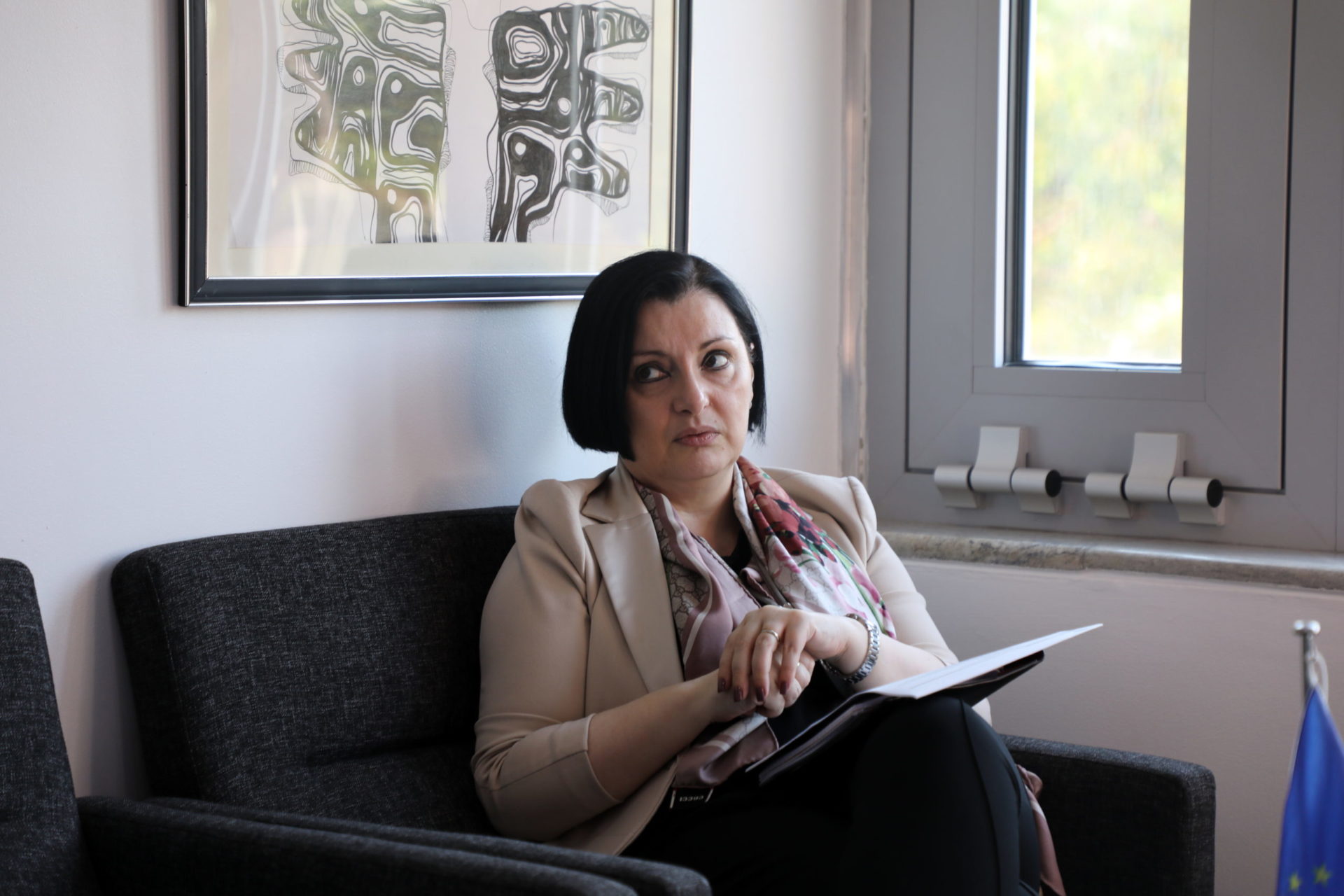
By Edozie Obasi-Eze
The European Union (EU) is Nigeria’s biggest trading partner with the volume of trade between the two partners hitting 28.7 billion euros as of 2021.
Ambassador, EU Delegation to Nigeria, and ECOWAS, Samuela Isopi, made the disclosure in Abuja, during the celebration of Europe Day on Monday.
She said, ”In 2021 the volume of EU-Nigeria trade stood at 28.7 billion euros, an increase of more than 25 percent over 2020, with a trade balance of 6.4 billion euros in favor of Nigeria.”
She highlighted that the EU as a bloc remained Nigeria’s biggest trading partner accounting for more than 20 percent of Nigerian trade with the world.
This, she opined has made the bloc Nigeria’s first partner in Foreign Direct Investment (FDI), with EU companies contributing, together with their Nigerian business partners, to Nigeria’s economic growth, job creation, and wealth generation.
She also averred that the bloc was looking further to strengthening these relations and to help create a requisite atmosphere for the private sector to operate and contribute more to developing the country.
Read Also >> Popoola Commends Access Holdings On Nigeria’s Growth Story
Isopi assured that the EU would continue to work with the Member States, the European Investment Bank, and other EU Development Financial Institutions, as ‘Team Europe’ to ensure that their joint vision is implemented.
She also pledged the EU’s determination to continue working with Nigeria to enhance security, development, and its vision for the future.
For instance, she pointed out that the EU, while backing efforts at bringing back peace in the North-East would support recovery, peacebuilding, and the fight against terrorism and violent extremism, through the Multinational Joint Task Force.
“The bloc,” she said, “would want to work together to strengthen multilateralism, democracy human rights, free and fair trade, and sustainable development.”









With a view to boosting the economy through job creation and technology transfer, the Nigerian government is considering direct government-to-government oil and gas partnerships with her Indonesian counterpart.
The President of the Nigerian-Indonesian Chamber of Commerce and Industry (NICCI), Ishmael Balogun, made the disclosure on Saturday in Lagos adding that the initiative could unlock billions of dollars in investment.
After the Indonesian 41st Trade Expo, which attracted hundreds of Nigerian delegates, Balogun pointed out that it would also deepen bilateral trade and investment.
He said that Indonesia currently buys about $3bn worth of Nigerian crude oil annually, adding that shifting from third-party transactions to direct government-to-government arrangements could unlock investment opportunities in oil exploration and other sectors.
“Indonesia has been buying crude from Nigeria, but they are buying it from a third-party kind of relationship. But this time around, we’re looking at a relationship where they can do a G2G, which opens up a lot of opportunities in exploration,” he said.
READ ALSO: Tinubu Hails EFCC as FBI Commends Nigeria Over International Child Sextortion Crackdown
According to Balogun, direct investment in exploration would generate wider economic benefits for Nigeria beyond the revenue derived from conventional trade.
“If you have an idea of the amount of money that is invested to explore for oil, that means jobs will be created for the common man in Nigeria. There will be knowledge transfer; there will be income that will be earned,” he added.
He described the proposed partnership as a mutually beneficial arrangement capable of attracting Foreign Direct Investment and strengthening economic relations between the two countries.
“Trading is good. Trading is what trading is. You buy, you go. But when it comes to exploration, life changes. And the level of investment we’re talking about is in billions of dollars that affect literally every single body in Nigeria that’s involved,” Balogun said.
He disclosed that more than 25 Indonesian government representatives had visited Nigeria less than a month before the interview to explore opportunities for closer cooperation in the energy sector.
The delegation included representatives of Indonesian state-owned energy company Pertamina, its renewable energy and exploration divisions, as well as the country’s Vice Minister of Foreign Affairs.
Balogun said the delegation met with Nigeria’s Minister of Foreign Affairs and officials of the Nigerian National Petroleum Company Limited (NNPC Ltd) and the Nigerian Upstream Petroleum Regulatory Commission (NUPRC).
He expressed optimism that the engagements would translate into concrete investment agreements and stronger cooperation in the energy industry, adding that both countries had recorded significant growth in bilateral trade over the years, with the value increasing from $2bn in 2020 to $2.7bn in 2021, $2.9bn in 2022 and $4.5bn in 2023.
He said Nigeria had maintained its position as Indonesia’s leading trading partner in Africa since overtaking South Africa in 2020.
Balogun said the chamber also facilitated transactions among its members, valued at more than N1bn annually.
According to him, Nigerian businesses import pharmaceutical products, palm oil, electronics and fast-moving consumer goods from Indonesia, while Indonesian companies source agricultural commodities from Nigeria.
Meanwhile, the Chief Executive Officer of Prime Minister Logistics, Giorgio Enrico Del Celo, said international trade exhibitions provided opportunities for Nigerian businesses to establish connections with potential partners and expand into new markets.

Nigeria’s telecommunications space can boast of more than 1,000 fifth-generation network sites in 2026 from one of the top service providers.
The Chief Executive Officer of Airtel Nigeria, Dinesh Balsingh, made the disclosure on Friday in Lagos, pointing out that the telco has been expanding its infrastructure to meet growing demand for faster mobile connectivity and improve service quality across the country.
Balsingh spoke during the launch of Airtel Open Network, a new feature on the My Airtel Africa app that gives subscribers greater visibility into network performance and a digital channel to report service issues.
It was gathered that the expansion forms part of the company’s broader network investment programme, which has taken its total number of network sites beyond 17,000, following the addition of more than 1,050 sites in the last financial year.
READ ALSO: INEC Chairman Assures on 2027 Elections
The deployment comes as telecommunications operators face increasing pressure to improve network capacity and coverage amid rising demand for mobile data, digital financial services and other internet-dependent activities.
According to Balsingh, the company’s infrastructure investments were aimed at extending connectivity and improving the experience of customers who rely on mobile networks for business transactions, education, communication and other daily activities.
“During the last financial year, Airtel Nigeria added more than 1,050 new sites and has surpassed 17,000 sites nationwide. This year, 2026 alone, Airtel has added more than 1,000 5G sites to date, expanding access to high-speed connectivity across the country,” he said.
Alongside network expansion, the operator is introducing digital tools to improve how it identifies and responds to service complaints.
The newly launched Open Network feature allows subscribers to engage with information about their network experience and submit feedback that could help the company’s technical teams identify the location and nature of connectivity problems.
Balsingh noted that conventional complaint channels, including call centres and physical customer service outlets, sometimes made it difficult to obtain sufficiently precise information about network challenges.
He explained that the digital platform would provide more detailed feedback, helping engineers investigate reported problems and direct attention to areas where improvements were needed.
However, he cautioned that the platform would not automatically repair network faults or eliminate service disruptions, describing it instead as an additional channel for gathering information and improving the company’s response.
Airtel is also expanding its physical customer service network, with more than 225 premium experience stores, and plans to increase the number to 500. It operates over 9,000 exclusive shops across local government areas and has more than 73,000 retail agents nationwide.
The launch builds on the company’s deployment of an artificial intelligence-powered spam alert service in March 2025.
Balsingh added that the service flagged more than 9.6 million suspected spam messages within its first two months.

Guinness Nigeria Plc is focused on sustaining growth through wider product availability, commercial expansion and disciplined pricing.
Managing Director and Chief Executive Officer, Guinness Nigeria, Girish Sharma made the disclosure in an interview with CNBC Africa, in which he outlined the priorities expected to shape the company’s performance in the coming quarters.
According to Sharma, the company would keep focusing on making its products more accessible to consumers while strengthening its presence across markets and distribution channels.
“The strategy has always been growing by being available at more places, having our beer, having our products cold in a lot of places and ensuring that we are playing at the right price points,” he said.
READ ALSO: Osun Tackles Sanitation with Adhoc Road Sweepers
Sharma explained that the company’s approach was centred on expanding its reach rather than relying on price increases to drive growth.
He said Guinness Nigeria had increased the number of locations and cities in which its products were available, alongside growth in its distributor network.
He maintained that the company’s commercial expansion is part of a longer-term plan that will continue over the next three to five years.
“In terms of number of touch points where we’re available to the Guinness Nigeria products, number of cities where we’re available today, number of distributors that we have that distribute our products today, on every single count we have grown multi-fold,” Sharma said.
He described the expansion as a significant undertaking for the business, noting that the effort began with his first 100-day plan and remains a key part of the company’s direction.
Sharma also pointed to operational discipline and improvements made over the past year as important foundations for the business. He said earlier decisions to address the balance sheet, adjust pricing and make fundamental corrections were now supporting the company’s growth trajectory.
He added that teams across operations and procurement were working to keep price increases to a minimum while increasing output, while a more stable currency environment had also been helpful.
Looking ahead, Sharma said the company would focus on maintaining consistency rather than promising a particular growth rate for the next quarter.
“I’m not here to stand and say that we’re going to do better than the third quarter, but what I see is we will be consistent in terms of delivering healthy results,” he said. “Consistency is the word.”
He also highlighted the importance of the final quarter of the year to the beverage industry, citing increased consumer activity around the festive season. Guinness Nigeria, he said, had strategic partnerships planned across the period, with some extending into the first quarter of the following year.
Sharma said the company’s broader ambition was to build a stronger business capable of funding its growth, rewarding shareholders and sustaining performance over time.
“The business is sturdy, business is strong, business is good, and I’m confident that we will continue to grow sustainably,” he said.
His comments underline Guinness Nigeria’s focus on extending its market reach, strengthening execution and building consistency as it pursues its longer-term growth ambitions.






Nigeria Moots Oil Industry Deal with Indonesia

Insecurity: Radda Seeks Traditional Rulers’ Partnership to Protect Farmers, Communities

APC Defends Tinubu Over Electricity Promise, Says President Is Tackling Sector’s Challenges

Oyo Police Arrest Suspected Serial Burglar, Recover Stolen Items Worth ₦16.2m

Ekiti Attack: Sowore Tracks Stolen Phones Near Governor’s Office, Demands CCTV Footage

NAF Tests 816 Recruits’ Combat Readiness in Kaduna Bush Camp Exercise

Trump’s Family Unveils New Cryptocurrency Platform

Senate Denies Receiving Petitions Against Tinubu’s Ambassadorial Nominees

Dangote Cement Lights Up Benue Host Communities With CSR Initiatives

Reps Recommend 3-year Jail Term For Aviation minister

Tems Sets New Record On Billboard Hot 100 Chart
