
NEWS
Oil Sector Attracts $460,000 in Three Months – NBS

Nigeria’s oil and gas sector recorded a 283.3 per cent increase in foreign capital inflows in the first quarter of 2026, but the industry continued to attract only a negligible share of total investments entering the country, official data have shown.
Figures obtained from the latest Capital Importation Report released by the National Bureau of Statistics and analysed by our correspondent on Friday showed that the oil and gas sector attracted just $0.46m in foreign capital during the review period, compared to $0.12m recorded in the corresponding period of 2025.
Although the year-on-year growth represents a significant percentage increase, the actual value of investments flowing into the industry remained extremely low when compared to the overall capital imported into the Nigerian economy.
The NBS report indicated that total capital importation into Nigeria rose to $10.37bn in the first quarter of 2026 from $5.64bn recorded in the same period of 2025, representing an increase of 83.83 per cent.
The oil and gas sector’s inflow of $460,000 accounted for virtually zero per cent of the total capital imported during the quarter, highlighting persistent investor caution towards an industry that remains the backbone of Nigeria’s economy and the country’s largest source of export earnings.
Further analysis of the data showed that the sector’s performance improved from the $120,000 recorded in the first quarter of 2025 but remained significantly below the levels required to support large-scale upstream, midstream and downstream investments.
ALSO READ: NUPRC, NNRA to Sync Regulations, Improve Industry Safety
The industry attracted $9.50m in the second quarter of 2025 before inflows declined to $4.60m in the third quarter and $3.76m in the fourth quarter. Cumulatively, the sector received $17.98m throughout 2025.
The latest figures suggest that despite ongoing reforms aimed at reviving investor confidence, foreign capital inflows into the oil and gas industry remain weak relative to the size and strategic importance of the sector.
In contrast, the financial services industry emerged as the biggest beneficiary of foreign investments during the period.
According to the report, the banking sector attracted $7.55bn, representing 72.79 per cent of total capital imported into Nigeria in the first quarter. This was followed by the financing sector, which received $2.43bn, or 23.42 per cent of total inflows.
The production and manufacturing sector attracted $152.27m, accounting for 1.47 per cent of total capital imported into the country.
The report also revealed that portfolio investments continued to dominate foreign capital inflows, accounting for $9.86bn, or 95.09 per cent of total investments recorded during the quarter.
Other investments contributed $374.48m, representing 3.61 per cent, while foreign direct investment, often regarded as the most stable form of capital, stood at just $135.08m, accounting for 1.30 per cent of total inflows.
The report read, “In Q1 2026, total capital importation into Nigeria stood at US$10,371.90 million, higher than US$5,642.07 million recorded in Q1 2025, indicating an increase of 83.83 per cent. In comparison to the preceding quarter, capital importation increased by 60.97 per cent from US$6,443.48 million in Q4 2025.
“Portfolio Investment ranked top with US$9,862.34 million, accounting for 95.09 per cent, followed by Other Investment with US$374.48 million, accounting for 3.61 per cent. Foreign Direct Investment recorded the least with US$135.08 million, representing 1.30 per cent of total capital importation in Q1 2026.”
A breakdown by source country showed that the United Kingdom retained its position as Nigeria’s largest capital importation partner, accounting for $5.08bn, or 49.01 per cent of total inflows.
The United States followed with $3.18bn, representing 30.69 per cent, while South Africa contributed $983.83m, or 9.49 per cent of the total capital imported during the quarter.
The report further showed that Standard Chartered Bank Nigeria Limited handled the largest share of capital inflows into the country, receiving $4.41bn, or 42.56 per cent of total imported capital.
Stanbic IBTC Bank Plc followed with $2.78bn, accounting for 26.79 per cent, while Rand Merchant Bank received $930.82m, representing 8.97 per cent of the total.
The latest capital importation data come despite repeated assurances by government officials that Nigeria’s oil and gas sector is witnessing a major investment rebound driven by reforms under the Petroleum Industry Act and efforts to attract fresh investments into the petroleum sector through the award of new oil and gas assets.
Speaking at the 2026 Nigeria International Energy Summit in Abuja, the Minister of State for Petroleum Resources (Oil), Heineken Lokpobiri, disclosed that Nigeria secured 28 new Field Development Plans valued at $18.2bn in 2025, with the projects expected to unlock about 1.4 billion barrels of crude oil reserves. The minister said the approvals signalled renewed investor confidence in Nigeria’s upstream sector after years of declining investments and production.
Lokpobiri also noted that four of the seven major Final Investment Decisions announced across Africa between 2024 and 2025 were recorded in Nigeria, which he attributed to policy clarity, improved governance and reforms aimed at making the country’s petroleum industry more competitive.
According to him, the approvals represented evidence that Nigeria had once again become a preferred destination for oil and gas investments on the continent.
The minister further argued that the implementation of the Petroleum Industry Act, fiscal incentives for upstream operators and the resolution of long-delayed International Oil Company divestments had helped restore investor confidence and attract fresh capital into the sector.
Similarly, the Group Chief Executive Officer of NNPC Limited, Bashir Bayo Ojulari, recently said reforms championed by the Nigerian Upstream Petroleum Regulatory Commission had unlocked more than $24bn in investments across the upstream oil and gas industry, with an additional $10bn investment pipeline under consideration.
Ojulari stated that the investments were the result of targeted interventions to resolve legacy disputes, unlock stalled Final Investment Decisions and improve the operating environment for investors.
He expressed confidence that the inflows would support Nigeria’s ambition of raising crude oil production to three million barrels per day over the medium term.
However, the National Bureau of Statistics data paint a different picture regarding actual foreign capital imported into the sector during the first quarter of 2026.
Despite the government’s announcement of multi-billion-dollar commitments and project approvals, the oil and gas industry attracted only $460,000 in capital importation during the period, accounting for virtually zero per cent of the $10.37bn that entered the Nigerian economy.
This suggests that while investment commitments and project approvals may be rising, many of the anticipated inflows have yet to fully translate into recorded foreign capital entering the sector.
The sharp contrast between the sector’s strategic importance and its share of foreign capital inflows is likely to intensify concerns about the pace of investment recovery in an industry that generates the bulk of Nigeria’s foreign exchange earnings and government revenues.
The Punch







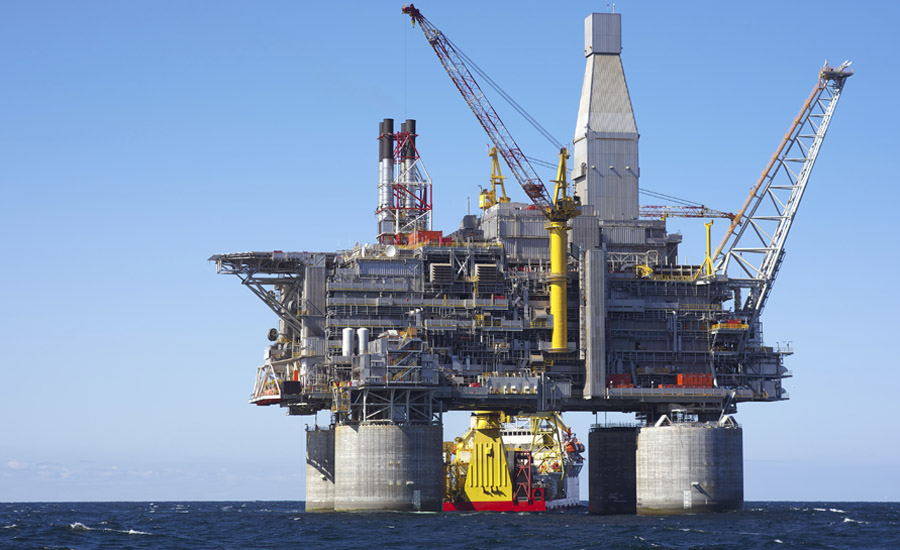
Licensed Oil and gas operators now have until October 31 to demonstrate compliance with their licence obligations or risk losing their acreages.
The Chief Executive of the Nigerian Upstream Petroleum Regulatory Commission (NUPRC), Oritsemeyiwa Eyesan, made the disclosure at an energy conference organised by the Harvard Business School Association of Nigeria in Lagos on Friday.
She cautioned that the regulator would enforce the drill-or-drop provisions of the Petroleum Industry Act (PIA) against operators that failed to develop their assets.
“Now the PIA has instituted the drill-or-drop mechanism. So, before you take the block, you know whether it’s a gas asset, you know whether it’s an oil and gas asset, and you must come up with concrete plans to unlock your resources,” Eyesan said.
READ ALSO: FG Lacks Capacity to Meet Dangote Refinery Crude Demand
She said the commission had issued a circular directing affected operators to respond before the deadline, warning that those who failed to do so would face regulatory action.
“And as a matter of fact, we’ve issued a circular, and we say by 31st of this month, for those who are not responsive, you can be rest assured that I am coming after you,” she threatened.
Eyesan also explained that operators holding onshore assets were expected to undertake the required work within the stipulated three-year period, warning that the commission would call up assets where companies failed to develop their acreages.
“For those onshore, you have three years. Within three years in the first instance, if you do nothing about those assets, we will call it up,” she said.
The commission’s warning comes as it moves to enforce work commitments attached to licences awarded through recent licensing exercises, with affected operators required to explain delays in executing their approved work programmes and show how they intend to address the challenges.
Strategy for unlocking Nigeria’s oil industry investment must focus on access to capital, technology, markets and regulatory certainty, in addition to physical assets.
These views were shared by the Heritage Energy Operational Services Limited (HEOSL) in a goodwill message at the Association of Energy Correspondents (NAEC) Energy Energy Conference 2026, in Lagos, themed: “Access to Assets: Empowering Players and Driving Growth.”
Delivering the message on behalf of the CEO, Ado Oseragbaje, General Manager, Government, Joint Venture & External Relations, Heritage Energy, Ohioze Unuigbe, commended the NAEC for convening what he described as a strategic platform for dialogue on issues shaping Nigeria’s energy sector.
READ ALSO: NCDMB, Renaissance Empower 60 with Oil & Gas Technical Skills
According to him, the conference theme is both timely and strategic at a period when the industry is seeking to increase production and attract investment.
“Access to assets must go beyond physical access to oil and gas resources. It must also include access to capital, infrastructure, technology, markets, skilled talent, regulatory certainty and strong partnerships. These are essential to unlocking investment, increasing production and strengthening Nigeria’s energy security,” he said.
Unuigbe noted that while access to an asset is critical, real value is created by how effectively, safely and responsibly the asset is operated.
He disclosed that Heritage Energy’s Operational Management System (OMS) provides the discipline for responsible operations, by bringing together People, Plans, Processes and Performance to embed operational excellence, strengthen accountability and manage risk.
This, he said, is particularly important in a complex environment such as OML 30, where sustainable performance depends on effective collaboration among staff, partners, regulators, host communities and other stakeholders.
He stressed that sustainable value creation goes beyond production to include safety, environmental stewardship, responsible asset management, local capacity development and meaningful host community engagement, alongside investment in infrastructure, technology and Nigeria’s gas resources.
“No operator can achieve this alone. Government, regulators, investors, operators, partners, host communities and the media all have important roles to play. Trust, transparency and constructive engagement must remain at the heart of these relationships,” he added.
The Heritage Energy GM also lauded the role of the energy media in promoting informed discourse, transparency and accountability, calling for continued collaboration to support accurate and balanced reporting.
“Nigeria’s energy opportunity is significant. Our collective task is to ensure that access to assets translates into access to opportunity, value creation and sustainable growth,” Unuigbe stated.
He reaffirmed Heritage Energy’s commitment to responsible operations, operational excellence and stakeholder collaboration in building a stronger and more sustainable Nigerian energy industry.

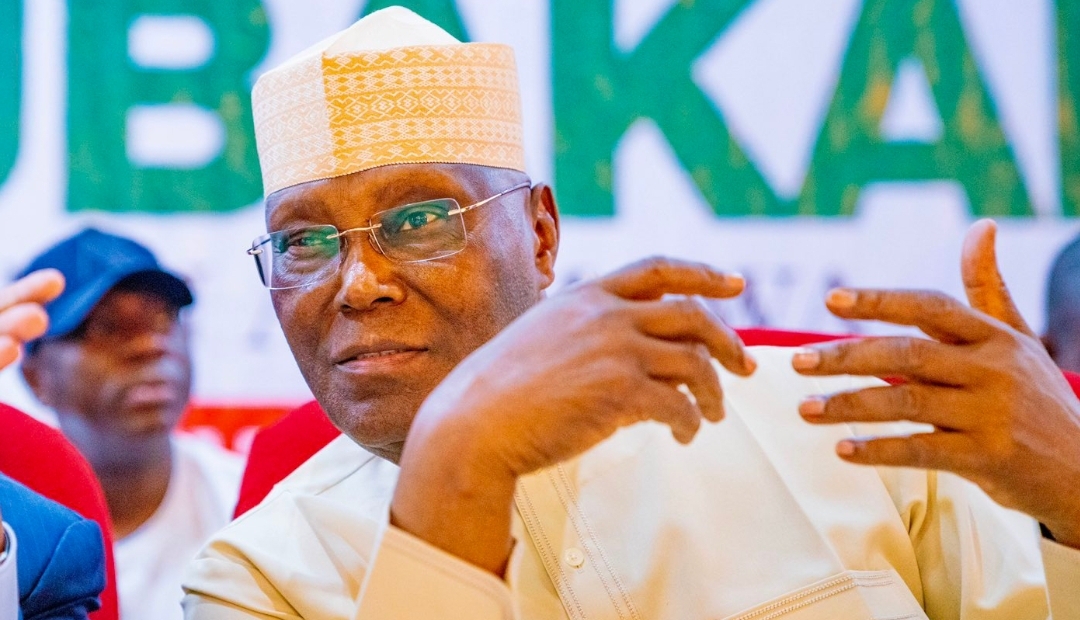
The Presidency has explained why former Vice President Atiku Abubakar’s proposed production subsidy for locally refined petrol could be difficult to implement, arguing that Nigeria lacks sufficient freely available crude oil to sustain the policy.
President Bola Tinubu’s Special Adviser on Media and Public Communications, Sunday Dare, made the position known in a statement issued on Sunday, October 11, 2026, titled “Atiku’s Demagoguery in the Face of Tinubu’s Logical Policies.”
Dare was responding to Atiku’s criticism of the Federal Government’s 30-day petrol discount offered through the Nigerian National Petroleum Company Limited (NNPC) Retail and its proposed fuel price modulation framework.
SEE ALSO: PETROAN Expects Fuel Discount to Combat Inflation
Atiku had described the temporary discount as a publicity stunt, questioning its sustainability and accusing Tinubu of adopting his economic proposal without incorporating the production subsidy he advocated.
However, the presidential aide argued that Atiku’s proposal failed to adequately account for Nigeria’s crude oil production arrangements, existing contractual obligations and the financial implications of subsidising petroleum products.
According to Dare, Nigeria produces approximately 1.8 million barrels of crude oil daily, but the Federal Government does not have unrestricted access to the entire volume.
He said joint ventures and production-sharing contracts, alongside production costs, royalties and profit-sharing arrangements, significantly reduce the quantity of crude available to the state.
“After accounting for these statutory and contractual obligations, Nigeria has fewer than 700,000 barrels per day of unencumbered ‘free crude’ to give away,” Dare stated.
He argued that using crude oil to fund a broad production subsidy without sufficient freely available supplies could undermine government revenues and expose the country to financial risks.
Dare maintained that domestic refineries, including the Dangote Petroleum Refinery, require substantial volumes of crude oil, making it difficult for the government to meet their needs solely from crude available for unrestricted allocation.
He argued that domestic refiners would still need to obtain additional crude through other arrangements, including purchases from international markets.
The presidential aide warned that a production subsidy without adequate crude supplies and clearly defined financial safeguards could recreate some of the problems associated with Nigeria’s former petrol subsidy regime.
He said such a policy could encourage opaque transactions, fraudulent claims and financial losses if its implementation was not properly structured.
Atiku has advocated shifting government support away from subsidising imported petrol towards supporting qualifying domestic refiners through preferential crude oil pricing, with the aim of reducing costs for consumers.
The proposal has become a subject of political and economic debate as Nigerians continue to grapple with high petrol prices and the wider cost-of-living crisis.
Presidency Defends 30-Day Petrol Discount
Dare also rejected the suggestion that NNPC Retail’s decision to forgo its profit margin temporarily amounted to a restoration of the former petrol subsidy.
He said the discount was initially introduced as part of activities marking Nigeria’s 66th Independence anniversary before being extended for another 30 days.
According to him, the arrangement allows NNPC Retail to absorb short-term market pressures without reinstating the previous system of government-funded fuel subsidies.
The presidential aide also defended the proposed N1,350-per-litre ceiling on ex-gantry costs, describing it as a mechanism to moderate sudden increases in fuel prices.
Under the framework outlined in the statement, refiners and importers would absorb temporary cost increases above the ceiling and recover those costs when market conditions improve.
Dare argued that the measure could help reduce the impact of abrupt fuel price changes on transport fares and household expenses.
The presidential aide further defended the administration’s broader economic reforms, including petrol subsidy removal and foreign exchange market reforms introduced in 2023.
He cited the expansion of compressed natural gas infrastructure, direct cash transfers to vulnerable households, support for small businesses and increased federal allocations to states and local governments as part of the government’s response to economic pressures.
Dare maintained that the administration was pursuing a combination of market-based pricing and targeted interventions to manage the effects of international oil market volatility.
He argued that the country needed structural economic measures rather than temporary interventions that could place additional pressure on public finances.





ADF Targets 5 Million Students, 2 Million Vulnerable Women

NUPRC Sets Revocation Date for Undeveloped Oil Licences

FG Lacks Capacity to Meet Dangote Refinery Crude Demand
Heritage Energy on Ways of Unlocking Oil Industry Investment
NCDMB, Renaissance Empower 60 with Oil & Gas Technical Skills

Fuel Discount: Presidency Explains Why Atiku’s Production Subsidy Proposal May Fail

Trump’s Family Unveils New Cryptocurrency Platform

Senate Denies Receiving Petitions Against Tinubu’s Ambassadorial Nominees

Dangote Cement Lights Up Benue Host Communities With CSR Initiatives

Reps Recommend 3-year Jail Term For Aviation minister

Tems Sets New Record On Billboard Hot 100 Chart
