
Business
Euro and pound remain steady as European shares bounce back


LONDON – On Tuesday, Shares in Europe improved as investors tried to take advantage of the price drop caused by geopolitical tension and doubts about global growth.
Markets were encouraged by hopes of stimulus measures in China and by a growing consensus that a rift between the West and Russia was unlikely to get out of hand.
Bourses in London.FTSE, Paris.FCHI and Frankfurt.GDAXI opened around 0.9 percent higher, bouncing after Monday’s 1 percent drop put the region’s FTSEurofirst 300 index .FTEU3 on track for its worst month since June.
While equity markets were hunting for bargains, the euro at 1.3827, the pound at 1.6483 and the region’s benchmark government bonds were little changed as they digested fresh data from the region’s biggest economies.
Top of the list was German business sentiment data from Germany’s Ifo institute. As expected, it dipped after this month’s tensions with Russia over Ukraine.
In Britain, inflation data showed price increases had slowed, reinforcing views that the Bank of England would hold off on raising interest rates.
“The reason why the equity markets are doing well is a bit of a rebound from the recent sharp sell-off,” said David Madden, a market analyst at IG index in London. “The euro has struggled a bit because of dollar strength more than anything, though I do think any strong sanctions slapped on Russia by the U.S. and Europe or vice-versa would knock equities again.”
STANDOFF
The Group of Seven major industrialized nations warned Russia on Monday it faces additional economic sanctions if President Vladimir Putin takes further action to destabilize Ukraine.
“The fallout from Ukraine so far has been very limited,” said Ramin Nakisa, a global macro strategist at UBS. “The politicians won’t have a strong mandate for heavy sanctions.”
In Asian trading, Japan’s Nikkei .N225 had dropped 0.4 percent. MSCI’s broadest index of Asia-Pacific shares outside Japan .MIAPJ0000PUS dipped 0.2 percent after a lackluster session on Wall Street.
Short-dated U.S. Treasuries prices remained in focus after Federal Reserve chief Janet Yellen said last week that interest rates could rise early next year.
Two-year Treasuries, the most sensitive to interest rate changes, were steady at 0.4288 percent in early European deals, after reaching a six-month high of 0.4650 on Monday. Money market futures were pricing in some possibility of a rate hike by spring 2015.
LESS PRECIOUS
Buoyant short-term rates undermined precious metals again. Gold fetched $1,315.35 per ounce, close to Monday’s near- five-week low of $1,307.54. Silver tumbled to a six-week low of
$19.84.
Rising U.S. rates are also generally negative for emerging markets, but many of them have held up so far. They have been helped in part by expectations the Chinese government will introduce economic stimulus measures after weak Chinese manufacturing data was reported on Monday.
Mainland Chinese shares .SSEC touched a one-month high in Asian trade as companies linked to Shanghai’s free-trade zone gained on the back of media reports that its restrictions on foreign investors may be relaxed.
“The (manufacturing) data was pretty bad,” said Naoki Tashiro, president of T.S. China Research. “It looks almost certain that the first-quarter growth is likely to fall short of the government’s growth target of 7.5 percent. So the government is likely to take some measures.”
The Australian dollar, often seen as a liquid proxy for bets on the Chinese economy, briefly reached a three-month high of $0.9158. Copper, also highly sensitive to China’s fortunes, touched a week high.
Copper prices have now stabilized after sinking to a three-and-a-half year low on worries that China’s slowdown might trigger a wave of defaults on loan deals where copper was used as collateral.
“Copper is a little bit in pause mode at the moment,” said analyst Mark Keenan of Societe Generale in Singapore. “People are watching for any signs of fresh defaults, but also for the official PMI stats out next week.”

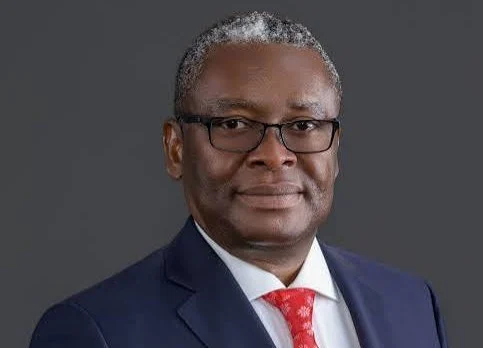
Ingentia Energies Limited has said it is targeting an expansion of its drilling operations after increasing its oil production by 150 per cent under the leadership of Engr Charles Odita as the company’s acting Chief Executive Officer.
This was disclosed in a statement signed by the Chairman of the Board, Chief Oseni Elamah, following a meeting in Lagos attended by Agbaroji and the outgoing CEO, Odita, after Victor Agbaroji assumed office as the company’s new Managing Director and CEO.
The board commended Odita for what it described as transformational leadership, noting that “production increased by 150 per cent during his tenure, from 2,200 barrels per day”.
Elamah extended congratulations and appreciation to Odita, describing his tenure as transformational and characterised by strategic clarity, decisive execution and exceptional leadership.
Agbaroji, who succeeded Odita, expressed appreciation for the achievements recorded under his predecessor and pledged to build on the foundation already established.
He identified enhancing drilling operations, maximising the value of existing assets, improving cost competitiveness, expanding the company’s portfolio and unlocking greater value from its gas resources as key priorities for the next phase of growth.
“Our immediate focus is to strengthen the next phase of our drilling campaign by leveraging the seismic acquisition programme currently underway.
This will enable us to execute a more robust and efficient drilling programme while improving exploration outcomes and operational performance,” Agbaroji said.
He also stressed the importance of crude oil evacuation infrastructure to future production growth, saying the company would intensify efforts to advance its pipeline evacuation project.
Agbaroji reaffirmed management’s commitment to sustaining the momentum achieved under Odita, adding that the company would continue to benefit from the experience and institutional knowledge developed during his tenure.
The leadership transition is expected to consolidate Ingentia’s recent gains, expand production capacity, improve operational efficiency and strengthen its position as an indigenous energy company.
A prominent royal father has mounted a spirited defence of the Dangote Petroleum Refinery and Petrochemicals Limited (DPRP), dismissing criticisms of the Initial Public Offering (IPO) and challenging detractors to replicate its scale by raising the estimated $22 billion required to build a competing refinery.
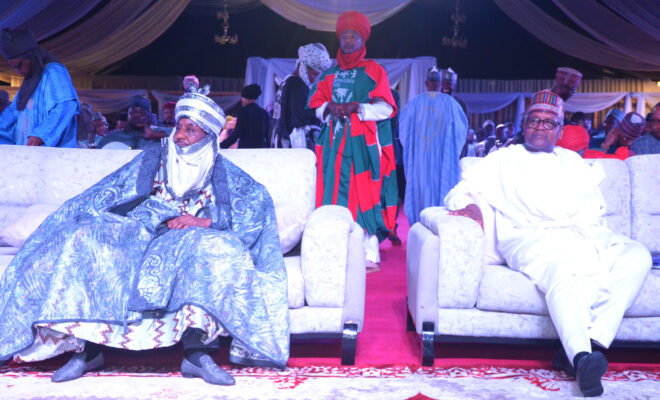
The Emir of Kano, His Royal Highness Khalifa Muhammadu Sanusi II, on Thursday made the remarks during the DPRP’s “People’s IPO” roadshow in Kano, where he passionately advocated broader Nigerian participation in the IPO as a pathway to wealth creation and economic inclusion.
Addressing a gathering of investors, business leaders, professionals and members of the public, the former Central Bank Governor described the refinery as one of the most significant industrial projects in Africa’s history and urged Kano residents to seize the opportunity to become shareholders.
According to the Emir, equity ownership represents one of the most effective means through which ordinary citizens can participate directly in national economic growth and build long-term financial security.
“Kano is a commercial city with a long tradition of trade, investment and entrepreneurship. Our people understand business, and they should understand the value of owning shares in productive enterprises,” he said.
READ ALSO: The Soludo, Obi Spat – When Brothers Fight to the Finish
Drawing from personal experience, Sanusi recounted his interactions with Aliko Dangote during his banking career in the late 1990s when Dangote Group was evolving from a trading company into a manufacturing powerhouse.
The Emir revealed that many observers at the time questioned Dangote’s strategy of deploying short-term financing to support long-term industrial investments. However, he noted that what critics considered risky was actually a demonstration of strategic foresight and a deep commitment to transforming Nigeria’s productive capacity.
Recalling the philosophy that drove the company’s industrial expansion, the monarch said the vision was anchored on a simple principle: producing domestically what Nigerians consume daily instead of relying excessively on imports.
“Somebody needs to produce the petrol for your cars, somebody needs to produce the cement for your houses, somebody needs to produce the food that you eat. We are importing these things from Asia, Europe and America. Our strategy is to produce those things here,” he stated.
The Emir described the Dangote Refinery as a game-changing investment that could fundamentally alter the structure of the Nigerian economy by reducing dependence on imported petroleum products and preserving foreign exchange.
Drawing on his experience at the nation’s apex bank, Sanusi explained that Nigeria had historically earned foreign exchange through crude oil exports only to expend a substantial portion of it importing refined fuel.
“What Aliko has done is disrupt that model,” he said.
According to him, the emergence of a world-class refinery on Nigerian soil positions the country not merely as an exporter of crude oil but as a major supplier of refined petroleum products to regional and international markets.
As evidence of the refinery’s growing global relevance, he cited reports that European airlines had sourced aviation fuel from the facility during recent supply disruptions linked to tensions around the Strait of Hormuz, underscoring its ability to compete effectively on the global stage.
Sanusi also addressed concerns raised by critics who have accused the refinery of seeking market dominance. The monarch firmly rejected such claims, arguing that competition remains open to anyone willing to undertake the financial and operational challenges associated with large-scale refining.
“There is no monopoly if a monopoly is not protected by law,” he declared.
“Anybody who wants to build a refinery, anybody who wants to raise $22 billion, invest and go through what Aliko went through is welcome to do so.”
The comment drew applause from participants at the roadshow, many of whom viewed the statement as a direct response to persistent criticism of the refinery’s market influence.
The Emir stressed that Nigeria’s economic future depends on encouraging more investments in productive industries capable of creating jobs, generating exports and strengthening local value chains. He warned against a culture that prioritises speculation and the accumulation of overseas assets at the expense of domestic industrial development.
He therefore described the Dangote Refinery IPO as a historic opportunity for millions of Nigerians to own a stake in one of Africa’s most strategic industrial assets.
“It is the shareholders who own it. It is the shareholders who take the returns. It is the shareholders who own the profits,” he said.
While encouraging broad participation, the respected traditional ruler advised prospective investors to approach the market responsibly. He urged citizens to invest only funds they could afford to commit for the long term and not resources earmarked for essential family needs.
In his closing remarks, Sanusi called on Kano residents and Nigerians generally to embrace the capital market and take advantage of the IPO, arguing that widespread ownership would democratise wealth generation and deepen public participation in national economic development.
He said broader participation in the Dangote Refinery IPO would not only reward investors financially but also strengthen local ownership of critical national infrastructure, expand financial inclusion and ensure that the benefits of industrialisation are shared more widely across the country.
“The opportunity is here. The question is whether you will participate,” the Emir told the audience.
The DPRP IPO roadshow, tagged “Kano Grand Homecoming,” brought together leading figures from Nigeria’s business, investment and financial sectors, including Aliko Dangote, President of Dangote Industries Limited; Bismarck Rewane, Managing Director of Financial Derivatives Company; Adetilewa Adebajo, CEO of CFG Advisory; and other capital market stakeholders.
Photo Caption – From Left: Emir of Kano, His Highness, Muhammadu Sanusi II (Special Guest of Honour & Chairman); President/CE, Dangote Industries Limited, Aliko Dangote, at the Dangote Petroleum Refinery IPO Roadshow tagged “Kano Grand Homecoming” in Kano on Thursday, September 17, 2026.

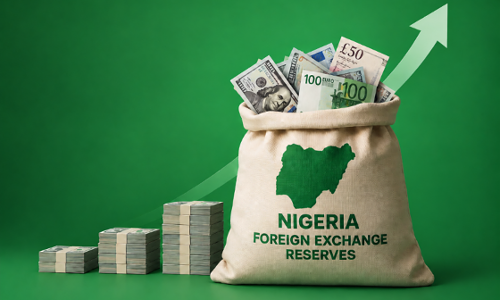
Nigeria’s gross foreign exchange reserves have risen to $54.61 billion in 2026, representing a $12.76 billion increase from the $41.84 billion recorded a year earlier.
The latest figure, recorded as of September, represents a 30.5 per cent year-on-year increase and continues a steady accumulation of Nigeria’s external reserves that became more pronounced from the middle of the year.
But how did Nigeria build up such a substantial reserve position within months?
Available data and analysis point to a combination of stronger oil-sector earnings, increased foreign capital inflows, diaspora remittances, non-oil export proceeds and changes in foreign exchange and monetary management.
Oil production and earnings
One of the factors supporting the improvement has been stronger crude oil production.
SEE ALSO: Nigeria Beats 2026 Foreign Reserves Target, Hits $53.1b
Analysis of Central Bank of Nigeria (CBN) data by Nairametrics showed that reserves stood at $49.80 billion on June 1 before crossing the $50 billion mark on June 4. By July 3, the balance had risen to $51.53 billion and subsequently moved above $52 billion in August.
Earlier CBN data analysis also showed that crude oil and condensate production averaged about 1.68 million barrels per day in April, 1.73 million barrels per day in May and 1.72 million barrels per day in June, before standing at about 1.68 million barrels per day in July.
The stronger production has coincided with higher oil-sector revenues. Nairametrics reported that NNPC revenue rose from N2.57 trillion in January to N2.68 trillion in February and N2.77 trillion in March, before jumping to N4.97 trillion in April. It subsequently stood at N4.34 trillion in May, N4.39 trillion in June and N3.09 trillion in July.
Aminu Gwambe, President of the Association of Bureaux De Change Operators of Nigeria, also attributed part of the reserve improvement to higher crude oil prices and increased production.
According to Gwambe, reduced volatility in the Niger Delta and lower crude oil theft have helped improve production and, consequently, foreign exchange receipts.
Foreign capital inflows surge
Another major development has been the increase in foreign capital entering Nigeria.
Nigeria attracted $10.37 billion in foreign capital in the first quarter of 2026, representing an 83.8 per cent increase from the $5.64 billion recorded in the corresponding period of 2025, according to National Bureau of Statistics data.
Portfolio investment accounted for the overwhelming majority of the inflows, reaching $9.86 billion, or 95.09 per cent of total capital imported during the quarter.
The banking sector attracted $7.55 billion, representing 72.79 per cent of total capital imported, while the financing sector received $2.43 billion.
The United Kingdom was the largest source of the foreign capital, contributing $5.08 billion, followed by the United States with $3.18 billion and South Africa with $983.83 million.
The increase in portfolio inflows has been linked by analysts to improved conditions in Nigeria’s foreign exchange market and the attractiveness of Nigerian financial assets and yields.
However, the composition of the inflows is significant because portfolio investments can be more easily reversed than longer-term foreign direct investment.
Remittances and non-oil exports
The reserve buildup has also been linked to stronger diaspora remittances passing through official channels.
Gwambe pointed to increased remittance flows following Nigeria’s foreign exchange reforms, as well as growing dollar liquidity through licensed fintech channels.
Higher non-oil export proceeds have also contributed to the country’s foreign exchange earnings, while improvements in fiscal and monetary management have supported the broader accumulation.
These sources are important because they provide foreign exchange beyond crude oil, although their contribution must be viewed alongside the much larger role still played by oil and financial-market inflows.
Foreign investors show greater interest
Chief Executive Officer of the Centre for the Promotion of Private Enterprise, Dr Muda Yusuf, linked part of the improvement to stronger foreign investor confidence and increased portfolio inflows.
Yusuf said, “It takes a lot of confidence in an economy for foreign inflows to come in,” while also pointing to improving export performance.
A source at the CBN disclosed that interest from foreign investors in Nigerian government securities had increased, with the apex bank receiving enquiries from foreign investors seeking information about Nigeria’s long-term bonds.
The development suggests that some investors are showing greater interest in holding Nigerian financial assets, although the extent to which such inflows remain in the country over the longer term remains uncertain.
FX and monetary reforms
Changes in Nigeria’s foreign exchange management have also played a role in the changing external position.
Analysts have linked stronger inflows partly to reforms aimed at improving liquidity and reducing distortions in the foreign exchange market.
The improvement in reserves has occurred alongside a period of relative stability in the naira.
The currency closed at N1,329.50/$ on September 15, compared with N1,328/$ on September 10, with the naira remaining within a narrow range over four consecutive trading sessions.
The stronger reserve position gives the CBN a larger external buffer with which to respond to temporary foreign exchange pressures and manage excessive volatility.
The numbers show how quickly reserves have accumulated
The pace of accumulation has accelerated during 2026.
Reserves stood at $50.03 billion in March and reached $49.80 billion on June 1. They crossed $50 billion on June 4 and reached $51.53 billion by July 3.
By August 14, reserves had risen to $52.32 billion.
They then climbed to $53.90 billion on September 1, $54.08 billion on September 3 and finally $54.61 billion on September 14.
That means Nigeria added about $707.75 million to its reserves during the first 14 days of September alone, while the balance increased by about $2.28 billion between August 14 and September 14.
The current position is also above the approximately $51.04 billion reserve level projected by the CBN for the whole of 2026.
Sustainability remains a concern
Despite the sharp increase, analysts have cautioned that the composition of the reserves matters as much as the headline figure.
A former Access Bank Treasury official noted that it is difficult to attribute the buildup to one particular source because several channels contribute to reserve accumulation.
Portfolio inflows can strengthen Nigeria’s foreign exchange liquidity, but they can also leave quickly when global interest rates, exchange-rate expectations or investor sentiment change.
Similarly, oil remains vulnerable to fluctuations in international crude prices and disruptions to domestic production.
Olu Olajemgbese of the University of Abuja therefore argued that a more sustainable improvement would require a broader mix of foreign exchange sources, including non-oil exports, remittances and productive foreign direct investment.
Gwambe has also raised concerns about the continuing gap between the official and parallel foreign exchange markets.
“My worry is on the inherent gaps between the official market and the parallel market rates,” he said.
He called for greater integration of Bureau de Change operators into the formal foreign exchange system and increased participation in the market.






‘Obi Has Nowhere to Hide’ — APC Campaign Council Tackles Peter Obi Over Anambra Record

‘A Nation Cannot Escape the Bill’ — Atiku Questions Tinubu’s Third UNGA Absence

Tinubu Reacts as Former Kogi Governor Ibrahim Idris Dies at 77

Why Ondo is Buying Dangote Shares for 500 Citizens

NMDPRA Points to PIA for Price Control Lapses

Indonesia’s Pertamina Leads Foreign Interest in Nigeria’s 2026 Oil Licensing Round

Trump’s Family Unveils New Cryptocurrency Platform

Senate Denies Receiving Petitions Against Tinubu’s Ambassadorial Nominees

Dangote Cement Lights Up Benue Host Communities With CSR Initiatives

Reps Recommend 3-year Jail Term For Aviation minister

Tems Sets New Record On Billboard Hot 100 Chart
