
NEWS
Executive Lawlessness: Wike, Others Risk Jail Term


It appears that the Judiciary is fed up with executive lawlessness, which has seen some members of the ruling All Progressives Congress (APC) flout court orders.
The National Industrial Court (NIC) might be leading in instituting the rule of law, as it moved on Wednesday to make an example of Minister of the Federal Capital Territory, Nyesom Wike and some of his executives, at the FCTA.
It was gathered that the NIC, Abuja has begun contempt proceedings against Wike, and others over what it termed ‘disregard of series of court orders’.
One of the reasons Wike would be standing trial is Managing Director/CEO, Abuja Markets Management Limited (AMML), Faruk Abubakar tenure.
One of the instances which incurred the irk of the NIC was Wike’s inclusion of Abubakar in the list of heads of agencies dissolved on September 27, 2023.
Recall that Wike had, on September 27, 2023 through a statement, relieved the heads of 21 parastatals, agencies and government companies of the Federal Capital Territory Administration (FCTA) of their appointments with immediate effect, including AMML.
The contempt charge, filed by Abubakar also joined the FCTA, AMML and the Abuja Investments Company Limited (AICL) as 2nd to 4th defendants respectively, including the former acting managing director of the AMML, Engr. Yakubu Abbas.
In the Form 48 marked: NICN/ABJ/62/2023, which was dated and filed on November 3, 2023, the application was titled: “Notice of Consequences of Disobedience to Order of Court.”
The application was brought pursuant to Section 72 Sheriff and Civil Process Act, 2004; Order IX Rules 1-3 of the Judgment Enforcement Rules and Under the inherent jurisdiction of court.
The application reads, “Take notice that unless you (the defendants) obey the orders and directions contained in the judgment of court on July 20 and the order of this Honourable Court made on July 26, you will be guilty of the contempt of court and will be liable to be committed to prison.”
It was gathered that that Abubakar’s counsel, Faruk Khamagam, had, following the dissolution, formally apprised Wike on September 28, 2023 about the peculiar situations that surrounded the agency’s headship and the legal tussle that preceded his appointment as minister.
Khamagam, in the letter, informed Wike of series of court judgments that affirmed Abubakar’s status as substantive managing director of the AMML.
The contempt proceeding would be standing on the allegation that Wike and others had been acting in disobedience to the orders of the industrial court made on July 20, restraining them from giving effect to the purported letter of termination of the employment of Abubakar as the managing director or the AMML.
Justice R. B. Haastrup had restrained the defendants from giving effect to the termination of the employment of Abubakar as the managing director of the AMML, which order was contained in a letter dated July 17, 2023, until the hearing and determination of the counterpart motion on notice.
The judge also ordered the defendants not to, in any way, interfere in the management, business and corporate affairs of the AMML and that status quo ante be maintained until the counterpart motion on notice was heard and determined.
In the same vein, Justice Donatus Okorowo of a Federal High Court, Abuja, had, on July 10, 2023 in a judgment, restrained the FCT Minister, the FCTA and others in the suit marked: FHC/ABJ/CS/499/2023 from dissolving and reconstituting the Board of the AMML by political fiat or press statement, without first following the procedure of CAMA, 2020.
According to the court, doing so would be ultra vires the powers of the FCT Minister and the FCTA.
The court had also affirmed Abubakar as the managing director of the AMML.
Khamagam, who said the AICL and FCTA had continued to insist on the termination of Abubakar’s employment as contained in their July 17, 2023 letter, also averred that Abbas had been parading himself as the acting managing director of the AMML in contravention of valid court orders and judgment.
He said, “Engr. Yakubu Abbas himself, has been parading himself as the acting MD of AMML and has been signing and issuing documents in that capacity, in the name of AMML from unknown locations.”
On his part, Legal Adviser and Secretary, AMML, Felix Edache, alleged that on Monday, the policemen stormed the AMML’s head office in Gudu on the order of the FCT commissioner of Police.
According to Edache, the officers were led by DSP Bello Adamu, who disclosed that they were deployed to maintain peace and workers’ safety.
“When I resumed, I saw a flood of armed policemen all over the premises.
“Upon getting to the office, I was told that they had come to ensure safety of the place but I told them that I am not aware that AMML made any complaint to the police to that effect.
“In fact if there should be any of such complaint, it should have come from me,” he said.
He was rattled, however, when later in the evening the same policemen tendered a memo from the FCTA signed by the General Counsel, Salman Dako, purportedly written on behalf of the FCT Minister asking the CP to prevent the MD, Abubakar, and the Legal Adviser from gaining entrance into the office.
He continued, “Although, the memo by Dako cited the termination of Abubakar’s employment as the eason for the request, it did not say why the police is being asked to prevent me from entering the office.
“We are law abiding citizens. We will never do anything to subvert the law.
“However, any attempt to trample our right would be resisted with every legal tool.
“It is time for the Minister to reassess his legal team at the ministry so that they don’t end up misleading him into running foul of the law which he also swore to protect as both lawyer and public servant.
“I am hopeful that the minister will act accordingly.”











The National Union of Edible Oil Tanker Drivers of Nigeria (NUEOTDN) has suspended its planned nationwide strike scheduled to begin Wednesday following Federal Government intervention in its dispute with operators in the edible oil industry.
The last-minute suspension averted a potential disruption in the transportation and distribution of edible oil across the country, with the union directing members to maintain normal operations while negotiations continue.
READ ALSO: Tinubu Applauds $800m FID on Ima Gas Project
NUEOTDN President, Ilias Aperun, announced the decision in a statement dated September 22, saying interventions by President Bola Tinubu and the Department of State Services (DSS) had opened discussions towards resolving the issues that prompted the planned industrial action.
“The planned industrial action scheduled to commence today, 23rd September 2026, has been suspended.”
Aperun said the union decided to give the government intervention time to produce results in the interest of economic stability and protection of the edible oil supply chain.
“In the interest of peace, national economic stability and the protection of the edible oil supply chain, the Union has decided to suspend the planned action and give room for the ongoing government intervention,” he said.
The union consequently directed its members and other stakeholders to halt preparations for the strike and continue normal operations pending further directives.
Aperun said discussions aimed at resolving the dispute were already underway, adding that the union remained committed to protecting the welfare and legitimate interests of its members without jeopardising the supply of edible oil.
“The NUEOTDN remains committed to the protection of the public health of the masses, welfare and legitimate interests of its comrades, while also supporting a peaceful and sustainable resolution of the issues at stake,” he said.
He urged stakeholders in the industry to cooperate with the ongoing negotiations, saying constructive engagement remained necessary to resolve the issues raised by the tanker drivers.
The union expressed appreciation to the Federal Government for its intervention and urged members to remain calm while awaiting the outcome of the discussions.
Aperun said further developments would be communicated as negotiations progressed.

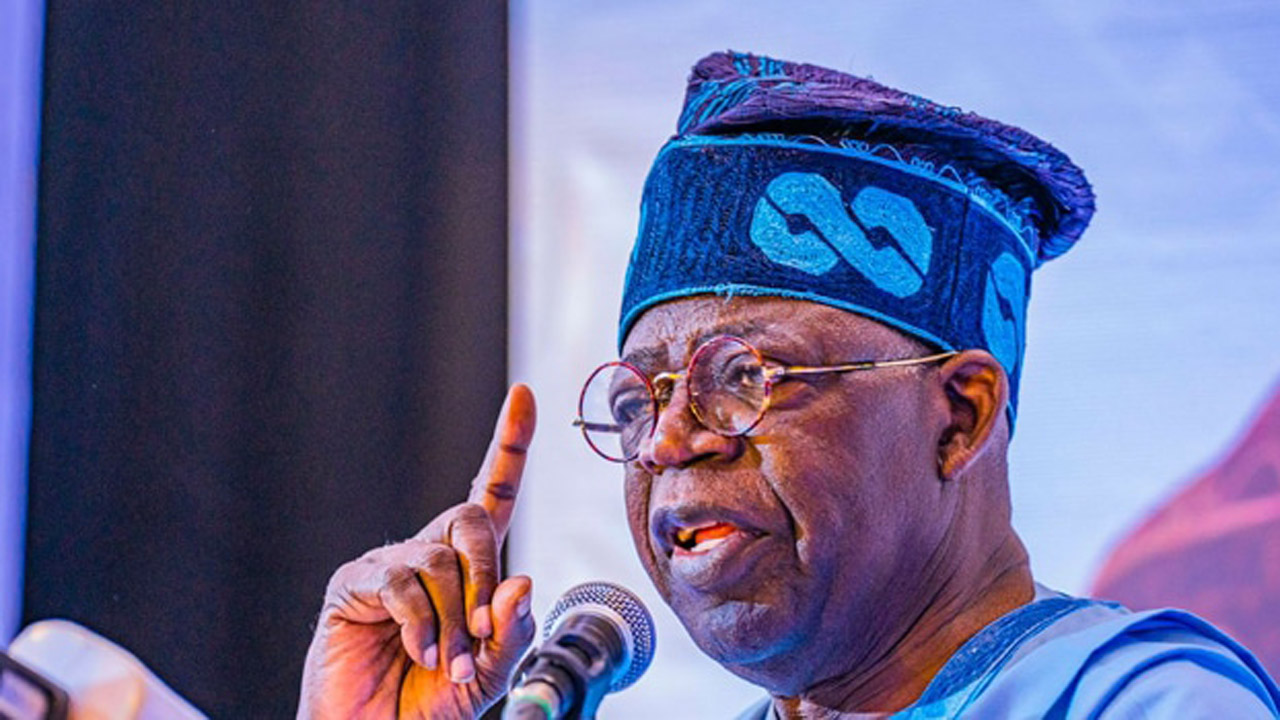
President Bola Ahmed Tinubu has welcomed the construction of a $12 million Abuja Centre for Entrepreneurship, saying the facility will strengthen Nigeria’s Micro, Small and Medium Enterprises (MSME) ecosystem and create more opportunities for businesses to grow and generate jobs.
The President made this known in a statement issued on Wednesday by his Special Adviser on Information and Strategy, Bayo Onanuga.
The Abuja Centre for Entrepreneurship (ACE) is being developed at the SMEDAN Industrial Development Centre in Idu, Abuja, with funding from the Republic of Korea through the Korea International Cooperation Agency (KOICA).
SEE ALSO: Tinubu Applauds $800m FID on Ima Gas Project
The project is being implemented in partnership with the Federal Government through the Small and Medium Enterprises Development Agency of Nigeria (SMEDAN) and the United Nations Development Programme (UNDP).
The centre will provide workspaces, digital facilities, training, incubation and enterprise support for aspiring entrepreneurs, start-ups and existing businesses.
According to the statement, the facility has an initial target of supporting 500 entrepreneurs, 400 start-ups and 1,500 MSMEs.
About $5.9 million of the investment will be allocated to construction, while $6.1 million will fund equipment and programmes designed to support entrepreneurs and businesses.
Tinubu said the centre would help establish, strengthen and grow businesses.
“Small businesses are an important part of our economy. They employ people, support families and create activity in communities across the country.
“Many entrepreneurs already have the ideas and the determination to succeed. What they often need is better access to facilities, technology, training and the support that can help their businesses grow.
“This Centre will provide more of that support and strengthen the ecosystem around them,” he said.
The centre is expected to serve businesses in Abuja and surrounding cities, including Kaduna, Jos, Keffi, Lafia, Minna, Makurdi and Lokoja.
It is also expected to contribute to strengthening the wider entrepreneurship and MSME ecosystem across Northern Nigeria.
The President said the Federal Government would continue to expand the conditions that allow small businesses to grow and compete.
“We want more Nigerians to be able to start businesses, grow them and employ others.
“We also want existing small businesses to have better access to the tools and support they need to become stronger and more productive.
“That is important for jobs, incomes and the wider economy,” Tinubu said.
He added that the project complements the administration’s wider investments in digital skills, entrepreneurship, enterprise development and support for MSMEs.
The centre has also been designed to accommodate women and persons with disabilities. It will include accessible facilities and crèche services for women with young children.
While construction is ongoing, SMEDAN, KOICA and UNDP will work with universities, incubators, financial institutions, private-sector organisations and entrepreneur networks to build a wider support system around the centre.
The partners will also identify businesses that can benefit from the centre’s programmes.
Tinubu thanked the South Korean government for the $12 million investment and commended KOICA, UNDP and SMEDAN for advancing the project to the construction stage.
He said Nigeria would continue to welcome investments and partnerships that strengthen local businesses, deepen enterprise development and create more jobs.
“Our economy will be stronger when more Nigerian businesses can start, survive and grow.
“We must keep building the support around them and opening more opportunities for enterprise across the country,” the President said.

The African Democratic Congress (ADC) has demanded clarification over who is currently exercising the constitutional powers of the President as President Bola Ahmed Tinubu and Vice-President Kashim Shettima remain outside Nigeria.
The opposition party, in a statement issued on Tuesday by its National Publicity Secretary, Bolaji Abdullahi, said Tinubu’s continued absence had raised questions about compliance with Section 145 of the Nigerian Constitution.
SEE ALSO: Shettima Arrives Yola to Condole With Bamanga Tukur’s Family
The ADC said the provision requires the President, when proceeding on vacation or otherwise unable to discharge the functions of his office, to transmit a written declaration to the President of the Senate and the Speaker of the House of Representatives, after which the Vice-President performs the functions of Acting President.
According to the party, Tinubu left Nigeria on August 30 and has now been away for more than 21 days.
“President Tinubu left Nigeria on 30 August and has now been away for more than 21 days. We therefore demand to know whether the required declaration was transmitted by the President,” the ADC said.
The party also questioned why the National Assembly had not addressed the issue if such a declaration had not been transmitted.
The ADC rejected the Presidency’s description of Tinubu’s stay abroad as a “working vacation”, arguing that the phrase does not create a separate constitutional category.
“There is no constitutional category known as a ‘working vacation’. Presidential authority cannot be transferred by convenience, protocol or press statement,” the party said.
The opposition party also dismissed the suggestion that Secretary to the Government of the Federation, George Akume, could effectively represent the President in the discharge of presidential responsibilities.
“Representing the President at events and ceremonies does not confer constitutional powers. The Secretary to the Government of the Federation is a mere appointee of the President,” it said.
The ADC stressed that attending official functions or delivering speeches on behalf of the President was different from exercising the constitutional powers of the President or Acting President.
“Representation is not governance. Attendance at official functions is not presidential authority,” the party added.
The controversy comes as Vice-President Shettima is in New York for the United Nations General Assembly, where he is representing Nigeria.
The ADC said the simultaneous absence of the President and Vice-President was particularly concerning given what it described as Nigeria’s security, unemployment and cost-of-living challenges.
The party also criticised Tinubu’s continued stay in Paris while French President Emmanuel Macron travelled to New York for the UN General Assembly.
“The irony would be amusing if it were not a national disgrace,” the ADC said, arguing that the situation created poor optics for Nigeria.
Macron had hosted Tinubu at a private dinner at the Élysée Palace in Paris before travelling to New York for the UN General Assembly.
The ADC therefore called on the Presidency and the National Assembly to answer what it described as a fundamental constitutional question.
“Who presently exercises the constitutional powers of the President of the Federal Republic of Nigeria, and under what provision of the Constitution?” the party asked.






N4bn Compensation Dispute Threatens Ikot Abasi Power Project

Organised Labour Supports Workers’ Demand for N500 PMS Price, N500,000 Minimum Wage

Tanker Drivers Suspend Strike after FG Intervention

Tinubu Welcomes $12m Abuja Entrepreneurship Centre to Boost MSMEs, Create Jobs
Tinubu Applauds $800m FID on Ima Gas Project

Refineries, Exports Lift Nigeria’s Foreign Reserves over $55bn

Trump’s Family Unveils New Cryptocurrency Platform

Senate Denies Receiving Petitions Against Tinubu’s Ambassadorial Nominees

Dangote Cement Lights Up Benue Host Communities With CSR Initiatives

Reps Recommend 3-year Jail Term For Aviation minister

Tems Sets New Record On Billboard Hot 100 Chart
