NEWS
FG, Labour Pass Minimum Wage Decision To Tinubu, Set 7-Day Timeline

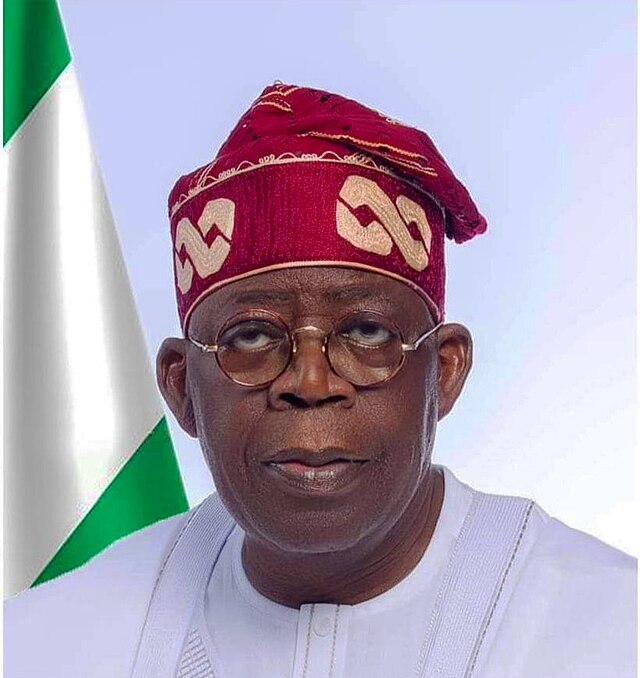
The meeting of the relevant parties of the Federal Government and organised labour on Monday has resolved to pass the sensitive matter of the minimum wage to President Bola Ahmed Tinubu for final decision.
The parties, made up of the Secretary to the Government of the Federation, George Akume, Organised Labour – the Nigerian Labour Congress (NLC), the Trade Union Congress (TUC) and other government officials, noted that President Tinubu “is committed to a National Minimum Wage that is higher than N60,000”.
Consequently, the Tripartite Committee on National Minimum Wage (NMW) resolved to pass decision on the final figure to the President, while no worker would be victimised to participation in the strike.
It was also resolved that the NMW would meet daily in the week with a view to resolving the matter, while organised labour “undertakes to convene a meeting of its organs immediately to consider this commitment”.
The communique was signed by Minister of State for Labour and Employment, Mohammed Idris and Minister of Information and National Orientation, Hon. Nkeiruka Onyejeocha for the Federal Government, President, Nigeria Labour Congress (NLC), Joe Ajaero, President, Trade Union Congress (TUC), Festus Osifo for labour.
The communique reads, “RESOLUTIONS REACHED AT THE MEETING BETWEEN THE FEDERAL GOVERNMENT AND THE ORGANISED LABOUR HELD ON MONDAY 3RD JUNE, 2024
“Further to the negotiation by the Tripartite Committee on National Minimum Wage (NMW) and subsequent withdrawal of Labour from negotiation, the Leadership of the National Assembly intervened on 2nd June, 2024. The Organised Labour declared nationwide strike on Monday, 3rd June, 2024 to drive home its demands.
“2. The Federal Government, in the National interest, convened a meeting with Labour held in the office of the Secretary to the Government of the Federation, on Monday 3rd June, with a view to ending the strike action.
“3. After exhaustive deliberation and engagement by both parties, the following resolutions were reached:
“1. The President, Commander-in-Chief of the Armed Forces, Federal Republic of Nigeria is committed to a National Minimum Wage that is higher than N60,000;
“II. Arising from the above, the Tripartite Committee is to meet everyday for the next one week with a view to arriving at an agreeable National Minimum Wage;
“III. Labour in deference to the high esteem of the President, Commander-in-Chief of the Armed Forces, Federal Republic of Nigeria’s commitment in (ii) above undertakes to convene a meeting of its organs immediately to consider this commitment; and
“IV. No worker would be victimized as a result of the industrial action.
“Done in Abuja on the 3rd of June, 2024.”








Former Kogi State Governor, Yahaya Bello, has taken legal steps against Senator Natasha Akpoti-Uduaghan, accusing her of defamation and incitement.
Bello, through his lawyer N.A. Abubakar, on Wednesday petitioned the Inspector General of Police, urging the force to invite the senator to present evidence backing the allegations she made against him at a recent event.
READ MORE: Drop Akpabio’s Petition, Probe Threats Against My Life – Senator Natasha To IGP
The former governor insists that Senator Akpoti-Uduaghan falsely accused him of being involved in an assassination plot during her homecoming ceremony on April 1, 2025, in Okehi Local Government Area of Kogi State.
The petition described her statements as both “malicious” and harmful, urging the police to prosecute her if she fails to justify her claims.
“Where she fails to do so, cause her to be arrested and prosecuted in accordance with the provisions of the law for criminal defamation, inciting public disturbance, and spreading false information injurious to public peace,” Bello’s lawyer wrote in the petition.
In addition to involving the police, Bello has also sent a personal demand letter to the senator via another lawyer, R.O. Balogun, asking her to issue a retraction and a public apology or risk facing legal consequences.
Bello’s legal team argues that her allegations violate Section 24(1)(b) of the Cybercrimes (Prohibition, Prevention, Etc.) Act, 2015.
“By accusing our client of plotting an assassination and naming him as a co-conspirator in a purported murder plot (with an attempt to disguise the killing as mob or ethnic violence), Sen. Akpoti-Uduaghan has:
“Gravely damaged our client’s reputation by portraying him as a violent and vengeful political actor and misled the public and tried to incite ethnic and political distrust, especially among clans of Ebiraland in particular and the people of Kogi Central in general.
“Brought his name into disrepute on the basis of an allegation so weighty that, if left unchallenged, could harm his political career and personal safety; and abused her parliamentary status and platform by propagating such falsehoods without evidence, in a very public and politically charged setting,” the solicitor noted.

The Rivers State Government has debunked reports making the rounds on social media, which alleged that the Sole Administrator of the state, Vice Admiral Ibok-Etteh Ibas (Rtd.), had summoned suspended Governor Sir Siminalayi Fubara and his deputy, Prof. Ngozi Nma Odu, to a meeting scheduled for Friday, April 18, 2025.
In an official statement released on Wednesday, the administration described the report as entirely false and intended to mislead the public.
The government warned against the spread of fake news, which it said was a calculated attempt to create panic and destabilize the state.
READ ALSO: “I Have No Connection To Militants’ – Fubara
The statement, signed by Sir Dede Sampson Friday, Permanent Secretary from the Office of the Secretary to the State Government (SSG), condemned the social media posts, which it labeled as malicious and fraudulent.
“The Rivers State Government has become aware of fraudulent announcements circulating on social media, falsely attributed to the Office of the Secretary to the State Government,” the statement noted.
“These malicious fabrications are designed to mislead the public, create panic, and disrupt the peace in Rivers State.”
One of the false messages specifically claimed that Governor Fubara and his deputy had been invited to Government House to answer questions regarding appointments and other matters of state.
Reacting to this, the state government firmly dismissed the announcement as fake and emphasized that no such directive was ever issued.
“The Rivers State Government categorically states that this announcement is fake and did not originate from any official source.
The public is urged to disregard this and any similar misinformation, as they are the work of troublemakers seeking to destabilize the state.”
The government further urged citizens to remain cautious and seek information only through verified platforms, highlighting the state’s official website — www.riversstate.gov.ng — as a reliable source for accurate updates.

Following the deadly attack on Otobi community in Otukpo Local Government Area of Benue State, Governor Hyacinth Alia has confirmed the arrest of two suspects linked to the killings.
The attack, which took place on Tuesday evening, saw suspected armed herders invade the community, unleashing violence that left at least eleven people dead.
Several houses were set ablaze during the onslaught, forcing many residents to flee to nearby villages.
READ ALSO: No Safety Guarantee For Unscheduled Visitors To Benue – Gov Alia
Speaking to journalists on Wednesday, Governor Alia described the attack as “condemnable” and assured the public that security agencies were working to track down everyone involved.
He also disclosed that three suspected herdsmen had been apprehended in connection with the incident.
“The National Security Advisor has promised to deploy more security operatives to the state following the current wave of attacks in the state, particularly, the incessant attacks on Otukpo,” Alia said.
He further appealed to security personnel to intensify efforts in ensuring the perpetrators are brought to book.
Reacting to the incident, the lawmaker representing Otukpo constituency in the Benue State House of Assembly, Kennedy Angbo, confirmed the attack and shared that the assailants stormed the community around 5:30 pm on Tuesday.
Angbo noted that nine bodies were recovered on the night of the attack, while two more were discovered on Wednesday morning.
He also added that several survivors who sustained injuries are currently receiving medical attention in Otukpo.
Meanwhile, security operatives have reportedly been deployed to the area as authorities intensify efforts to restore calm and prevent further attacks.






Defamation Battle: Yahaya Bello Demands Arrest Of Senator Natasha

Son Heung-min To Miss Spurs’ Europa League Decider Against Frankfurt

‘No Such Meeting’ — Rivers Sole Administrator Denies Summoning Fubara, Deputy

Otukpo Killings: Gov Alia Confirms Arrests, Calls For More Security Deployment

Gabonese Striker, Aaron Boupendza Dies After Tragic Fall In China