
NEWS
How $3.4bn IMF COVID-19 Loan Was Allegedly Diverted — Falana

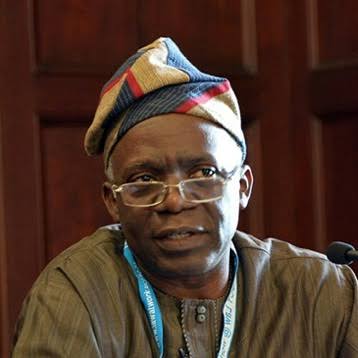
Senior Advocate of Nigeria and renowned human rights lawyer, Femi Falana, has called for an immediate investigation into the alleged diversion of a $3.4 billion loan Nigeria received from the International Monetary Fund (IMF) in 2020 to combat the effects of the COVID-19 pandemic.
In a statement released on Sunday, Falana expressed concern over the apparent mismanagement of the emergency funds, which were intended to support Nigeria’s healthcare system, protect jobs, and stabilise the economy during one of the most disruptive global crises in modern history.
“It is pertinent to recall that in the wake of the COVID-19 in 2020, Nigeria requested emergency assistance of about US$3.4 billion — equivalent to 100 percent of its quota from the International Monetary Fund to shore up the country’s economy and help businesses weather the storm of a deadly pandemic that disrupted global markets and plunged the world into a recession,” he said.
READ ALSO: SERAP Sues Tinubu Over Missing $3.4bn IMF Loan
The IMF Executive Board had approved the disbursement on April 28, 2020, under its Rapid Financing Instrument.
The Deputy Managing Director and Acting Chair at the time, Mr. Mitsuhiro Furusawa, emphasized that, “The emergency financing under the RFI will provide much-needed liquidity support to respond to the urgent BOP needs. Additional assistance from development partners will be required to support the government’s efforts and close the large financing gap.
“The implementation of proper governance arrangements—including through the publication and independent audit of crisis-mitigating spending and procurement processes—is crucial to ensure emergency funds are used for their intended purposes.”
Falana, however, said the IMF failed to uphold that commitment. “Characteristically, the IMF Management, which jointly manages the neocolonial economy of Nigeria with the Federal Government, failed to ensure emergency funds were used ‘for their intended purposes.’”
He based his claim on the findings of the 2020 audit report by the Office of the Auditor-General of the Federation, made public in January 2024.
According to the report, $2.4 billion from the loan was initially transferred to the Central Bank of Nigeria (CBN)’s account at the Federal Reserve Bank of New York, with the remaining balance deposited at the Bank of China in Shanghai.
Within weeks, both amounts were reportedly moved again—this time to the Bank for International Settlements (BIS) and the Industrial and Commercial Bank of China—for short-term investments.
“These transactions, according to the audit, were not supported by documentation or approvals from the Federal Government or the CBN’s Investment Committee, and the funds were subsequently reclassified as part of the CBN’s external reserves rather than the Federal Government’s holdings.
“This reclassification, the report noted, allowed interest to be earned on the funds, contrary to the emergency spending purpose for which they were approved,” Falana explained.
Further irregularities were recorded in August 2020 when the Federal Ministry of Finance requested the monetisation of $700 million to support the national budget.
“The Central Bank, according to the report, approved a debit of ₦265.65 billion, applying a higher-than-official exchange rate of ₦379.5/$ as against the prevailing ₦360.5/$.
The funds were credited to three accounts: ₦252 billion went into the COVID-19 Public Sector Account, ₦13.3 billion to the Forex Equalisation Account, and ₦350 million to the Exchange Commission Account.
Falana pointed to additional concerns from the Auditor-General’s findings: “The audit noted that a 2% commission was deducted from the monetised amount, even though the funds were categorised as Federal Government property.
At the end of 2020, an unmonetised balance of $2.7 billion — equivalent to approximately ₦1.02 trillion — remained unaccounted for, according to the Auditor-General’s report.”
The audit urged the CBN Governor to provide an explanation for the movement and reclassification of the funds without due approval.
It further demanded access to bank statements confirming the unmonetised balance, recovery of the ₦13.3 billion and ₦350 million, and full remittance of interest earned on the investments. It warned that failure to do so would attract penalties under financial regulations.
According to Falana, “The Auditor-General wants the money recovered and remitted to the public treasury, and for the evidence of remittance to be forwarded to the Public Accounts Committee of the National Assembly.
“He also said the Auditor-General also recommended that anyone suspected to be involved should be ‘sanctioned and handed over to the EFCC and ICPC for investigation and prosecution, as provided for in paragraph 3112 of the Financial Regulations.’”
However, the lawyer expressed disappointment that both chambers of the National Assembly have not acted on the report.
“Even though the Auditor-General of the Federation submitted the 2020 Annual Report to each House of the National Assembly, both Houses have failed to cause the report to be considered by the committees responsible for public accounts, to cover up the criminal diversion of the $3.4 IMF and several trillions of Naira set out in the Auditor-General’s report, in utter contravention of section 85(5) of the Constitution of the Federal Republic of Nigeria as amended.”
On behalf of the Alliance on Surviving COVID-19 and Beyond (ASCAB), Falana issued a two-pronged demand—urging Nigeria’s anti-corruption agencies, the EFCC and ICPC, to probe the matter, and calling on the IMF Board to conduct its own investigation.
“We also call on the IMF Board to probe the deliberate refusal of its management to ensure that the emergency funds were used for their intended purposes,” he said.
Falana also asked the IMF to halt collection of any remaining charges on the loan—estimated at SDR 125.99 million (₦275.28 billion)—pending the outcome of a thorough investigation.








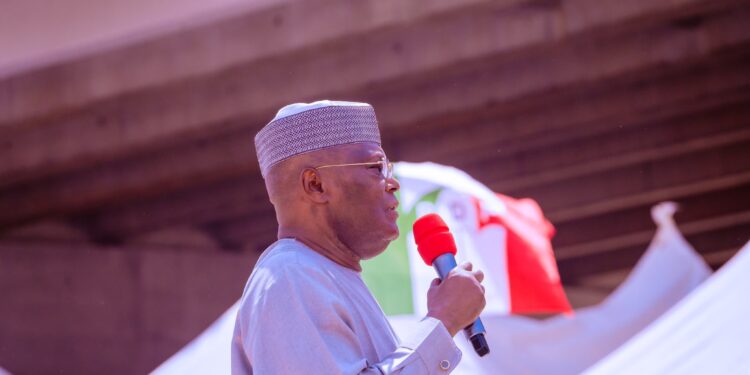
Former Vice President and African Democratic Congress (ADC) presidential candidate, Atiku Abubakar, has said Nigerians still deserve answers six years after the October 20, 2020, EndSARS shooting at the Lekki Toll Gate in Lagos.
Atiku made this known in a statement on Tuesday marking the sixth anniversary of the incident, in which he called for accountability over the shooting and criticised the Federal Government’s handling of the unresolved questions surrounding the tragedy.
He questioned who gave the order for the operation against protesters, insisting that the country could not continue to commemorate the victims without addressing the circumstances surrounding the incident.
RELATED NEWS: EndSARS Memorial: ‘We Must Never Normalise Injustice’ – Peter Obi
Atiku also recalled President Bola Tinubu’s remarks in October 2020, when he questioned the circumstances surrounding the casualties recorded during the shooting.
Tinubu had asked: “How were they there? How long were they there? What kind of characters are they?”
According to Atiku, the remarks appeared to focus on questioning the victims rather than demanding answers from those responsible for the violence against peaceful protesters.
He said the anger surrounding the anniversary reflected the unresolved grief of affected families and the distrust of young Nigerians who had demanded accountability and a better future.
“The APC has governed Nigeria through these six years. It cannot keep asking Nigerians to remember the dead while refusing to confront the unanswered questions,” Atiku said.
The ADC presidential candidate also linked the unresolved questions surrounding the Lekki shooting to the economic hardship confronting Nigerians, particularly young people struggling with rising living costs.
Citing petrol prices of ₦1,405 per litre, Atiku said transportation costs were making it increasingly difficult for Nigerians to afford basic necessities, including food, rent, education and commuting to work.
He illustrated the situation with the account of a young woman who reportedly resigned from her job because her salary could no longer cover her transportation expenses.
According to Atiku, one of his aides shared the woman’s experience earlier on Tuesday.
The woman reportedly said: “The pay no longer covers transport. Everything in Nigeria just dey increase in price. Feels like I’m working for Bolt guys.”
Atiku described the experience as an example of the difficulties faced by employed Nigerians whose earnings could no longer adequately cover the cost of getting to work.
He argued that the economic situation was affecting not only unemployed Nigerians but also workers struggling to survive on salaries weakened by rising costs.
The former vice president also highlighted his Economic Recovery Plan, which he said was designed to make Nigeria more affordable.
The proposed measures include providing support tied to fuel refined in Nigeria, passing savings on to consumers, increasing local production to create jobs, protecting minimum-wage earners, supporting students and cutting government waste rather than imposing additional taxes.
Atiku maintained that young Nigerians deserved answers about the Lekki shooting, a government that protects human life and an economy in which employment could provide a path to a better standard of living.
He added that Nigerians were entitled to question the APC’s record on accountability and economic opportunities six years after the incident.
The EndSARS protests began in October 2020, with young Nigerians demanding an end to police brutality and reforms to policing in the country. The shooting at the Lekki Toll Gate on October 20 became one of the most prominent events associated with the protests.
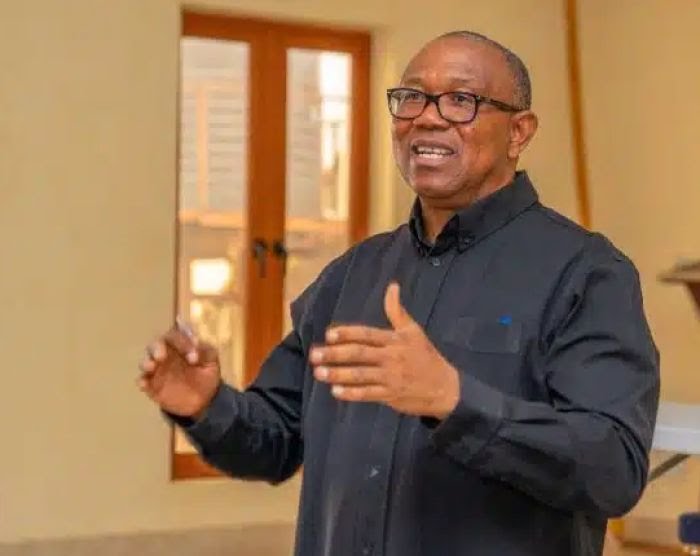
National Democratic Congress (NDC) presidential candidate, Peter Obi, has called on Nigerians never to normalise injustice as the country marks the sixth anniversary of the Lekki Toll Gate shootings during the #EndSARS protests.
Obi made the call in a statement posted on his X account on Tuesday, October 20, 2026, in which he reflected on the events of October 20, 2020, and renewed his call for a Nigeria where citizens’ rights are protected.
He expressed appreciation for Nigerian youths who participated in the protests, describing the anniversary as a painful reminder of the sacrifices made in the demand for a better country.
SEE ALSO: BREAKING: Activists Arrested For Commemorating #Endsars Released
According to him, peaceful #EndSARS protesters were met with gunfire at the Lekki Toll Gate on that fateful night, leaving people dead and others injured.
He noted that the incident raised questions about justice, accountability and respect for human life.
“We must never forget. We must never normalise injustice,” Obi said.
He also reaffirmed his belief that a New Nigeria is possible, describing it as a country where citizens are protected rather than brutalised, young people are heard rather than silenced, and government power is exercised responsibly and with respect for human rights.
The former Anambra State governor stressed that Nigeria must become a nation where no citizen is punished for demanding good governance and a better future.
As the country marks six years since the incident, Obi prayed for the repose of the souls of those who lost their lives and called for their sacrifices to strengthen efforts towards building a better nation.
“May the souls of the departed continue to rest in peace. May their sacrifice strengthen our resolve to build a Nigeria where this tragedy will never be repeated,” he stated.
He concluded by reiterating his belief in the possibility of a New Nigeria, insisting that the country must become one where every life matters.
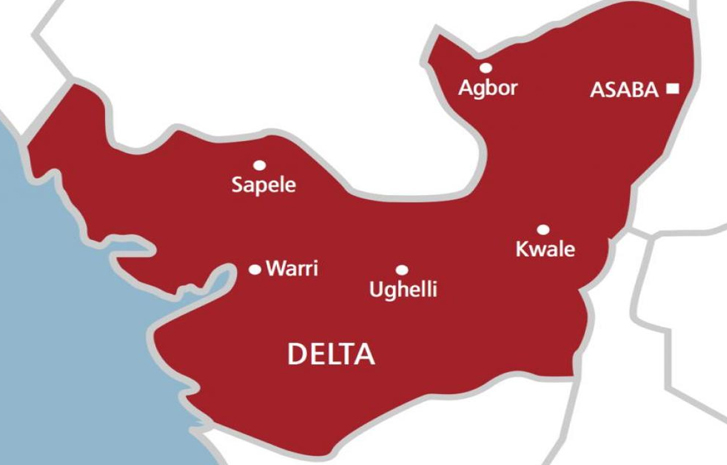
Former Delta State Governor, Dr Emmanuel Uduaghan, has reportedly died, according to sources said to be close to his family.
The sources confirmed the development on Monday, October 19, 2026, although details surrounding the circumstances of his death remained unclear as of the time of filing this report.
“Uduaghan is no more; he is dead,” one of the sources reportedly said.
SEE ALSO: Document reveals Akpoti-Uduaghan demanded N10b damages from husband before marriage, firm reacts
The reported death comes months after claims that the former governor had died circulated on social media before being dismissed by his media aide, Henry Unini.
In June, reports of Uduaghan’s alleged death spread across Facebook and WhatsApp, prompting Unini to publicly debunk the claims and assure the public that the former governor was alive.
“I can tell you for a fact that Dr. Emmanuel Uduaghan is alive,” Unini said at the time.
“Frankly, I don’t know where the writer got his information from. The death of someone is not something you take and write about casually,” he added.
Unini acknowledged at the time that Uduaghan had been experiencing health challenges but maintained that he was receiving medical attention.
“It is now common knowledge that Dr. Emmanuel Uduaghan has been sick, but he is receiving proper medical care,” the media aide said.
He also stated that the former governor was recuperating, assuring the public that there was no immediate cause for concern.
“There is no cause for alarm whatsoever,” Unini said.
The media aide thanked friends, well-wishers and residents of Delta State who contacted the family to verify the former governor’s condition. He also urged the public to avoid spreading unverified information.
“The rumour was uncalled for,” he said while addressing the earlier reports.
As of the time of filing this report, further details about the circumstances surrounding Uduaghan’s reported death had yet to emerge.





FG to Launch National Lead Poisoning Prevention Plan Wednesday

EndSARS Memorial: ‘Nigerians Still Deserve Answers’ – Atiku

EndSARS Memorial: ‘We Must Never Normalise Injustice’ – Peter Obi

Petrol Price Hike Looms as Oil Hits $110/barrel

NIPCO Gas Licences, NNPC Ltd Management Face Reps Probe
UNDC Assures on Readiness to Protect Oil, Gas Pipelines

Trump’s Family Unveils New Cryptocurrency Platform

Senate Denies Receiving Petitions Against Tinubu’s Ambassadorial Nominees

Dangote Cement Lights Up Benue Host Communities With CSR Initiatives

Reps Recommend 3-year Jail Term For Aviation minister

Tems Sets New Record On Billboard Hot 100 Chart
