
Politics
SERAP Sues Tinubu Over Missing $3.4bn IMF Loan

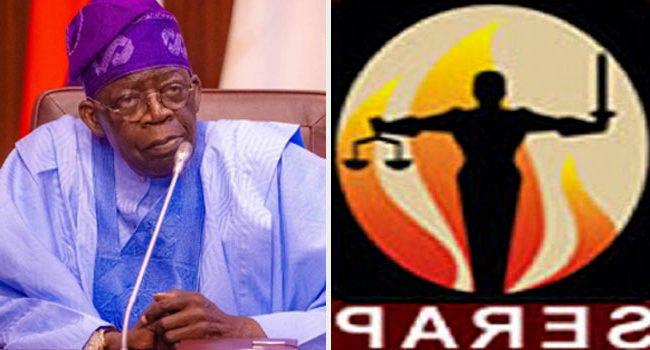
The Socio-Economic Rights and Accountability Project (SERAP) has dragged President Bola Tinubu to court on the $3.4 billion COVID-19 loan from the International Monetary Fund (IMF) which remains unaccounted for.
The SERAP in a statement averred that its action was over “the failure to probe the grim allegations that $3.4 billion loan obtained by Nigeria from the International Monetary Fund (IMF) to finance the budget and respond to COVID-19 is missing, diverted or unaccounted for.”
The anti-corruption crusader made it clear that it action was predicated on information gleaned from the recently published 2020 Nigeria’s annual audited report by the Auditor-General of the Federation.
In the suit number FHC/ABJ/CS/269/2024 filed last Friday at the Federal High Court, Abuja, SERAP is asking the court “to direct and compel President Tinubu to probe the allegations that $3.4 billion loan obtained by Nigeria from the IMF to finance the budget and respond to COVID-19 is missing, diverted or unaccounted for.”
The SERAP is also seeking: “an order of mandamus to direct and compel President Tinubu to ensure the effective prosecution of anyone suspected to be responsible for the alleged mismanagement and diversion of the $3.4 billion IMF loan obtained by Nigeria to finance the budget and respond to the COVID- 19 pandemic.
“An order of mandamus to direct and compel President Tinubu to ensure the full recovery of the missing $3.4 billion IMF loan obtained by Nigeria to finance the budget and respond to the COVID- 19 pandemic.”
In the suit, the SERAP argued that: “Investigating these grave allegations, bringing suspected perpetrators to justice and recovering any missing IMF loan would contribute to addressing the country’s economic crisis and debt burden.”
The SERAP is also arguing that, “The findings by the Auditor-General suggest a grave violation of the public trust, the provisions of the Nigerian Constitution 1999 [as amended], national anticorruption laws, and the country’s obligations under the UN Convention against Corruption.”
According to the SERAP, “Servicing IMF loan that is allegedly missing, diverted or unaccounted for is double jeopardy for Nigerians—they can neither see nor benefit from the projects for which the loan was approved; yet, they are made to pay back both the loan and accrued interests.”
The SERAP is arguing that, “Unless the President is directed and compelled to get to the bottom of these damning revelations, suspected perpetrators would continue to enjoy impunity for their crimes and enjoy the fruits of their crimes.”
The suit filed on behalf of the SERAP by its lawyers Kolawole Oluwadare and Andrew Nwankwo, read in part: “There is a legitimate public interest in ensuring justice and accountability for these serious allegations. Granting the reliefs sought would end the impunity of perpetrators and ensure justice for victims of corruption.
“Granting the reliefs sought would facilitate the effective implementation of the recommendations by the Auditor-General in the 2020 annual report that the missing $3.4 billion IMF loan be fully recovered and remitted to the public treasury and those responsible be ‘sanctioned and handed over to anticorruption agencies’.
“The allegations of corruption in the spending of IMF loan documented by the Auditor-General undermine economic development of the country, trap the majority of Nigerians in poverty and deprive them of opportunities.
“According to the 2020 annual audited report by the Auditor-General of the Federation published last week, the US$3.4 billion emergency financial assistance obtained from the International Monetary Fund (IMF) to finance the budget and respond to the COVID-19 pandemic is missing, diverted or unaccounted for.
“According to the Auditor-General, no information or document was provided to justify the movement and spending of the Fund.
“The Auditor-General has recommended that the money should be fully recovered and remitted to the public treasury and for the evidence of remittance to be forwarded to the Public Accounts Committee of the National Assembly.
“The Auditor-General has also recommended that anyone suspected to be involved should be ‘sanctioned and handed over to the EFCC and ICPC for investigation and prosecution, as provided for in paragraph 3112 of the Financial Regulations’.
“According to SERAP’s information, Nigeria has signed an agreement to spread the repayment of the IMF loan/interests from 2023 to 2027. The first instalment, due in 2023, is worth $497.17 million. The second instalment, due in 2024, will be worth $1.76 billion. The third instalment, due in 2025, will be worth $865.27 million.
“The final two instalments, due in 2026 and 2027, will each be worth $33.99 million. These instalments will only be interest payments.
“Impunity for corruption in the management of loans obtained by Nigeria will continue as long as high-ranking public officials go largely unpunished for their alleged crimes.
“The consequences of corruption are felt by citizens on a daily basis. Corruption exposes them to additional costs to pay for health, education and administrative services.
“The Nigerian government has a sacred duty to ensure that the country’s loans including those obtained from the IMF are transparently and accountably used solely for the purposes for which the loans are obtained, and for the effective development of public goods and services as well as the general public interests.
“Section 13 of the Nigerian Constitution 1999 [as amended] imposes clear responsibility on the Nigerian government to conform to, observe and apply the provisions of Chapter 2 of the constitution. Section 15(5) imposes the obligations on the government to ‘abolish all corrupt practices and abuse of power’ in the country.
“Under Section 16(1) of the Constitution, the Nigerian government has a responsibility to ‘secure the maximum welfare, freedom and happiness of every citizen on the basis of social justice and equality of status and opportunity.’
“Section 16(2) further provides that, ‘the material resources of the nation are harnessed and distributed as best as possible to serve the common good.’
“Similarly, articles 5 and 9 of the UN Convention against Corruption also impose legal obligations on the Nigerian government to ensure proper management of public affairs and public funds including loans obtained by the country, and to promote sound and transparent administration of public affairs.
“The UN Convention against Corruption and the African Union Convention on Preventing and Combating Corruption to which Nigeria is a state party obligate the Nigerian government to effectively prevent and investigate allegations of corruption and mismanagement of public funds including loans obtained by the country.
“Specifically, article 26 of the UN convention requires the Nigerian government to ensure ‘effective, proportionate and dissuasive sanctions’ including criminal and non-criminal sanctions, in cases of grand corruption.
“Article 26 complements the more general requirement of article 30, paragraph 1, that sanctions must take into account the gravity of the corruption allegations.”
Joined in the suit as Respondent is Lateef Fagbemi, the Attorney General of the Federation and Minister of Justice.
No date has been fixed for the hearing of the suit.







Politics
2027 Polls: ‘Poor Funding Could Undermine Election Security, Logistics’ — INEC Chairman Warns

The Chairman of the Independent National Electoral Commission (INEC), Prof. Joash Amupitan, has warned that inadequate funding could undermine security and logistics for the 2027 general elections.
Amupitan gave the warning on Wednesday in Owerri, Imo State, while delivering a goodwill message at the sixth edition of the Conference and Retreat for Senior Police Officers, themed, “Developing a Nigeria Police Roadmap for Effective Management of Security During Elections.”
ALSO READ: Where Is Amupitan?’ — Obidients Demand Answers From INEC
According to the INEC chairman, adequate funding is critical to the effective deployment of security personnel and electoral materials needed for the successful conduct of elections.
He noted that although INEC’s funding is constitutionally provided as a first-line charge on the Consolidated Revenue Fund, the scale of the commission’s responsibilities requires sustained financial support.
Amupitan explained that INEC conducts not only presidential and National Assembly elections but also governorship and State House of Assembly elections, in addition to voter registration and the registration of political parties.
He also pointed out that the commission has statutory powers to request the deployment of security agencies for elections and voter registration, making security an integral component of the electoral process.
He said financial limitations could affect what government agencies are able to accomplish, noting that allocations are often determined by what is available and affordable at a particular time.
“Sometimes, it is not what you would like to do that you are able to do because of financial constraints.”
Amupitan further stressed the importance of voter registration, describing it as the foundation of credible elections.
He warned that an inaccurate or outdated voters’ register could undermine the inclusiveness of the electoral process, adding that INEC’s responsibility for elections across the three tiers of government makes election expenditure a collective national responsibility.
The INEC chairman said adequate funding would be particularly important for deploying personnel and electoral materials to local government areas, wards, registration areas and polling units across the country.
According to him, even where security agencies successfully maintain peace, inadequate logistics could still affect the effective conduct of elections.
Amupitan said security and logistics had remained priorities under his leadership, adding that the commission was working with government and security agencies to address operational challenges ahead of the 2027 polls.
He also highlighted the role of the Inter-Agency Consultative Committee on Election Security (ICCES), describing it as a platform for coordinating INEC, security agencies and other relevant government institutions on election security.
He explained that ICCES, which emerged as a coordinating arrangement following the 2011 general elections amid concerns over post-election violence, has since developed into a structured election-security mechanism operating at federal, state and local government levels.
At the national level, the Inspector-General of Police participates in the arrangement, while commissioners of police are represented at the state level and divisional police leadership at the local level.
Amupitan said continued coordination among INEC, the police and other security agencies would be essential to ensuring that security and logistical challenges do not undermine the 2027 general elections.

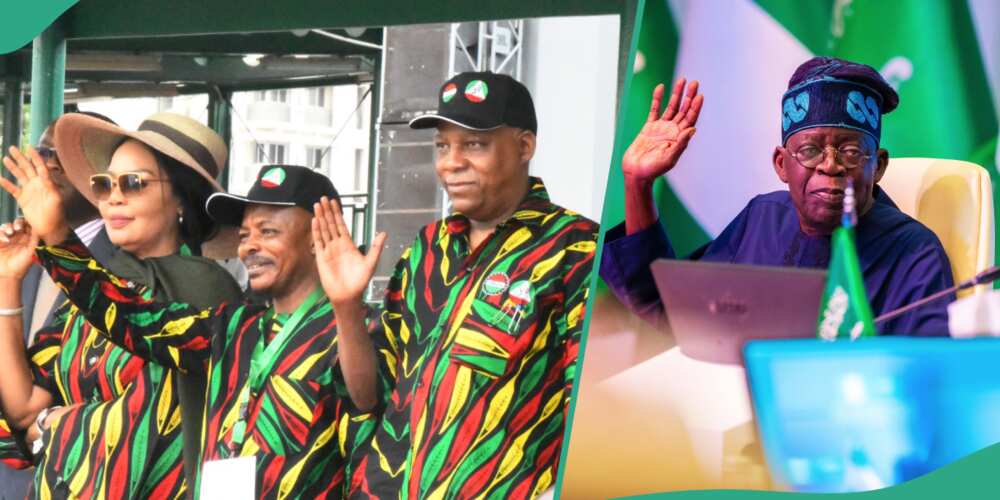
The organised labour in Nigeria has joined forces with civil servants demanding for a new minimum wage of N500,000 and reduction of petrol price to N500 per litre to address the worsening economic hardship facing workers and their dependents.
Acting under the Joint National Public Service Negotiating Council (JNPSNC), made up of the Nigeria Labour Congress (NLC), and civil servants, as one Trade Union Side (TUS), made a formal request to the Federal Government.
In a letter to President Bola Tinubu, the National Secretary of JNPSNC (Trade Union Side), Olowoyo Gbenga, disclosed that workers were also demanding the immediate constitution of a committee to negotiate a new national minimum wage, ahead of January 2027.
READ ALSO: Tanker Drivers Suspend Strike after FG Intervention
The NLC insists that their position is realistic and legitimate.
According to the workers, the recent increase in fuel prices to N1,430 per litre and above in some locations had further worsened the cost-of-living crisis. They gave government till Wednesday, September 30, 2026, to take action on their demands, warning that the prevailing hardship is creating palpable tension among workers and Nigerians.
The JNPSNC, which includes Nigerian Civil Service Union (NCSU); Medical and Health Workers Union (MHWU); Association of Senior Civil Servants of Nigeria (ASCSN); National Association of Nigerian Nurses and Midwives (NANNW); among others, said the removal of fuel subsidy three years ago had triggered an astronomical increase in fuel prices which triggered multiplier effects on the prices of essential commodities in the economy.
Other unions in the council are Amalgamated Union of Public Corporations (AUPC); Civil Service Technical and Recreational Employees, AUPCTRE; Nigeria Union of Public Service, Reportorial, Secretarial, Data Processors and Allied Workers, NUPSRAW; National Union of Printing, Publishing and Paper Products Workers, NUPPPPROW; and National Union of Agriculture and Allied Employees, NUAEE.
The council said the situation has made life increasingly unbearable for workers, adding that the provision of food palliatives is not a sustainable solution to the economic crisis.
It said: “It has dawned on Nigerian workers that the provision of palliatives, such as bags of rice, Indomie, vegetable oil, garri, among other edible foods, is as good as weaponising Nigerians with poverty because it is a pyrrhic intervention which is unsustainable, inaccessible to the majority of Nigeria’s population and also limited to political cronies.”
The workers argued that a more sustainable intervention would be to reduce the cost of fuel to N500 per litre, saying the measure will have a multiplier effect on the economy.
“Consequent upon the above, it is preferable that the Federal Government provides an intervention that will trickle down to all Nigerians by making fuel available at an affordable amount, as low as N500 (five hundred Naira),” they said.
The council identified the restoration of workers’ purchasing power, improved productivity and service delivery, promotion of integrity and accountability, and the reinforcement of trust and industrial peace as major reasons for its demand for improved remuneration.
‘Govt must look inward on fuel price’
On fuel prices, the workers said government should “look inward and stabilise the prices of fuel to an affordable minimum,” arguing that fuel remains an essential commodity with significant implications for the Nigerian economy.
“As a matter of reality, the current hardship being faced by the hapless Nigerian workers is caused by the astronomical increase in the price of Premium Motor Spirit to as much as N1,430.00, or more per one litre (this is a killing amount),” the council stated.
It further called for an intervention fund for stakeholders in the oil sector to stabilise fuel prices and eventually bring the pump price down to N500 per litre.
The council also said government could adopt another description for the intervention if the term “fuel subsidy” was considered unacceptable.
“The fuel intervention fund will give the opportunity to every Nigerian to benefit from the intervention fund because it will have multiplier effect in the life of every Nigerian and will naturally trickle down to the downtrodden and all the remotest parts of the country,” it said.
The council also endorsed a position attributed to the NLC President, Joe Ajaero, on measures to address the fuel crisis.
Ajaero was quoted as saying that “Nigeria, as an oil-producing country, has sufficient local refining capacity, even as this substantially resides with the private sector.”
He also said: “As a nation, and as a people endowed with enormous fossil resources, we are deserving of a certain level of protection or buffer against the gales from the Gulf, and indeed, other gales.”
According to the NLC position cited by the council, “As part of the process of creating this buffer government should sell sufficient crude in Naira to our local refineries; expand our national storage capacity in pursuance of meeting energy emergencies and security. These measures will create jobs, economic value as well as deal with mutating security challenges.”
The statement further said: “There is nothing wrong with government subsidizing the needs of citizens, especially in emergency situations like this. At the moment, there is no oil-producing country we know of that has not intervened or come up with sustainable palliatives in one way or the other in these perilous times.”
The NLC position also stated: “Government is making extra money in the international spot market (of between USD35 and 40 per barrel above the budgeted figure). This translates to trillions of Naira a month.
“On a long term basis, we are equally concerned that local refineries are importing crude. This is unreasonable and unacceptable and defeats the logic and purpose of local capacity.”
On wages, the council demanded immediate introduction of a wage award covering federal, state and local government workers.
“Wage award as an urgent intervention and upward review of salaries and allowances of all serving public servants in the Nigerian public service should be provided with immediate effect to cut across all federal, state and local government workers,” it said.
The JNPSNC proposed that the minimum salary payable to an officer on Grade Level 01, Step 1, should be N500,000 per month under the 2027 salary template.
The council also called for harmonised wages across ministries, departments and agencies, MDAs, while urging that the review be encouraged at the state and local government levels.
The JNPSNC urged the president to direct the National Salaries, Incomes and Wages Commission, NSIWC, to commence discussions with the Nigeria Labour Congress, NLC; Trade Union Congress of Nigeria TUC; JNPSNC; and other relevant stakeholders on the wage award and upward review of salaries and allowances.
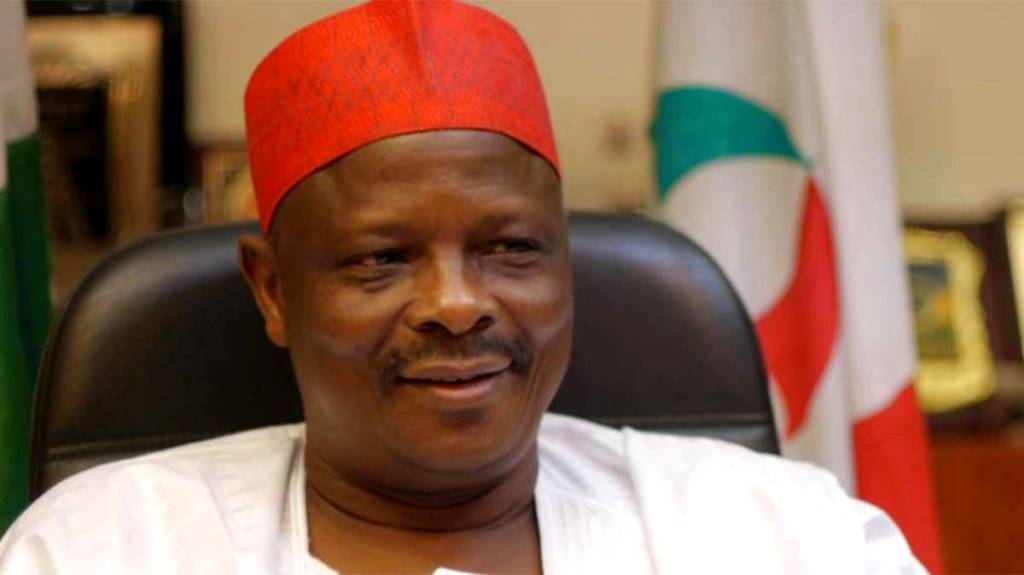
Former Kano State Governor and Nigeria Democratic Congress (NDC) vice-presidential candidate, Rabiu Musa Kwankwaso, has said an NDC government would bring back fuel subsidy if elected in the 2027 general elections.
Kwankwaso made the declaration during an exclusive interview with ARISE Correspondent, Adesuwa Giwa-Osagie.
SEE ALSO: ‘Obi Has Nowhere to Hide’ — APC Campaign Council Tackles Peter Obi Over Anambra Record
The former governor said the subsidy would not necessarily return in the same form as the previous system, stressing that the NDC would adopt its own approach to reduce the cost of petrol for Nigerians.
“We’ll bring back subsidy in our own way,” Kwankwaso said.
He added that the party would do “whatever it takes” to bring down the price of fuel.
Kwankwaso also criticised President Bola Tinubu’s decision to remove the petrol subsidy at the beginning of his administration, describing the policy and its consequences as having left Nigeria in a “total mess, economically.”
Tinubu announced the removal of the petrol subsidy during his inauguration on May 29, 2023, triggering a major shift in petrol pricing and subsequent increases in the cost of transportation, goods and services.
The policy has remained a major subject of political and economic debate, with the Federal Government maintaining that subsidy removal was necessary to reduce the financial burden on the country, while critics have argued that it has worsened economic hardship.
Kwankwaso, who is running alongside former Anambra State Governor Peter Obi on the NDC ticket, said bringing down fuel prices would be a priority under an NDC administration.
The former Kano governor also took a swipe at former Vice-President Atiku Abubakar while discussing Nigeria’s refineries.
According to Kwankwaso, “Atiku would sell our refineries to his friends.”
His comments come as political parties and presidential contenders begin to intensify their positioning ahead of the 2027 elections, with economic hardship, fuel prices, subsidy policy and the future of Nigeria’s refineries expected to remain major campaign issues.






Dangote to Support Two Million Women with Refinery IPO Share Ownership
NGX Invest Expands Primary Market Access with WhatsApp Subscription Channel

Kainji–Birnin Kebbi Power Line: TCN Begins Final Phase of Restoration

2027 Polls: ‘Poor Funding Could Undermine Election Security, Logistics’ — INEC Chairman Warns

N4bn Compensation Dispute Threatens Ikot Abasi Power Project

Organised Labour Supports Workers’ Demand for N500 PMS Price, N500,000 Minimum Wage

Trump’s Family Unveils New Cryptocurrency Platform

Senate Denies Receiving Petitions Against Tinubu’s Ambassadorial Nominees

Dangote Cement Lights Up Benue Host Communities With CSR Initiatives

Reps Recommend 3-year Jail Term For Aviation minister

Tems Sets New Record On Billboard Hot 100 Chart
