
Business
How Nigeria Can Slash Inflation To 13% In 2026 — Expert Explains

Nigeria could reduce its inflation rate to 13 per cent by 2026 if key economic conditions, particularly currency stability and improved food supply, are effectively sustained, an investment expert has said.
A leading Investment Associate at AAG Capital, Oyinkansola Aregbeseola, made this disclosure while speaking on Nigeria’s inflation outlook during an interview aired on ARISE Television.
According to Aregbeseola, the country’s ability to achieve the projected inflation target largely depends on the continued stabilisation of the foreign exchange market and a significant increase in domestic agricultural production.
SEE MORE: World Bank Raises Nigeria’s Growth Forecast to 3.8% as Inflation Eases
She explained that although the 2024 rebasing of the Consumer Price Index (CPI) has caused temporary distortions in inflation data, a stronger naira and improved security across food-producing regions could help stabilise prices in the long term.
The analyst noted that a naira exchange rate strengthening to about ₦1,300 per dollar, combined with increased food supply, could sharply slow headline inflation by the end of the year.
Addressing concerns surrounding December’s inflation figures, Aregbeseola said the National Bureau of Statistics (NBS) is currently dealing with statistical adjustments arising from the CPI rebasing exercise.
To promote transparency, she said the NBS has announced plans to release two inflation reports — one reflecting raw data and another showing normalised figures for comparison.
“The market understands that this is largely a statistical issue. The decision to release two reports is welcome and will help investors and policymakers better interpret the data,” she said.
Outlining Nigeria’s inflation outlook for 2026, Aregbeseola identified three possible scenarios. The base case projects inflation settling at 14.6 per cent, assuming the naira remains stable at around ₦1,450 to the dollar.
In the bull case, inflation could fall to 13 per cent if the naira appreciates further to ₦1,300 per dollar.
However, she warned that inflation could rise to 16 per cent under a bear case scenario if insecurity and geopolitical tensions disrupt farming activities and food supply.
She emphasised that national security remains central to controlling inflation, noting that food availability is a major driver of price stability.
According to her, recent efforts to curb insecurity must translate into tangible improvements to allow farmers to return to their fields and boost production.
Without stability in food supply, she added, downward pressure on prices would be difficult to sustain, regardless of fiscal or monetary interventions.
Meanwhile, Aregbeseola said the Central Bank of Nigeria (CBN) is closely monitoring inflation data and has adopted a cautious stance on monetary policy decisions.
She explained that the apex bank’s next moves on interest rates will depend largely on how inflation responds to the technical adjustments following the CPI rebasing exercise.



Nigeria recorded the largest increase in the number of people experiencing multidimensional poverty among five countries that registered increases over their latest measurement periods, according to the United Nations Development Programme (UNDP).
The finding was contained in the 2026 Global Multidimensional Poverty Index report, released on Monday by the UNDP and the Oxford Poverty and Human Development Initiative (OPHI).
According to the report, Nigeria’s multidimensional poverty rate rose from 33 per cent in 2021 to 38.7 per cent in 2024, representing an increase of 5.7 percentage points.
SEE MORE: NNPC’s 30-Day Petrol Discount Is Not a Policy – Sowunmi
The number of Nigerians living in multidimensional poverty increased from 72.2 million in 2021 to 90.1 million in 2024, leaving an additional 17.9 million people affected.
The report noted that the latest increase reversed the progress Nigeria recorded between 2018 and 2021, when the proportion of people living in multidimensional poverty declined.
Nigeria’s Multidimensional Poverty Index value also increased from 0.175 in 2021 to 0.208 in 2024, reflecting a rise in both the incidence and intensity of deprivation.
The intensity of deprivation among multidimensionally poor Nigerians increased from 52.9 per cent to 53.6 per cent over the same period.
Unlike income-based poverty measures, which assess poverty based on how much people earn or spend, the Multidimensional Poverty Index examines overlapping disadvantages experienced in daily life.
The index measures deprivation across three dimensions: health, education and standard of living.
Its 10 indicators include nutrition, child mortality, years of schooling, school attendance, cooking fuel, sanitation, drinking water, electricity, housing and household assets.
A person is classified as multidimensionally poor when their household experiences deprivation in at least one-third of the weighted indicators.
The report showed that Nigeria had made progress in reducing multidimensional poverty before the latest increase.
The country’s index value declined from 0.230 in 2013 to 0.202 in 2018 and 0.175 in 2021 before rising to 0.208 in 2024.
Similarly, the proportion of Nigerians living in multidimensional poverty fell from 42.3 per cent in 2013 to 37.2 per cent in 2018 and 33 per cent in 2021 before increasing to 38.7 per cent in 2024.
The number of affected Nigerians also declined from 76.3 million in 2018 to 72.2 million in 2021 before climbing to 90.1 million in 2024.
The report further highlighted significant differences in multidimensional poverty across Nigeria’s subnational regions, with incidence ranging from 3.7 per cent to 88.3 per cent across the regions covered by the analysis.
It compared Yobe and Sokoto, two of Nigeria’s poorest subnational regions with similar Multidimensional Poverty Index values, to illustrate how the forms of deprivation experienced by communities can differ despite comparable overall poverty levels.
Globally, the report estimated that 1.2 billion people across 108 countries lived in acute multidimensional poverty.
Sub-Saharan Africa accounted for 616 million people living in multidimensional poverty, while South Asia followed with 393 million.
The report also found that 83.3 per cent of the world’s multidimensionally poor population, equivalent to approximately 998 million people, lived in rural areas, compared with 200 million in urban areas.
Children below the age of 18 accounted for 617 million, or 51.5 per cent, of the world’s multidimensionally poor population.
In sub-Saharan Africa, 355 million children lived in multidimensional poverty, accounting for 57.7 per cent of the region’s poor population.

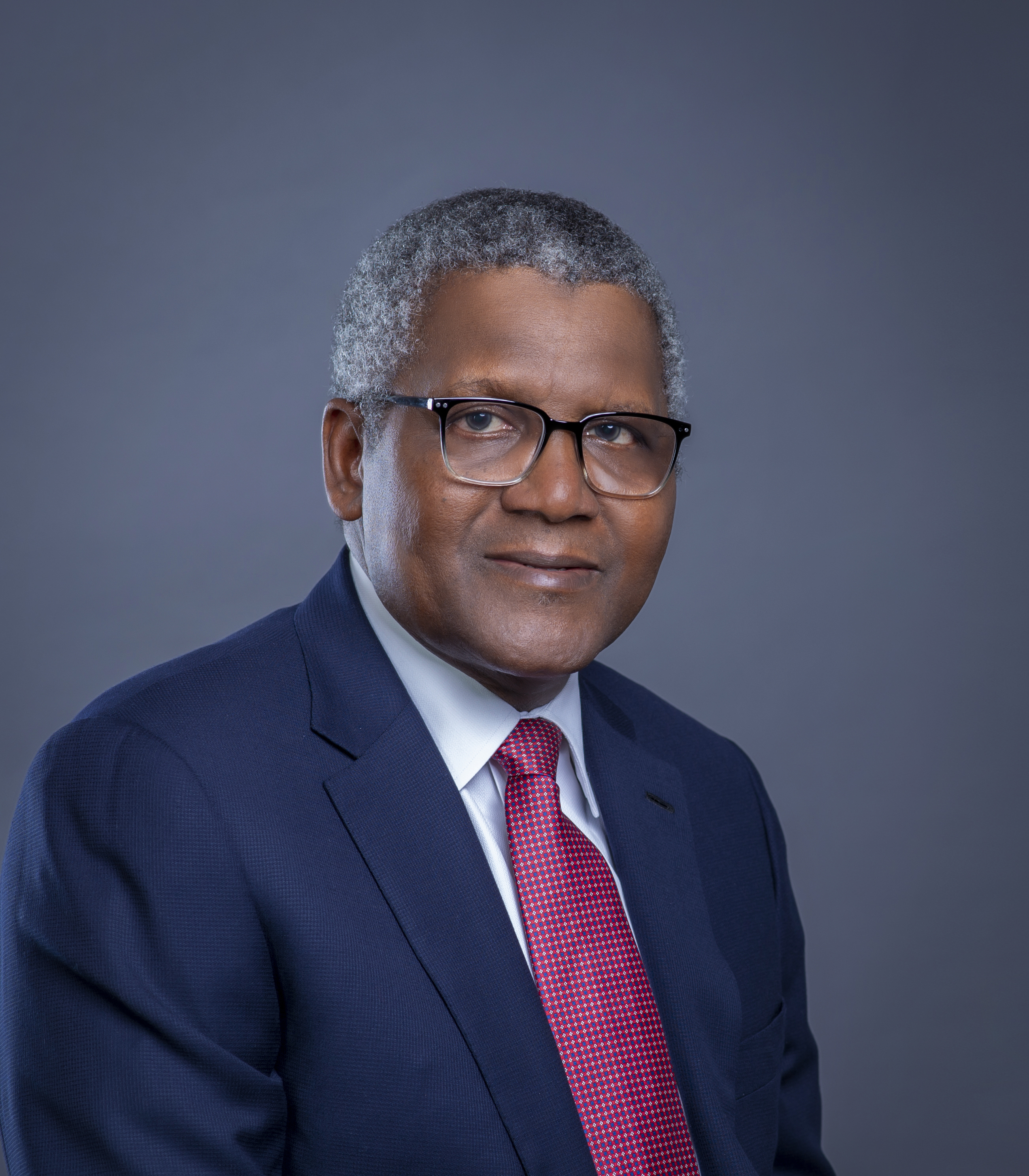
In a bold move to deepen retail participation in Nigeria’s capital market, the Aliko Dangote Foundation (ADF) has unveiled a share grant initiative aimed at helping up to five million tertiary students and two million vulnerable women become shareholders in Dangote Petroleum Refinery and Petrochemicals (DPRP) through its Initial Public Offering (IPO).
Managing Director and Chief Executive Officer of ADF, Zouera Youssoufou, disclosed that the Foundation will match qualifying share subscriptions by eligible beneficiaries. Under the programme, students who subscribe for the minimum 10 shares worth N5,250 will receive an additional 10 shares funded by the Foundation, subject to the approved process and allocation, effectively doubling their holdings to 20 shares.
Speaking during a television interview, Youssoufou said the initiative was designed to turn the refinery’s “People’s IPO” vision into reality by giving traditionally underserved groups a direct stake in one of Africa’s largest industrial assets.
“When Aliko announced the IPO, he described it as the IPO of the people and wanted as many Nigerians as possible to participate,” she said.
READ ALSO: FG Lacks Capacity to Meet Dangote Refinery Crude Demand
According to her, students and vulnerable women were specifically selected because they have historically been underrepresented in the capital market.
The ADF said it is prepared to support up to five million students enrolled in Nigerian tertiary institutions, including universities, polytechnics and colleges of education. Eligible applicants must be at least 18 years old and enrolled in a recognised institution. The Foundation is working with relevant educational authorities to verify beneficiaries.
Youssoufou revealed that about N25 billion has been earmarked for the student component of the scheme, while the broader programme for students and vulnerable women is valued at approximately N40 billion.
She emphasised that the intervention is a grant, not an investment, with all shares ultimately belonging to the beneficiaries.
“The shares end up with the beneficiary. Our goal is to help people who may never have had the opportunity to own shares begin building long-term wealth,” she said.
Beyond students, ADF plans to support up to two million vulnerable women, including widows, women living in extreme poverty, persons with disabilities, and widows of members of the Armed Forces. The Foundation is partnering with state governments, the Ministry of Women Affairs, the Armed Forces and other institutions to identify eligible participants.
According to Youssoufou, the initiative is not only about widening ownership in the refinery but also about promoting financial literacy, encouraging a culture of savings and investment, and helping Nigerians build sustainable wealth through participation in the capital market.
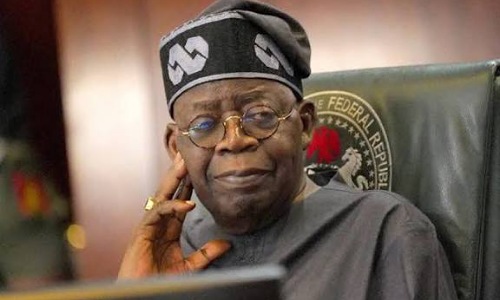
Nigeria’s efforts to increase production and curb crude oil theft still leaves her short of meeting the demands of the 700,000 barrels demand of the Dangote Petroleum Refinery and Petrochemicals (DPRP).
Minister of Finance and Coordinating Minister of the Economy, Taiwo Oyedele, made the disclosure during an interview on Channels Television’s Politics Today at the weekend.
The disclosure comes amid renewed debate over government intervention in the petroleum market, with proposals for production subsidies, the 30-days petrol discount and other measures to support domestic refining and reduce the cost of petroleum products.
READ ALSO: Fuel Discount: Presidency Explains Why Atiku’s Production Subsidy Proposal May Fail
He explained that Nigeria’s total crude oil production does not translate into an equivalent volume available for allocation by the government.
Oyedele said Nigeria’s crude oil production of about 1.8 million barrels per day was shared among parties operating under production-sharing contracts and joint ventures, while production costs, royalties and other obligations further reduced the volume available to the government.
“Under the production-sharing contract and joint venture, they share these things, and the ratios vary. Let’s say roughly 45:55,” he said.
He explained that oil producers first recover eligible production costs through cost oil, while royalties and contractual sharing arrangements also determine the quantity ultimately accruing to the government.
“The long and short of what I’m telling you is whatever is left for Nigeria, we exhaust it almost entirely because of fuel subsidy,” he said.
According to the minister, the situation was particularly severe before President Bola Tinubu introduced the economic reforms in May 2023, when the Nigerian National Petroleum Company Limited (NNPC Ltd), which holds the country’s crude on its behalf, had less than 100,000 barrels of freely available crude remaining.
He said the government had exhausted much of its revenue and resorted to printing money before turning to future crude oil production to secure commitments used to finance present consumption.
“That was a ticking time bomb,” Oyedele said, describing the arrangement under which future oil production was committed to support current fuel consumption.
The minister, however, acknowledged improvements following increased production, efforts to reduce crude oil theft and the renegotiation of some existing commitments that had tied down the country’s crude.
He cited comments by business leader Tony Elumelu, who had previously expressed frustration over the scale of crude oil theft in Nigeria, and subsequently reported an improvement in the situation.
Despite these gains, Oyedele said the country was yet to attain the level of freely available crude required to supply the Dangote refinery with its full daily requirement.
“But we are still not at the point where we can give Dangote 700,000 barrels,” he said.
The minister dismissed proposals for the government to supply the refinery with discounted crude or at production cost, arguing that such proposals failed to recognise the constraints on the volume of oil available for allocation.
“We don’t have enough to service Dangote. Dangote imports crude,” he said.
He added that the naira-for-crude arrangement introduced by the Federal Government had helped provide some stability but had not eliminated the supply constraints.
According to him, sustained increases in crude oil production and the release of additional barrels from existing commitments would eventually enable Nigeria to meet the requirements of Dangote and other domestic refiners.
“As we ramp up production and we free up some barrels, we’ll get to a point where we’ll be able to give Dangote everything he wants and other refiners will be able to get enough,” he said.
Oyedele also expressed hope that Nigeria would eventually refine all the crude oil it produces domestically and export refined petroleum products rather than crude.
The disclosure comes amid renewed debate over government intervention in the petroleum market, with proposals for production subsidies and other measures to support domestic refining and reduce the cost of petroleum products.
Oyedele further maintained that achieving that ambition will depend not only on the expansion of refining capacity but also on sustained growth in crude oil production and the availability of additional volumes for domestic processing.






State Govs, Wike Endorse One-Party State, Join APC Campaign Council

2027: ‘Tinubu Has Done Well’ – Wike Tells Opposition to Speak the Truth

‘Celebrate This Poor Man’ – Shettima Defends Tinubu Over Economic Crisis
FG Withdraws Charges Against ‘Fake Agency’ DG, Adeniyi Adeyemi

Shell Identifies Keys to Nigeria’s Energy Future
Nigeria Records Biggest Rise in Multidimensional Poverty Among Five Countries – UN

Trump’s Family Unveils New Cryptocurrency Platform

Senate Denies Receiving Petitions Against Tinubu’s Ambassadorial Nominees

Dangote Cement Lights Up Benue Host Communities With CSR Initiatives

Reps Recommend 3-year Jail Term For Aviation minister

Tems Sets New Record On Billboard Hot 100 Chart
