
NEWS
Insecurity: COAS say there is need to identify, track sources of funding of insurgents, bandits

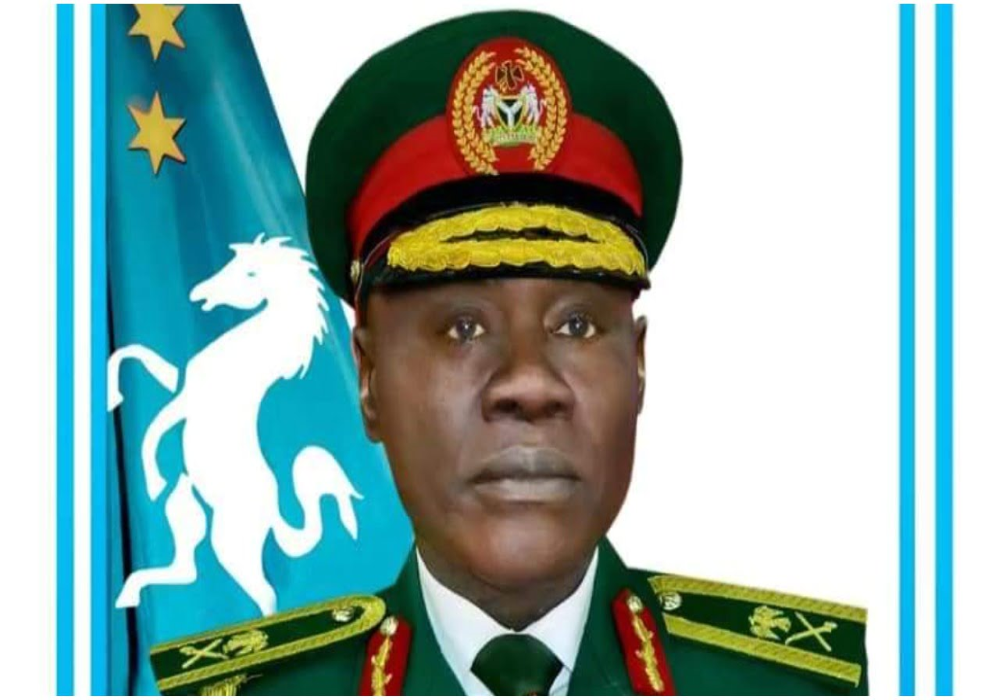
The Chief Of Army Staff Lieutenant General Faruk Yahaya has advocated for the sources of funding for bandits and insurgents to be identified and tracked to stifle them
He also challenged the entire country to take more than a passing interest in issues of security so that together the collective effort will put an end to all forms of insecurity
He, therefore, advocated for a need to evolve a whole of society approach for the respective security challenges confronting the nation.
He spoke recently at an interactive session with the senate committee on Army chaired by Senator Ali Ndume.
According to him the enduring solution to the security challenges is a holistic assessment of the root causes of the issues however, he lamented that unfortunately there are challenges to securing the adequate buy-in of all the stakeholders to come to the understanding that security is a whole of nations efforts.
This lack of buy-in he said has limited the flow of information to promptly identify threats to deal decisively with them.
“There is therefore the need for sustained advocacy by the respective national institutions such as the senate committee on Army and the national assembly to further awaken the various stakeholders to their responsibilities.
The COAS indicated that the current security situation across the nation remains fluid and requires a collective approach
“To this end the Nigerian army considers it expedient that enhance effort be targeted at identifying and addressing the root causes of the various security challenges across the country.
“It is equally important for the government to sustain efforts at improving the manpower challenges and equipment shortfalls in the Nigerian army while also improving the capacity of the primary responders in internal security.
“There is also the need to enhance ongoing measures to identify and track the sources of funding of insurgents, bandits and other criminal elements with a view to stifling the flow of funds.
He expressed the optimism that he has no doubt that the collective efforts of all Nigerians will be crowned with the required success.
Continuing he said, “In spite of the modest achievements it is evident that there are areas needing more interventions to enhance our operational actives.
“There is a need for additional manpower and force enablers as the Nigerian Army is far stretched beyond any other time in our history. “The plethora of security challenges imply that our troops are largely committed to one operation in one theater or the other with little respite for the culprits.
“It is increasingly becoming clear that a systematic and fast-tracking of manpower strength is imperative to be able to maintain the tempo and adequately support the police.
“Similarly the employment of other force enablers as well as further development of the capacity of the primary security agencies responsible for intra security is imperative.”
In these security challenges confronting the nation, he observed that the absence of buy-in of the various stakeholders remains a major setback as he reiterated the fact that Security remains a responsibility of every stakeholder which requires their buy-in for it to be effective.
“We have challenges really but we are working on the challenges. The Army along with other services, talking about the Nigerian Navy, the Nigerian Air Force, other security agencies, and stakeholders are on it and I want to assure of our commitment and dedication to achieving the results for which we are set.
“The mandate was given to us by the commander in chief of the armed forces. We are doing that. The challenges sometimes appear pervasive but they are not insurmountable otherwise many successes are being recorded.
“The only thing is that for every event probably you have seen 10, 15, 20 others have been averted, foiled, or defeated.”
He said over the past months the Nigerian army made a concerted effort at enhancing its operations across the country which are mostly in support of the Nigerian police in order to improve the general security environment.
“In spite of our modest achievements the security situation across the country remains fluid as the Nigerian Army continues to confront security threat scenarios many of which beg for far-reaching efforts and tools other than the military to sufficiently address them.
Read Also >> Adesina Accuses Kukah Of Dividing Nigeria With Unguarded Utterances
“It is therefore important to emphasize at this point that the enduring solution to a number of current challenges requires a holistic assessment of their root causes and emplacing multidimensional interventions to address them.
“The Nigerian Army under my command remains ever willing ready to continue to improve our operations and to act decisively. We are therefore confident that the weeks ahead portend optimistic outcomes as we are buoyed by the assurances of the Present leadership and the support of the committees like yours in driving the activities of organs of government to accomplish ongoing operations”
He said they have made remarkable strides in the Northeast theater since the beginning of the year.
The offensive operations being carried out across the theater and in conjunction with the multinational joint tax force has stabilized the situation in the region.
“Our troops have cleared and are dominating most of the hideouts in Timbuktu triangle, Sambisa Forest as well as other locations in Northern Borno.
“There have also been a lot of recoveries in terms of arms and ammunition as well as various equipment from the terrorists.
“The operations were complemented by a well-crafted non-kinetic line of efforts and other enabling activities which ensured a sustained surrender of Boko haram and ISWAP terrorists. Thus as of today over 51000of the terrorists and their families have so far surrendered.”
He said their multiple interventions in the theater in terms of the procurement and the induction of needed platforms, equipment, and other logistics, the number of theater nations, specific training for the troops as well as targeted welfare initiatives including the emplacement of the routine welfare to boost troops morale were also emplaced.
“All these efforts have contributed to the successes being recorded in the Northeast theater.
He expressed the optimism that by the end of the ongoing operation greater normalcy would have been returned to the Northeast leading to the return of more internally displaced persons and restoration of civil authority across the area.
“Now armed banditry manifesting in the form of terrorism, cattle rustling, and abduction for Ransome has become one of the main issues in the North West region.
“There were concerted efforts and interventions in Zamfara and Katsina States which were earlier identified as hotbeds for the criminals by the number of operations by 8 division Nigerian Army with the support of other services and agencies which helped to improve its overall presence with laudable successes.
He said the actions however led to a noticeable drift in bandit’s activities in some areas in Kaduna and Niger States.
“Furthermore the relocation of some elements of Boko haram and ISWAP terrorists including IED experts to the North West with the ongoing operations in the North East as well as economic gains further exacerbated the threats in the region.
“This transboundary movement of the terrorist has unfortunately led to the surge in incidents recorded in Kaduna and Niger States including a recent attack on the Abuja -Kaduna train service on 28th March 2022 as well as those on isolated villages particularly in Kachia, Zangon Kataf Local Government areas and others. “Expectedly efforts are ongoing with services and agencies to expand our operations to clear the terrorists from their hideouts and rescue the abductees.
“There are also ongoing efforts at improving synergy and cooperation with other services and security agencies for holistic and enduring interventions against criminals.
“In the North Central, the security issue is a blend of banditry in Niger State and farmers/herders crises and ethnic clashes in plateau and Benue States. “These necessitated several interventions that have seen an improvement in the situation across the zone, although with some challenges, especially in Niger.
“In Plateau and Benue States a deep combination of Kinetic and non-kinetic efforts were driven by ‘Operation Safe Haven’ and ‘Operation Wild Stroke’ which has curtailed the farmers/herders’ crashes in Plateau, Benue, and the Nasarawa States, though one-off incidences are still being recorded.
“On the other hand, Niger State witnessed a surge in banditry activities particularly in the month of January and February in 2022 largely due to the southward movement of the criminals in operations in Zamfara and Katsina States
“These necessitated several interventions including the operationalization of a new army unit in Bida. The resultant improvement in the situation is being monitored even as greater stability is being envisaged in North Central in the weeks ahead.”
In the southwest, he said the security situation has remained largely calm with isolated cases of armed robbery and kidnapping in addition illegal oil bunkering activities continue to receive the required attention. “Equally the activities of criminals around old Oyo National Park are being decisively dealt with.”
He said their contingency plans are undergoing the much-needed reviews to support the police as the electioneering period kicks in with the gubernatorial election in Ekiti and the Osun States scheduled for 18th June 2022 and 26th July 2022 respectively
“Consequently our formations are being resourced and efforts are ongoing in concert with other security agencies to insulate the zone from politically induced security problems. “Security threats in Southeast continue to revolve around the activities of the proscribed indigenous people of Biafra an eastern security network. In this regard, intelligent-driven operations have led to the arrest and neutralization of a special number of criminals and domination of their hideouts and camps.
“In spite of the gains made the criminals have shown some resilience with IPOB and ESN trying on piece mill deployment of security agencies Although with very limited success.”
The COS observed that the criminals have also continued to invest in the development and deployment of IEDs with a number of such IEDs being recovered since the beginning of the year.
“Nevertheless deliberate operations have continued to the senate. leading to special recoveries and improvement in the security situation.”
For the south South geopolitical zone, he said it has remained largely calm although with the limited incidence of kidnapping cultism, and militancy being the main security threat. “Significantly oil theft in the region continues to constitute severe economic losses to the nation and provides criminals with funds for their illegal enterprises.
“Accordingly the Nigerian army has stepped up offensive operations targeting oil thieves with significant results.
“The efforts have been complemented in some states of the region through an improved buy-in of the local authorities against the menace of illegal oil bunkering.
“This has expectedly led to direct attacks on troops intended to dissuade troops from further anti-illegal bunkering operations.
“The Nigerian army will continue to further deepen synergy with other security agencies in order to enhance the flow of intelligence on major oil thieves with a view to countering their actives. In respect of releases for the fiscal year”
Earlier the Senate committee chairman Senator Ali Ndume said they invited the army to the interactive session because of rising insecurity
He said it is an opportunity to boost the confidence of the general public that information you will want to share with them because Nigerians have been looking forward to the interactive session due to the worrisome security situation.
He cited the escalated one recently
Starting with the event in the northeast, ‘that is what you have been battling with for a decade now and then the recent daring attack on the train last two weeks that led to the death of about 8 or more people and the kidnap of an unconfirmed number of people and an unaccounted number of passengers
“The most recent one again is in the Northwest and also in the north-central. What happened recently in Wase in Plateau and even now in the last 71 hours over 31 people have been killed in the South East.
Southwest is relatively calm.
“That is why we want as a committee overnighting the army to share or to get information about what you are doing about this and what is the level of your achievement and what level of confidence you will build on Nigerians
“The second one is the issue of funding the committee has been crying out on your behalf.
“We want to know how far these funds have been released overhead and recurrent, what challenges and also we will go for oversight and see for ourselves the level of implementation or utilization of the fund allocated. “Basically that is the reason why we invited you here today to have an interactive session so that we will know what we would do in order to support you as you continue to do that to achieve what you set out and to overcome the numerous challenges that the Nigerian Army is facing.”
He said the senate knows that most of the issues are internal which is more of policing but the army is now engaged in war and policing at the same time.
“We want to know the challenges and the expectations so that we can interact with other committees especially that of police and security services to overcome this worrisome situation





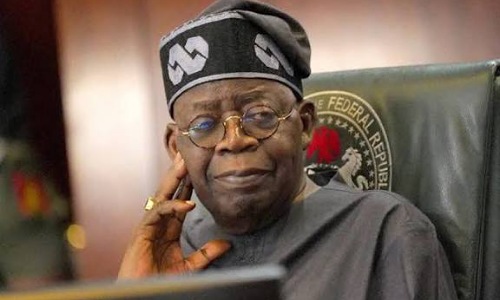
President Bola Ahmed Tinubu has congratulated Brazilian President Luiz Inácio Lula da Silva on his reported re-election for a fourth term, expressing his desire to strengthen Nigeria-Brazil relations across trade, investment, energy and other key sectors.
Tinubu conveyed his congratulations in a statement dated October 26, 2026, in Abuja, describing Lula as his friend and emphasising the historical ties between Nigeria and Brazil.
SEE ALSO: Peter Obi Demands Release of Rilwan Olawale, Accuses Tinubu of Undermining Democracy
The Nigerian president said Lula’s renewed mandate presents an opportunity for both countries to strengthen their longstanding friendship and expand cooperation in areas of mutual interest.
“Your renewed mandate offers an opportunity to strengthen the longstanding friendship and historical ties between Nigeria and Brazil,” Tinubu said.
He noted that Nigeria and Brazil, as leading nations of the Global South, could work together to promote economic integration and advance their shared interests amid a rapidly changing global order.
Tinubu said he looked forward to expanding cooperation between both countries in trade and investment, agriculture and food security, energy, oil and gas, manufacturing, science and technology, education, aviation and cultural exchange.
He also reaffirmed Nigeria’s commitment to strengthening multilateral cooperation with Brazil and advancing shared priorities across Africa, South America and the wider Global South.
“I affirm Nigeria’s continued commitment to working with Brazil to strengthen multilateral cooperation and advance shared priorities in Africa, South America, and across the Global South,” he said.
Tinubu, on behalf of the Nigerian people, wished Lula success in his new term in office.
“On behalf of the people of Nigeria, I wish you a successful new term in office,” the president added.

The Inspector-General of Police, Olatunji Rilwan Disu, has urged Nigerians to remain calm and vigilant following the Federal Government’s reported confirmation of an Ebola case in the Federal Capital Territory (FCT), warning against contact with the blood and body fluids of suspected patients.
Disu also called for strict adherence to preventive measures, improved personal hygiene and cooperation with public health authorities to protect lives and prevent further transmission of the disease.
SEE MORE: 2027 Election: ‘Your Future Is More Valuable’ — IGP Warn Youths Against Political Violence
In a statement issued on Monday, October 26, 2026, by the Force Public Relations Officer, CSP Ani Iniedu, the IGP emphasised the importance of public awareness and collective responsibility in combating the outbreak.
Know the Warning Signs
The Nigeria Police Force urged Nigerians to familiarise themselves with the symptoms associated with Ebola and seek medical guidance if they develop symptoms following possible exposure.
The warning signs highlighted in the police awareness campaign include: Fever,Severe, headache, Muscle pain, Weakness, Vomiting, Diarrhoea, Unexplained bleeding.
The public was cautioned not to wait until bleeding occurs before seeking medical assistance.
Anyone who suspects they may have been exposed to the virus should promptly contact health authorities for guidance.
How Ebola Spreads
According to the awareness information provided by the Nigeria Police Force, Ebola can spread through direct contact with the blood or body fluids of an infected person.
Transmission can also occur through contact with contaminated items or the body of someone who has died from the disease.
Members of the public were therefore advised to avoid direct contact with the blood, body fluids and personal items of suspected patients.
The police also warned against touching or washing the bodies of people suspected to have died from Ebola.
Preventive Measures Nigerians Should Follow
The IGP urged Nigerians to observe basic preventive measures to reduce the risk of infection.
The measures include washing hands regularly with soap and water, avoiding contact with suspected patients’ body fluids and staying away from potentially contaminated items.
The public was also advised not to handle the bodies of suspected Ebola victims and to cooperate with healthcare workers and contact-tracing teams.
According to the awareness poster, individuals who may have been exposed to the virus should avoid physical contact with others if they begin feeling unwell and contact health authorities for immediate guidance.
The poster further advised anyone experiencing symptoms following possible exposure to contact the Nigeria Centre for Disease Control and Prevention (NCDC) through its toll-free helpline, 6232.
IGP Directs Police Officers to Observe Safety Measures
Disu also directed police personnel to observe appropriate infection prevention measures while carrying out their duties and promptly refer suspected cases to qualified health professionals.
The police said suspected patients, contacts and healthcare workers must be treated with dignity and without discrimination.
The Force further called on Nigerians to cooperate with contact-tracing teams, provide accurate information when required and refrain from spreading unverified reports capable of causing unnecessary panic.
Members of the public were encouraged to rely on official updates from the Federal Ministry of Health and Social Welfare, the NCDC and other authorised public health agencies.
Police Warn Against Stigmatisation
The Nigeria Police Force assured Nigerians of its commitment to supporting relevant health authorities in protecting lives and maintaining public order throughout the period.
The Force also urged the public to share accurate information, remain vigilant and avoid stigmatising people affected by or suspected of having the disease.
The awareness campaign stressed that protecting public health is a shared responsibility and encouraged Nigerians to stay informed and follow appropriate preventive measures.
Members of the public should seek guidance from authorised health officials if they suspect exposure to Ebola.
Professor Stefan Dercon, a development economist at the University of Oxford, has warned that Nigeria cannot replicate China’s economic development model, urging the country to adopt pragmatic policies that reflect its own institutional realities.
Dercon made the remarks on Monday at the opening ceremony of the 32nd Nigerian Economic Summit (NES #32) in Abuja, where he highlighted the importance of leadership commitment, economic transformation and policies that promote sustainable growth.
According to him, Nigeria lacks the institutional structures that supported China’s development and must therefore identify an economic model suited to its own circumstances.
SEE MORE: China Grants 30-Day Visa-Free Entry To British, Canadian Travelers
“Nigeria does not have a Chinese state, and it can dream of it, but it doesn’t. But it also means it can’t do a China,” Dercon said.
He explained that China’s development was supported by a long history of meritocratic institutions, including a rigorous public examination system for civil servants that had existed for approximately 1,300 years.
The economist noted that many countries developed their state institutions through patronage and personal connections rather than merit-based systems, creating differences in their capacity to implement development policies.
Dercon, however, said Nigeria could still learn from successful economies by identifying approaches that fit its own circumstances rather than attempting to copy another country’s model.
He pointed to China’s shift away from an ideology-driven economy under former leader Mao Zedong towards a more pragmatic approach focused on economic growth and progress.
According to him, countries that achieve economic success share a commitment among their leadership to growth, regardless of the specific economic model they adopt.
“That’s actually what all countries that are successful, whatever the blueprint or the models they try to use, have in common. That’s an elite commitment to actually growth using a model that fits the context,” he said.
Dercon Calls for Economic Transformation
The Oxford economist urged Nigeria to demonstrate a serious commitment to transforming its economy, creating jobs and improving prosperity.
He argued that the country needed to move away from an economic system that benefits a limited group of people towards one that delivers broader opportunities and sustainable development.
“So what Nigeria needs is that. It needs a really serious commitment to begin to change this model,” Dercon said.
He added that the government must recognise its capabilities and limitations while identifying and correcting policies that undermine economic growth.
Dercon also emphasised the importance of learning from experience, testing policies and making necessary adjustments to achieve better results.
“But all these places, they learned, they tried, and they corrected, and then they made progress,” he said.
Indonesia Offers Lessons for Nigeria
Dercon also identified Indonesia as a country Nigeria could study for lessons on economic development, while acknowledging that the two countries have important differences.
He argued that economic growth should be treated as a national security priority because a stronger economy is essential to national development and stability.
“You need to grow the economy, you need to develop. That’s an issue of national security. I don’t think I have to explain that in Nigeria’s context either,” he said.
He advised Nigerian policymakers to maintain macroeconomic stability, remain consistent with sound economic policies and focus on practical measures capable of supporting long-term growth.
Dercon stressed that Nigeria’s priority should be to develop an economic strategy that reflects its institutional realities while promoting productivity, job creation and shared prosperity.






Standard Chartered Inks Deal for Shell Gas Sale

NALPGAM Preaches Innovation, Safety to LPG Operators

Tinubu Promises to Boost Local Production with NNPC Refineries

INEC Opens Online Access to Voters’ Register After Public Outcry

ADC Replies Alake, Says APC’s ‘Falsehood’ Cannot Hide Tinubu’s Failures

‘How Did Tinubu Graduate Before School Existed?’ – ADC Challenges Shettima Over Atiku

Trump’s Family Unveils New Cryptocurrency Platform

Senate Denies Receiving Petitions Against Tinubu’s Ambassadorial Nominees

Dangote Cement Lights Up Benue Host Communities With CSR Initiatives

Reps Recommend 3-year Jail Term For Aviation minister

Tems Sets New Record On Billboard Hot 100 Chart
