
NEWS
It’s Time For Biafra Actualization – IPOB Declares

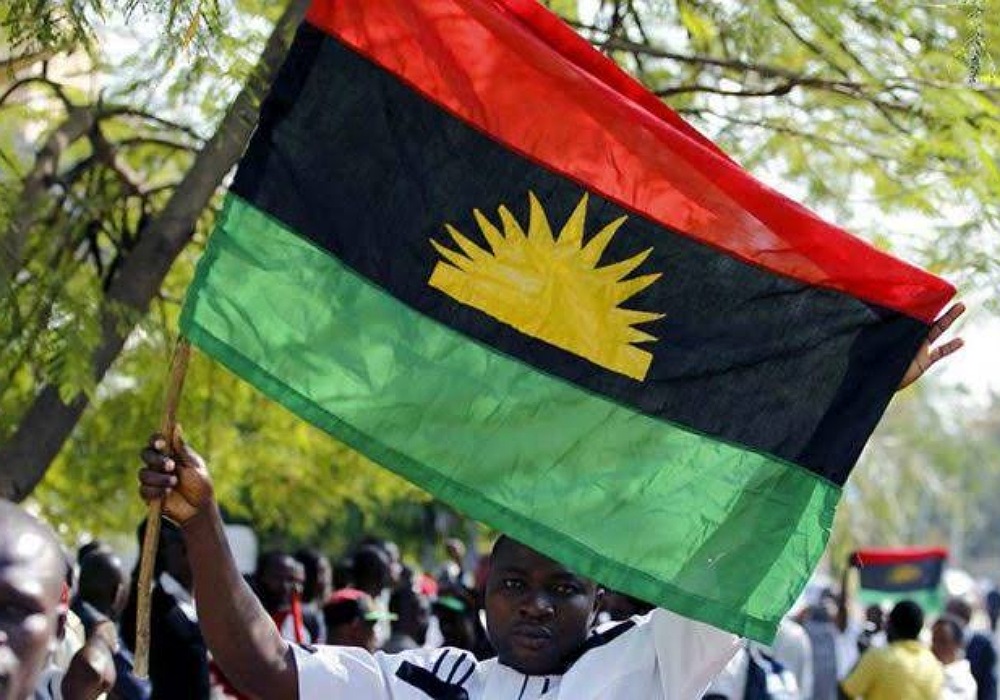
According to the Indigenous People of Biafra (IPOB), Nnamdi Kanu’s prophecy of an oil discovery in northern Nigeria has come true.
With the finding of oil in the North, Biafra’s actualization, according to IPOB, should be approved by the Nigerian government.
Buhari had signaled the beginning of the week’s commercial production of gas and crude oil from the $3 billion Kolmani Integrated Development Project.
The Kolmani project, with Oil Prospecting Licence 809 and 810, is situated in the Gongola Basin of the Upper Benue Trough, straddling the two northern states of Gombe and Bauchi.
The field, which includes more than one billion barrels of crude oil reserves, will, according to the field’s developers, produce roughly 50,000 barrels of crude oil each day, bringing Nigeria’s total oil reserves to more than 38 billion barrels.
Emma Powerful, the spokeswoman for IPOB, responded to the revelation by asserting that money made from the oil field would be utilized to advance jihadist objectives.
A statement by Powerful reads: “We the global movement and family of the Indigenous People of Biafra (IPOB) under the command and leadership of our great leader and prophet Mazi Nnamdi KANU confirm the answer to the prayers of our leader concerning oil discovery in the North. In one of his landmark broadcasts on Radio Biafra, he prayed for God Almighty Chukwu Okike Abiama to give crude oil to the Northern Region of Nigeria.
“Northern Nigeria has large deposits of many solid minerals that are more lucrative than crude oil. But because they thirst for oil, and because of their greedy nature to conquer others, they are ready to do unimaginable things because of oil in Biafraland. In his infinite wisdom, God Almighty Eze Chukwu Okike has settled the fraudulent contraption’s age-long problem of unity occasioned by crude oil.
“Crude oil discovery in the North will certainly settle this forced unity if indeed, they are truthful in settling Nigeria’s problem. Oil or no oil, Biafrans are not interested. All we need is a conducive environment to do our business without fear of terrorists at our borders.”
Speaking further, he said: “Now that every component part of Nigeria has oil, can we all go our separate ways and mind our own businesses?”





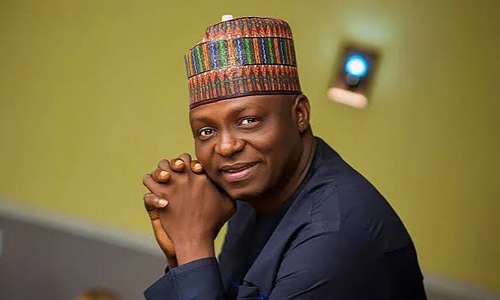
The National Chairman of the All Progressives Congress (APC), Nentawe Yilwatda, has said more than 10 million Nigerians have received ₦75,000 each through the Federal Government’s conditional cash transfer programme.
Yilwatda made the disclosure on Saturday while responding to questions from journalists after the APC’s three-day National Executive Council (NEC) retreat in Maiduguri, Borno State.
According to him, many of the beneficiaries are not active on social media because they cannot afford mobile phones and other communication devices.
ALSO READ: Atiku Vows Probe of ₦33.75bn Cash Transfer to 3.29m Nigerians
He said this has made the impact of the government’s interventions less visible in online discussions.
“We have given 75,000 naira to over 10 million Nigerians across the country using the conditional cash transfer under the ministry of humanitarian affairs and poverty reduction,” Yilwatda said.
The APC chairman said the beneficiaries were largely vulnerable Nigerians who have limited access to mobile phones, television and social media platforms.
He maintained that the absence of beneficiaries from social media discussions should not be interpreted to mean that government interventions were not reaching them.
Yilwatda also listed road construction, employment opportunities created through infrastructure projects and student loans among programmes implemented by the President Bola Tinubu-led administration.
He said the Federal Government was constructing roads across the country while Nigerians working on the projects were being paid.
His comments come amid ongoing public scrutiny of the Federal Government’s conditional cash transfer programme, particularly regarding the number of beneficiaries and the amount disbursed.
In August, the Minister of Humanitarian Affairs and Poverty Reduction, Bernard Doro, said the government had distributed more than ₦600 billion in cash transfers over three years, reaching slightly more than 10 million households.
Biztellers reports that former Vice-President Atiku Abubakar subsequently questioned the government’s reported beneficiary figures and called for greater transparency and accountability in the programme.
Meanwhile, Yilwatda said the APC NEC retreat also reviewed the party’s structures and activities at the national, state, local government, ward and polling-unit levels ahead of the 2027 general elections.
He said the party had resolved to strengthen reconciliation efforts across its state chapters and urged chapters that had yet to establish reconciliation committees to do so.
Yilwatda added that the APC leadership would take an active role in communicating the Tinubu administration’s programmes and achievements to Nigerians during the party’s electioneering activities.
The APC chairman also said the NEC expressed support for President Tinubu, Vice-President Kashim Shettima and other APC candidates who emerged from the party’s primaries for the 2027 elections.
The party also expressed condolences to the government and people of Niger State over the deaths of 37 miners.
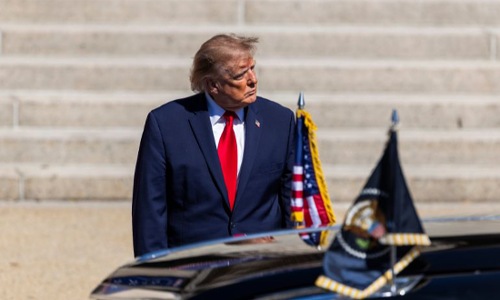
US President Donald Trump has explained his decision to reject Iran’s latest proposal to reopen the Strait of Hormuz, saying Tehran was seeking an agreement because it was losing revenue.
Speaking to reporters at the White House, Trump said Iran wanted to immediately reopen the strategically important waterway but argued that the proposal was not acceptable to his administration.
“They want to make a deal, and I think that’s fine. I like making a deal, too, but that deal would not be acceptable,” Trump said.
SEE ALSO: How the Strait of Hormuz Attack Could Trigger a Fresh Global Oil Shock
According to the US president, Iran’s push to reopen the strait was driven by the economic pressure it was facing.
“What they want to do is immediately open the Hormuz Strait. Do you know why? Because they are dying,” Trump said.
“You know why they’re dying? Because they have no money coming in, because they get their money from the Hormuz Strait.”
Trump also claimed that the US had established an unprecedented naval blockade against Iran, describing it as “a wall of steel.”
“So they outsmarted themselves. We put up the greatest blockade ever in military history. It’s a wall of steel,” he said.
“And guess what? They don’t have any money now because they wanted to close the strait.”
The Strait of Hormuz is a major global energy shipping route, and disruption to traffic through the waterway has significant implications for international oil markets and countries that depend on energy imports.
Trump’s remarks came amid continued tensions between Washington and Tehran over the reopening of the strategic waterway and negotiations involving Iran.
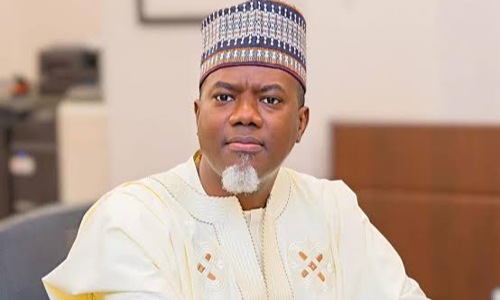
Former presidential aide and author, Reno Omokri, has highlighted what he described as significant revelations from former Head of State, General Yakubu Gowon’s autobiography, My Life of Duty & Allegiance.
Gowon’s memoir, published in 2026, chronicles his military career, emergence as Head of State, the Nigerian Civil War, his 1975 overthrow and his subsequent life in exile. The book has generated considerable discussion because of its account of some of Nigeria’s most consequential historical events.
SEE ALSO: Reno Omokri Hails Dangote as Wealth Hits $51.3bn After Refinery IPO Launch
In a lengthy review of the autobiography, Omokri described the book as “unexpectedly well written and captivating,” adding that he learnt a lot from it.
One of the issues he highlighted was Gowon’s account of his relationship with his predecessor, Major General Johnson Aguiyi-Ironsi.
According to Omokri, Gowon revealed that Ironsi attempted twice to remove him from his position as General Officer Commanding the Nigerian Army.
Citing pages 193 and 295, Omokri said Ironsi first attempted to move Gowon to head the Air Force and later proposed sending him to the United Kingdom for a course.
However, Omokri cautioned against reaching definitive conclusions from Gowon’s account alone.
“Of course, without General Ironsi’s side of the story, we cannot draw concrete conclusions,” he wrote.
Omokri also drew attention to Gowon’s account of how he became Head of State following the July 1966 counter-coup.
He said the memoir suggested that Gowon was almost “elected” by officers and men gathered at Ikeja Barracks during the uncertain period that followed the counter-coup.
“On page 212, we learnt that Gowon was almost in a way ‘elected’ by the officers and men gathered at the Ikeja Barracks to be Head of State in the uncertain atmosphere that followed the July 29, 1966 countercoup,” Omokri wrote.
He further highlighted Gowon’s description of the early period of his administration, arguing that the former Head of State initially occupied the office without having complete control over the machinery of government.
“From page 217, we understand that he was initially in office but not in power,” Omokri said.
The review also focused on the role of Nigerians of Igbo origin who, according to Omokri’s reading of the memoir, remained among Gowon’s advisers during the crisis and Civil War.
He specifically mentioned Philip Asiodu, Edwin Ogbu and Ukpabi Asika.
“On page 282, we learn … that there were quite a number of Igbos, even during the crisis and later the Civil War, who were in Gowon’s kitchen cabinet, advising him,” he wrote.
Omokri also highlighted Gowon’s account of the political structure of his administration, saying the former Head of State described a system in which military and civilian authorities shared power.
“From page 302, we learn that General Gowon practised diarchy, a form of government in which the military shared power with civilians,” Omokri stated.
Another controversial issue raised in the review concerned an allegation in the memoir about foreign involvement in the Nigerian Civil War.
According to Omokri, Gowon alleged that the Rothschild family sponsored Biafra’s war against Nigeria after reaching an agreement with the then Biafran leader, Lieutenant Colonel Chukwuemeka Odumegwu Ojukwu.
Omokri, however, noted that Gowon did not provide much detail on the allegation. The claim is therefore presented here as an allegation attributed to Gowon in the memoir, rather than an independently established fact.
Omokri also said Gowon took issue with Chinua Achebe’s account of the Civil War, particularly the late author’s book, There Was a Country.
“On page 363, General Gowon, more or less, called Achebe a propagandist, especially with regard to his book, ‘There Was a Country’,” Omokri wrote.
The review further examined Gowon’s personal experiences following his overthrow in 1975.
Omokri said the memoir revealed that Gowon experienced financial difficulties after being removed from power and later lived in England, where he received assistance from Nigerians.
“On page 602, you almost feel sorry for him after his overthrow in Kampala, where he had to depend on donations from Presidents Idi Amin and Eyadéma because he was broke,” he wrote.
Omokri also highlighted Gowon’s account of his years at the University of Warwick, saying the former Head of State cooked for fellow Nigerian students and travelled on public buses.
“On page 620, he showed that he never lost that personal touch when he cooked food for fellow Nigerian students at the University of Warwick, who were shocked to see him riding public buses,” Omokri said.
Concluding his review, Omokri praised Gowon’s record-keeping and willingness to acknowledge mistakes.
“Altogether, this is a brilliant book, and I am impressed by General Gowon’s meticulous record-keeping, his purity of heart, and his willingness to admit mistakes,” he wrote.
“This book is a must-read for all those who want to understand post-colonial Nigeria,” Omokri added.






2027: Atiku’s Presidential Bid Is ‘Just a Joke’ — Tinubu’s Aide

‘Over 10m Nigerians Got ₦75,000 Cash Transfer, But They’re Not On Social Media’ — Yilwatda

2023 Election: ‘If Something Fishy Went Down, Ask INEC’ — Gov Sule

Sanwo-Olu Woos Global Investors, Pitches Lagos as Africa’s Business Gateway

2027: Ejiofor Warns Of Fallout If Anything Happens To Peter Obi, Urges Tinubu To Act

‘They Are Dying’ — Trump Explains Why He Rejected Iran’s Hormuz Proposal

Trump’s Family Unveils New Cryptocurrency Platform

Senate Denies Receiving Petitions Against Tinubu’s Ambassadorial Nominees

Dangote Cement Lights Up Benue Host Communities With CSR Initiatives

Reps Recommend 3-year Jail Term For Aviation minister

Tems Sets New Record On Billboard Hot 100 Chart

930550 389239What platform and theme are you making use of if I could ask? Where can I buy them? x 529066