NEWS
JUST IN: Colorado S’Court Removes Trump From 2024 US Ballot

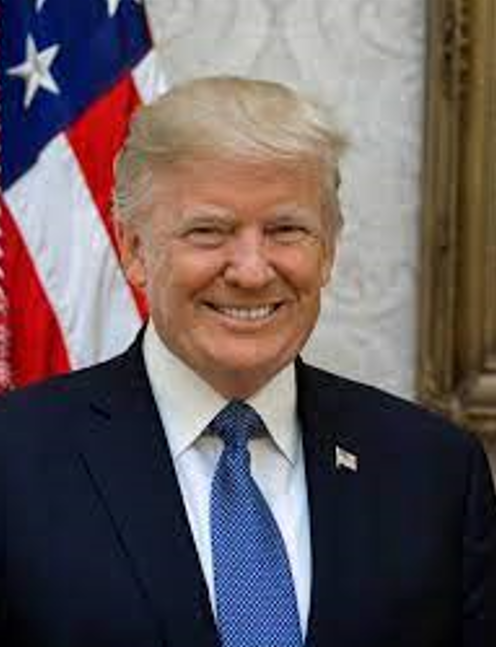
In a defining ruling, the Colorado Supreme Court has disqualified former United States of America’s President, Donald Trump from serving as POTUS, and cannot appear on the primary ballot in Colorado.
In the ruling on Tuesday, the Court cited Trump’s role in the January 6, 2021, attack on the U.S. Capitol by his supporters.
The historic 4-3 ruling is likely to be contested in other jurisdictions, and probably taken up by the U.S. Supreme Court.
By the ruling, Trump became the first presidential candidate deemed ineligible for the White House under a rarely used constitutional provision that bars officials who had engaged in “insurrection or rebellion” from holding office.
Though the pronouncement of the court is binding only to Colorado’s March 5 Republican primary but it could affect Trump’s status in the state for the November 5 general election.
Nonpartisan U.S. election forecasters view Colorado as safely Democratic, meaning that President Joe Biden will likely carry the state regardless of Trump’s fate there, Reuters reports.
It was gathered that Trump had vowed to appeal the ruling to the U.S. Supreme Court, and the Colorado court said it would delay the effect of its decision until at least January 4, 2024, to allow him exercise his right for an appeal.
In addition, the Colorado court ruling sets the stage for the Supreme Court, whose 6-3 conservative majority includes three Trump appointees, to consider whether Trump is eligible to serve another term as president.
The lawsuit is viewed as a test case for a wider effort to disqualify Trump from state ballots under section 3 of the 14th Amendment, which was enacted after the U.S. Civil War to keep supporters of the confederacy from serving in the government.
In the views of the Colorado court the U.S. Constitution bars Trump, the frontrunner for the Republican nomination in 2024, from appearing on the ballot because of his role in instigating violence at the Capitol as lawmakers met to certify the results of the 2020 election.
The court’s majority acknowledged the decision was “uncharted territory.”
“We do not reach these conclusions lightly,” the majority justices wrote.
“We are mindful of the magnitude and weight of the questions now before us. We are likewise mindful of our solemn duty to apply the law, without fear or favor, and without being swayed by public reaction to the decisions that the law mandates we reach,” they added.
Trump’s campaign called the court decision “undemocratic.”
“The Colorado Supreme Court issued a completely flawed decision tonight and we will swiftly file an appeal to the United States Supreme Court,” a spokesperson from the Trump campaign said.
The decision reverses a ruling by a lower court judge who found Trump engaged in insurrection by inciting his supporters to violence, but concluded that, as president, Trump was not an “officer of the United States” who could be disqualified under the amendment.
The Biden campaign declined to comment.
Involvement of Colorado Electorte
The case was brought by a group of Colorado voters, aided by the advocacy group Citizens for Responsibility and Ethics in Washington (CREW), who argued that Trump should be disqualified for inciting his supporters to attack the Capitol in a failed attempt to obstruct the transfer of presidential power to Biden after the 2020 election.
President, CREW, Noah Bookbinder said in a statement that the court’s decision is “not only historic and justified, but is necessary to protect the future of democracy in our country.”
One of the things that make the ruling of the Colorado court of interest to political watchers is that courts had rejected several lawsuits seeking to keep Trump off the primary ballot in other states.
Minnesota’s top court rebuffed an effort to disqualify Trump from the Republican primary in that state, but did not rule on his overall eligibility to serve as president.
Some advocates had hoped the Colorado case would boost the overall disqualification effort and potentially put the issue before the U.S. Supreme Court.
Trump’s campaign has condemned 14th Amendment challenges as an attempt to deny millions of voters their preferred choice for president.
Trump’s lawyers argued that his speech to supporters on the day of the riot was protected by his right to free speech, adding that the constitutional amendment does not apply to U.S. presidents and that Congress would need to vote to disqualify a candidate.
Interestingly, three Colorado Supreme Court justices dissented from Tuesday’s ruling.
One of the dissenting justices, Carlos Samour, said in a lengthy opinion that a lawsuit is not a fair mechanism for determining Trump’s eligibility for the ballot because it deprives him of his right to due process, noting that a jury has not convicted him of insurrection.
“Even if we are convinced that a candidate committed horrible acts in the past – dare I say, engaged in insurrection – there must be procedural due process before we can declare that individual disqualified from holding public office,” Samour said.











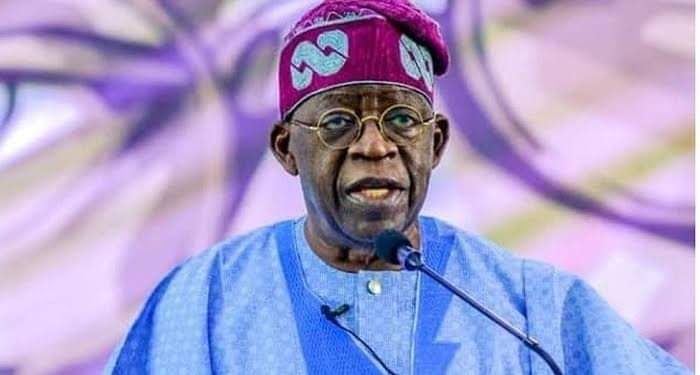
President Bola Tinubu has appealed to Igbo voters in Lagos State to support his re-election bid in 2027, jokingly recalling that many of them did not vote for him during the 2023 presidential election.
Tinubu made the appeal on Monday, November 23, 2026, while addressing Igbo stakeholders at the Wole Soyinka Centre for Culture and Creative Arts, formerly the National Theatre, in Lagos.
SEE ALSO: ‘Tinubu Must Go’: Sowore Leads Fresh Protest at INEC, Knocks Opposition Aspirants
The meeting, organised under the platform of the Ndigbo National Dialogue and Development Initiative, brought together Igbo leaders, businesspeople, market women and youths resident in Lagos to discuss political participation and support for the President ahead of the 2027 general election.
In a remark that drew attention, Tinubu told the gathering that he was displeased with those who did not support him in the last presidential election but suggested that the disagreement had been settled.
“Some of you didn’t vote for me for 2023, I vex woo, we don settle, get your PVC, you will vote this time. Come January 16, you get your PVC, you come vote. Agreement na agreement woo, na Bola Tinubu be APC woo,” the President said.
Tinubu’s remarks come against the backdrop of the overwhelming support recorded for the Labour Party’s presidential candidate, Peter Obi, across the five South-Eastern states during the 2023 presidential election.
Obi, a former Anambra State governor, defeated Tinubu and other major contenders in all five states, reflecting the region’s strong electoral backing for his candidacy.
Results announced by the Independent National Electoral Commission (INEC) showed that Obi polled 327,095 votes in Abia State, against Tinubu’s 8,914.
In Anambra, Obi secured 584,621 votes, while Tinubu received 5,111. The Labour Party candidate also won Ebonyi with 259,738 votes against Tinubu’s 42,402.
In Enugu, Obi polled 428,640 votes, while Tinubu secured 4,772. Imo State also went to Obi, who recorded 360,495 votes against the APC candidate’s 66,406.
Altogether, Obi secured approximately 1.96 million votes across the five South-Eastern states, compared with Tinubu’s 127,605 votes.
During Monday’s engagement, Tinubu also urged the Igbo community to obtain their Permanent Voter Cards and participate in the coming election, signalling his administration’s interest in securing broader political support from the community.
The President’s appeal comes as political activities gradually intensify ahead of the 2027 general election, with parties and political leaders seeking to consolidate existing support and attract voters across the country’s geopolitical zones.
The meeting was spearheaded by the Minister of State for Budget and Economic Planning, Doris Uzoka-Anite, as part of efforts to strengthen engagement between the Federal Government and the Igbo community in Lagos.

Former Deputy Senate President and Delta Central senatorial candidate of the Nigeria Democratic Congress (NDC), Senator Ovie Omo-Agege, has reportedly escaped an assassination attempt after gunmen attacked his campaign team in Uduere, Ughelli North Local Government Area of Delta State.
The attack, which occurred during a campaign tour of the community, allegedly left four people dead, including two members of Omo-Agege’s campaign team, while four others sustained gunshot injuries.
The incident was disclosed in a press statement issued by Sunny Areh, Media Adviser to Omo-Agege, on behalf of the Omo-Agege Campaign Organisation on Monday.
SEE MORE: 2027: Oborevwori, Omo-Agege Trade Fresh Blows Over Tinubu, Obi Endorsements
According to the statement, armed men opened fire at close range on the senator and his entourage while he was addressing residents who had gathered to receive him.
The organisation said Omo-Agege narrowly escaped being hit by bullets, which allegedly passed close to his head during the attack.
The statement identified two of the deceased campaign aides as Moses Anaughe and Akima Efemena Umukoro.
It also named four other persons reportedly injured as Chief Evans Iwuvrie, Chuks Erhire, Tobore Agba and Ayodo Wanogho. Agba was said to have sustained a gunshot wound to the neck.
The injured victims are reportedly receiving medical attention.
The campaign organisation described the incident as a targeted assassination attempt rather than a political disagreement or confrontation.
It quoted eyewitnesses as alleging that the attackers repeatedly shouted, “It’s Omo-Agege we want to kill! It’s Omo-Agege we want to kill!”
The organisation further alleged that the attack was led by Ughelli North Local Government Chairman, Barrister Jaro Egbo, acting on the orders of Delta State Governor, Sheriff Oborevwori.
However, the allegations against Egbo and the governor have not been independently established.
The campaign organisation called for an immediate, transparent investigation into the incident and demanded that all those allegedly involved in planning or executing the attack be brought to justice.
It specifically urged Governor Oborevwori to publicly condemn the attack, ensure the arrest and investigation of those implicated, and guarantee the safety of opposition candidates and political supporters across the state.
The organisation also called on the Inspector-General of Police, the Director-General of the Department of State Services (DSS) and the Delta State Commissioner of Police to intervene.
It demanded that the Inspector-General of Police personally take over the investigation, alleging that officers of the Delta State Police Command were present at the scene with six trucks but failed to prevent the killings.
The campaign organisation also appealed to the Independent National Electoral Commission (INEC), civil society groups and the international community to take note of the incident, warning against the growing threat of political violence in the state.
While mourning the deceased, the organisation extended its condolences to the families of Anaughe and Umukoro, pledging to pursue justice for the victims.
It also urged supporters not to retaliate or take the law into their own hands, insisting that the campaign’s ward-to-ward tour of Delta Central would continue despite the attack.
“Delta State is not a war zone. Campaigning is not a crime. Seeking the votes of the people should not be a death sentence,” the statement declared.
The organisation added: “Enough is enough. Delta must not bleed for politics.”
The reported casualty figures and allegations surrounding the attack are yet to be independently verified. An official account from the police and responses from those accused would be necessary to establish the circumstances of the incident.
The National Economic Council (NEC) has approved an additional ₦130 billion for the rehabilitation of police training institutions across Nigeria, bringing the total funding commitment to ₦230 billion, as preparations gather pace for the proposed establishment of state police.
The Council also endorsed two major development projects requiring a combined $850 million in proposed World Bank financing to strengthen disaster preparedness, climate resilience and early childhood development across the country.
The decisions were reached on Monday, November 23, 2026, during the 162nd NEC meeting, chaired by Vice President Kashim Shettima.
The additional funding followed a presentation by the NEC Ad-Hoc Committee on the rehabilitation of police training institutions, chaired by Enugu State Governor, Peter Mbah.
SEE ALSO: INEC Opens Online Access to Voters’ Register After Public Outcry
The committee disclosed that rehabilitation work was ongoing at 13 locations nationwide, with approximately 30 per cent of the projects completed.
It explained that the additional ₦130 billion would accelerate ongoing work, upgrade training facilities and improve the capacity of police institutions to accommodate increased recruitment and training requirements.
NEC had earlier approved ₦100 billion for the programme following the establishment of the committee in October 2025, on the recommendation of President Bola Ahmed Tinubu.
The intervention is also expected to support preparations for the recruitment of 50,000 police personnel and strengthen Nigeria’s security training infrastructure.
Nigeria’s Economic Indicators Improve
At the meeting, the Minister of Finance and Coordinating Minister of the Economy, Taiwo Oyedele, presented an update on the country’s economic performance, reporting improvements across several key indicators.
He disclosed that Nigeria’s real Gross Domestic Product (GDP) grew by 4.43 per cent in the second quarter of 2026, compared with 4.23 per cent recorded during the corresponding period in 2025.
According to him, headline inflation declined for the fifth consecutive month to 14.06 per cent in October 2026, its lowest level since September 2020.
He also reported that the country’s external reserves stood at $54.87 billion as of November 12, 2026.
Nigeria’s trade surplus increased from ₦10.2 trillion in the first half of 2025 to ₦20.1 trillion during the corresponding period in 2026, while net revenue distributed through the Federation Account Allocation Committee rose by 44 per cent, from ₦15.2 trillion in 2024 to ₦21.9 trillion in 2025.
However, Oyedele cautioned that the improving economic indicators had yet to translate sufficiently into relief for households and businesses.
He identified persistent pressure from food prices, electricity costs, expensive credit and unemployment as major concerns.
Food inflation, he noted, remained elevated at 19.13 per cent in October, while high lending rates and energy costs continued to affect businesses and household incomes.
NEC Endorses $850m World Bank Development Projects
The Council also endorsed two major development initiatives presented through the Federal Ministry of Budget and Economic Planning, headed by Senator Atiku Bagudu.
The first is the proposed $350 million Accelerating Resilience through Investment Systems and Engagement (ARISE-Nigeria) Project, a six-year World Bank-supported programme designed to strengthen Nigeria’s capacity to anticipate, prepare for and respond to natural disasters, including floods, droughts and fires.
The initiative will support improvements in emergency operations centres, early warning systems, weather monitoring and disaster response financing at federal and state levels.
Between five and ten states are expected to participate in the initial phase, with selection based on their exposure to disaster risks, institutional readiness and commitment to emergency preparedness.
The second initiative is the State-Led Early Childhood Development Programme, which is expected to receive $500 million in proposed World Bank financing.
The Global Financing Facility has also indicated potential additional grant support of $30 million.
The programme is designed to improve children’s access to healthcare, nutrition, early learning and protection services across Nigeria’s 36 states and the Federal Capital Territory.
Under the initiative, early childhood development hubs will connect primary healthcare facilities with childcare, preschool education and other essential social services, particularly in underserved communities.
State governors are expected to provide leadership in implementation, resource mobilisation and accountability, while existing institutions will coordinate service delivery.
NEC Calls for Faster National Identity Registration
On the proposed National Identity Management Commission (NIMC) Act 2026, the Council called for stronger collaboration between the commission and state governments to accelerate the registration of Nigerians and improve the integration of the National Identification Number (NIN) into public services.
State governments were urged to fast-track identity registration and data capture to ensure broader coverage of the national identity system.
The initiative is expected to strengthen public service delivery, improve tax administration, eliminate duplicate records and reduce fraud in government payrolls, pensions and social intervention programmes.
Council Pushes Contributory Pension Scheme
The Director-General of the National Pension Commission (PenCom), Omolola Oloworaran, also presented a proposal titled, “Securing the Retirement of Nigerian Workers While Strengthening State Finances.”
The proposal called for the full implementation of the Contributory Pension Scheme across the federation.
NEC approved the proposal and urged state governors to formally adopt implementation timelines for the scheme.
The Council also directed state administrative and finance teams to work with PenCom on the necessary arrangements to ensure implementation.
Shettima Urges Strong Institutions to Sustain Reforms
Earlier in his opening remarks, Vice President Kashim Shettima said the long-term success of President Tinubu’s economic reforms would depend on building strong institutions capable of sustaining their benefits.
He urged federal ministries and state governments to work together, taking into account the people affected by government policies and decisions.
“While His Excellency, President Bola Ahmed Tinubu, GCFR, makes the difficult reforms to stabilise the economy, we must all participate in establishing institutions capable of sustaining the benefits of those reforms,” Shettima said.
“This requires ministries and States to settle practical responsibilities without losing sight of the people affected. To achieve this, we must cooperate.”
The Vice President encouraged state governments to learn from successful practices in other jurisdictions while recognising differences in institutional capacity and circumstances.
He also urged NEC members to consider the needs of Nigerians who would depend on decisions taken by the Council in the years ahead.
On the ARISE-Nigeria project, Shettima said the initiative must be approached with the responsibility of reducing the damage natural disasters and other disruptions could inflict on incomes, businesses and public services.
He stressed that resilience should begin with decisions taken before disasters occur, noting that investments must strengthen the ability of communities and economies to withstand shocks and recover.
“This matters especially where a family or business has little room to absorb another loss. The capacity to recover should never depend entirely on the resources a person already possesses,” he said.
Shettima further emphasised the importance of involving affected communities in shaping development projects, saying their experiences could help identify gaps in proposed interventions.
“The strength of a project rests partly on the institutions and citizens that will carry it,” he added.





NDC Accuses APC of Sponsoring Attack on Omo-Agege’s Campaign Train

‘Some of You Didn’t Vote for Me in 2023, But We Don Settle’ – Tinubu to Igbo Voters
Delta Attack: Omo-Agege Escapes Assassination Attempt as Four Reportedly Killed

EFCC Arraigns Two Over Alleged $6.52m Forgery, Seeks Remand of Defendant
NEC Approves ₦130bn Additional Funding for Police Colleges, Endorses $850m World Bank Projects

Shettima Arrives Maiduguri for Project Commissioning, APC Rally

Trump’s Family Unveils New Cryptocurrency Platform
Senate Denies Receiving Petitions Against Tinubu’s Ambassadorial Nominees

Dangote Cement Lights Up Benue Host Communities With CSR Initiatives

Reps Recommend 3-year Jail Term For Aviation minister

Tems Sets New Record On Billboard Hot 100 Chart