
NEWS
JUST IN: EFCC Restricts 300 Accounts Over Illicit Forex Transactions

In a bid to curb illicit financial activities, the Economic and Financial Crimes Commission (EFCC) has imposed restrictions on 300 accounts suspected of involvement in dubious forex transactions.
Chairman, EFCC, Ola Olukoyede revealed a startling $15 billion transaction volume allegedly funneled through one platform over the past year, signaling a concerning escalation in financial irregularities beyond previous investigations.
He said, “There are people in this country doing worse than Binance. ”
Details later…….




NEWS
Dangote Refinery IPO: Why Nigerians Are Being Urged to Own a Stake in Oil Business — Madaki Ameh

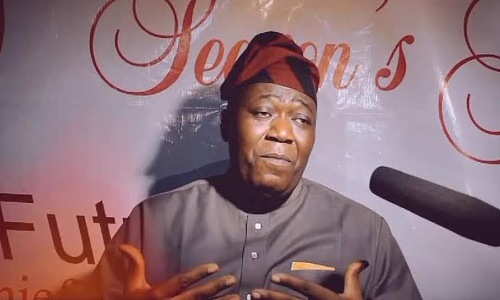
Oil and gas expert and Convener of the Oil, Gas and Power Forum, Madaki Ameh, has urged Nigerians to take advantage of the Dangote Refinery Initial Public Offering (IPO), describing it as a rare opportunity for ordinary citizens to own a stake in one of the country’s biggest refining businesses.
Ameh said the IPO, priced at ₦525 per share, has created an accessible entry point for Nigerians who want to participate in the oil and gas industry, noting that investors can buy shares with as little as ₦5,000.
He made the remarks while speaking on Arise News, where he described the offer as an opportunity Nigerians should seriously consider.
ALSO READ: Africa’s Biggest IPO: Dangote Promises Strong Returns, Generational Wealth for Investors
“The Dangote Refinery IPO gives Nigerians a rare opportunity to own a piece of a refinery. Most of us will not be able to build our own refineries in our lifetime, so this is a very good opportunity.
“The IPO is coming at an extremely good price—at 525 Naira per share, the shares are worth less than $1 (around 30 cents). Nobody would sell shares of an organization like Dangote Refinery for that low.”
According to Ameh, the relatively low entry point could generate significant interest among retail investors and potentially lead to substantial oversubscription.
“Ordinarily, I expect a huge level of interest—maybe a 200% to 300% oversubscription within a month. They have made it easy for anyone to buy; if you have up to 5,000 Naira, you can own a piece of Dangote Refinery. It is a very smart, strategic move,” he said.
Shares Could Double Within Six Months
Ameh also projected significant growth in the value of the refinery’s shares, citing plans by the company to increase its refining capacity from 650,000 barrels per day to 1.4 million barrels per day.
“From the way this IPO is priced, and considering that the refinery plans to double its capacity from 650,000 barrels per day to 1.4 million barrels per day in a short while, informed investors see that these shares are priced almost like penny stocks with the capacity to double within six months.
“In an inflationary environment, money kept in the bank loses value. Putting your money here is a prudent choice, as it can grow exponentially within a short time.”
He encouraged Nigerians to consider participating in the IPO, arguing that the minimum investment required was relatively small compared with the potential opportunity.
“As they say, no risk, no reward. If the risk threshold is low—5,000 Naira can hardly buy a decent meal in this country—and people are not ready to take a chance to buy ten shares, then they are not ready to make money.
“Nigerians should encourage themselves to be part of this massive business. This is money you make even while sleeping once you have investable funds.”
Dangote Should Be Encouraged
Ameh also dismissed concerns that the Dangote Refinery could create a monopoly in Nigeria’s oil and gas sector, arguing that the company should instead be encouraged for taking the risk of investing billions of dollars in domestic refining.
He recalled that Dangote began developing the refinery about a decade ago, at a time when there was uncertainty over whether the massive project would be completed.
“Dangote started this refinery about ten years ago when nobody gave him much of a chance. Dangote took personal courage and committed his own resources, recognizing that the future still required refining.
“He set up a private refinery that is now operational and delivering value. Now he is going to Kenya to set up another massive refinery in East Africa to handle the oil and gas value chain in that region.”
Responding to concerns about competition, Ameh argued that other investors had opportunities to establish refineries but failed to commit the necessary resources.
“People complain about a monopoly, but nobody prevented others from doing business. Many people hold refinery licenses today and have not laid a single brick.
“A man who had the courage to take the bull by the horns should be encouraged to reap the benefits. I fully align with the need to continue encouraging private industry, and Dangote is leading the way in Africa.”
He further argued that the risks associated with Dangote’s investment should be viewed in the context of the enormous scale of the project.
“The risks mentioned are minimal when looking at the entire risk profile. Dangote knows how to manage big companies. For a private individual to import and install every component shows immense confidence in this economy. We need many more investors like Dangote doing this level of work,” Ameh told Arise News.
Ameh Wants Government to Sell Crude to Local Refiners at $10
Beyond the IPO, Ameh called for broader reforms in Nigeria’s oil industry, including the sale of crude oil to domestic refiners at wellhead prices of no more than $10 per barrel.
He said the policy would strengthen local refining, increase domestic production and reduce the foreign exchange burden associated with importing refined petroleum products.
“Since 2012, I have consistently advocated that Nigeria needs a strategic plan to exit OPEC at some point. We have no business selling unrefined crude oil; we should refine everything we produce.
“Producing between 1.7 and 1.8 million barrels in total is not enough to grow this economy to where it ought to be.”
Ameh argued that the government should shift the focus of petroleum subsidies from consumption to production.
“The country needs to shift the subsidy from the consumption end to the production end. If you sell crude oil at the wellhead cost (which should not be more than $10 a barrel) to local refiners, you energize the economy significantly.
“This stops the drain on foreign exchange from importing products we can produce in abundance locally.”
Dangote Should Enter Upstream Sector
Ameh also called on Dangote to consider entering the upstream oil sector to secure crude feedstock for the refinery, particularly as its refining capacity expands.
“The government should encourage Dangote to enter the upstream sector himself to produce the feedstock for his refinery. When he expands to 1.4 million barrels per day and starts production in Kenya, finding enough crude to refine will become difficult.”
He said the government could support backward integration by allocating oil-producing assets to serious local refiners.
“If we have serious local refiners, why not farm out acreages in prolific fields and allow them to engage in backward integration? That way, the refinery produces its own feedstock,” he said.
Dangote Refinery Shares Could Double By December
Ameh further expressed optimism about the valuation prospects of Dangote Refinery, saying its share price could almost double or more than double by December 2026.
He linked the projection to expected strong demand for the refinery’s products in both domestic and international markets.
“When Dangote says the refinery will be the most valuable by December, he means that based on current projections and demand both locally and internationally, the value of these shares on listing could almost double or more than double by the end of the year,” Ameh said.
The comments come as the Dangote Refinery IPO attracts growing attention from Nigerian investors, with the offer providing retail investors an opportunity to participate directly in the ownership of a major player in the country’s oil and gas value chain.
However, while Ameh expressed strong optimism about the potential returns, investment in equities remains subject to market risks, and future share-price performance is not guaranteed.
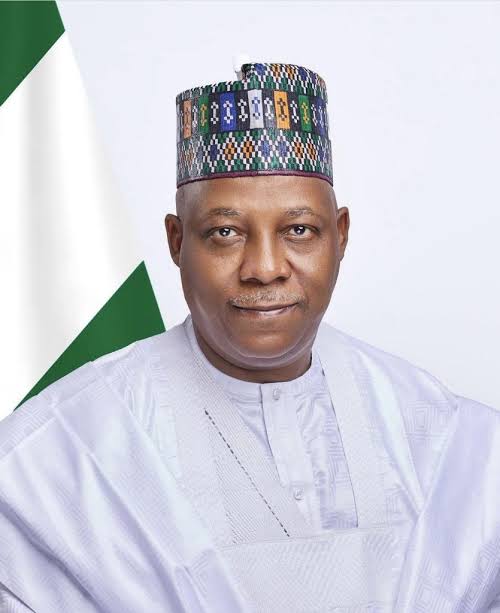
Vice President Kashim Shettima has returned to Nigeria after representing President Bola Tinubu at the 18th BRICS Leaders’ Summit in New Delhi, India.
Shettima’s return followed a series of high-level engagements focused on strengthening Nigeria’s economic and diplomatic interests and expanding the country’s partnerships with BRICS member and partner countries.
According to a statement issued on Tuesday by the Senior Special Assistant to the President on Media and Communications, Office of the Vice President, Stanley Nkwocha, Shettima participated in high-level sessions at the summit and held bilateral meetings with key international leaders.
ALSO READ: BRICS 2026: Modi Seeks More Nigerian Crude as Shettima Meets Indian PM
Among his major engagements was a meeting with Indian Prime Minister Narendra Modi, where discussions focused on strengthening economic ties between Nigeria and India.
The discussions covered renewed crude oil trade, investment, pharmaceuticals, defence, digital technology, fintech, renewable energy and other strategic sectors.
Shettima also met with the Director-General of the World Trade Organisation, Dr Ngozi Okonjo-Iweala, reaffirming Nigeria’s support for multilateralism and a more inclusive global economic order.
At the BRICS summit, Shettima delivered President Tinubu’s message calling for reforms of global governance structures and international financial institutions to reflect current economic realities.
He also positioned Nigeria as a gateway to Africa’s expanding market under the African Continental Free Trade Area.
Nigeria further used its participation at the summit to deepen engagement with BRICS member and partner countries in key sectors, including agriculture, artificial intelligence, digital infrastructure, manufacturing, healthcare, energy and human-capital development.
The Vice President’s participation forms part of the Federal Government’s broader efforts to strengthen Nigeria’s international economic partnerships, attract investment and create new opportunities across strategic sectors of the economy.
Tension has heightened in parts of Sokoto metropolis following the stabbing of an Islamic cleric, Musa Lukuwa, shortly after Friday prayers, prompting the state government to shut the mosque where the incident occurred.
The Sokoto State Government ordered the immediate closure of the Lukuwa Jumu’at Mosque in Mabera and declared the facility a crime scene pending the outcome of investigations.
The government also ordered a full investigation into the stabbing of the cleric and the subsequent killing of his alleged attacker by worshippers.
SEE MORE: 2027 Presidency: Sokoto ADC Adopts Atiku as Preferred Candidate
The directives were contained in a statement issued on Tuesday by the Director-General, Media and Publicity, Government House, Abubakar Bawa.
According to the Sokoto State Police Command, the alleged attacker used a knife to assault Lukuwa after the Friday prayers before worshippers overpowered and beat him to death.
Police spokesperson, Ahmad Rufa’i, said the command received a distress call at about 1:50pm concerning the incident.
He said preliminary investigations showed that the alleged assailant entered the mosque after the prayers and attacked the cleric.
Lukuwa was subsequently taken to hospital for treatment.
Following the attack, the cleric appealed for calm, saying he was in stable condition and urging his followers not to retaliate or take any action capable of escalating the situation.
Explaining the mosque’s closure, the state government said the measure was necessary to enable security agencies to conduct a thorough investigation.
“The government has ordered a full investigation into the attack and killing at Musa Lukuwa Jumu’at Mosque, Mabera, and ordered the closure of the mosque (crime scene) till further notice,” Bawa said.
The government also constituted a committee of Islamic scholars, known as ulamas, to investigate the immediate and remote causes of the religious tensions and advise the administration on appropriate measures.
“The State Government has constituted a committee of ulamas to examine the remote and immediate causes of such crisis, and to advise the government on the appropriate measures to be taken in the interest of the state,” the statement said.
The government further dissociated itself from anyone who, under the guise of religion, engages in acts it considers disrespectful to Prophet Muhammad, his parents, household and companions.
It reaffirmed its “total obedience and respect” for the Prophet and urged residents to continue demonstrating love and compassion towards him.
The administration also appealed to residents to refrain from making inciting statements capable of worsening the situation.
“The Government has appealed to people in the state to desist from incisive statements that could jeopardise the peaceful coexistence that Sokoto is known for,” Bawa said.
The state government assured residents of its commitment to protecting lives and property across Sokoto State and urged members of the public to remain calm as investigations continue.






Dangote Refinery IPO: Why Nigerians Are Being Urged to Own a Stake in Oil Business — Madaki Ameh

2027: ‘Let Tinubu Finish the Good Work’ — Oba of Benin Backs President

Shettima Returns To Nigeria After High-Stakes BRICS Summit In India
Tension in Sokoto as Govt Shuts Mosque After Cleric’s Stabbing

Africa’s Biggest IPO: Dangote Promises Strong Returns, Generational Wealth for Investors

Saudi Pipeline Disruption Pushes Nigeria’s Crude Beyond $115/barrel

Trump’s Family Unveils New Cryptocurrency Platform

Senate Denies Receiving Petitions Against Tinubu’s Ambassadorial Nominees

Dangote Cement Lights Up Benue Host Communities With CSR Initiatives

Reps Recommend 3-year Jail Term For Aviation minister

Tems Sets New Record On Billboard Hot 100 Chart
