
NEWS
JUST IN: Sanusi II Regains Position As Kano Emir

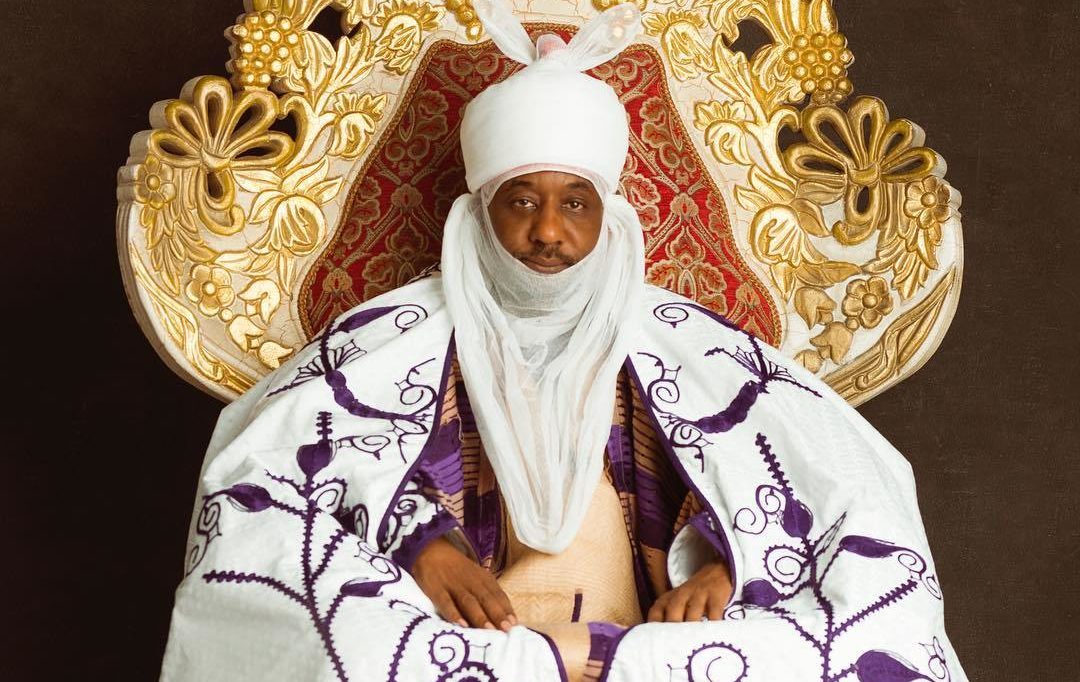
Following the Kano State House of Assembly’s legislative actions, including the amendment of necessary state laws and a resolution, speculations are rife that Governor Abba Kabir Yusuf has reinstated, Sanusi Lamido Sanusi II as the Emir of Kano.
It was gathered from LEADERSHIP newspaper, which cited informed sources that every necessary step had been taken, pending official pronouncement expected on Friday.
According to the newspaper, “This decision followed the Kano State House of Assembly’s resolution to dethrone the current Emir and also dismantle the four new Emirates in the State established under a controversial 2019 law.”
Citing credible sources, LEADERSHIP stated, “So certainly with the passage of the Bill, Sanusi automatically stands reinstated. No need for confirmation, the thing to is wait for the Governor to assent to it.”
Continuing, the report said: “The then restructuring of the Kano Emirate is seen as a political manoeuvre to diminish the influence of then Emir Sanusi II, a vocal critic of the former Governor Abdullahi Ganduje administration.
“The creation of the new emirates fragmented the authority of the old Kano Emirate Council, diluting its power and influence.
“Meanwhile, the Majority Leader of the Kano State House of Assembly, Lawan Hussaini Chediyar Yan Gurasa, who sponsored the Amendment Bill, shortly after Thursday’s session, revealed to journalists that, “the bill has been sent to the governor for assent, now there is no longer an active Emir in Kano in all the five Emirates; Kano, Bichi, Gaya, Rano and Karaye. The law now provides the governor to call on the traditional kingmakers to choose a new king.”
“Our correspondent also reports that all the district heads elevated or appointed under the repealed law are to revert to their previous positions.”








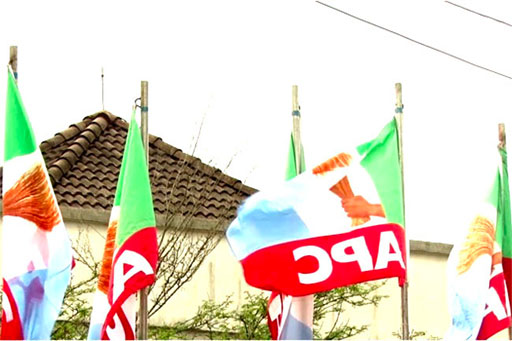
The Chairman of Kuje Area Council in the Federal Capital Territory (FCT), Danjuma Shekwolo, has clarified his controversial remarks in a viral video where he appeared to tell residents who do not support the All Progressives Congress (APC) to leave the council.
Shekwolo, who came under criticism following the circulation of the video, said his remarks were made in a specific context during a meeting with APC youths and loyalists and were subsequently taken out of context.
ALSO SEE: Abuja One-Chance Scare: How Criminals Turn Taxis Into Death Traps
In the viral footage, the chairman was heard saying: “I have said in my area council, it’s either you are doing APC or leave the area council. I am not arguing with you.”
The statement sparked concerns over political intimidation and residents’ freedom to support political parties of their choice, particularly as political activities intensify ahead of the 2027 general elections.
However, in a clarification issued on Wednesday, Shekwolo said he had no intention of disenfranchising residents or denying anyone their fundamental rights.
According to him, the meeting where the statement was made focused on administrative efficiency, local development and the welfare of communities within Kuje Area Council.
“The remarks in question were made in a specific context aimed at addressing administrative efficiency, local development, and community welfare. You may recall that event that led to the unfortunate incident was a meeting with the APC party youths and loyalties,” he said.
The chairman stressed that political affiliation could not be used as a basis for denying residents their rights.
“And as the Executive Chairman of Kuje Area Council, I have no right to disenfranchise any residents or citizen of their fundamental human rights in the council,” Shekwolo said.
He also denied any intention to create disaffection or undermine any group, saying his administration remained committed to serving all communities in Kuje.
“At no point did I intend to cause disaffection, undermine any group, or promote policies that do not serve the best interest of our citizens,” he said.
Shekwolo further appealed to residents and stakeholders to support the development of Kuje regardless of their political, religious or ethnic differences.
“I urge the people of Kuje Area Council and the general public, regardless of their political affiliation, religious, or ethnic difference, to join hands with the administration to make Kuje the area council of our dreams,” he said.
The chairman also appealed to journalists to verify the context of statements before publishing reports, describing the media and government as “partners in progress.”
The controversy followed widespread criticism of the original remarks, with rights groups and political actors raising concerns over the implications of linking residency in Kuje to political support.

The Federal Government has said Compressed Natural Gas can significantly reduce fuel and transportation costs, citing a traveller whose fuel expenditure reportedly dropped from more than N200,000 to about N40,000 after switching to CNG.
The Director-General of the National Automotive Design and Development Council, Oluwemimo Joseph Osanipin, disclosed this on Wednesday after meeting with President Bola Tinubu at the Presidential Villa in Abuja.
SEE MORE: FG, NADDC Empower NYSC Members in South-East with CNG Conversion Skills
Osanipin said the example demonstrated the potential of CNG to deliver substantial savings as the government expands infrastructure and access to alternative energy across the country.
He said the traveller was able to refill with gas in Kano, demonstrating the expanding availability of CNG beyond major commercial centres.
“So, a lot of people are already benefiting from this policy, and more and more will come now that we are having more people and more firms going into it and investing in it,” he said.
According to Osanipin, the number of companies licensed to retail gas had increased sharply from about four to 81, describing the development as evidence of growing private-sector participation in the Federal Government’s CNG initiative.
However, he acknowledged concerns that some commercial transport operators benefiting from lower CNG costs had yet to pass the savings on to commuters through reduced fares.
“We have a lot that are already doing it; fleet operators are already benefiting from this. So what we are pushing for again, because someone asked me that question, is that I have seen a lot of people benefiting from it, but they refuse to transfer the price to the masses.
“So that is going to be the next stage. But we just want to make sure that all the infrastructure and everything is coming. Then we now see enforcement of some of these policies,” he said.
Osanipin stressed that adequate infrastructure, including filling stations, mobile refuelling units and gas production facilities, remained critical to making the CNG initiative sustainable.
He also disclosed that the Federal Government had taken delivery of the first batch of electric vehicles promised to civil servants, describing it as the beginning of a broader rollout of cleaner-energy vehicles.
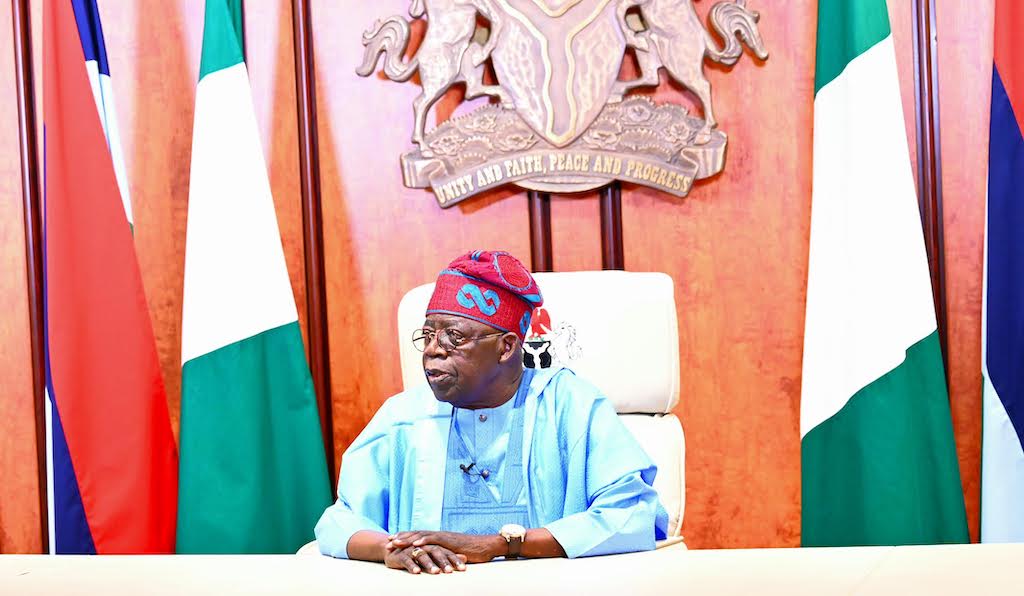
The Federal Government has begun the rollout of electric cars for civil servants with the delivery of the first batch of vehicles promised by President Bola Tinubu.
The Director-General of the National Automotive Design and Development Council, Oluwemimo Joseph Osanipin, disclosed this on Wednesday after meeting with President Tinubu at the Presidential Villa in Abuja.
Osanipin said the arrival of the vehicles marked the beginning of a broader plan to expand electric mobility in Nigeria, reduce transportation costs and promote cleaner energy.
SEE MORE: ‘Painful Loss to Nigeria’ — Tinubu Mourns Eagle Online Publisher Dotun Oladipo
“Today, you must have heard in the news that the first batch of the electric vehicle that the President promised civil servants was delivered today, and they are all electric vehicles. This is the beginning of more and more that will come,” he said.
According to him, the government has also deployed electric-vehicle infrastructure in about 16 universities across the country to support the development of an ecosystem for alternative-energy transportation.
Osanipin said the government’s policies on electric vehicles and Compressed Natural Gas would become increasingly visible as investments in supporting infrastructure continue to grow.
He stressed that infrastructure was critical to the success of the alternative-energy transition, noting that CNG adoption, for instance, requires filling stations, mobile refuelling units and gas production facilities.
“You can’t put a policy in place today and start having the immediate impact,” he said, adding that investments were already being made in the required infrastructure.
The NADDC boss also disclosed that the number of companies licensed to retail gas had increased from about four to 81.
He described the development as evidence of growing private-sector participation in the Federal Government’s CNG initiative and said gas was becoming more available in some states.
Osanipin further highlighted the potential of CNG to reduce transportation expenses, citing the experience of a traveller whose fuel expenditure reportedly fell from more than N200,000 to about N40,000 after switching to CNG.
He said the traveller was able to refuel with gas in Kano, demonstrating the expanding availability of CNG beyond major commercial centres.
However, Osanipin acknowledged concerns that some commercial transport operators benefiting from lower CNG costs had yet to transfer the savings to commuters through reduced fares.
“We have a lot that are already doing it; fleet operators are already benefiting from this. So what we are pushing for again, because someone asked me that question, is that I have seen a lot of people benefiting from it, but they refuse to transfer the price to the masses,” he said.
He explained that the next phase of the government’s intervention would focus on ensuring that the benefits of cheaper alternative energy translate into lower transportation costs for Nigerians.
Osanipin said his meeting with President Tinubu also provided an opportunity to brief him on developments in the automotive sector, ongoing investments and a draft legislation being developed for the industry.
The Federal Government has continued to promote electric mobility and CNG as part of efforts to diversify Nigeria’s transportation energy mix, reduce dependence on petrol and diesel, lower transportation costs and cut emissions.






Domestic Refineries Supply 75% of Nigeria’s Petrol

2027: Massive Turnout as Adebutu, Iyabo Obasanjo Kick Off PDP Campaign in Ogun

Funke Akindele, Ex-Husband JJC Skillz Reunite in Paris, Spark Reactions

Kuje Chairman Breaks Silence Over Viral ‘Leave If You’re Not APC’ Comment

2027: ‘You Said Remove Subsidy, Now You Want It Back’ — Adebayo Blasts Atiku

DPRP Decries Rising Fuel Imports, Despite Strong Local Supply Capacity

Trump’s Family Unveils New Cryptocurrency Platform

Senate Denies Receiving Petitions Against Tinubu’s Ambassadorial Nominees

Dangote Cement Lights Up Benue Host Communities With CSR Initiatives

Reps Recommend 3-year Jail Term For Aviation minister

Tems Sets New Record On Billboard Hot 100 Chart
