
Other News
Katsina State Government Drops N11bn Suit Against Ex-Gov Shema


The Katsina State Government has retracted its N11 billion lawsuit against the former Governor of the state, Ibrahim Shehu Shema, and former Chairman of the Association of Local Governments of Nigeria (ALGON), Ibrahim Lawal Dankaba, that it had previously filed with the state High Court.
Abdulrahman Umar, the state Director of Public Prosecution, announced to journalists at the Government House on Monday evening that the state government had filed a nolle prosequi before the court, leading to the withdrawal of the lawsuit against the two defendants.
Former Governor Shema was accused of criminal breach of trust, forgery, abuse of office, and converting public funds totaling over N11 billion during his time as governor. He was arraigned in 2016 before the late Justice Ibrahim Maikaita-Bako at the state High Court 3.
Former Commissioner for Local Government and Chieftaincy Affairs, Alhaji Sani Hamisu Makana, former Permanent Secretary of the ministry, Alhaji Lawai Rufai, and former ALGON Chairman Dankaba were also brought before the court alongside Shema.
However, the former governor, who served under the Peoples Democratic Party (PDP) from 2007 to 2015, pleaded not guilty to all the charges filed against him by the Governor Aminu Bello Masari-led government.
During the media chat, Umar confirmed that during Monday’s proceedings, the court accepted the Nolle Prosequi and cleared the former governor and Dankaba of all corruption charges brought against them by the state government.
Umar said: “Today being Monday the 13 of February, 2023, we were in High Court number 3 where the trial of the former Governor of Katsina State, Ibrahim Shehu Shema, is being conducted.
“We went with a nolle prosequi, which is a power of any state attorney-general to either institute an action or criminal case against any person in Nigeria before any court of law or take over any criminal proceedings against any person and as well as power to discontinue any case at any stage of the proceedings before judgment is entered.
“The attorney-general exercised that power and we went with it and the court gladly accepted that position of the attorney general to discontinue the case.
“To that effect, the former governor and Lawal Dankaba were discharged from all charges against them. That is the position of the state government at the moment but the EFCC’s case is still ongoing.” He added.

The African Democratic Congress (ADC) has warned the ruling All Progressives Congress (APC) against what it described as a dangerous attempt to weaken the opposition through judicial controversies, following a judgment by Justice Peter Lifu of the Federal High Court, Abuja, affecting the party’s leadership and the candidacy of former Vice President Atiku Abubakar.
The party alleged that the judgment, which reportedly sacked the Senator David Mark-led leadership and invalidated Atiku’s candidacy, was a desperate attempt to undermine the opposition and deny Nigerians the right to freely choose their leaders ahead of the 2027 general elections.
SEE ALSO: Atiku Raises Alarm Over Attacks on Sowore, ADC Governorship Candidate, Accuses APC of Intimidation
In a statement signed by its National Publicity Secretary, Bolaji Abdullahi, on Thursday, the ADC linked the timing of the judgment to the massive turnout at its presidential campaign rally in Sokoto, which took place barely 24 hours earlier.
The party claimed that the rally, which attracted thousands of supporters, had triggered panic within the ruling APC and accelerated the delivery of the judgment.
“We have reasons to believe that the judgment had long been written on this case. The Sokoto rally was simply a trigger that stampeded its delivery,” the statement read.
The ADC argued that the judgment went beyond the political ambitions of Atiku and David Mark, warning that its implications could affect thousands of candidates seeking elective positions at the local, state and federal levels.
It maintained that the development threatened the democratic rights of Nigerians and the participation of opposition candidates in the forthcoming elections.
The party also questioned the legal basis of the judgment, citing an earlier ruling by Justice Musa Liman of the same Federal High Court, delivered on July 2, 2026, in Suit No. FHC/ABJ/CS/1637/2025.
According to the ADC, the earlier judgment affirmed the legitimacy of the David Mark-led National Working Committee (NWC) and directed the Independent National Electoral Commission (INEC) to recognise the leadership.
The party argued that a court of coordinate jurisdiction cannot sit on appeal over, review, vary or nullify the subsisting judgment of another court of equal jurisdiction.
It said it would challenge the latest judgment through every available judicial process, adding that it was awaiting the Certified True Copy (CTC) to establish its precise terms, scope and operative orders.
The ADC further accused the APC of using judicial processes to frustrate opposition parties whenever they gained political momentum.
Warning against what it described as an attempt to eliminate political competition, the party said the peace and stability of Nigeria should not be sacrificed for the political ambitions of any individual or party.
“We warn the APC: do not play with fires you cannot control. The peace and stability of Nigeria are bigger than the ambition of any president or political party,” the statement added.
The party also challenged President Bola Tinubu and the APC to submit themselves to a free and fair electoral contest if they were confident in their performance and popularity.
“Nigeria belongs to Nigerians, not to the APC. The presidency is not an inheritance. If the President thinks he has performed well in office, why is he afraid of competition?” the ADC asked.
The controversy comes amid growing political activities ahead of the 2027 general elections, with the court judgment raising fresh questions about the ADC’s leadership and the status of candidates contesting under its platform.

Vice President Kashim Shettima has charged newly appointed Confederation of African Football (CAF) General Secretary, Samson Adamu, to protect and promote Nigeria’s interests while advancing the development of African football.
Shettima gave the charge on Tuesday at the Presidential Villa, Abuja, when he received Adamu, who was accompanied by a delegation led by the Chairman of the National Sports Commission, Shehu Dikko.
SEE ALSO: Sanwo-Olu Pledges Full Support as Lagos Prepares to Host 2026 CAF Awards
The Vice President congratulated Adamu on his appointment, describing his emergence as the first Nigerian to occupy the position in CAF’s 70-year history as a significant achievement for the country.
Conveying President Bola Tinubu’s goodwill, Shettima urged Adamu to approach his new responsibilities with integrity, diligence and a strong sense of national pride.
“The President is proud of you, Samson Adamu. Go and do a yo-man’s job. Go and promote, protect and project and preserve the interest of the Nigerian nation,” he said.
Shettima described football as an important instrument of national unity, noting that the sport brings Nigerians together irrespective of their differences.
“Anytime Nigeria plays, it tends to subsume all other identities. Football and sports generally is a source of unity for our country. What binds us together superseded whatever divides us,” he stated.
He attributed Nigeria’s achievements in sports to the quality of its people and the contributions of administrators, coaches, talent scouts and institutions responsible for identifying and developing sporting talents.
The Vice President also recalled the achievements of Nigerian football legends, including Rashidi Yekini, Austin ‘Jay-Jay’ Okocha and Finidi George, noting that their successes were supported by individuals and institutions that nurtured their abilities.
Earlier, Dikko thanked President Tinubu and the Federal Government for supporting sports development, saying the administration’s commitment had strengthened Nigeria’s international sporting profile and created opportunities for investment through sports.
He described Adamu’s appointment as a major milestone for Nigerian sports administration and disclosed that the Federal Government had approved Nigeria’s hosting of the CAF General Assembly in November and the CAF Awards in December 2026.
In his remarks, Adamu expressed appreciation to the Federal Government for its support, describing his appointment as a source of national pride.
He pledged to use his experience as CAF’s former Director of Competitions to strengthen the continental body’s administration and advance African football.
Adamu also promised to support Nigeria’s efforts to harness its football talents and maximise its potential in continental and global sports.
He was appointed CAF General Secretary on Sunday, November 1, 2026, following a recruitment exercise by the continental football governing body. He is expected to oversee CAF’s day-to-day administration.
The Economic and Financial Crimes Commission (EFCC) and the National Judicial Institute (NJI) have called for specialised judges, improved digital evidence management and legal reforms to accelerate the prosecution of corruption and other financial crime cases in Nigeria.
The recommendations were contained in a communiqué issued at the end of the 8th Capacity Building Workshop for Justices and Judges, held in Abuja from October 13 to 15, 2026.
The workshop, organised by the EFCC in collaboration with the NJI, was themed “Investigation and Prosecution of Economic and Financial Crimes in a Digital Age.”
SEE MORE: EFCC Arrests Enugu Estate MD Over Alleged N128m Land Scam
According to a statement signed by the EFCC’s Head of Media and Publicity, Dele Oyewale, the workshop brought together justices and judges from across the country, alongside EFCC investigators and prosecutors, for three days of lectures and deliberations.
Participants resolved that designating specialised judges and court staff to handle corruption cases, alongside targeted training, would help address delays in the administration of justice.
According to the communiqué, delays in resolving corruption cases “will be greatly reduced by designating specialised judges and court staff to handle such cases as well as equipping such judges and courts with necessary skills through training to ensure efficient, certain and consistent application of existing laws in the administration of justice.”
The participants also called for a balance between protecting the rights of defendants and ensuring the speedy administration of justice.
They said the criminal justice system “must strike the proper balance between fairness, efficiency and legal certainty in the protection of individual rights on one hand and the speedy administration of justice, on the other hand.”
To achieve this, they recommended reviewing relevant provisions of the Administration of Criminal Justice Act where necessary.
EFCC, NJI Seek Better Digital Evidence Management
The participants called for stronger investigation standards, including improved digital management protocols, to ensure that prosecutions rely on credible and admissible evidence.
They also recommended a more coordinated approach to obtaining confessional statements, stressing that institutionalising video recording and other necessary safeguards would protect suspects’ rights and preserve the integrity of investigations.
On asset recovery, the communiqué described Non-Conviction Based Asset Forfeiture proceedings as “an effective tool for recovery of stolen assets.”
However, participants stressed that its use “must follow extant legal protocols, adherence to human rights standards and strong institutional oversight.”
They also called for procedural reforms to allow extensions of time for freezing suspected proceeds of financial crimes.
Participants Recommend AI Guidelines for Judiciary
The communiqué further called on Ministries, Departments and Agencies in the anti-corruption sector to work with the National Assembly and the Judiciary to develop governance protocols and policy guidelines for adopting and deploying artificial intelligence in the administration of justice.
Participants also urged stakeholders to familiarise themselves with existing laws and regulations governing the investigation, prosecution and adjudication of financial crime cases involving virtual assets.
These include the Investment and Securities Act (2025), the Executive Order on Virtual Assets Coordination (2026), the Rules on Digital and Virtual Assets Operations (2026) and the Proceeds of Crime Act (2022).
The workshop also highlighted the need for increased investment in digital forensic laboratories, technology infrastructure and specialised training for investigators, prosecutors and judicial officers.
Participants called for continuous training to equip judicial officers and anti-corruption agencies with the skills required to address evolving economic and financial crimes in line with global best practices.
On the use of open-source intelligence, they said investigators, prosecutors and judicial officers should treat it primarily as a source of investigative leads and corroboration, while ensuring that evidence relied upon in court complies with applicable evidential rules.
NJI, NJC Urged to Develop Certification Courses
The communiqué recommended that the NJI, working with the National Judicial Council (NJC), develop accredited certificate and diploma courses to equip judges and other relevant stakeholders with the skills required to improve justice delivery, subject to any necessary legislative review.
Participants also called for sustained coordination among stakeholders in the administration of criminal justice, particularly in sharing information on emerging trends in the investigation and prosecution of economic and financial crimes in the digital age.
They urged heads of courts to use insights from the workshop to develop policies clarifying judicial practice on the technical issues discussed.
The workshop featured nine interactive sessions covering the admissibility of confessional statements, garnishee proceedings, abuse of court processes, asset forfeiture, artificial intelligence in investigations and prosecutions, virtual asset recovery and digital forensics.
Attendees included justices of the Supreme Court and Court of Appeal, judges of the Federal High Court, State High Courts and the High Court of the Federal Capital Territory, alongside other stakeholders in the judiciary and anti-corruption sector.
Participants expressed appreciation to President Bola Ahmed Tinubu, who was represented at the workshop by Vice-President Kashim Shettima, as well as other stakeholders and organisers who contributed to its success.






APC Pressuring Hotels to Deny Opposition Parties Venues – NDC Raises Alarm

Tinubu Hails Flamingos After Historic World Cup Final Qualification, Urges Team to Win Trophy
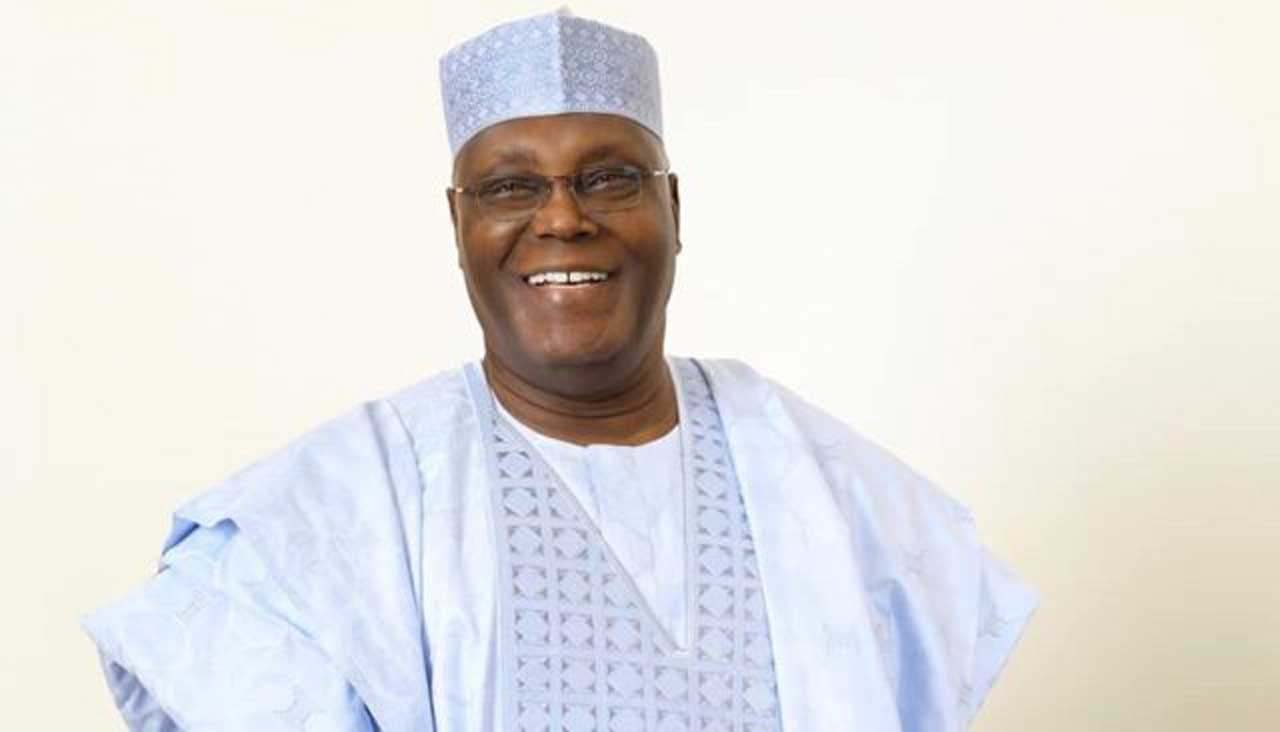
‘The Panic Is Real’ – Atiku Accuses APC of Plot to Weaken ADC

‘Don’t Set Nigeria on Fire’ – ADC Sends Warning to APC Over Lifu Judgment

2027: Shettima Declares Nigeria’s Economy Fixed, Seeks Tinubu’s Re-election

Atiku Launches 2027 Campaign in Sokoto, Pledges to Tackle Insecurity

Trump’s Family Unveils New Cryptocurrency Platform

Senate Denies Receiving Petitions Against Tinubu’s Ambassadorial Nominees

Dangote Cement Lights Up Benue Host Communities With CSR Initiatives

Reps Recommend 3-year Jail Term For Aviation minister

Tems Sets New Record On Billboard Hot 100 Chart
