
NEWS
Lagos-Ibadan Express: Road Users Lament Gridlock, Count Losses


By Edozie Obasi-Eze
The Ogun State-Lagos State end of the Lagos Ibadan express road has continued serving road users with nauseating experiences.
Several commuters who spoke to Biztellers, lamented the slow pace of work by Julius Berger, the safety and health implications, and economic costs.
They decried that this week has been particularly worrisome with the trauma of Lagos inbound traffic, which has been taking up to three hours to the less than 10-kilometer journey from Magboro, Ogun State to the Alausa, Lagos State, taking up to four hours in circumstances.
Pointing fingers at the snail’s pace of work on the reconstruction of that part of the road being handled by Julius Berger, Olugbemiga Oteninya, a resident of Magboro, recounted how he had to wake up at 3am on Thursday in the bid to catch an early morning bus to Enugu.
“I had an important engagement in Enugu on Friday and had to travel on Thursday. Knowing that the traffic from Magboro to Lagos had become hellish, I woke up at 3am and was on the way around an hour later.
“You can imagine my shock when I got to the long-bridge and met the traffic at a standstill? I count myself lucky to have met the God-Is-Good Bus at the Jibowu terminal. A journey that would have taken 45 minutes, took me almost three hours.”
She wondered why the government would not mandate Julius Berger to take steps to ameliorate the sufferings of the people, which aside compounding health conditions, was also compounding safety and leading to economic losses.
“The trauma is made worse by the poor state of the service lanes of the long-bridge, which ought to have been made usable to ease the traffic, improve security and support economic activities,” she lamented.
READ ALSO: NNPC rehabilitates PHRC/PPMC Depot access road
Still on her ordeal, she pointed out that “this last Thursday, there was a road traffic accident involving a heavy duty vehicle at the Kara bridge, outbound Lagos. So, the gridlock was at both sides of the express.
“That incident held us back in Lago till almost 11am despite the bus leaving Jibowu by 8am. Before we could get to the Onitsha head-bridge, it was already dusk. The activities of security agencies made the traffic at that end also traumatic and the driver had to be courageous to complete that journey to Enugu.”
Commuters are calling on the government and the contractor working on the Ogun-Lagos end of the Lagos-Ibadan express road to consider its strategic place and take measure to alleviate the sufferings of the people while also fast-tracking the reconstruction.

Sunbeth Energies Limited, an indigenous energy firm, has launched an additional self-service fuelling station in Ibadan, Oyo State, marking the fourth location in its growing retail network.
The launch extends the company’s fuelling solution to the South-West, giving more motorists access to a service designed around convenience, transparency and customer control.
The new station lets motorists manage their fuelling transactions independently, from selecting the quantity or value of fuel they want to purchase to making payment and dispensing fuel. Instructions displayed at the pumps guide customers through the process, while trained Customer Assistants are available to provide support whenever necessary.
The expansion builds on the company’s experience across its existing stations in Lagos, Abuja and Port Harcourt. Its Ogba station in Lagos, where the self-service offering was first introduced in July 2026, has now operated for more than 100 days without any reported service challenges.
READ ALSO: FG Eyes 167 CNG Stations as Investments Hit $2.6bn
During the launch, Head, Retail Roll-Out Projects at Sunbeth Energies, Adegbemiro Adeboye, said: “Our ambition is to make this service accessible to motorists across Nigeria, so that every Nigerian has the opportunity to experience a fuelling option that gives them greater control, transparency and confidence in their purchases. We believe that building trust in the downstream petroleum sector starts with giving customers a clear understanding of what they are paying for and greater control over the transaction. The successful operation of our first self-service station for over 100 days without any operational issues demonstrates the reliability of the technology and the potential of this service to transform the retail fuelling experience in Nigeria.
“As we expand into new locations, we continue to listen to customers across our regions, gather feedback and use real operational data to improve the service. This helps us understand the challenges motorists face in different markets and develop solutions that respond to local needs. Our focus is on building a service that works reliably for Nigerian conditions and continues to improve with every deployment.”
The Ibadan launch marks another step in Sunbeth Energies’ efforts to expand its self-service offering across the country, combining technology, customer feedback, and operational learning to deliver a more transparent, customer-led retail fuelling experience.
Sunbeth Energies Limited operates in Nigeria’s downstream petroleum sector, focusing on the bulk trading, distribution and supply of refined petroleum products. Through strategic partnerships, operational excellence and innovation, the company contributes to Nigeria’s energy security and the development of the downstream petroleum sector.

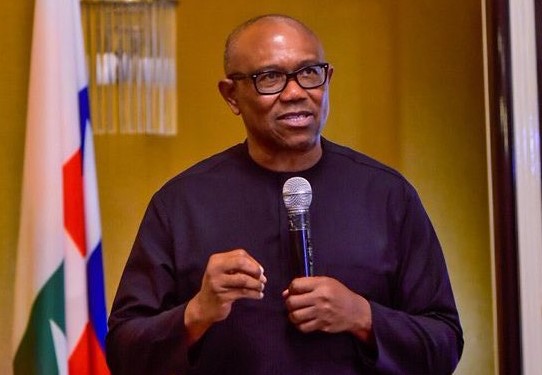
Former Anambra State Governor Peter Obi has challenged Nigerians to examine his administration’s governance record, highlighting the development policies and institutional reforms introduced during his tenure.
Obi disclosed this in a post on his X account on Monday, as he commenced a series titled “Nigerians, Go and Verify,” in which he reflected on the circumstances surrounding his emergence as governor and the governance philosophy that guided his administration.
He said Anambra State was at a critical point when he assumed office, with weak public institutions, inadequate development planning and a growing disconnect between government and the people.
According to him, his administration recognised that governance needed to be redefined around transparency, accountability, prudent management of public resources and measurable results.
“Our governing philosophy rested on four principles: character, competence, capacity, and compassion,” Obi stated.
He explained that leadership should not be driven by political slogans, personal recognition or self-promotion but by the responsibility to improve the living conditions of ordinary citizens.
“Leadership was not a platform for self-promotion, political slogans, or the pursuit of personal acclaim. Its purpose was to improve the circumstances of ordinary citizens,” he said.
Obi disclosed that one of the earliest challenges identified by his administration was the absence of a unified development plan capable of guiding government priorities and resource allocation.
To address the gap, he said his administration established the Ministry of Economic Planning to provide an institutional foundation for coordinated and sustainable development.
The initiative subsequently led to the development of the Anambra Integrated Development Strategy (ANIDS), which became the overarching framework for the state’s development agenda.
According to Obi, ANIDS was designed to align Anambra’s development priorities with the United Nations Millennium Development Goals (MDGs), which focused on eight areas, including poverty reduction, universal primary education, gender equality, maternal health, child mortality, disease prevention, environmental sustainability and global development partnerships.
He said his administration adapted the international objectives to the specific circumstances and needs of Anambra State, translating them into practical policies, programmes and measurable outcomes.
“Instead of viewing the MDGs as remote international benchmarks, we worked to convert their aims into practical policies, programs and measurable results that would produce tangible improvements in the lives of our people,” he stated.
The former governor also recalled that his administration changed Anambra’s public identity from “Home for All” to “The Light of the Nation.”
He said the decision was not merely a change of slogan but part of a broader effort to restore public confidence in government, renew civic pride and position the state as an example of purposeful leadership and development.
On the broader development agenda, Obi said his administration pursued a comprehensive approach that recognised the interdependence of different sectors.
He maintained that education, healthcare, infrastructure, security, agriculture and effective public institutions required simultaneous attention to achieve sustainable development.
“We did not accept the idea that government could focus on a single sector while leaving others behind,” he said.
Obi further identified the restoration of the dignity of the Anambra person as a central objective of his administration, arguing that the quality of infrastructure, healthcare, education and public institutions reflected how government treated its citizens.
He also listed the treatment of government workers, pensioners and traditional institutions as important indicators of responsible governance.
The latest statement forms part of Obi’s “Nigerians, Go and Verify” series, through which he is revisiting the policies, decisions and development framework of his administration in Anambra State.

The National Emergency Management Agency (NEMA) has distributed humanitarian relief materials to families displaced by armed banditry in communities across Shagari and Tureta Local Government Areas of Sokoto State.
The intervention, carried out as part of the Federal Government’s efforts to support communities affected by insecurity, took place in Yabo town, Yabo Local Government Area, where the displaced families are currently taking temporary refuge.
The distribution was approved by NEMA Director-General, Mrs Zubaida Umar, on behalf of the Federal Government, following an assessment conducted by the agency’s Sokoto Operations Office.
SEE MORE: NEMA Urges Federal Government Aid As Flood Forces Adamawa Residents To Flee
The relief materials included bags of rice and beans, cartons of spaghetti, vegetable oil, iodised salt, mosquito nets, nylon mats, foam mattresses and blankets.
The intervention comes against the backdrop of repeated bandit attacks in parts of Sokoto State, which have forced residents to abandon their homes and seek safety in other communities.
In June 2026, NEMA reported that attacks on Dan Gulbi community in Tureta Local Government Area on June 7 and 9 had displaced thousands of residents, with many fleeing to public facilities and neighbouring settlements.
The security situation also deteriorated in parts of Shagari Local Government Area in October, when police confirmed attacks on communities in the area. A police inspector was reportedly killed during the incident, while residents raised concerns over the movement of armed bandits around Sanyin Nawal and surrounding communities.
The recurring attacks have heightened humanitarian concerns in the affected areas, particularly for families forced to leave their homes and sources of livelihood.
During the latest relief distribution, beneficiaries expressed appreciation to the Federal Government and NEMA for the assistance, describing the intervention as a demonstration of compassion and solidarity with communities affected by insecurity.
The exercise was conducted in collaboration with the Sokoto State Emergency Management Agency (SEMA).
NEMA said the intervention was part of ongoing efforts to alleviate the suffering of people affected by insecurity and other humanitarian emergencies.






Five Key Considerations When Choosing Nigeria’s President in 2027

Verdant Capital Wins Two Africa Global Funds Awards

Sunbeth Energies Expands, Unveils New Self-service Station in Ibadan

FG Eyes 167 CNG Stations as Investments Hit $2.6bn

NMDPRA Gets Senate Nod for Six Executive Directors

Asharami Synergy Kenya Eyes Connecting 10 Million Homes to Affordable LPG by 2028

Trump’s Family Unveils New Cryptocurrency Platform
Senate Denies Receiving Petitions Against Tinubu’s Ambassadorial Nominees

Dangote Cement Lights Up Benue Host Communities With CSR Initiatives

Reps Recommend 3-year Jail Term For Aviation minister

Tems Sets New Record On Billboard Hot 100 Chart
