
International News
Mali’s Junta Leader Assimi Goita Grants Himself Unlimited Presidential Mandate

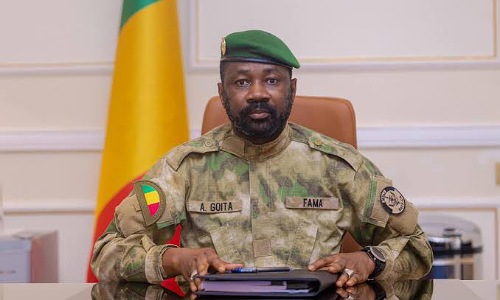
In a controversial move that has sparked fresh concerns over democracy in West Africa, Mali’s military ruler, General Assimi Goita, has signed into law a bill granting himself a five-year presidential term, renewable indefinitely without elections.
The law, made public on Thursday, was approved earlier this week by Goita, following its adoption by the military-controlled legislative body last month.
It effectively allows the junta leader to remain in power until at least 2030, overriding previous commitments to return the country to civilian rule by March 2024.
SEE ALSO: BREAKING: Mali&’s Junta Postpones Presidential Election
The legislation states that Goita will serve “as head of state for a term of five (05) years, renewable as many times as necessary, until the country is pacified.”
The sweeping mandate has drawn criticism for deepening authoritarian rule in a country already beset by violence and political instability.
Goita, who first seized power in a 2020 coup and later sidelined the transitional civilian leadership, had once pledged to restore democratic governance.
He was initially celebrated by some Malians as a bold reformer capable of restoring order in the jihadist-hit Sahel nation.
However, his failure to organize elections, followed by the dissolution of all political parties and civic organizations in May 2025, has raised alarms about Mali’s slide into military dictatorship.
Earlier this year, a junta-led national consultation boycotted by most major political parties had recommended proclaiming Goita president without an election and tightening rules around the formation of political organizations.
The new law marks a significant shift in Mali’s governance and reflects broader efforts by the junta to consolidate power.
It also comes amid heightened regional instability and strained relations with traditional Western allies.
Under Goita’s leadership, Mali has severed military ties with France and pivoted toward Russia. Alongside fellow junta-led states Burkina Faso and Niger, Mali has formed the Alliance of Sahel States (AES) and recently announced a joint force of 5,000 troops to conduct military operations across their territories.
Russia’s Africa Corps, widely reported to be the successor to the Wagner Group, has been operating in Mali in close coordination with the Malian army.
Both forces have been accused of human rights abuses, particularly during anti-jihadist campaigns.
Despite the increasingly repressive environment, Goita still commands support from a section of the population who view him as a symbol of national sovereignty and resistance against foreign interference.
Since 2012, Mali has been embroiled in a bloody conflict with jihadist groups linked to Al-Qaeda and the Islamic State.
Attacks have intensified in recent weeks, heightening fears that political instability will further complicate the security crisis.
International observers and democracy advocates have warned that Mali’s new political direction could embolden other military regimes in the region, undermining democratic norms and deepening instability across West Africa.


Federal agents raided the Washington, D.C., home of Democratic Congresswoman Ilhan Omar early Monday morning as part of an ongoing federal criminal investigation, the United States Department of Justice (DOJ) has confirmed.
Homeland Security Investigations agents arrived at the Minnesota congresswoman’s residence at about 6:00 a.m. Eastern Time, according to a report by Fox News.
SEE MORE: Trump Sparks Outrage With Shock Proposal to Rename New Mexico
The report said both the Department of Homeland Security (DHS) and the DOJ are involved in the investigation.
A DOJ spokesperson confirmed the operation, stating: “Today in the Washington, D.C. area, Homeland Security Investigations executed a judicially authorized search warrant secured by the Department of Justice.”
The spokesperson added: “This enforcement action is part of an ongoing federal criminal investigation.”
Details later……….
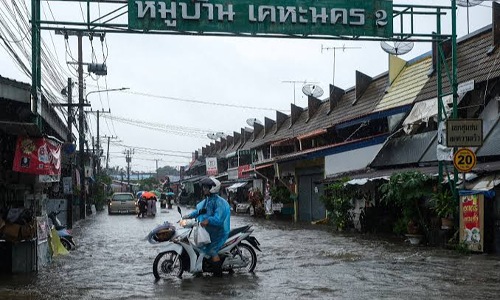
Heavy rains have triggered severe flooding across parts of Bangkok, Thailand, forcing nearly 4,900 residents to evacuate to shelters as floodwaters swept through roads and residential areas.
The flooding has disrupted movement across parts of the Thai capital, with motorists and pedestrians forced to navigate submerged roads and seek alternative routes.
SEE ALSO: NAFDAC Warns Nigerians As Fake Cowbell Milk Floods Market
According to the Bangkok Metropolitan Administration, about 52,000 households have been affected by the flooding, prompting authorities to declare a flood disaster and intensify emergency response efforts.
Emergency teams have been deployed to assist affected communities and move residents from vulnerable areas to safer locations as water levels rise.
Bangkok is accustomed to seasonal heavy rainfall, but intense downpours can overwhelm drainage systems, particularly in low-lying areas, resulting in widespread flooding and disruption.
Authorities are continuing to monitor affected locations while coordinating evacuations and other emergency measures.
For thousands of residents, the immediate priority remains securing safe shelter and protecting homes and livelihoods as authorities work to manage the situation and restore normal activities once the floodwaters recede.
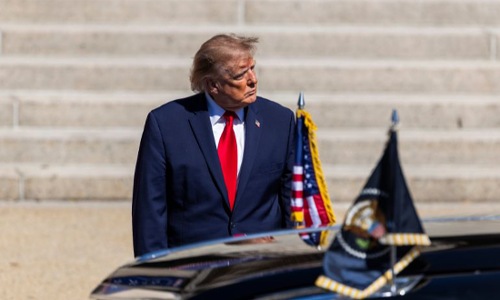
US President Donald Trump has explained his decision to reject Iran’s latest proposal to reopen the Strait of Hormuz, saying Tehran was seeking an agreement because it was losing revenue.
Speaking to reporters at the White House, Trump said Iran wanted to immediately reopen the strategically important waterway but argued that the proposal was not acceptable to his administration.
“They want to make a deal, and I think that’s fine. I like making a deal, too, but that deal would not be acceptable,” Trump said.
SEE ALSO: How the Strait of Hormuz Attack Could Trigger a Fresh Global Oil Shock
According to the US president, Iran’s push to reopen the strait was driven by the economic pressure it was facing.
“What they want to do is immediately open the Hormuz Strait. Do you know why? Because they are dying,” Trump said.
“You know why they’re dying? Because they have no money coming in, because they get their money from the Hormuz Strait.”
Trump also claimed that the US had established an unprecedented naval blockade against Iran, describing it as “a wall of steel.”
“So they outsmarted themselves. We put up the greatest blockade ever in military history. It’s a wall of steel,” he said.
“And guess what? They don’t have any money now because they wanted to close the strait.”
The Strait of Hormuz is a major global energy shipping route, and disruption to traffic through the waterway has significant implications for international oil markets and countries that depend on energy imports.
Trump’s remarks came amid continued tensions between Washington and Tehran over the reopening of the strategic waterway and negotiations involving Iran.






Dangote Preaches Ambition, Africa First to Nigerian Creatives

Protest Against Oil Company’s Vessel in Rivers Takes 10 Lives

FRSC Warns Drivers After Brake Failure Kills Two in Kano Crash

AAC Seeks Tinubu’s Approval, Logistical Support for 5,000 at Campaign Event

Renaissance, Sterling Bank Back Indigenous Oil and Gas Contractors Financially
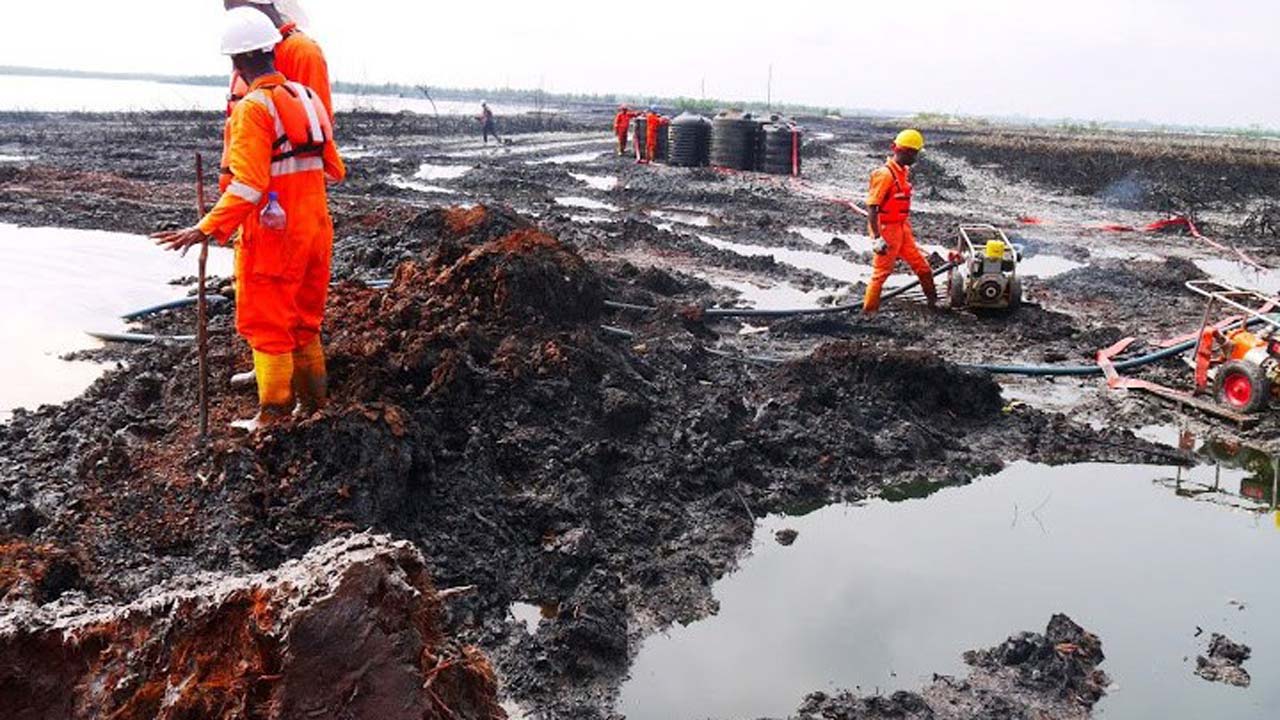
Group Demands Fair Share of NNPC Jobs for Ogoni Oil Exploration

Trump’s Family Unveils New Cryptocurrency Platform

Senate Denies Receiving Petitions Against Tinubu’s Ambassadorial Nominees

Dangote Cement Lights Up Benue Host Communities With CSR Initiatives

Reps Recommend 3-year Jail Term For Aviation minister

Tems Sets New Record On Billboard Hot 100 Chart
