
International News
No More YouTube For Kids Under 16, Says Australian Government


Australia has announced a groundbreaking move to prohibit children under 16 from creating or maintaining accounts on YouTube, as part of its broader efforts to curb the influence of social media on minors.
Communications Minister Anika Wells said on Wednesday that the new law, which takes effect on December 10, is designed to protect young Australians from “predatory algorithms” that expose them to harmful online content.
“We want kids to know who they are before platforms assume who they are,” Wells stated. “There’s a place for social media, but there’s not a place for predatory algorithms targeting children.”
READ MORE: Ayra Starr Breaks Records, Hits One Billion Views On YouTube
The decision comes after reports showed that four out of ten Australian children have encountered harmful content on YouTube — a platform still widely used in schools.
Initially, YouTube was expected to be exempt from the law due to its educational value. However, the government has now confirmed its inclusion alongside other popular platforms.
“Young people under the age of 16 will not be able to have accounts on YouTube,” Prime Minister Anthony Albanese confirmed during a press briefing.
“They will also not be able to have accounts on Facebook, Instagram, Snapchat, TikTok, and X, among other platforms. We want Australian parents and families to know that we have got their back.”
While the Prime Minister admitted that enforcement might be imperfect likening it to existing alcohol restrictions he emphasized the importance of the move as a protective step.
YouTube criticized the decision, labeling it a surprising policy reversal. In a statement, a company spokesperson said, “Our position remains clear: YouTube is a video sharing platform with a library of free, high-quality content, increasingly viewed on TV screens. It’s not social media.”
Other tech companies also expressed concerns. Meta, the parent company of Facebook and Instagram, warned that the new law could place “an onerous burden on parents and teens.” TikTok went further, accusing the government of ignoring expert opinions on youth mental health and online safety.
Though the legislation is one of the strictest of its kind globally, critics argue it lacks clarity on enforcement mechanisms, raising fears it could be more symbolic than impactful.








Federal agents raided the Washington, D.C., home of Democratic Congresswoman Ilhan Omar early Monday morning as part of an ongoing federal criminal investigation, the United States Department of Justice (DOJ) has confirmed.
Homeland Security Investigations agents arrived at the Minnesota congresswoman’s residence at about 6:00 a.m. Eastern Time, according to a report by Fox News.
SEE MORE: Trump Sparks Outrage With Shock Proposal to Rename New Mexico
The report said both the Department of Homeland Security (DHS) and the DOJ are involved in the investigation.
A DOJ spokesperson confirmed the operation, stating: “Today in the Washington, D.C. area, Homeland Security Investigations executed a judicially authorized search warrant secured by the Department of Justice.”
The spokesperson added: “This enforcement action is part of an ongoing federal criminal investigation.”
Details later……….
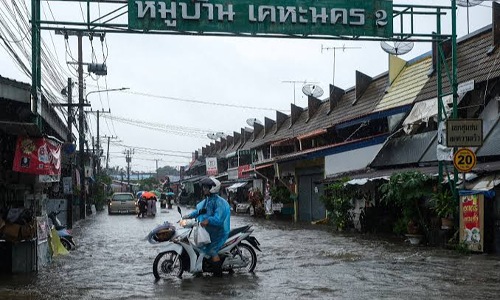
Heavy rains have triggered severe flooding across parts of Bangkok, Thailand, forcing nearly 4,900 residents to evacuate to shelters as floodwaters swept through roads and residential areas.
The flooding has disrupted movement across parts of the Thai capital, with motorists and pedestrians forced to navigate submerged roads and seek alternative routes.
SEE ALSO: NAFDAC Warns Nigerians As Fake Cowbell Milk Floods Market
According to the Bangkok Metropolitan Administration, about 52,000 households have been affected by the flooding, prompting authorities to declare a flood disaster and intensify emergency response efforts.
Emergency teams have been deployed to assist affected communities and move residents from vulnerable areas to safer locations as water levels rise.
Bangkok is accustomed to seasonal heavy rainfall, but intense downpours can overwhelm drainage systems, particularly in low-lying areas, resulting in widespread flooding and disruption.
Authorities are continuing to monitor affected locations while coordinating evacuations and other emergency measures.
For thousands of residents, the immediate priority remains securing safe shelter and protecting homes and livelihoods as authorities work to manage the situation and restore normal activities once the floodwaters recede.
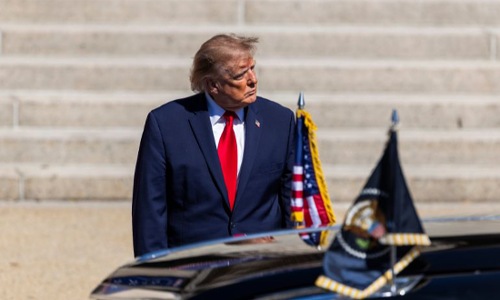
US President Donald Trump has explained his decision to reject Iran’s latest proposal to reopen the Strait of Hormuz, saying Tehran was seeking an agreement because it was losing revenue.
Speaking to reporters at the White House, Trump said Iran wanted to immediately reopen the strategically important waterway but argued that the proposal was not acceptable to his administration.
“They want to make a deal, and I think that’s fine. I like making a deal, too, but that deal would not be acceptable,” Trump said.
SEE ALSO: How the Strait of Hormuz Attack Could Trigger a Fresh Global Oil Shock
According to the US president, Iran’s push to reopen the strait was driven by the economic pressure it was facing.
“What they want to do is immediately open the Hormuz Strait. Do you know why? Because they are dying,” Trump said.
“You know why they’re dying? Because they have no money coming in, because they get their money from the Hormuz Strait.”
Trump also claimed that the US had established an unprecedented naval blockade against Iran, describing it as “a wall of steel.”
“So they outsmarted themselves. We put up the greatest blockade ever in military history. It’s a wall of steel,” he said.
“And guess what? They don’t have any money now because they wanted to close the strait.”
The Strait of Hormuz is a major global energy shipping route, and disruption to traffic through the waterway has significant implications for international oil markets and countries that depend on energy imports.
Trump’s remarks came amid continued tensions between Washington and Tehran over the reopening of the strategic waterway and negotiations involving Iran.





‘Oseni Rufai Helped Me, Not NiDCOM’ — Ekene Chukwuma on Return to Nigeria

‘Who Owns NNPC?’ Rufai Grills Olabode Sowunmi Over Fuel Subsidy
JUST IN: Amnesty Volunteer Lawrence Zongo Regains Freedom After 10 Days In Custody

2027: Tinubu Won’t Abandon Governance for Campaigns, Says Aide

Atiku Launches ‘Ask AA’ Portal, Invites Nigerians to Question His Record
Adamawa SSG Identifies Three Priorities for Tackling Nigeria’s Security Challenges

Trump’s Family Unveils New Cryptocurrency Platform

Senate Denies Receiving Petitions Against Tinubu’s Ambassadorial Nominees

Dangote Cement Lights Up Benue Host Communities With CSR Initiatives

Reps Recommend 3-year Jail Term For Aviation minister

Tems Sets New Record On Billboard Hot 100 Chart
