
Business
Marketers, NNPC Tangle Over N1,200/Litre For PMS

In a move that shows that the subsidy saga is far from over, fuel marketers under the aegis of the Independent Petroleum Marketers Association of Nigeria (IPMAN), started year 2024 inside the boxing ring with the Nigerian National Petroleum Company Limited (NNPC Ltd).
The IPMAN on Tuesday, threw the first punch, citing the depreciation of the naira against the United States dollar at both the official Investors & Exporters Window and the parallel market.
Biztelers reports that the Naira closed trading at 998/dollar at the official market, while it traded at 1,225/dollar at the black market on Tuesday.
Given the constant depreciation of the local currency, those who know, including economists and oil marketers opined that the Premium Motor Spirit (PMS), known as petrol, subsidy has been mounting lately.
A position that the state oil company, the NNPC Ltd has been quick to deny.
One of the strong voices on the state of the subsidy has been the Chief Executive Officer, Financial Derivatives Company, Bismarck Rewane.
In a live television programme on ChannelsTV on Sunday, Rewane expressed the view that fuel subsidy had not been removed but is being ‘managed’.
The matter assumed a stronger dimension on Tuesday when The Punch cited oil marketers that subsidy on petrol was increasing, in response to the crash of the naira against the United States dollar.
According to the oil marketers, the cost of crude oil, global currencies and prevailing economic/market condition have pushed PMS to N1,200/litre in a free market.
At the moment, NNPC Ltd remains the sole importer of petrol in Nigeria and sells for between N617/litre to N660/litre, depending on the location of purchase in Nigeria.
However, the Chief Corporate Communications Officer, NNPC Ltd, Olufemi Soneye, maintains that the government had dropped subsidy on petrol.
According to The PUNCH, Sonyeye described the positions of economists and marketers as assumptions, and insisted that the Recall that President Bola Ahmed Tinubu during his inaugural speech on May 29, 2023, declared that subsidy on petrol was gone.
The oil industry, led by the NNPC Ltd implemented the pronouncement with immediate effect.
Before Tinubu’s declaration, the pump price of petrol was below N190/litre, but it jumped to over N500/litre after the President’s statement, and moved up again to over N600/litre a few weeks later.
On if the NNPC Ltd, was still subsidising the commodity as posited by dealers and experts, the oil firm’s CCCO replied, “We prioritise our time on substantive matters rather than responding to assumptions.
“At NNPC Ltd, we prioritise national development through energy security and sustainable growth. We reiterate that the Nigerian government does not pay subsidy on fuel; we recover full costs from our imported products.
“As a global energy company, our focus remains on fostering a vibrant and energy-secure Nigeria.”
However, National Public Relations Officer, IPMAN, Ukadike Chinedu, expressed the view that subsidy on petrol was rising and that the cost of the commodity should be around N1,200/litre in a free market.
“To be pragmatic in this analysis let’s consider the cost of petrol today in the United States. For premium petrol, it is $2.99, while super petrol sells for $3.15 or $3.10 depending on the part of that country where you are making the purchase.
“Now, $3 in Nigeria is over N3,000, because a dollar in the parallel market is over N1,000. You can also see the cost of diesel, that is over N1,000/litre, and it is important to state that petrol is usually higher in price than diesel in a free market.
“So if you consider the cost of diesel, dollar and other international factors, the price of petrol in Nigeria should be around N1,200/litre, but the government is subsidising it, which to an extent is understandable,” he stated.
Ukadike noted that he had earlier explained that the government was implementing quasi-subsidy, and by this it means that “the Federal Government, instead of taking out the subsidy by 100 percent, decides to take out about 50 percent.”
The IPMAN official, however, expressed optimism again that the cost of refined petroleum products would reduce as soon as the Port Harcourt and Dangote refineries start producing the commodities.
“I also believe that there will be a reduction in the prices of petroleum products this year when you consider what the government is currently doing. The coming onboard of the Port Harcourt refinery and the supply of crude to Dangote refinery are good developments in the sector.
“Their operations will help stabilise the price of PMS and other petroleum products in Nigeria, because it will definitely cut down the importation of products,” Ukadike stated.











President and Chief Executive of Dangote Industries Limited (DIL), Aliko Dangote, has announced plans for the Aliko Dangote Foundation (ADF) to collaborate with state governments to empower vulnerable women across Nigeria through participation in the Dangote Petroleum Refinery and Petrochemicals Limited (DPRP) Initial Public Offering (IPO).
Dangote made the announcement in New York during the 81st United Nations General Assembly (UNGA) while responding to a question from the Secretary to the Yobe State Government, Dr. Goje Mohammed.
The discussion focused on how partnerships between government and the private sector can help conflict-affected communities, particularly widows, build sustainable financial futures through investment opportunities.
READ ALSO: NGX Invest Expands Primary Market Access with WhatsApp Subscription Channel
According to Dangote, the Foundation will work closely with state governments to ensure that women from vulnerable groups, including widows and victims of conflict, can take advantage of the refinery’s share offering and begin building long-term wealth through equity ownership.
The initiative is designed to expand access to Nigeria’s capital market by giving women who might otherwise be excluded the opportunity to become shareholders in one of Africa’s largest industrial enterprises.
Speaking on the programme, Dangote revealed that the Foundation plans to provide additional support to participating women by donating shares to complement their investments.
“We are partnering with state governments to ensure that widows and other vulnerable women are able to buy shares in the refinery,” he said.
He explained that women who purchase shares under the IPO will receive an additional allotment of shares from the Foundation, helping them establish a long-term financial asset.
“Beyond enabling them to buy shares, the Foundation will also support them by donating additional shares that they can hold as savings for the future,” Dangote noted.
The programme targets up to two million women nationwide, making it one of the largest financial inclusion and women’s empowerment initiatives linked to Nigeria’s capital market.
“We are looking at reaching about two million women through this initiative,” he added.
The proposed intervention forms part of the broader objectives of the Dangote Refinery “People’s IPO,” which seeks to democratise ownership of the landmark refinery and enable more Nigerians to share in the value created by one of the country’s most significant private-sector investments.
The initiative is expected to have particular significance for conflict-affected states such as Yobe, where many widows and vulnerable households continue to face economic challenges resulting from years of insecurity. By facilitating access to investment opportunities, the partnership aims to provide a pathway to sustainable wealth creation and long-term financial security.
Dangote emphasized that collaboration between the Foundation and state governments will create a structured framework for supporting vulnerable women to participate in the IPO, reinforcing the role of investment and equity ownership as tools for economic empowerment, financial inclusion and social development.
Through this initiative, the ownership opportunity presented by the Dangote Refinery IPO will be extended to some of Nigeria’s most vulnerable women, helping them build assets, secure their futures and participate directly in the growth of a landmark national enterprise.
The Nigerian Exchange Group (NGX Group) has expanded access to its NGX Invest platform with the launch of a WhatsApp subscription channel.
Biztellers reports that it provides investors with an additional, convenient way to participate in public offers.
A statement from the company has it that investors can begin the subscription process by sending “Invest” to NGX Invest on WhatsApp at +234 812 731 9521. They can then follow the prompts to view eligible offers and complete the required subscription steps without downloading a separate application. As part of the process, investors will select a stockbroker through whom their application will be processed, ensuring that brokers remain an integral part of the investment journey.
READ ALSO: Dangote IPO Will Spread Wealth Across Nigeria – Emir Sanusi
The new channel extends NGX Invest’s growing distribution ecosystem, which connects issuers to investors through more than 100 distribution channels, including stockbrokers, banks, fintechs, mobile operators and other financial institutions via API connectivity.
By integrating WhatsApp into NGX Invest, the NGX Group is reducing friction in the investment process and bringing primary-market opportunities closer to investors through a platform they already use every day. For issuers, the integration provides an additional route to reach a broader pool of potential investors and support more efficient capital raising.
The development forms part of NGX Group’s broader strategy to use technology, partnerships and open distribution infrastructure to widen participation in Nigeria’s capital market.
Security remains central to the design of the investor journey. While WhatsApp provides the interface through which investors can access the service, subscriptions are processed through NGX Invest’s secure, regulated infrastructure. Investors are encouraged to interact only with the official NGX Invest WhatsApp number and should never share passwords, PINs, OTPs or other sensitive credentials with third parties.
As digital participation in Nigeria’s capital market grows, NGX Group remains focused on ensuring that increased access is supported by secure, transparent and regulated market infrastructure. The addition of WhatsApp combines the convenience of a familiar consumer channel with the safeguards required for participation in regulated public offers.
With WhatsApp now part of its distribution ecosystem, NGX Invest is further expanding the infrastructure through which investors can discover and participate in primary-market opportunities, while enabling issuers to reach a wider investing public.
The $800m Final Investment Decision (FID) on the Ima Gas Project (IGP) has been warmly welcomed as a major milestone in efforts to unlock Nigeria’s gas resources for industrialisation, job creation and economic growth.
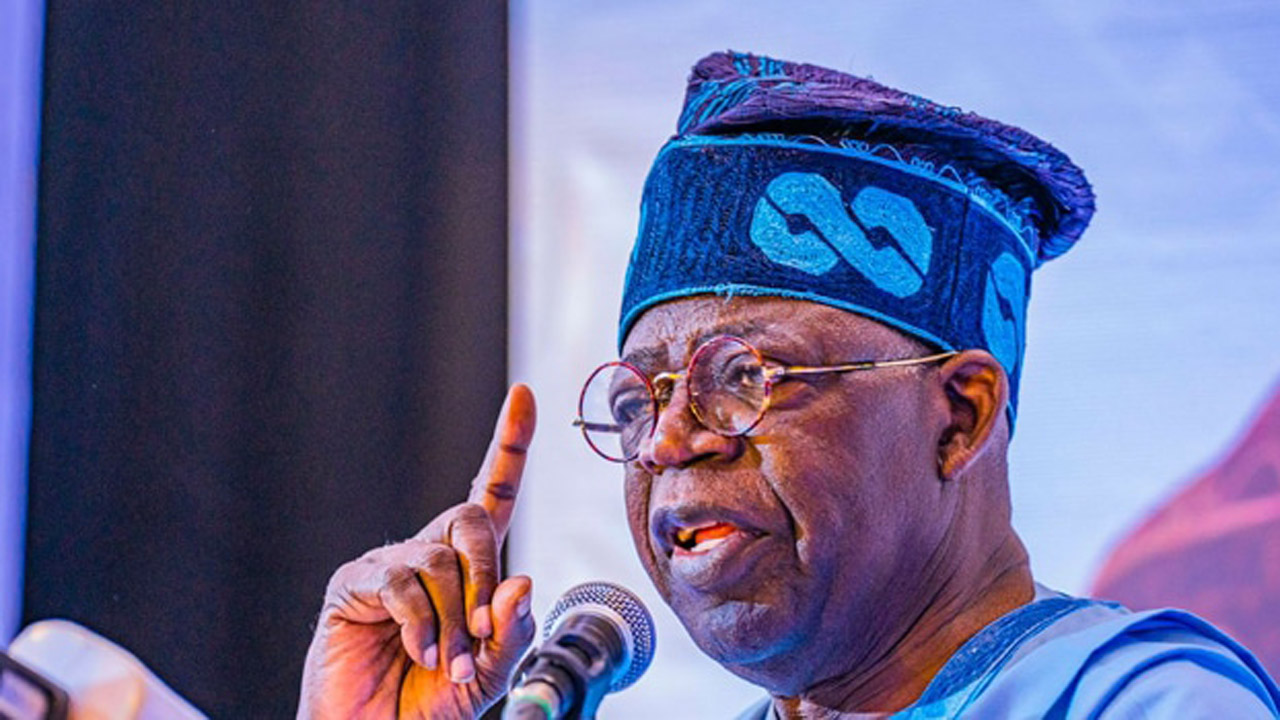
President Bola Tinubu applauded the development, according to the Special Adviser to the President on Information and Strategy, Bayo Onanuga, in a statement in Abuja, on Wednesday.
READ ALSO: Refineries, Exports Lift Nigeria’s Foreign Reserves over $55bn
The statement has it that the project, developed by Nigerian independent exploration and production company, AMNI International, in partnership with TotalEnergies, is expected to produce about 300 million standard cubic feet of gas per day at peak.
It added that the Ima gas resource, located offshore in Oil Mining Leases 112 and 117, was discovered in 1973 but remained undeveloped for more than five decades.
The FID, announced on Wednesday, is expected to pave the way for the development of the resource, which has the potential to provide feedgas for the Nigeria LNG Limited.
According to the statement, Tinubu said the development demonstrated the impact of creating a predictable and competitive environment for investors.
He stated, “For more than fifty years, the gas beneath Ima remained a resource with enormous potential, but potential alone does not create jobs, finance businesses or improve the lives of our people.
“Our responsibility has been to create the conditions that turn Nigeria’s natural resources into productive investments and economic opportunities.”
The President added, “The Final Investment Decision on Ima demonstrates what is possible when we provide investors with a competitive, predictable and enabling environment.
“We are determined to unlock more of Nigeria’s gas resources to power our industries, expand our exports, create jobs and build lasting prosperity for our people.”
The President said that for decades, Nigeria has had one of Africa’s largest gas resource bases, although significant volumes have remained undeveloped.
He added that this administration’s gas strategy is focused not only on increasing gas production but also on putting the resource to productive use by supporting LNG exports and foreign exchange earnings, providing feedstock for industries, enabling fertiliser and petrochemical production, improving power supply and creating opportunities for Nigerian businesses and workers.
“Natural resources have value only when they are converted into opportunities for our people.
“Our goal is to ensure that Nigeria’s gas powers Nigerian prosperity,” the President said.






Dangote to Support Two Million Women with Refinery IPO Share Ownership
NGX Invest Expands Primary Market Access with WhatsApp Subscription Channel

Kainji–Birnin Kebbi Power Line: TCN Begins Final Phase of Restoration

2027 Polls: ‘Poor Funding Could Undermine Election Security, Logistics’ — INEC Chairman Warns

N4bn Compensation Dispute Threatens Ikot Abasi Power Project

Organised Labour Supports Workers’ Demand for N500 PMS Price, N500,000 Minimum Wage

Trump’s Family Unveils New Cryptocurrency Platform

Senate Denies Receiving Petitions Against Tinubu’s Ambassadorial Nominees

Dangote Cement Lights Up Benue Host Communities With CSR Initiatives

Reps Recommend 3-year Jail Term For Aviation minister

Tems Sets New Record On Billboard Hot 100 Chart
