NEWS
Minister Orders Security Operatives to Wade into Souring LPG Prices


Prompted by the sharp hike in the price of cooking gas also called Liquefied Petroleum Gas (LPG), the Minister of State for Petroleum Resources (Gas), Ekperikpe Ekpo, has directed operatives of the Department of State Services (DSS), Police, Nigeria Security and Civil Defence Corps (NSCDC) and other paramilitary to decisively deal with those undermining the sector.
Ekpo, yesterday at a meeting with stakeholders on the rising prices of LPG, specifically directed the phalanx of the security team to apprehend hoarders and stop illegal storage diversion across Nigeria.
According to him, the government would not sit back and allow market forces to thwart its efforts in ensuring availability and affordability of LPG.
“I have directed the NMDPRA to intensify monitoring, engage operators, and work with security agencies to discourage hoarding, eliminate artificial scarcity, and strengthen distribution and pricing transparency.
“Improved supply must be matched by efficient distribution and responsible conduct. Bottlenecks, hoarding, speculative storage, allocation inefficiencies, logistics constraints, and pricing distortions must not undermine public confidence,” he said.
He reassured Nigerians that there is no cause for panic, as the government remains committed to adequate domestic gas supply and to the Decade of Gas Initiative as a pathway for cleaner cooking, industrial growth, and energy security,” stated.
Deputy President of Nigerian Association of LPG Marketers (NALPGAM), Ude Godwin, in his presentation, recalled how the body approached the Minister, the NMDPRA over the escalating price of gas in Nigeria and today’s meeting presented opportunities to enable the stakeholders to address the crisis.
Godwin explained that Since late 2025 into mid-2026: Nigerians have faced repeated LPG scarcity and consequential sharp price hikes despite rising domestic production.
According to him, prices jumped from N1,000/kg in January 2026 to N1,500-1,700/kg by May 2026.
“Prices went in some locations from N2,000-2,500/kg by June 2026. A 20MT truck now costs marketers N28m-N30m as against N14m/20MT when Dangote first supplied LPG in 2025.
“Erratic supply, terminal congestion in Lagos, logistics bottlenecks, and reduced volumes from Dangote Refinery and NLNG. Low buffer stock made any 2-week disruption to trigger panic buying.
“The Nigerian Association of Liquefied Petroleum Gas Marketers (NALPGAM), led by National President Barr. Edu Inyang has been the main industry voice pushing for intervention to save the situation,” he added.
ALSO READ: Sahara Group Fires-up Energy Journalism with $5,000 Fellowship
Beyond threats and sanctions, the marketer suggested to the government that there should be all domestic LPG producers to demonstrate compliance with domestic supply commitments and ensure adequate volumes are made available to the Nigerian market before exports, saying it will increase product availability and reduce supply disruptions.
He said there should be a joint government-industry monitoring team to track production volumes, depot prices, inventory levels, and distribution patterns across the country, to identify early signals of supply shortages, speculative activities, and market distortions.
He tasked the government to Initiate an urgent review of multiple fees, levies, and charges imposed across the LPG value chain with a view to eliminating duplications and reducing cost burdens on operators. This will bring about lower operating costs and moderation of retail prices.
“Where domestic supply is insufficient, provide a fast-track framework for marketers and investors to import additional LPG volumes, including support for foreign exchange access and streamlined regulatory approvals. This will bridge supply gaps and improve market competition.
“Announce targeted incentives for investment in LPG storage facilities and distribution hubs in underserved regions, particularly Northern Nigeria and major inland consumption centres. This will reduce transportation costs and improve nationwide product availability.
“Set up a standing working group comprising representatives of the Ministry, NMDPRA, producers, terminal operators, NALPGAM and other critical stakeholders to meet periodically and monitor implementation of agreed interventions.
“This will bring about sustained stakeholder engagement, policy coordination, and measurable progress toward supply, availability and stability,” he added.





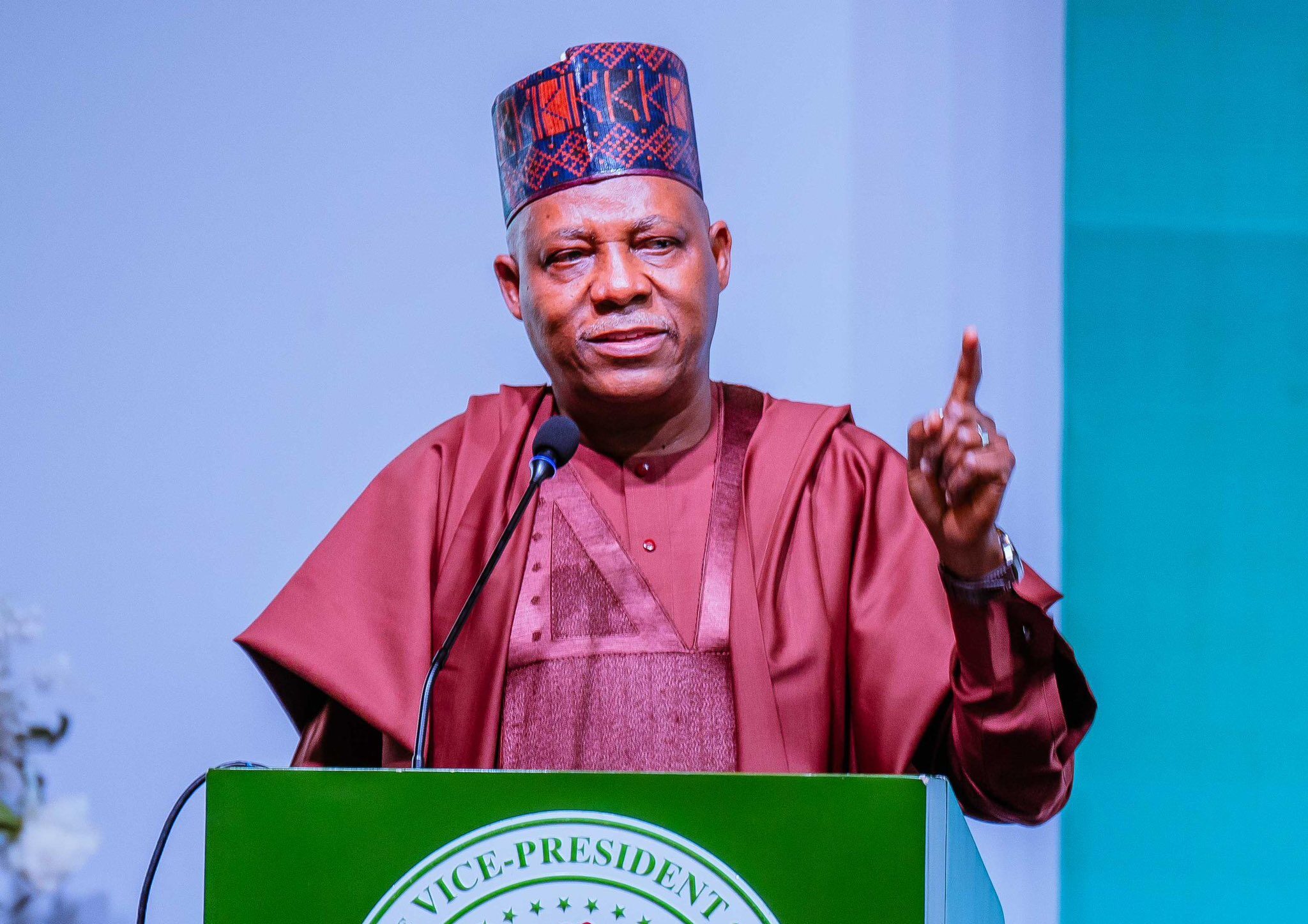
Vice President Kashim Shettima has departed Abuja for Jos, Plateau State, alongside his wife, Hajiya Nana Shettima, ahead of the All Progressives Congress (APC) presidential campaign rally in the state.
The visit is part of the Tinubu–Shettima campaign’s engagements as the ruling party seeks to secure support for President Bola Ahmed Tinubu and Vice President Shettima ahead of the 2027 general elections.
The campaign’s visit to Plateau is expected to highlight the Federal Government’s infrastructure and economic development projects in the state, particularly those aimed at improving road connectivity, boosting commerce and supporting agricultural activities.
SEE ALSO: Tinubu, Shettima Head to Jos for APC Presidential Campaign Rally
Among the projects highlighted by the administration is the ongoing 125-kilometre Akwanga–Jos highway, which forms part of the Akwanga–Bauchi–Gombe–Maiduguri Superhighway.
Other projects include the rehabilitation of the Sharram–Garram–Babban Lamba Road in Kanke and the approved Mararaban Jama’a–Kanke–Langtang–Shendam–Ibi Road, which is expected to improve connectivity between Plateau and Taraba states.
The administration says the projects are part of its broader development agenda to connect communities, facilitate access to markets and provide farmers and businesses with improved infrastructure.
The APC campaign is expected to use the rally to present the administration’s achievements and future plans while seeking the confidence of Plateau residents to continue its development agenda beyond 2027.

The Ogun State Police Command has presented cheques totalling ₦10.65 million to families and next-of-kin of deceased police officers who served under the command, as part of efforts to support dependants of personnel who died in active service.
The cheques, amounting to ₦10,658,391.36, were presented on Saturday, November 14, 2026, by the Commissioner of Police, CP Bode Ojajuni, on behalf of the Inspector-General of Police, IGP Olatunji Rilwan Disu.
The statement was signed by the Police Public Relations Officer of the Ogun State Command, DSP Oluseyi B. Babaseyi, anipr, and dated November 14, 2026.
ALSO READ: How Ogun Driver Allegedly Stole Boss’s ₦45m Lexus and Plotted to Sell It for ₦10m in Cotonou
The presentation took place at the Command Headquarters in Eleweran, Abeokuta, under the Nigeria Police Force Group Life Assurance and the IGP Family Welfare Schemes.
The initiatives are designed to provide financial assistance to families of police officers who lost their lives while serving the country.
Accompanied by members of the Command Management Team, Ojajuni personally handed over the cheques to the beneficiaries.
Addressing the recipients, the police commissioner reaffirmed the Inspector-General’s commitment to the welfare of police personnel and their families.
He described the widows and families of the deceased officers as the “true superheroes”, acknowledging their resilience in coping with the loss of their loved ones who died in service to the nation.
Ojajuni noted that the financial intervention was a demonstration of the Force’s appreciation and institutional responsibility to support the families of fallen officers.
He said the initiative represented the Nigeria Police Force’s enduring commitment to standing by the dependants of personnel who paid the ultimate price in active service.
Responding on behalf of the beneficiaries, Mrs Ejembi Ada Veronica thanked the Inspector-General of Police and the Ogun State Police Command for remembering their families and providing financial assistance.
She assured the authorities that the money would be channelled towards the education, upkeep and general welfare of the children and dependants left behind by the deceased officers.
According to her, the intervention would provide timely relief and help improve the stability of the affected families.
The Ogun State Police Command reiterated its commitment to supporting the families of fallen officers, assuring them of its continued solidarity.
The Nigerian Upstream Petroleum Regulatory Commission (NUPRC) has screened 28 oil and gas wells around reported gas seepage locations in Bille Community, Degema Local Government Area of Rivers State, identifying three as high-risk, as investigations continue to establish the source of the bubbling gas.
The Commission disclosed that its investigation team physically visited 14 of the 28 wells screened but could not access three others because they were submerged. During the visits, the team observed gas hissing from some wells, while some facilities were found to be corroded and others vandalised.
ALSO READ: Rig Count Hits 100, as NUPRC Approves 740 Drilling Jobs
The update was made on Thursday during a special technical paper presentation at the 44th Annual International Conference and Exhibition of the Nigerian Association of Petroleum Explorationists (NAPE).
The paper, titled “Unravelling Gas Seepage and Bubbling in Nigeria: The Integrated Study Approach Towards Source Attribution,” was hosted by the NUPRC.
In his presentation, the Director of Subsurface Development at the NUPRC, Engr. Joseph Ogunsola, FNSE, described gas seepage as a new phenomenon in the Nigerian petroleum industry, prompting the Commission to constitute a team to investigate what lies beneath the bubbles.
Ogunsola was represented by the Senior Manager, Onshore Frontier Development Drilling, Mr. Azibamikiomam John-Adumo, a geologist.
He disclosed that studies conducted in one of the affected areas had helped unravel the structural threat associated with the phenomenon.
According to him, one of the wells was originally drilled in search of oil but was shut down following the discovery of gas instead.
He explained that the well is approximately 2.5 kilometres from the seepage location, adding that investigations are ongoing to establish whether the seepage originates from that particular well or other nearby wells.
He further disclosed that the distance between the seepage location and other wells ranges from 2.5 to three kilometres, noting that the area is highly explored and hydrocarbon-charged, as demonstrated by the number of wells in the vicinity.
Providing an update on the wells workstream, which falls under the facility and infrastructure component of the investigation, John-Adumo said the 28 wells were screened based on their proximity to the seepage locations and the reservoirs traversed during drilling.
He also explained that the investigation had progressed from the first reported bubble to an independent fingerprinting campaign within 12 months.
Recalling that the first seepage was observed in October 2025, he said the results of the independent investigation, using Gas Chromatography-Isotope Ratio Mass Spectrometry (GC-IRMS) and compositional field analysis, were expected in the fourth quarter of 2026.
While investigations continue, John-Adumo said the Commission and operators had mobilised relief materials and other support for affected communities.
The interventions include food supplies, medical outreach, efforts to provide potable water, fire vans and safety kits, among other assistance.
He, however, warned that if the seepage is established to be a natural geological phenomenon, residents may need to be evacuated because tracing the migration pathways and designing subsurface interventions could be much more challenging.
He reiterated the Commission’s commitment to a speedy, coordinated and integrated investigation to establish the source of the gas seepage.



40% of Breadmakers Shut Down as Atiku Accuses Tinubu of Economic Failure

ADC Fires Back at NBA Over Kalu, Says ‘No Respectful Way to Address Evil’

INEC Debunks Amupitan Resignation Rumour After London Protest, Voter Register Controversy

Chevron Nigeria Emerges Second-best Exhibitor at NAPE 2026
NGX Gains 1.36% as Market Capitalisation Climbs to ₦163.80trn

Shettima, Wife Depart Abuja for Jos as Tinubu–Shettima Campaign Takes Rally to Plateau

Trump’s Family Unveils New Cryptocurrency Platform
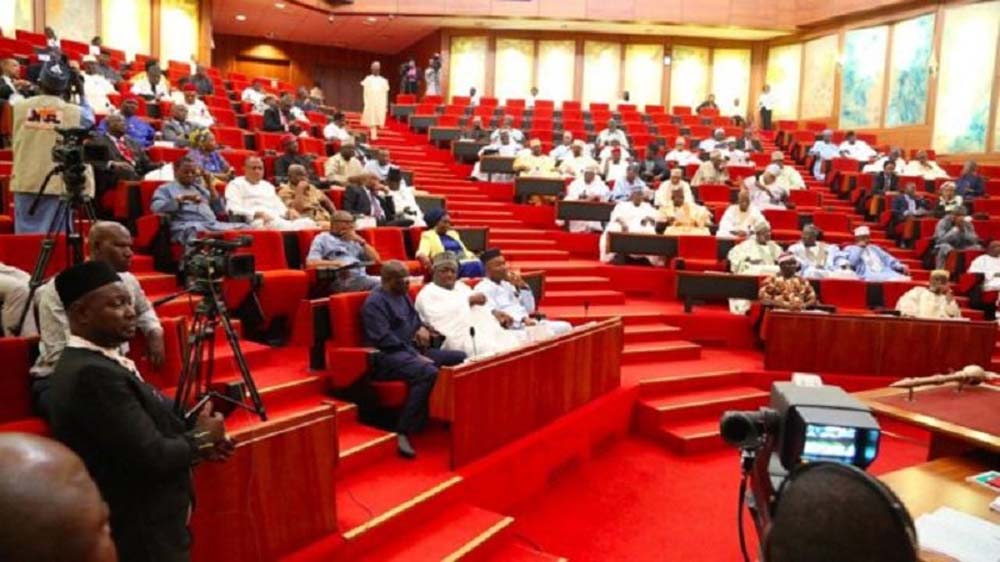
Senate Denies Receiving Petitions Against Tinubu’s Ambassadorial Nominees

Dangote Cement Lights Up Benue Host Communities With CSR Initiatives

Reps Recommend 3-year Jail Term For Aviation minister

Tems Sets New Record On Billboard Hot 100 Chart