
NEWS
Naira Re-design: CBN/Finance Minister face off sign of confused govt – Kachukwu

By John Danjuma
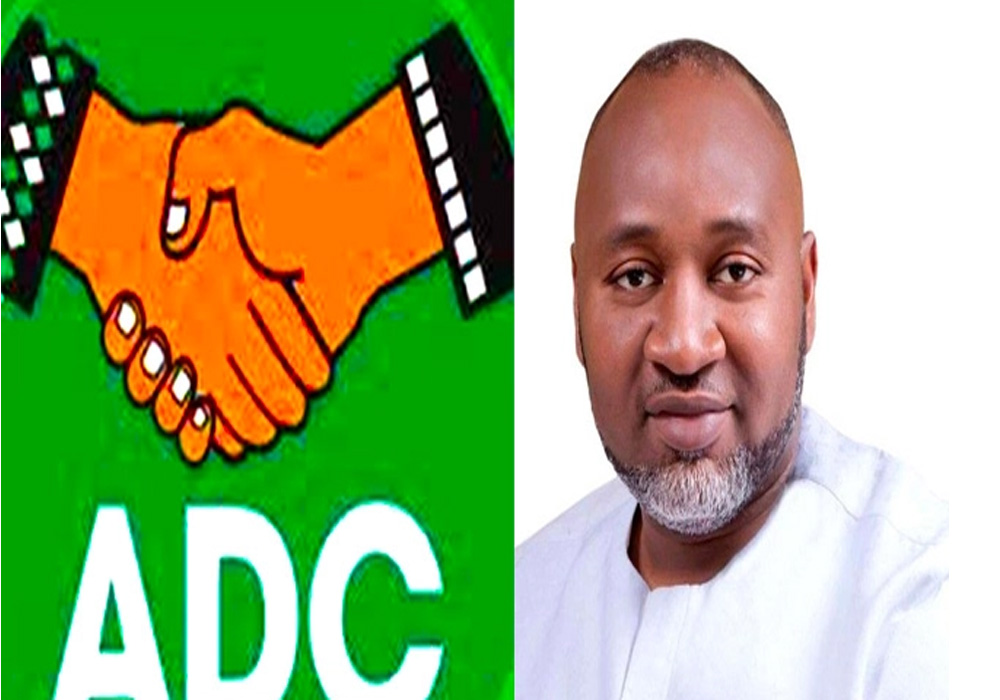
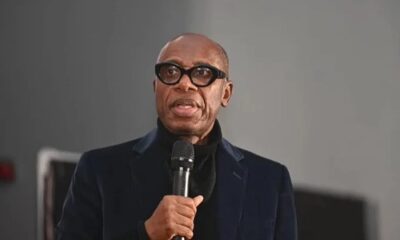
The Presidential candidate of the African Democratic Congress (ADC), Dumebi Kachukwu, has described the face off between the governor of Central Bank of Nigeria, CBN and the Minister of Finance, Zainab Ahmed, over Naira re-designing as sign of a confused government with no direction.
Dumebi Kachukwu
It would be recalled that barely two days after the CBN announced the move to redesign the Naira billed for December 15, 2022, the minister disowned the policy saying she was not aware of it, warning the CBN of the consequences that may arise from it.
Speaking in Abuja on Monday, Kachukwu said the controversy between the finance minister and the Central Bank of Nigeria has exposed the fact that some appointees of the government are working at cross purpose.
Read also>>>CBN destroys N6 trillion banknotes in Buhari’s regime
“It further speaks to the confusion that goes on daily in President Muhammadu Buhari” administration, the fact that the minister of finance who is a key part of the economy, who superitends over the economy to get to know the policy of Naira redesigning through the media says a lot about our country and the government.
“It says a lot about the fact that in this government, something that concern monetary policy, the minister of finance was not part of the meeting to be briefed. She might not have a supervisory role over the CBN Governor but she is a key part of the economy. She would have pointed out the fact that the policy is ill timed.
Kachukwu reiterated his believe that the planned redesigning of the Naira is ill timed policy which will further erode the value of the Nigerian currency against the American Dollar.
He said President Muhammadu Buhari has continued to destroy the Nigerian economy with wrong and ill-timed policies that mostly benefit a few.
“Millions are daily thrown into the poverty bracket. Our middle class has been wiped out as the dollar today exchanges for N800 and above. Diesel which powers most businesses and industries retails for around N900. A bag of local rice sells for N50,000 in some parts of Nigeria.
“A bag of Dangote cement retails for N4100. Mind you cement is the building block for the construction industry and that same construction industry is a key driver of any economy.
“One begins to wonder if this government is deliberately trying to set a record of creating the greatest number of poor people in the shortest period possible.
“How do you explain the timing of the re-design of the naira? The sensible thing to do is weigh the pros and cons before taking such a decision which has further weakened the naira.
“How many Nigerians actually store money in their homes as is being speculated? Do we further destroy the naira because of a few Nigerians?
“At a time like this. It is extremely ill-timed. Before this time, the Naira was doing N788 to $1, today it is over N800 and in Lagos it is over N1000 because people are now speculating.
“Everyday Nigerians are now leaving this country in droves. As they leave Nigeria they are selling their properties, they are buying forex.
“Our economy is in tatters while the managers of our economy fight over who informed who or who got Presidential approval.
“As the naira continues to plunge, more businesses will collapse this week. Thousands will be thrown into the employment market daily. This is our reality.
“We need to see all the factors affecting our Naira. If these people are not in touch with the reality of what is happening in Nigeria they keep on making wrong headed policies. They will keep on making mistakes.
“In a country like ours we have been speaking for seven years about diversifying our economy about strengthening the Naira, I want to challenge this government, the banks to tell us how many new businesses the banks have supported to export this year.
“If you want to strengthen the Naira you have to look at the balance of trade, you have to export more than we import. They should ask the banks how many people they funded to export, how many small businesses in the last 10 months, in the last one year or two years, five years or throughout the lifespan of this administration that will show you what is going in Nigeria.
“It is a very unserious government that does not know what is to be done.”
He challenged the security agents to fish out those that are hoarding the Naira to warrant the new policy.
“Why can’t our security agencies up their game, identify those who have been speculated to store billions in their homes and then use legal means to recover the money.
“By the way who says all money stored at home is ill-gotten wealth? There are those who simply don’t trust banks or don’t want to incur the extortionist bank charges imposed by some banks”
On the security security advisory by some of the western nations and the departure of embassy officials and their families which have led to panic amongst Nigerians he said it is because the President failed to respond to rumours that some convicted terrorists were released to secure the freedom of the remaining Kaduna train captives.
“Some now accuse his government of undermining the efforts of our men and women in the field by the indiscriminate release of those who have sworn to destroy our way of life. Only the President can confirm if this is true or not.
“Nigerians now live in fear of the unknown as they wonder if they could be in the right place at the wrong time. Our highways have gotten worse as bandits now take on and kill convoys with several policemen. If those with a retinue of police aides are being attacked and, in some cases killed, then who is safe in Buhari’s Nigeria?
“Even though President Buhari has sought to assure Nigerians that all is well one begins to wonder what is really going on.”
“We can’t continue to keep quiet while our President continues to pauperise us. I call on President Buhari to convene an emergency economic summit.
“We all need to get involved in this conversation. It is meaningless to keep on talking about the 2023 general elections when our present realities suggest that we might not have a nation by that time.
“We can’t continue acting like we don’t know tens of millions of Nigerians are unemployed and impoverished.Their plight gets worse as our economy gets worse. When is breaking point?
“The President can’t keep on saying he is fighting inflation yet in an import dependent economy small businesses are paying up to N5 million to clear a 20ft container and up to N9million for a 40ft container.
“Who is advising our President? Inflation begins from your ports. This government is killing small businesses. If the President is serious about strengthening the naira, he should find out how many new export oriented businesses Nigerian banks funded in the last one year.
“He should find out how many new businesses Nigerian banks funded in the last 10 months. We can’t keep on deceiving ourselves.”






Following observed mis-steps, the Federal Government of Nigeria has withdrawn the eight-count criminal charge brought against the alleged fake Director General (DG) of the Presidential Foreign Intervention Promotion Council (PFIPC), Adeniyi Adeyemi.
Biztellers reports that the matter, in accordance with the counsel of the Attorney General of the Federation (AGF) and Minister of Justice, Prince Lateef Olasunkanmi Fagbemi, (SAN), the matter will be filed at the High Court of the Federal Capital Territory (FCT), instead of the Federal High Court (FHC).
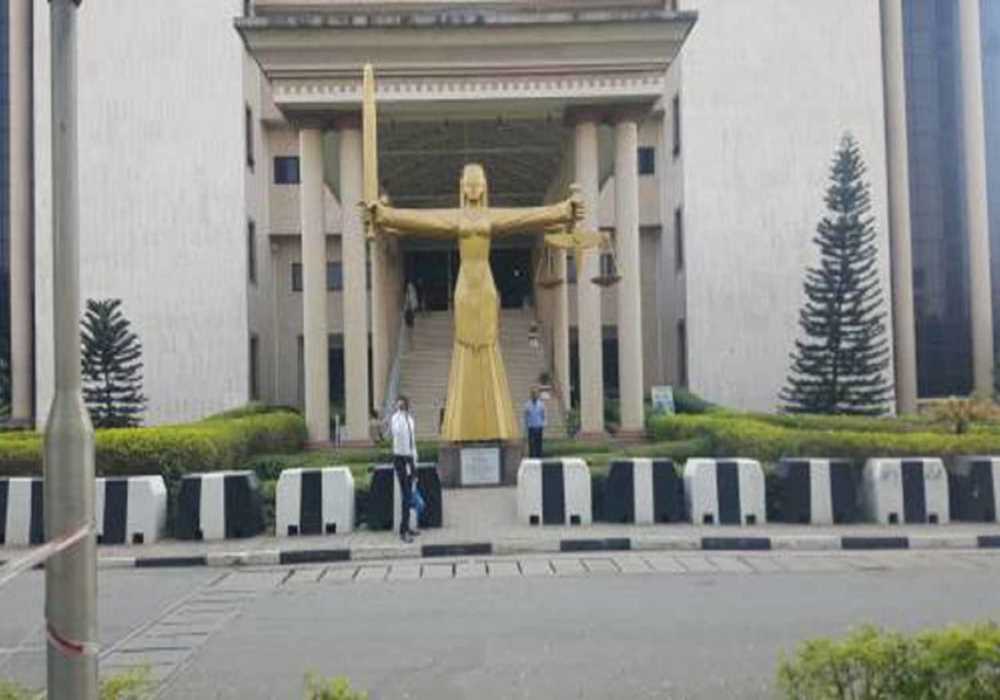
Consequently, upon an unopposed application for termination by the prosecution counsel and Director of the Public Prosecution of the Federation (DPPF), Rotimi Oyedepo (SAN), on Monday, Justice Mohammed Umar of a Federal High Court, Abuja on Monday, struck out the matter.
READ ALSO: Shell Identifies Keys to Nigeria’s Energy Future
In a motion for the termination of the charges, Oyedepo informed the court that the Attorney General of the Federation (AGF) and Minister of Justice has carried out a review of the case file of Adeyemi and the charge filed by the Inspector General of Police (IGP) and found some loopholes.
The DPPF added that the documents allegedly forged by Adeyemi during his operations of the fake agency are those that can be prosecuted by the High Court of the Federal Capital Territory (FCT).
He also informed the court that a new charge has been filed at the High Court of the FCT and that Adeyemi would be expeditiously arraigned afresh.
He therefore urged the judge to strike out the charge as required by law.
Following no objections from Ibrahim Angulu (SAN), who stood in for Adeyemi, Justice Umar subsequently terminated the charge.
Adeniyi, 38, was being tried alongside two others whose whereabouts are unknown, on charges bordering on conspiracy and forgery.
The two others said to be at large were identified as Femi (surname unknown) and Anu (surname unknown).
The charge marked: FHC/ABJ/CR/25/2025, was entered against the defendant by the DPPF.
To secure a bright energy for her teeming population, Nigeria must sustain the momentum of reform, accelerate investment, and deepen partnerships.
This view was expressed by Managing Director, Shell Nigeria Exploration and Production Company of Nigeria Limited (SNEPCo) Ronald Adams in Lagos at the weekend.
Delivering a keynote address at the Africa Energy Conference (AEC) of the Lagos Business School (LBS), Adams called for regulatory certainty through efficient execution of reforms, sustained investment appeal to enable projects to move more swiftly from opportunity to production and partnership by operators, regulators, NNPC Limited and communities to unlock the full value of Nigeria’s resources.
Adams cited Nigeria’s huge oil and gas resources as an advantage but pointed out: “Resources alone do not guarantee prosperity. Prosperity comes when resources are matched with investment, technology, sound policy and disciplined execution. Success will be determined not by the size of our resources, but by our ability to convert them into investment and economic growth.”
Adams pledged the support of Shell towards a bright energy future of Nigerians. He said: “For more than six decades, Shell has been part of Nigeria’s energy journey. Together with our partners, we have helped develop major energy infrastructure, supported Nigerian businesses, invested in talent, and contributed to economic development. Bonga remains a powerful example of what technology, partnership and Nigerian capability can achieve in deepwater operations. Today, that story continues through Bonga North.”
READ ALSO: ADF Targets 5 Million Students, 2 Million Vulnerable Women
Issuing a clarion call for action by all stakeholders, he added: “The world is not standing still. Capital is moving, technology is advancing and competition is intensifying. The countries that attract investment tomorrow are those that improve competitiveness today. Nigeria has begun that journey. Our task is to sustain the momentum and translate reform into projects, projects into growth, and growth into shared prosperity.”
The conference, the 4th in the series had at its theme; “Securing Nigeria’s Energy Future: Policy Reform, Capital Mobilisation, and Pathways to a Sustainable Power and Energy Market” and was attended by top government officials, industry captains, energy professionals, and students.
Lagos State Deputy Governor Obafemi Hamzat represented Lagos State Governor Babajide Sanwo-Olu as the guest of honour. SNEPCo was a principal sponsor of the Africa Energy Conference (AEC) and mounted a well-received exhibition on its deepwater operations and social investments across Nigeria.

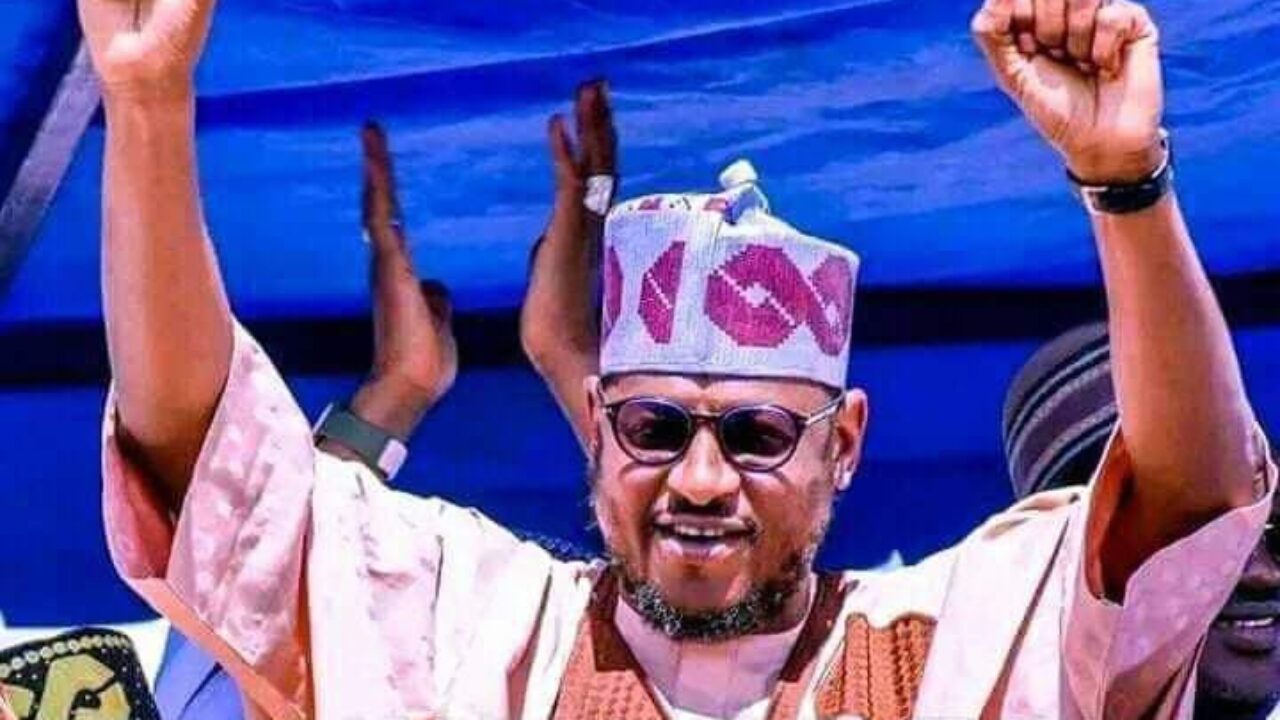
Katsina State Governor, Dikko Umaru Radda, has flagged off the disbursement of ₦689.79 million in bursary payments to 19,318 continuing students across 97 institutions for the 2025/2026 academic session.
The disbursement follows a 100 per cent increase in academic bursary rates, marking the first adjustment since 2007.
The latest payment forms part of the state government’s broader investment in education and student welfare, with cumulative bursary disbursements and related student awards under the administration reaching ₦3.29 billion.
SEE ALSO: Dikko Radda Of APC Wins Katsina Governorship Election
More than 174,000 beneficiary payments have been recorded across successive payment cycles.
Increased Allowances for Veterinary and Law Students
Under the revised scholarship support framework, allowances for Veterinary Medicine students have increased by 150 per cent for students in the 300 and 400 levels and by 200 per cent for those in the 500 and 600 levels.
Support for Nigerian Law School students and academic excellence awards has also continued.
The state government has also approved a scholarship programme for 1,700 students, with 50 beneficiaries drawn from each of the state’s 34 local government areas.
The programme is designed to support tuition fees, registration and other educational expenses.
₦6bn Scholarship Trust Fund
The government has made provision for ₦6 billion in seed funding for a scholarship trust fund intended to strengthen educational financing.
The fund is expected to support specialised scholarship opportunities in fields including engineering, medicine, Artificial Intelligence and mechatronics.
The state’s foreign scholarship initiatives have also supported 118 students studying Medicine, Artificial Intelligence and Bioengineering in Egypt, Ethiopia and China, with approved educational and living expenses covered by the government.
More Scholarship Opportunities
Other educational support initiatives include 34 maritime scholarship beneficiaries and seven students receiving 50 per cent financial support at the Nigerian College of Aviation Technology, Zaria.
The state has also nominated 34 candidates for MBBS studies in Russia, identified 70 prospective master’s degree candidates and selected 10 candidates for Qur’anic Sciences scholarships in Ghana.
These initiatives form part of the state’s broader efforts to expand access to education across different fields and levels of study.
Scholarship Board Strengthens Accountability
The Katsina State Scholarship Board has also strengthened its application, verification and payment systems.
As part of its accountability measures, the board interviewed more than 14,925 fresh applicants and returned approximately ₦86 million in unclaimed funds to the state government.
The state also acknowledged the contributions of the Nigerian Education Loan Fund (NELFUND), the Tertiary Education Trust Fund (TETFund) and the National Information Technology Development Agency (NITDA) in expanding access to educational financing and digital learning resources.
Radda Inaugurates Tinubu/Dikko Education Beneficiary Network
As part of the activities, Radda inaugurated the Tinubu/Dikko Education Beneficiary Network (TDEBNET), a voluntary organisation comprising parents and beneficiaries of educational programmes.
Members of the organisation expressed support for the re-election bids of Radda and President Bola Ahmed Tinubu in 2027.





FG Withdraws Charges Against ‘Fake Agency’ DG, Adeniyi Adeyemi

Shell Identifies Keys to Nigeria’s Energy Future

Nigeria Records Biggest Rise in Multidimensional Poverty Among Five Countries – UN

Katsina Students Get ₦689.79m Bursary as Gov Radda Doubles Allowances
DOJ Confirms Federal Criminal Investigation After Agents Raid Ilhan Omar’s Home

Peter Obi Slams Tinubu Over ₦7.7tn Debt Interest Against ₦6.2tn Revenue

Trump’s Family Unveils New Cryptocurrency Platform

Senate Denies Receiving Petitions Against Tinubu’s Ambassadorial Nominees

Dangote Cement Lights Up Benue Host Communities With CSR Initiatives

Reps Recommend 3-year Jail Term For Aviation minister

Tems Sets New Record On Billboard Hot 100 Chart
