
International News
NASA Issues July Heat Warning Over Rising Temperature

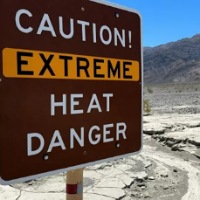
National Aeronautics and Space Administration(NASA) has raised a heat warning for July due to persistent high temperatures, with daily records being shattered throughout the month.
During a recent briefing with reporters on Thursday, Gavin Schmidt emphasized the unmistakable trend of extreme heat and predicted that this pattern would likely be evident in the comprehensive monthly reports to be issued by United States agencies.
“We are seeing unprecedented changes all over the world – the heat waves that we’re seeing in the US in Europe and in China are demolishing records, left, right and centre,” he added.
The effects cannot be attributed solely to the El Nino weather pattern, which “has really only just emerged”, he said.
The warning from Schmidt comes as a wave of extreme heat, wildfires, torrential rain and flooding wreaked havoc across the world in recent days, raising new fears about the pace of climate change.
The World Health Organization (WHO) said the extreme heat was straining healthcare systems, hitting older people, infants and children.
On Thursday, Greece said archaeological sites, including the Acropolis, will be closed during the hottest hours of the day due to a new heatwave.
The nation is preparing for further high temperatures until Sunday.
As Greece announced the restrictions, firefighters were still battling wildfires west of Athens, which have so far burned thousands of hectares.
In Spain, the heat peak has passed but temperatures remained high overall on Thursday, with readings above 25 degrees Celsius (77 degrees Fahrenheit) recorded at 120 of the 900 stations in the official meteorological network.
Temperatures in excess of 35C (95F) were forecast across the southern half of the country, leading authorities to warn of “very high to extreme” risk of fire.
In the Balkans, a Croatian firefighter was reported to have died during a deadly storm that swept the Balkans after a heatwave, bringing the death toll to six.
Emergency services in Slovenia, Croatia, Bosnia and Serbia scrambled to restore electricity and clear the debris left over after Wednesday’s chaos.
Meteorologists said the storm was extremely powerful as it was formed after a string of very hot days.
Heatwave, floods in Asia
Temperatures of 35C (95F) and above continued to menace China as parts of the country register record temperatures.
Northwestern Xinjiang, where temperatures hit a record high 52.2C (125.9 F) on Sunday, remained blanketed in worse-than-usual heat while in neighbouring Gansu province some areas suffered intense heat while others warned of floods and landslides.
Lithuanian border towns grapple with threat of Russia-Ukraine war
Beijing and other cities braced for severe flooding on Friday as summer storms rolled across many parts of China, while inland regions baked in intense heat, threatening to shrink the country’s biggest freshwater lake.
On Friday, in the western part of India, rescue teams resumed their search for potential survivors following a massive landslide that claimed the lives of 16 people. It is suspected that over 100 individuals might still be trapped in the debris.
The rescue efforts faced even greater challenges on Friday due to thick fog and heavy rain, hindering the operation further. The incident had occurred at midnight on Thursday, and more than a day later, Indian television news channels reported on the ongoing difficulties faced by the rescue teams.




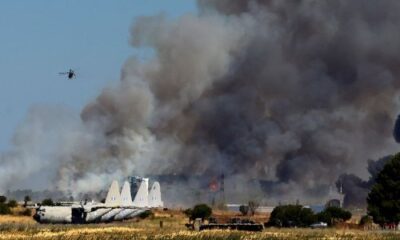






Federal agents raided the Washington, D.C., home of Democratic Congresswoman Ilhan Omar early Monday morning as part of an ongoing federal criminal investigation, the United States Department of Justice (DOJ) has confirmed.
Homeland Security Investigations agents arrived at the Minnesota congresswoman’s residence at about 6:00 a.m. Eastern Time, according to a report by Fox News.
SEE MORE: Trump Sparks Outrage With Shock Proposal to Rename New Mexico
The report said both the Department of Homeland Security (DHS) and the DOJ are involved in the investigation.
A DOJ spokesperson confirmed the operation, stating: “Today in the Washington, D.C. area, Homeland Security Investigations executed a judicially authorized search warrant secured by the Department of Justice.”
The spokesperson added: “This enforcement action is part of an ongoing federal criminal investigation.”
Details later……….
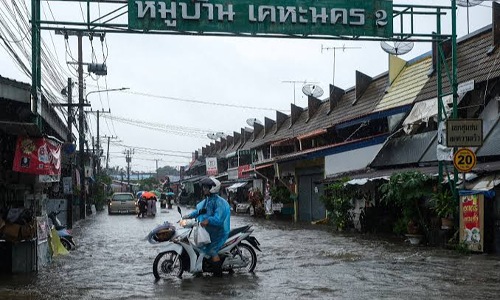
Heavy rains have triggered severe flooding across parts of Bangkok, Thailand, forcing nearly 4,900 residents to evacuate to shelters as floodwaters swept through roads and residential areas.
The flooding has disrupted movement across parts of the Thai capital, with motorists and pedestrians forced to navigate submerged roads and seek alternative routes.
SEE ALSO: NAFDAC Warns Nigerians As Fake Cowbell Milk Floods Market
According to the Bangkok Metropolitan Administration, about 52,000 households have been affected by the flooding, prompting authorities to declare a flood disaster and intensify emergency response efforts.
Emergency teams have been deployed to assist affected communities and move residents from vulnerable areas to safer locations as water levels rise.
Bangkok is accustomed to seasonal heavy rainfall, but intense downpours can overwhelm drainage systems, particularly in low-lying areas, resulting in widespread flooding and disruption.
Authorities are continuing to monitor affected locations while coordinating evacuations and other emergency measures.
For thousands of residents, the immediate priority remains securing safe shelter and protecting homes and livelihoods as authorities work to manage the situation and restore normal activities once the floodwaters recede.

US President Donald Trump has explained his decision to reject Iran’s latest proposal to reopen the Strait of Hormuz, saying Tehran was seeking an agreement because it was losing revenue.
Speaking to reporters at the White House, Trump said Iran wanted to immediately reopen the strategically important waterway but argued that the proposal was not acceptable to his administration.
“They want to make a deal, and I think that’s fine. I like making a deal, too, but that deal would not be acceptable,” Trump said.
SEE ALSO: How the Strait of Hormuz Attack Could Trigger a Fresh Global Oil Shock
According to the US president, Iran’s push to reopen the strait was driven by the economic pressure it was facing.
“What they want to do is immediately open the Hormuz Strait. Do you know why? Because they are dying,” Trump said.
“You know why they’re dying? Because they have no money coming in, because they get their money from the Hormuz Strait.”
Trump also claimed that the US had established an unprecedented naval blockade against Iran, describing it as “a wall of steel.”
“So they outsmarted themselves. We put up the greatest blockade ever in military history. It’s a wall of steel,” he said.
“And guess what? They don’t have any money now because they wanted to close the strait.”
The Strait of Hormuz is a major global energy shipping route, and disruption to traffic through the waterway has significant implications for international oil markets and countries that depend on energy imports.
Trump’s remarks came amid continued tensions between Washington and Tehran over the reopening of the strategic waterway and negotiations involving Iran.






Renaissance, Sterling Bank Back Indigenous Oil and Gas Contractors Financially
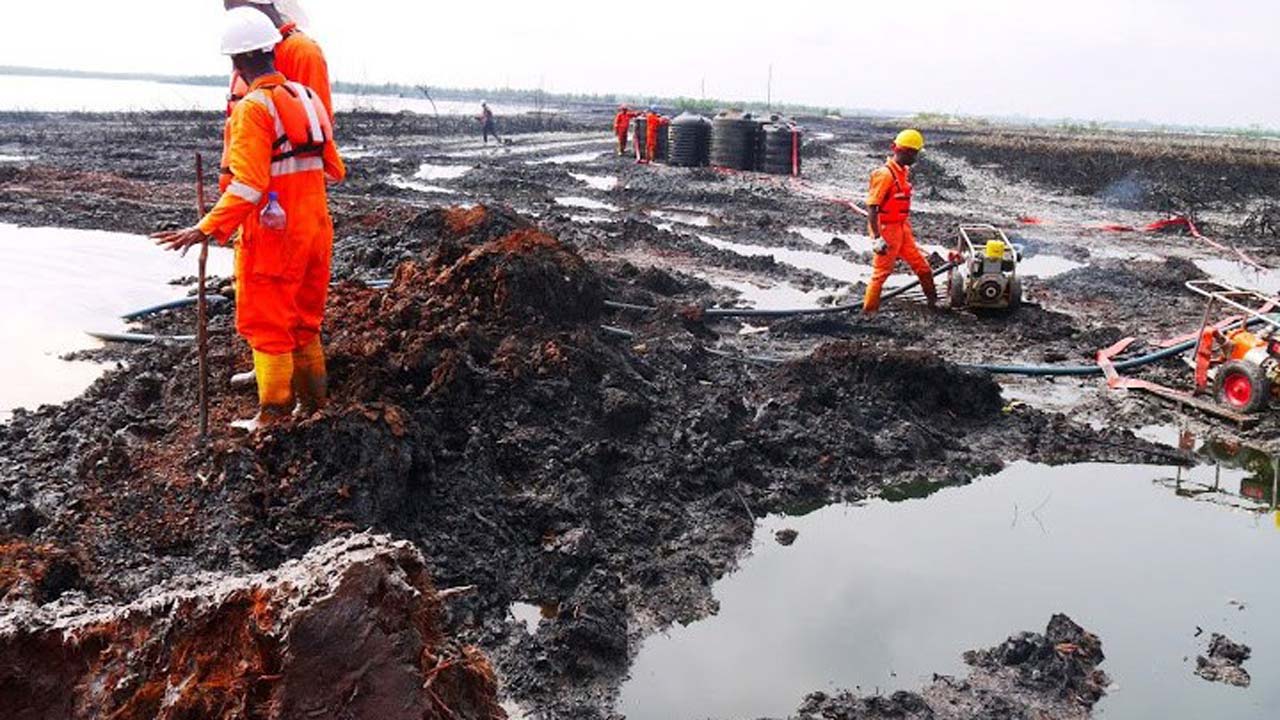
Group Demands Fair Share of NNPC Jobs for Ogoni Oil Exploration

NNPC Ltd Exploration Spending Down 87%

200 Imo Teachers Benefit from NCDMB’s Effective Curriculum Training

FG to Launch National Lead Poisoning Prevention Plan Wednesday

EndSARS Memorial: ‘Nigerians Still Deserve Answers’ – Atiku

Trump’s Family Unveils New Cryptocurrency Platform

Senate Denies Receiving Petitions Against Tinubu’s Ambassadorial Nominees

Dangote Cement Lights Up Benue Host Communities With CSR Initiatives

Reps Recommend 3-year Jail Term For Aviation minister

Tems Sets New Record On Billboard Hot 100 Chart
