
International News
Niger, Mali, Burkina Faso Cut Ties With ECOWAS, Form New Alliance


The military regimes of Niger, Mali, and Burkina Faso have severed ties with the Economic Community of West African States (ECOWAS) and officially formed a new alliance.
Niger’s ruling general announced the move during the inaugural summit of the Alliance of Sahel States (AES) in Niamey on Saturday.
Niger’s General Abdourahamane Tiani at the summit, which saw the participation of the three nations’ leaders stated “our people have irrevocably turned their backs on ECOWAS”.
The AES was established after the countries withdrew from ECOWAS earlier this year.
In September, Niger, Mali, and Burkina Faso signed a mutual defense pact, marking a significant shift in the region’s political landscape.
Niger, Mali, and Burkina Faso left ECOWAS, citing accusations of Paris manipulating the bloc and insufficient support for anti-jihadist efforts.
“The AES is the only effective sub-regional grouping in the fight against terrorism,” Tiani stated on Saturday, highlighting ECOWAS’s “conspicuous lack of involvement in this fight.”
The exit marks a shift away from their former colonial ruler, France, with Tiani advocating for a new bloc that is a “community far removed from the stranglehold of foreign powers.”
All three nations have expelled French anti-jihadist troops, turning instead to their “sincere partners” — Russia, Turkey, and Iran.
Facing deadly jihadist violence, Niger, Mali, and Burkina Faso will focus on “the fight against terrorism” and the “consolidation of cooperation” during Saturday’s agenda, according to the Burkinabe presidency.
ECOWAS is set to hold a summit of its heads of state in the Nigerian capital, Abuja, on Sunday, where relations with the AES is anticipaed to be a key topic.
After multiple bilateral meetings, the three Sahelian leaders are convening for the first time since seizing power through coups between 2020 and 2023.
In mid-May, the foreign ministers of Burkina Faso, Mali, and Niger met in Niamey to draft a text establishing the confederation, which the heads of state are set to adopt at Saturday’s summit.
Niger’s General Abdourahamane Tiani first received Burkinabe counterpart Ibrahim Traore in the capital on Friday, followed by Malian Colonel Assimi Goita on Saturday.
“Don’t expect many announcements; this is primarily a political event,” remarked Gilles Yabi, founder of the West African think tank Wathi. “The goal is to demonstrate that this is a serious project with three dedicated heads of state showing their solidarity.”
Norway’s King Harald V has died at the age of 89, bringing an end to his more than three-decade reign and ushering in a new era for the Norwegian monarchy.
The Royal Palace announced on Friday, August 28, 2026, that the monarch died peacefully at Oslo University Hospital at 6:35am local time.
ALSO READ: Infantino’s Re-Election Bid Suffers Fresh Blow as Italy Withdraws Backing
“It is with deep sadness that we announce that His Majesty King Harald passed away today. King Harald passed away peacefully at Oslo University Hospital on Friday, August 28 at 6:35 am,” the palace said in a statement.
King Harald, who ascended the throne in 1991, had been hospitalised in Oslo since August 17 while receiving treatment for haemolytic anaemia.
His condition became “extremely serious” on Thursday, prompting members of the royal family to gather at his bedside.
His 53-year-old son, Crown Prince Haakon, has automatically succeeded him as monarch under Norway’s constitutional succession rules. He is expected to take the name King Haakon VIII.
Following the announcement of Harald’s death, the flag at the Royal Palace in Oslo was lowered to half-mast, while members of the public gathered outside the palace to lay flowers and mourn the late monarch.
Harald was widely regarded as a popular and unifying figure during his 35 years on the throne. He was also known for his modest lifestyle and efforts to modernise the monarchy.
Kaspara Bolstad, 24, described him as “a very steady and warm king.”
“I think the entire Norwegian people see him as a role model and as someone who brings people together. Whether you’re for or against the monarchy, I think he’s well-liked across the board,” she said.
Magnus Skaugseth, 27, also praised the late King’s inclusive approach.
“He was so inclusive and committed to having values that are inclusive in the society we live in today. When there is so much division and polarisation, he was a pillar pointing in the opposite direction,” Skaugseth said.
Harald had experienced several health challenges in recent years and had undergone procedures including the fitting of a pacemaker. Despite his declining health, he repeatedly ruled out abdication, maintaining that his oath to serve Norway was lifelong.
His death comes during a turbulent period for the Norwegian royal family, which has faced a series of health and personal controversies in recent months.
With Harald’s death, Crown Prince Haakon now takes over the Norwegian throne, marking the beginning of a new chapter for the country’s monarchy.
International News
US Takes Drastic Action Against UK-Based Palestine Action, Declares Group ‘Terrorist’

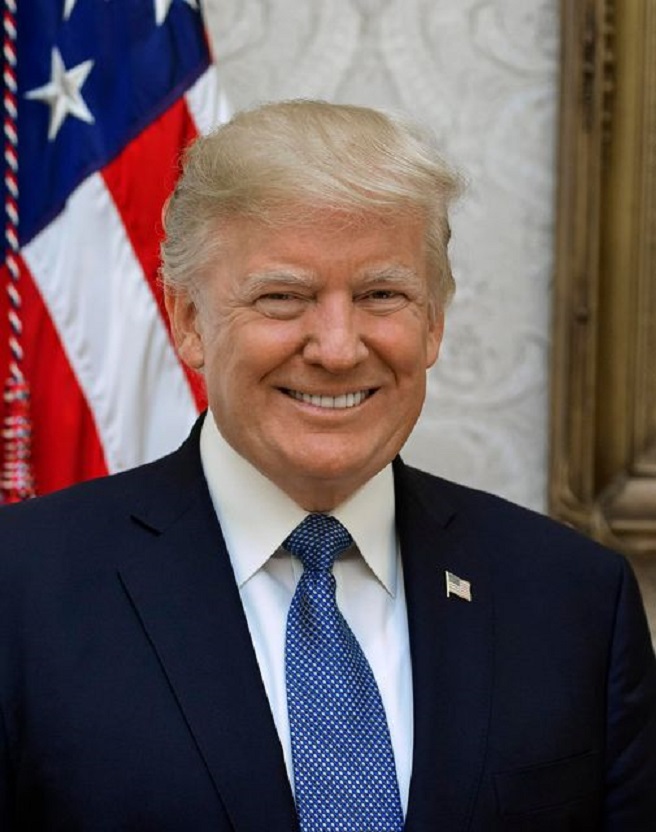
The United States has taken drastic action against the UK-based Palestine Action group, designating it as a “specially designated global terrorist” organisation and imposing sanctions on the group.
The designation was announced on Wednesday by the US, which accused Palestine Action of supporting “an act of terrorism.”
The US also designated two other organisations — Italy-based Autistici/Inventati, also known as A/I Collective, and the pro-Palestinian group Masar Badil — as terrorist organisations.
US State Department spokesperson Tommy Pigott described the three groups as “violent far-left terrorist groups.”
US Treasury Secretary Scott Bessent said Washington would deploy its financial powers against the organisations.
“Political terrorism has no place in our society, and we will continue to cut the financial lifelines of these groups until they are eliminated,” Bessent said.
Palestine Action was established in 2020 and is currently appealing a ban imposed on it by the British government.
The UK ban has resulted in thousands of arrests, while rights organisations have criticised the move, arguing that it amounts to criminalising dissent.
According to its stated objective, Palestine Action seeks to end what it describes as “global participation in Israel’s genocidal and apartheid regime.”
The group gained increased international attention after Israel launched its military campaign in Gaza following the October 7, 2023 attack by Hamas fighters in southern Israel.
The latest US designation comes as President Donald Trump’s administration continues its efforts to target organisations it considers part of the far-left movement.
ALSO READ: US Hails DPRP as Nigeria’s Petroleum Exports Surge Seven Times
In April, Amnesty International criticised what it described as attempts by the leaders of the United States, Israel and Russia to impose a new “predatory” world order through crackdowns on dissent.
The United States Department of Defense has fired the editor-in-chief, publisher and a reporter of a long-running military newspaper amid a growing dispute over editorial independence.
The newspaper’s editor-in-chief, Erik Slavin, told CBS News that he was dismissed for “insubordination” after speaking to the network about disagreements with the Department of Defense.
SEE ALSO: Iran’s Threat Pushes Brent Over $90
The department had earlier this year said it wanted to steer the publication’s coverage away from what it described as “woke distractions.”
The newspaper’s publisher, Max Lederer, who had served in the position since 2007, was also notified that he was being terminated. His dismissal came just three days after he announced plans to retire from the publication.
Reporter Lara Korte also confirmed that she had been fired for alleged insubordination.
“Today, I was informed that the Department of Defense is firing me for insubordination after I told a CBS reporter that I work for Stars and Stripes — not the Pentagon, not any administration, and not any policy maker,” Korte wrote on X.
The dismissals came only days after the newspaper published a report detailing grim conditions faced by crewmembers aboard the USS Abraham Lincoln.
The report triggered fresh criticism of President Donald Trump’s handling of the war with Iran. The aircraft carrier had been deployed before the conflict in the Middle East began in February.
Last weekend, the US military announced that a new carrier strike group had arrived in the region, while Trump said the Lincoln would be replaced.
Slavin had also drawn attention last month after publicly opposing what he described as attempts by the Department of Defense to interfere with the newspaper’s editorial decisions.
During an interview on “CBS Sunday Morning,” Slavin was asked whether there were any editorial red lines he would not cross.
“‘Don’t run a perfectly accurate story, run this instead. Here it is, written by the Pentagon.’ That would be a red line,” he said.
Lederer had announced his retirement on Tuesday, with his departure initially scheduled for September 30.
He said his decision followed fundamental differences between his leadership philosophy and the plans the Department of Defense had for the organisation.
Meanwhile, US Secretary of Defense Pete Hegseth has faced criticism from sections of the media over his approach to journalism since taking charge of the department in 2025.
The independence of US military media outlets has increasingly come under scrutiny.
Shortly before Lederer announced his retirement, active-duty US Navy Captain William Urban was installed as military deputy to the publisher, a move interpreted by some, including Democratic lawmakers, as weakening the publication’s editorial independence.






DPRP Uses Court to Restrain NMDPRA from Meddlesomeness

Group Credits PINL with Safeguarding Environment, Farms

Dangote Threatens Petrol Importers’ Supply Over Product Blending

JUST IN: ‘Nothing Left to Give’ — Messi Announces Retirement From Argentina

INEC Raises Alarm as Fake 2027 Election Recruitment Website Surfaces

2027: ‘We Must Build the Table’ — Opposition Leaders Meet in Abuja to Challenge Tinubu

Trump’s Family Unveils New Cryptocurrency Platform

Senate Denies Receiving Petitions Against Tinubu’s Ambassadorial Nominees

Dangote Cement Lights Up Benue Host Communities With CSR Initiatives

Reps Recommend 3-year Jail Term For Aviation minister

Tems Sets New Record On Billboard Hot 100 Chart
