
NEWS
Nigerians Must Sacrifice For Economic Growth – Minister


Minister of Budget and Economic Planning, Atiku Bagudu, is of the opinion that Nigerians must make sacrifices for the country to achieve necessary growth.
Speaking on Monday before the House of Representatives Committee on Appropriations, Bagudu defended President Bola Tinubu’s proposal to increase the 2024 budget by N6.2 trillion.
The minister highlighted that countries experiencing significant growth have done so through years of sacrifices.
He urged Nigerians to avoid comparing the country with more developed nations unless they are prepared to make similar sacrifices.
READ ALSO: Sowore Urges Nigerians To Fight Take Back Their Country
Bagudu said, “We have to recognise that countries that achieved development took choices that maybe we should have taken. That is my point. We have a leader (Tinubu) who is not even saying, Let us blame this or blame that. We are not where we want to be.
“How do we mobilise all together? Our children need to appreciate this fact. It is not a pleasant conversation when any father calls the children and says, Look, I am not as rich as you think I am. Let’s face it.
“But that conversation will build a better family than a situation where children feel self-entitled—they just blame the father, not knowing that even though he is the authority figure, he has his own limitations. So, even in a country, it is no different.
“The simple truth is that we have to make sacrifices in order for our country to achieve the growth that it requires. Those countries whom we are teaching our children that they have achieved this and that; we should stop comparing ourselves to where they (the countries) are today. But what choices did they make in the past to bring them to where they are?”
Breaking down the N6.3 trillion budget increase, Bagudu noted that N3.2 trillion is set aside for infrastructure projects, encompassing various road and rail developments.
The minister highlighted that these funds will serve as counterpart funding for previously stalled rail projects, including the Port Harcourt-Maiduguri line, which runs through Rivers, Imo, Abia, Enugu, Ebonyi, Anambra, Benue, Nasarawa, Plateau, Kaduna, Bauchi, Gombe, Yobe, and ends in Borno state.
Additionally, N522 billion will be allocated to agricultural projects, focusing on water supply, irrigation, and dams.
Bagudu explained that the proposed N3.2 trillion “Renewed Hope Infrastructural Fund” aims to provide equity contributions or counterpart funding for federal government projects identified as priorities, as well as critical projects requiring additional appropriations to prevent neglect.
The minister also mentioned that the remaining N3 trillion will cover recurrent expenditures, including the newly approved national minimum wage by President Tinubu.








The Osun State Executive Council (SEC) has approved a 2027 draft budget as submitted by the various Ministries, Departments and Agencies of government
This follows a presentation by by the Commissioner for Economic Planning, Budget and Development, Prof. Moruf Ademola Adeleke, according to a government house statement on Osogbo on Friday.
It added that it was part of the resolutions reached after the SEC meeting presided over by Osun State Governor, Senator Ademola Adeleke at the Executive Council Chambers, Governor’s Office, Bola Ige House, Osogbo.
The Commissioner said after due consideration of the memo presented by the Commissioner for Economic Planning, Budget and Development, Prof. Moruf Ademola Adeleke for the draft 2027 Recurrent and Capital Budget estimates of the State Government, the Executive Council approved the budget draft estimates with immediate effect.
The Council, has consequently directed the transmission of the approved draft budget to the Osun State House of Assembly (OSHA) for subsequent legislative action.

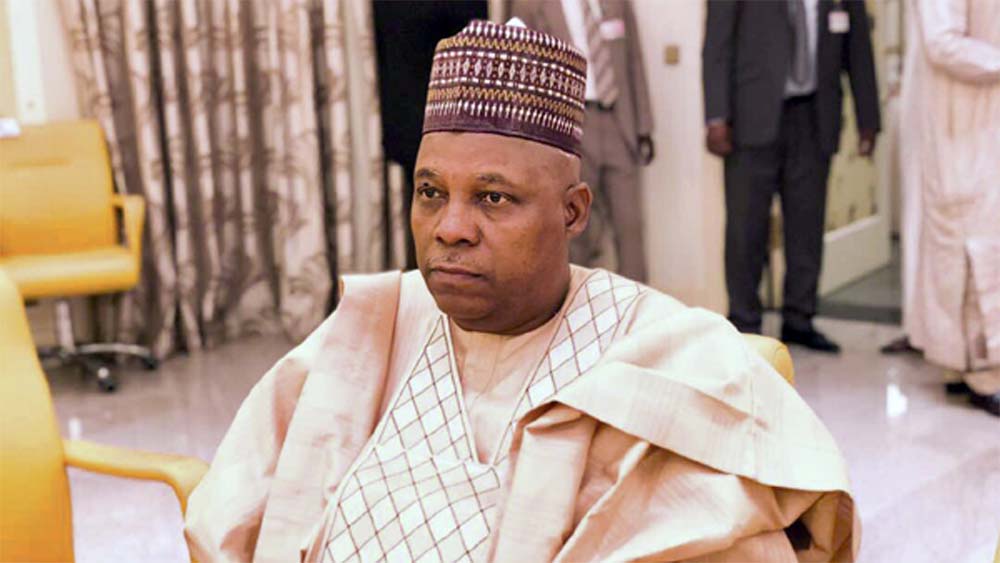
Vice President Kashim Shettima on Friday attended the grand opening of Ashley Furniture Nigeria’s showroom in Lagos.
The development was disclosed by the Vice President’s Senior Special Assistant on Media and Communications, Stanley Nkwocha, in a statement released on Friday.
The opening marks a significant development in Nigeria’s furniture and retail industry, following a strategic partnership between Ashley Furniture Industries, a major American home furnishings manufacturer, and Vento Furniture, a Nigerian furniture company.
SEE ALSO: Shettima, Wife Depart Abuja for Jos as Tinubu–Shettima Campaign Takes Rally to Plateau
The partnership, announced in 2025, is aimed at expanding Nigerians’ access to quality home furnishings while creating opportunities for investment, commercial partnerships and the development of the country’s furniture industry.
At the time of announcing the partnership, Ashley Furniture Industries’ President and Chief Executive Officer, Todd Wanek, described the company’s entry into Nigeria as a major step in its international expansion.
“We are incredibly excited to partner with Vento Furniture. Opening in Nigeria, the largest economy in Africa, is a monumental step for our international growth,” Wanek said.
He added that the company looked forward to opening more stores in Nigeria and supporting Vento Furniture as its anchor partner.
Vento Furniture’s Chief Executive Officer, Cemal Yigit, also expressed optimism about the partnership, describing it as an important development for Nigeria’s home furnishings market.
“We are very excited about this alliance,” Yigit said, expressing confidence in Ashley Furniture’s growth in the Nigerian market.
The partnership aligns with President Bola Ahmed Tinubu’s economic reform agenda, which places private-sector investment, enterprise development and job creation at the centre of efforts to stimulate economic growth.
Nigeria’s daily petrol receipts increased by 21 per cent to 46.9 million litres in October 2026, while diesel receipts nearly doubled, rising by 93 per cent to 16.8 million litres per day, according to the Nigerian Midstream and Downstream Petroleum Regulatory Authority (NMDPRA).
The figures were contained in the authority’s October 2026 State of the Midstream and Downstream Sector Fact Sheet, released on Friday as part of its first anniversary edition.
The report, which covers petroleum operations between October 1 and 31, showed an improvement in fuel receipts compared with September, when Nigeria recorded 38.7 million litres of petrol and 8.7 million litres of diesel daily.
SEE ALSO: NMDPRA Gets Senate Nod for Six Executive Directors
Despite the increase in petrol supply, the country’s petrol stock cover stood at 21.8 days, remaining below the regulator’s 30-day threshold.
The October figure represents a decline from the 23.9 days recorded in September, indicating that the improvement in daily receipts has not yet translated into sufficient petrol stock levels.
The fact sheet also highlighted activity at the Dangote Petroleum Refinery, which recorded an average utilisation rate of 103.73 per cent of its installed capacity of 650,000 barrels per day.
The refinery’s utilisation rate was slightly lower than the 105.98 per cent recorded in September.
On diesel supply, the authority reported a significant improvement, with daily receipts rising to 16.8 million litres from 8.7 million litres in the preceding month.
The NMDPRA described the increase as having “Nearly doubled (+93%),” reflecting a substantial recovery in diesel receipts during the review period.
The October fact sheet forms part of the authority’s first anniversary edition, providing an overview of developments across Nigeria’s midstream and downstream petroleum sectors.
The October figures follow earlier reports on Nigeria’s fuel supply situation and domestic refining activities.
On October 23, Biztellers reported that the NMDPRA had disclosed that domestic refineries received 156.52 million barrels of crude oil between January and September 2026, with 80.4 per cent sourced locally and 19.6 per cent imported.
The report also highlighted September’s petrol receipts of 38.7 million litres daily and petrol stock sufficiency of 23.9 days, below the regulator’s 30-day benchmark.
Earlier reports on the September petroleum market situation also showed that Nigeria’s petrol receipts fell by 23 per cent, while diesel receipts dropped by 40 per cent to 8.7 million litres daily, their lowest level in 13 months.
Other reports highlighted a decline in petrol supply despite increased production at the Dangote refinery, with domestic deliveries and imports recording significant reductions.
Figures from September further showed that Dangote Refinery supplied an average of 28.5 million litres of petrol daily to the domestic market while exporting 15.47 million litres per day.
The refinery’s combined exports of petrol, diesel and aviation fuel also reached 54.63 million litres daily in September, exceeding its combined domestic receipts.
The October figures now point to an improvement in Nigeria’s daily petrol and diesel receipts, although petrol stock sufficiency remains below the regulatory benchmark.





Osun SEC Approves Draft 2027 Budget

Dangote Cement Honours Outstanding Drivers for Safety Excellence, Records 60% Reduction in Road Traffic Accidents

APPO Lauds Nigeria on Energy Bank Initiative
Shettima Attends Grand Opening of Ashley Furniture Showroom in Lagos

NEIS Offers 9,583 Agents to Monitor 2027 Election Results

Nigeria’s Petrol Supply Rises 21% as Diesel Receipts Nearly Double – NMDPRA

Trump’s Family Unveils New Cryptocurrency Platform

Senate Denies Receiving Petitions Against Tinubu’s Ambassadorial Nominees

Dangote Cement Lights Up Benue Host Communities With CSR Initiatives

Reps Recommend 3-year Jail Term For Aviation minister

Tems Sets New Record On Billboard Hot 100 Chart