
Business
Nigeria’s Booming Forex Trading Industry: A Risky But Lucrative Venture For Traders


Forex trading has been on the rise in Africa, with Nigeria being the second-largest retail online forex market on the continent.
However, the absence of specific regulations makes traders vulnerable to scams and fraudulent activities. South Africa leads the way with a lesser but still significant number of 190,000 daily forex traders.
Despite the lack of regulations, the Nigerian forex industry has garnered a lot of interest from online traders, investors, and international brokerage firms.
According to Temitope Ijibadejo, the Nigeria Regional Manager of CM Trading, a licensed international brokerage and contract for difference (CFD) provider, the Nigerian forex industry is a “very buoyant one.”
He said the number of active Nigerian forex traders exceeds 300,000 with net deposits in billions of Naira annually.
In a 2021 report, it was estimated that there were roughly 300,000 retail forex traders in Nigeria, and there has been a substantial rise (46%) in female traders over the past couple of years.
Forex trading involves converting one national currency into another, and the most common currency pairs include GBP/USD and EUR/USD.
In Nigeria, the most common currency to trade with is the USD, which accounts for around 90% of Nigeria’s forex activity. Nigeria is a producer of crude oil, which is sold in dollars.
When prices increased in the 1970s, Nigeria saw a nice economic boost. This increase led to a growing interest in Africa in trading in dollars.
Since 2020, forex trading has seen a roughly 300% growth, and the majority of traders’ accounts (60%) are from Africa, Southeast Asia, and Eastern Europe.
However, the Central Bank of Nigeria July 2021 announced that it will no longer sell forex to Bureau De Change operators, saying the parallel market has become a conduit for illicit forex flows and graft.
According to the announcement, weekly sales of foreign exchange by the CBN will go directly to commercial banks. Banks are mandated to immediately and transparently sell forex to customers who present the required documents, and customers not attended to by the banks are to report to the CBN through a toll-free number or email.
In August 2016, the CBN banned nine deposit money banks (DMBs) from the foreign exchange market, for hiding over $2 billion belonging to Nigerian National Petroleum Corporation (NNPC) from the Treasury Single Account (TSA).
President Muhammadu Buhari was briefed on the breach by the banks, and all nine had been mandated to move the monies to the treasury single account.
The CBN also warned that banks that did not comply with the TSA remission plan would face possible fines and stringent punishment. This was made during the full implementation of the TSA in 2015.
As the naira continues spiraling downwards, the CBN is looking for a solution to stop the currency from hitting the bottom. However, despite its efforts, the regulator has been accused of not taking responsibility.
In response, the CBN has argued that the issue is not a result of its policies, but rather a reflection of external economic factors.
In September 2021, the Central Bank of Nigeria (CBN) accused AbokiFX, an exchange rates aggregator, of manipulating Nigeria’s foreign exchange market.
According to the CBN, AbokiFX was responsible for promoting the exchange of the naira for foreign currencies on the black market, which it claimed was fueling inflation and harming the economy.
In July 2022, the CBN issued a statement warning that it would arrest and prosecute anyone using naira to buy dollars, citing a law that prohibits the use of the Nigerian currency to transact business outside the country.
The CBN claimed that the use of naira for such transactions was undermining the stability of the country’s foreign exchange market and contributing to the depreciation of the currency.
“For those taking money from banks to buy dollars, it is illegal to do so. If the security agencies hold you, you will know the implication of that,” Godwin Emefiele said.
However all this measures did not stop the increase in the forex world as Nigeria forex trader find ways to remain in the forex world.
To get more insights, Biztellers interviewed a forex trader known as Yolofx who spoke about his ordeal in the forex world.
Yolofx is a trader with 10k followers on instagram, and 2k followers on Twitter. He also offers mentorship programs for aspiring traders which requires payment.
He said ” Forex trading is not for everyone as it requires taking risk, consistency and patience. Consistency to me means doing it all over again regardless of the losses incured. I started trading since 2017 till date making it 6 years In the forex world. It has not been easy as it drastically affected my academics. I had to spend extra one year in school because I was not focus rather I gave my all in learning the forex”
According to him, to enter into the forex world, one requires a broker who serves as a middleman between a trader and the commercial bank.
He said “there are various brokers in the forex world, since I started trading I have used 5 different brokers but presently am using exness broker and to me it has been the best so far”
When asked about the legitimacy of the forex trade, he stated that forex trade is very much legit as it requires a verification process before entering the market.
He said “to verify your account in forex trade, you need to have proof of identity which is either your international passport or National Identity Number and also proof of residence which requires your bank statement that is not less that 6 months”
He went further to say “to tell you how complex and risky the forex world is, you can make 500k in a week or two and lose the entire money in a day” He added.
According to him, forex trade has changed his financial status as he has not searched for a job since after graduating from Higher institution.
Uche Paragon, who began his trading career in 2007, has become Nigeria’s richest currency trader with an estimated net worth of over $16 to 20 million.








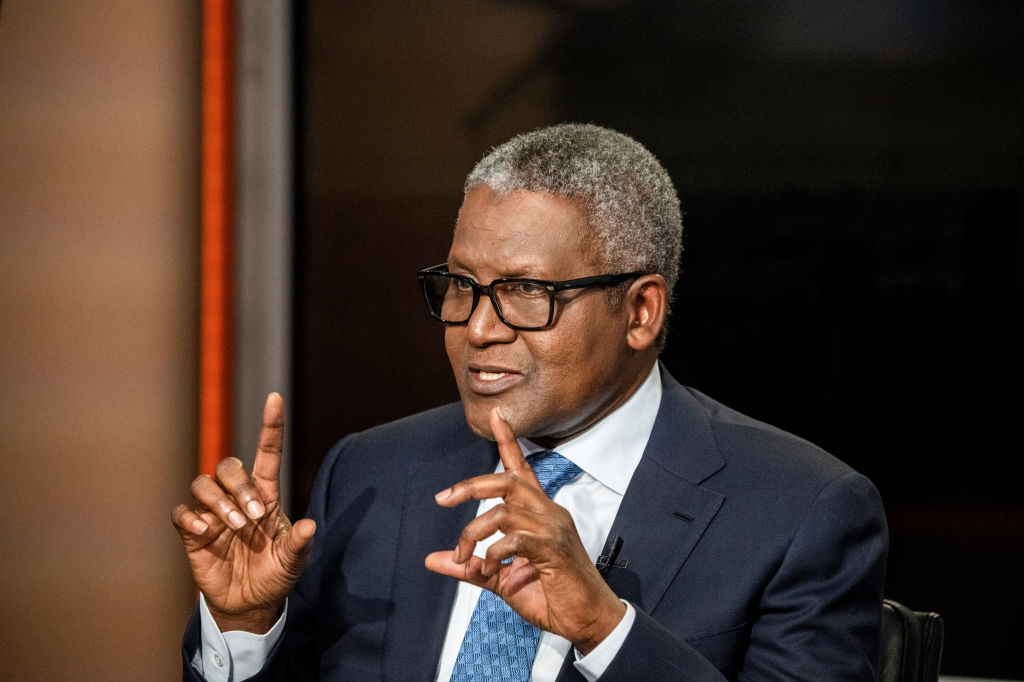
Leading investment research firm Renaissance Capital Africa (RCA) has upgraded its valuation of Dangote Petroleum Refinery and Petrochemicals (DPRP) to N700.41 per share, implying a 33.4 percent upside from the refinery’s IPO offer price of N525 per share.
According to RCA, the valuation increase reflects the refinery’s exceptional earnings performance in the first nine months of 2026, driven by stronger refining margins and better-than-anticipated operational results. Revenue, EBITDA and net profit all exceeded the firm’s expectations during the period.
READ ALSO: Dangote Refinery IPO Elicits Participation in 90 Countries Globally
In its October 16, 2026, update, titled “Stronger Refining Margins Drive Earnings Outperformance,” the investment firm cited robust refining margins and stronger operating results as key drivers of the enhanced valuation.
The remarkable investor interest comes against the backdrop of the refinery’s strong operational and financial performance. For the nine months ended September 30, 2026, the DPRP reported revenue of US22.5 billion and net profit of US4.7 billion, representing one of the strongest financial performances recorded by an African industrial enterprise in recent years.
The results marked a significant turnaround from the corresponding period in 2025, when the company recorded a loss of US117.2 million. Revenue grew by 144 percent from US9.2 billion, while EBITDA increased nearly nine-fold to US5.5billionfromUS627.6 million. Operating cash flow rose more than ten-fold to US$3.68 billion, underscoring the refinery’s growing ability to generate substantial earnings and cash flow from its operations.
The company also strengthened its balance sheet considerably, moving from a net debt position of US1.73 billion as of September 2025 to a net cash position of US651 million by September 2026, reflecting improved liquidity and financial resilience.
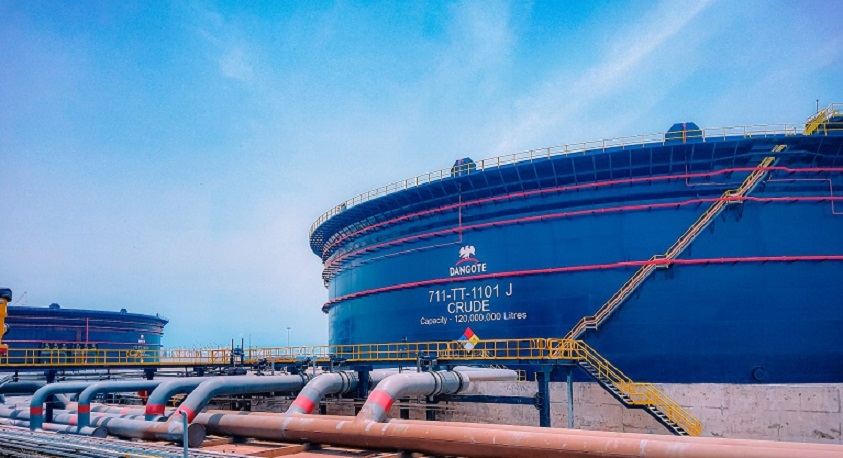
The Dangote Petroleum Refinery & Petrochemicals (DPDP) has revealed that its ongoing Initial Public Offering (IPO) has attracted exceptional participation from investors across Africa and around the world, with subscriptions received from more than 90 countries, including investors from 51 of Africa’s 54 nations.
The unprecedented level of participation positions the transaction as Africa’s first truly pan-African public offering, reflecting strong investor confidence in African-led industrialization and a growing desire among Africans to own strategic assets built on the continent.
The company noted that the IPO has already set new benchmarks in the capital markets, breaking the Nigerian market record on its opening day and surpassing the previous African record within its first ten days, driven by robust demand from retail investors, pension funds, institutional investors, asset managers, and members of the investing public.
On the milestone, Chief Financial Officer of Dangote Group, Murat Erden, said: “This offering represents far more than a capital-raising exercise. It is a landmark opportunity for Africans and global investors alike to participate in the ownership of one of the continent’s most transformative industrial assets. The extraordinary participation from individuals and institutions across Africa demonstrates a shared conviction that Africans should not only benefit from industrial development but also own and create wealth from it.”
The remarkable investor interest comes against the backdrop of the refinery’s strong operational and financial performance. For the nine months ended September 30, 2026, the DPRP reported revenue of US22.5billion and net profit of US4.7 billion, representing one of the strongest financial performances recorded by an African industrial enterprise in recent years.
READ ALSO: Makinde Fires Back at Presidency, Insists on ₦9tn NLNG Dividend Shortfall
The results marked a significant turnaround from the corresponding period in 2025, when the company recorded a loss of US117.2 million. Revenue grew by 144 percent from US9.2 billion, while EBITDA increased nearly nine-fold to US5.5 billion from US627.6 million. Operating cash flow rose more than ten-fold to US$3.68 billion, underscoring the refinery’s growing ability to generate substantial earnings and cash flow from its operations.
The company also strengthened its balance sheet considerably, moving from a net debt position of US1.73 billion as of September 2025 to a net cash position of US651 million by September 2026, reflecting improved liquidity and financial resilience.
According to Erden, the refinery’s current performance significantly exceeds the assumptions underpinning the IPO valuation. “Our financial performance has already advanced well beyond the baseline assumptions used in determining the IPO valuation. The refinery’s operational momentum, scale and efficiency continue to create substantial shareholder value and reinforce our confidence in its long-term growth prospects.”
In a major boost to African capital-market integration, the transaction has also benefited from pioneering cross-border market collaborations involving Botswana, Egypt, Ethiopia and Kenya, helping to broaden access and reduce barriers to participation for investors across the continent.
The DPDP described the IPO as a powerful demonstration of the increasing sophistication, depth and interconnectedness of African financial markets, providing a blueprint for future continent-wide investment offerings.
The company reiterated that the IPO provides a unique opportunity for investors to become shareholders in one of Africa’s largest and fastest-growing industrial enterprises, with the potential for USD-linked dividends, subject to the company’s dividend policy and applicable regulatory approvals.
With the offer scheduled to close on 27 October 2026, the company has intensified investor education and engagement activities across key markets to ensure broader inclusion and participation. The refinery emphasized that no further extension of the offer period is currently planned.
On the significance of the transaction, Erden added: “We are witnessing the emergence of a new chapter in African industrial ownership and capital-market development. The overwhelming response from investors across 51 African countries and more than 90 countries globally is a resounding vote of confidence in Africa’s future and in the ability of world-class African enterprises to deliver sustainable value for shareholders.”
The company expressed appreciation to regulators, stockbrokers, issuing houses, financial institutions, fintech partners, community leaders, investor associations and the investing public for their support and participation throughout the offer period.

Tesla has set a 2028 commercial production date for its new Roadster sports car that can briefly rise into the air using rocket technology.
According to CNN, the date was revealed when the manufacturers demonstrated its functionality on Thursday at a SpaceX testing facility in Texas, United States, where the two-seater vehicle performed a series of manoeuvres, including driving upside down before making a short airborne movement.
The prototype was operated without a driver during the test, with Musk saying the decision was taken “to make sure we don’t kill anyone.”
“Success is not guaranteed. I mean that. It’ll probably work, but if it doesn’t work, we’re at a safe distance,” he said.
READ ALSO: 2027 Election: ‘Your Future Is More Valuable’ — IGP Warn Youths Against Political Violence
CNN reported that the vehicle uses 10 nozzles and high-pressure air tanks to generate thrust, with Musk claiming it could accelerate from zero to 60 miles per hour in less than a second.
The Tesla boss attributed the development to cooperation between the electric vehicle manufacturer and SpaceX, the rocket company he also leads.
He described the project as “the results of what happens when you have a collaboration with the world’s best car company and the world’s best rocket company.”
Musk also sought to assure spectators that the demonstration was genuine, saying, “We need an audience to prove that it’s not AI or SI. So you guys can tell people you saw it with your eyes, because what you see with your eyes, you will not believe.”
Despite the display, questions remain about whether the vehicle can achieve sustained flight and how practical it would be for everyday transportation.
Roger Conner, curator for vertical flight at the Smithsonian’s National Air and Space Museum, told CNN that combining the requirements of road vehicles and aircraft presented significant engineering challenges.
“Aircraft are extremely sensitive to weight, whereas with ground vehicles you want them to have bumpers and crumple zones and all that,” he said.
“Inevitably, something that is a hybrid between the two is going to be a poor performing aircraft and a poor performing vehicle, and also quite expensive,” he added.
Conner questioned whether the demonstration amounted to flying in the conventional sense.
“We’re not talking about sustained flight. We are literally talking about hopping,” he said.
However, Jim Dukhovny, chief executive of flying car startup Alef, said the technology was achievable, while pointing to the difficulties involved in making such vehicles transition safely from vertical take-off to forward flight.
“It absolutely is 100% feasible,” he told CNN.
“That being said, the hardest part on all eVTOLs, and for us, it’s a transition from (rising) vertical to (moving) forward. It needs to be extremely careful, making sure you do not lose lift, and making sure it’s very stable,” he added.
CNN also reported that Alef’s prototype weighs about 254 pounds, uses eight propellers and is designed to carry one person.
Musk said Tesla intended to begin production of the new Roadster in 2028.
CNN reported that the latest display adds to Musk’s ambitions to push Tesla’s vehicle technology beyond conventional electric cars, although the prototype’s ability to operate as a practical flying vehicle has yet to be established.





Alausa Hails Dangote Foundation’s Plan to Give Four Million Students IPO Shares
APC Campaign Council Sets Inaugural Meeting for Tuesday Ahead of Kaduna Flag-Off

Renaissance Capital Sees Significant Upside in Dangote Refinery, Lifts Valuation by 33.4%

Dangote Refinery IPO Elicits Participation in 90 Countries Globally

Makinde Fires Back at Presidency, Insists on ₦9tn NLNG Dividend Shortfall

‘NELFUND Is Not an Excuse for School Fees Hikes’ – NANS Warns Universities

Trump’s Family Unveils New Cryptocurrency Platform

Senate Denies Receiving Petitions Against Tinubu’s Ambassadorial Nominees

Dangote Cement Lights Up Benue Host Communities With CSR Initiatives

Reps Recommend 3-year Jail Term For Aviation minister

Tems Sets New Record On Billboard Hot 100 Chart
