
NEWS
Nigeria’s Democracy In Crisis, Destiny Uncertain, Says Peter Obi

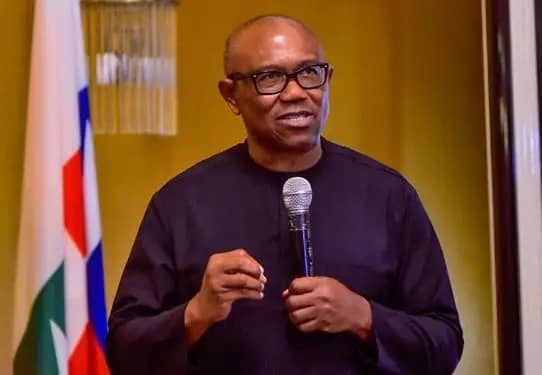
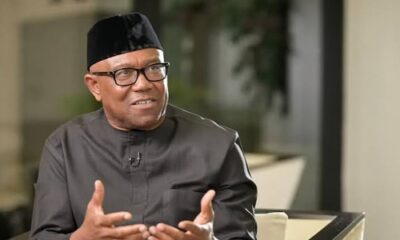
Mr. Peter Obi, the presidential candidate of the Labour Party (LP) in the last general election on February 25, has expressed his concern about the state of the nation’s democracy.
According to him, the democracy is facing significant challenges, and he believes that the destiny of the country is currently uncertain and precarious.
He disclosed this via his Twitter handle on Sunday evening before the commemoration of “June 12 Democracy Day” in Nigeria.
Mr. Peter Obi expressed his regret over the current state of affairs in the country, highlighting that the foundational pillars of democracy are being undermined by widespread impunity, pervasive violence, and alarming levels of bloodshed.
The tweet reads “June 12 is marked in our dear country as Democracy Day . It is a historic day that deserves to be celebrated. On that day in 1993, we the people of Nigeria stated our unreserved preference for true democracy.
“Though under military rule, we freely chose a transparent voting method. Our votes reflected our true choice as a people. Our choice on that day defied divisions of ethnicity, religion and region. It is these qualities that added up to make June 12 special in our search for true democracy.
“Our collective choice of late Chief M. K.O AbIola as a worthy leader for nation was saluted by Nigerians and governments and peoples across the world. Therefore, June 12 underpins our long collective journey to nationhood as a true democracy.
“Our collective choice of late Chief M. K.O AbIola as a worthy leader for nation was saluted by Nigerians and governments and peoples across the world. Therefore, June 12 underpins our long collective journey to nationhood as a true democracy.
“However, the current state of our politics tells a different story . Our democracy is deeply troubled while our nation’s destiny remains uncertain and precarious. We remain a nation in search of solutions to too many basic problems.
“One of these is the search for a credible electoral system that would command the trust, confidence and belief of ALL Nigerians just like June 12 did. We should, therefore, use the commemoration of June 12 as an occasion to return to the true virtues of a truly democratic nation.
“We achieved that feat on June 12, 1993. In the spirit of June 12, therefore, we need to emplace an electoral system that commands the trust of the people. This is in recognition of the tenets and core values of democracy, which rests on respect for the wishes of the people as expressed in their ballots.
“Above all, government must respect and protect the institutions of the democratic state by respecting the social contract with the people by meeting their needs, obeying their wishes and fulfilling the responsibilities of responsible governance as contained in the constitution. A cardinal responsibility of government in this regard is respect for the rule off law.
“Regrettably, we are now in an era where these foundational pillars of democracy are undermined by prevalent impunity and pervasive violence and bloodletting. The trust deficit between the leaders and Nigerians continues to expand.
“The deficits of trust and efficiency in our last elections demonstrate this malady quite boldly. The challenge of June 12 and a dedicated Democracy Day is to inspire us to correct the errors of our recent elections.
“This is the surest way to restore the confidence of our people in the future of our nation and the promise of true democracy. I however urge us all not to lose faith in the inbuilt design of our democratic system to self-correct.
“Personally, I remain committed and convinced that a New Nigeria is POssible. Our aspiration for a nation of equity, justice, security and peace can hardly be utopia. We are a nation blessed richly with human and natural resources.
“What we lack, are selfless leaders who are committed to national interest, sustainable development and innovative thinking that offers every Nigerian irrespective of ethnicity, religion or social strata, the freedom of choice of abode, and protection lives, property and ordered liberties.
“These aspirations are real and achievable; and I hereby reiterate my promise to Nigerians that we will not relent in our fight to bring about a leadership that will accord them the priority they deserve.
“Let me, therefore, on behalf of Labour Party (LP) and the Obidient Movement across the globe wish all Nigerians a happy democracy day. -PO.” The tweet added





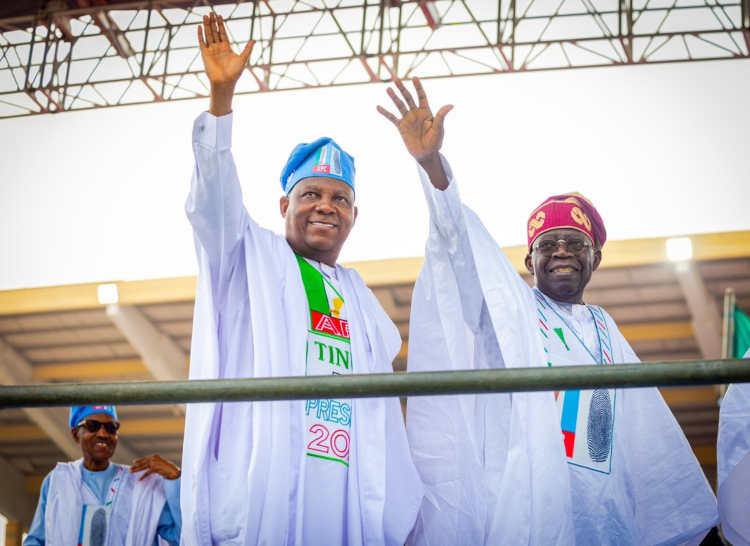
The African Democratic Congress (ADC) has demanded clarification over who is currently exercising the constitutional powers of the President as President Bola Ahmed Tinubu and Vice-President Kashim Shettima remain outside Nigeria.
The opposition party, in a statement issued on Tuesday by its National Publicity Secretary, Bolaji Abdullahi, said Tinubu’s continued absence had raised questions about compliance with Section 145 of the Nigerian Constitution.
SEE ALSO: Shettima Arrives Yola to Condole With Bamanga Tukur’s Family
The ADC said the provision requires the President, when proceeding on vacation or otherwise unable to discharge the functions of his office, to transmit a written declaration to the President of the Senate and the Speaker of the House of Representatives, after which the Vice-President performs the functions of Acting President.
According to the party, Tinubu left Nigeria on August 30 and has now been away for more than 21 days.
“President Tinubu left Nigeria on 30 August and has now been away for more than 21 days. We therefore demand to know whether the required declaration was transmitted by the President,” the ADC said.
The party also questioned why the National Assembly had not addressed the issue if such a declaration had not been transmitted.
The ADC rejected the Presidency’s description of Tinubu’s stay abroad as a “working vacation”, arguing that the phrase does not create a separate constitutional category.
“There is no constitutional category known as a ‘working vacation’. Presidential authority cannot be transferred by convenience, protocol or press statement,” the party said.
The opposition party also dismissed the suggestion that Secretary to the Government of the Federation, George Akume, could effectively represent the President in the discharge of presidential responsibilities.
“Representing the President at events and ceremonies does not confer constitutional powers. The Secretary to the Government of the Federation is a mere appointee of the President,” it said.
The ADC stressed that attending official functions or delivering speeches on behalf of the President was different from exercising the constitutional powers of the President or Acting President.
“Representation is not governance. Attendance at official functions is not presidential authority,” the party added.
The controversy comes as Vice-President Shettima is in New York for the United Nations General Assembly, where he is representing Nigeria.
The ADC said the simultaneous absence of the President and Vice-President was particularly concerning given what it described as Nigeria’s security, unemployment and cost-of-living challenges.
The party also criticised Tinubu’s continued stay in Paris while French President Emmanuel Macron travelled to New York for the UN General Assembly.
“The irony would be amusing if it were not a national disgrace,” the ADC said, arguing that the situation created poor optics for Nigeria.
Macron had hosted Tinubu at a private dinner at the Élysée Palace in Paris before travelling to New York for the UN General Assembly.
The ADC therefore called on the Presidency and the National Assembly to answer what it described as a fundamental constitutional question.
“Who presently exercises the constitutional powers of the President of the Federal Republic of Nigeria, and under what provision of the Constitution?” the party asked.
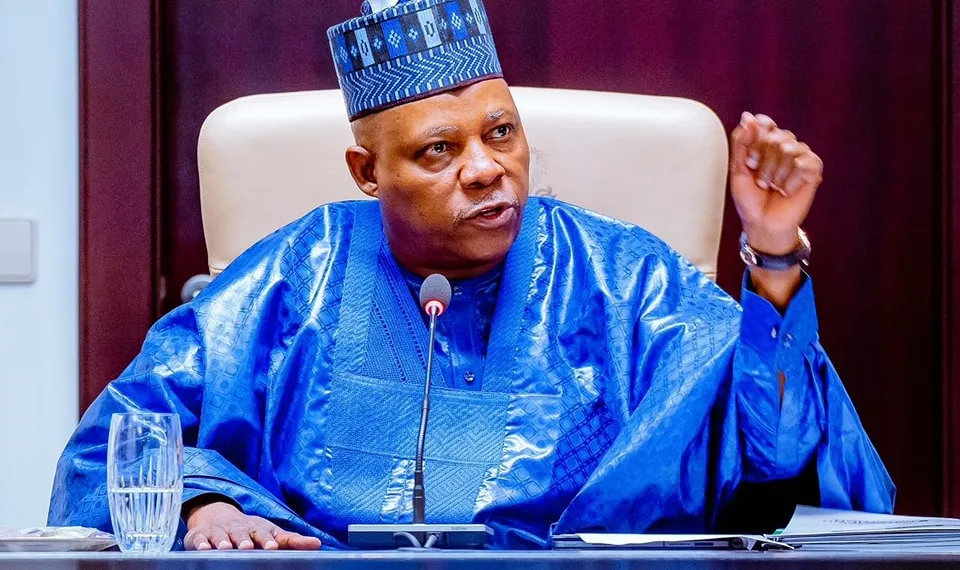
President Bola Ahmed Tinubu has called on African countries to unite and end the export of raw mineral resources, urging the continent to focus on local processing, manufacturing and value addition.
Tinubu made the call on Tuesday in New York, United States, while declaring open the 3rd Africa Minerals Strategy Group (AMSG) High-Level Roundtable on Critical Minerals Development in Africa, held on the sidelines of the ongoing 81st Session of the United Nations General Assembly.
The high-level meeting, which was chaired by Tinubu, was themed, “From Resources to Wealth: Continental Cooperation for Mineral Value Addition, Data Sovereignty, Innovative Financing and Critical Minerals Security.”
ALSO READ: Shettima Arrives Yola to Condole With Bamanga Tukur’s Family
Represented by Vice President Kashim Shettima, Tinubu told African leaders and stakeholders that the continent must move away from its long-standing position as a supplier of raw materials and develop industries capable of processing its mineral resources locally.
“For generations, Africa has furnished the materials of prosperity elsewhere. Our duty is to ensure that the future being fashioned from African minerals has room for African ambition,” the President said.
Tinubu expressed concern that mineral-rich communities across Africa continue to suffer from inadequate infrastructure, limited employment opportunities and insufficient participation in the wealth generated from their natural resources.
He noted that rising global demand for clean energy, artificial intelligence and advanced manufacturing had made African critical minerals such as cobalt, copper, lithium and rare earth elements increasingly important to global supply chains.
According to the President, Africa’s response should include mineral processing and refining, battery production, component manufacturing, African technologies and the development of competitive skills.
“The worth of a mine must be counted in the lives it improves,” Tinubu said.
“Jobs, industries, infrastructure, technology transfer, African enterprise participation and prosperity retained across generations must measure our progress from resources to wealth.”
Tinubu Warns Against African Fragmentation
The President said no African country could achieve the desired transformation of its mineral sector alone.
He warned that countries competing against one another by offering lower royalties, weaker local-content requirements and excessive concessions could undermine the continent’s collective bargaining power.
“Fragmentation leaves us exporting raw materials and buying finished goods at a premium. Cooperation gives our markets scale, our industries integration, our financing reach and our negotiations authority,” he said.
Tinubu called for greater continental cooperation, saying African countries must negotiate collectively where their interests converge and ensure that partnerships with external investors strengthen rather than undermine African industrial capacity.
“Reliability must never mean dependency, and partnership must never demand inequality,” he added.
President Highlights Nigeria’s Mining Reforms
Tinubu also highlighted reforms in Nigeria’s mining sector, saying the country must require local value addition for new mining licences, strengthen geological data and investor access, organise artisanal miners into cooperatives, combat illegal mining and improve regulatory accountability.
He disclosed that revenue from Nigeria’s mining sector rose from approximately ₦6 billion in 2023 to over ₦38 billion in 2024, and further to between ₦68.1 billion and ₦70 billion in 2025.
The President also pointed to major foreign investment commitments and the development and commissioning of large-scale lithium processing capacity in Nasarawa State as evidence of the opportunities available in the sector.
He said his administration’s mining policy was designed to ensure that minerals extracted in Nigeria contribute to the country’s industries, workers, skills and communities.
According to Tinubu, ongoing reforms have demonstrated that “firm terms can attract serious capital.”
Tinubu Backs Continental Minerals Framework
The President also endorsed the Continental Integration and Economic Assurance Declaration (CIEAD) adopted at the roundtable.
He said the declaration should create a predictable and investment-ready environment for Africa’s strategic mineral corridors through harmonised policies, responsible investment and shared infrastructure.
Tinubu, however, stressed that the declaration must go beyond a ceremonial signing and be backed by clear timelines, financing, implementation mechanisms and public accountability.
“Africa’s power resides in its people, markets and ingenuity. No outsider will organise our continent or place our industrial interests above their own,” he said.
“We must integrate our markets, mobilise African capital and negotiate with one voice wherever our interests converge.”
He added: “Our industrial growth can strengthen global prosperity, the energy transition and secure supply chains. Minerals confer no automatic prosperity; vision, investment and industry must earn it. Political will must turn mineral promise into enduring African wealth.”
Alake Calls for More African Countries to Join AMSG
Earlier, AMSG Chairman and Nigeria’s Minister of Solid Minerals Development, Dele Alake, said the group was proposing the Continental Integration and Economic Assurance Declaration as a framework for establishing a unified architecture for Africa’s critical and solid minerals value chains.
Alake urged African countries that have yet to join the AMSG to become members, stressing the importance of coordinating efforts, ideas and resources to develop the continent’s natural resources.
He said Africa’s mineral ambitions could not be achieved through policy implementation alone, arguing that integrated partnerships covering financial transactions and infrastructure development were also necessary.
Kenya’s Minister of Blue Economy and Maritime Affairs, Hassan Ali Joho, also emphasised the importance of domestic resource mobilisation for solid mineral development.
Joho called for transparency, competitiveness and greater alignment of licensing procedures among AMSG members while respecting the sovereignty of individual countries.
Representatives of Liberia, Chad and Tanzania, alongside other stakeholders, also contributed to the discussions.
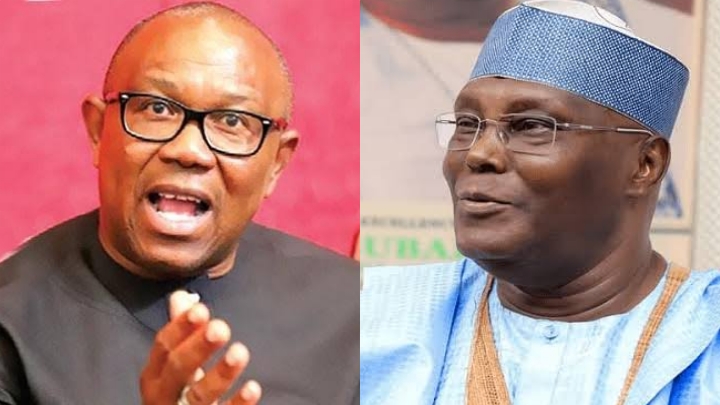
Former Vice President Atiku Abubakar has questioned President Bola Tinubu’s third consecutive absence from the United Nations General Assembly (UNGA), demanding an explanation for the president’s decision not to attend the global gathering.
Atiku made the remarks in a statement issued by his Senior Special Assistant on Public Communication, Phrank Shaibu, as Vice President Kashim Shettima leads Nigeria’s delegation to the 81st UNGA in New York.
According to Atiku, Tinubu was absent from the 79th UNGA in 2024 and the 80th session in 2025, and has again stayed away from the 81st session in 2026.
ALSO READ: ‘Calling Tinubu Bola, Giving Him Orders Is Insolence’ — Sunday Dare Blasts Atiku
The former vice president said the repeated absences could no longer be regarded as a coincidence or routine delegation, arguing that they required an explanation.
Atiku also questioned whether Tinubu’s documented history with United States law-enforcement agencies had become a burden on Nigeria’s foreign relations.
“The United Nations General Assembly is one of the world’s most important diplomatic gatherings. It brings together the representatives of the UN’s 193 member states and provides a unique platform for presidents and prime ministers to defend their countries’ interests, negotiate partnerships and shape global decisions on trade, security and development,” Atiku said.
He acknowledged that Shettima could represent Nigeria at the gathering but maintained that the vice president’s representation could not permanently substitute for the president’s personal authority and visibility.
“Vice President Shettima may represent Nigeria capably, but representation by delegation cannot permanently substitute for the personal authority, visibility and responsibility of the president,” he said.
“Tinubu cannot continue to treat Nigeria’s seat at the world’s biggest diplomatic table as though it were an inconvenient appointment that can be endlessly outsourced.”
Atiku further argued that UNGA was not simply a ceremonial event, noting that important bilateral meetings, investment discussions, trade negotiations and development-financing engagements take place on the sidelines of the gathering.
“Presidential absence on the global stage has consequences. UNGA is not merely a ceremonial gathering or an annual photo opportunity,” he said.
“Its side-lines are where leaders hold decisive bilateral meetings, court investors, negotiate trade partnerships, mobilise development finance and make the case for their countries.”
The former vice president said Nigeria could lose investment and other economic opportunities as a result of the president’s continued absence.
“When a president makes himself absent from that stage for three consecutive years, his country loses opportunities. Investment does not follow silence. International capital does not pursue a country whose leader repeatedly abandons the room in which consequential economic relationships are being built,” Atiku said.
He linked the issue to investment, employment and capital inflows, arguing that reduced investment could increase pressure on the naira and contribute to higher costs for Nigerians.
“The cost is eventually transferred to ordinary citizens: fewer investments mean fewer businesses and fewer jobs. Reduced capital inflows place additional pressure on the local currency,” he said.
“A weaker naira raises the cost of imports, production, transportation and food. These are among the economic pressures now punishing Nigerian families through the worst cost-of-living crisis in living memory.”
Atiku concluded by saying that while the president could regard attendance at UNGA as a matter of personal prerogative, Nigeria would ultimately bear the consequences of the decision.
“Tinubu may consider attending UNGA a matter of personal prerogative, but the economic and diplomatic consequences of his absence are being paid by Nigerians. A President may surrender his seat, but a nation cannot escape the bill,” he said.






Who Is Running Nigeria? ADC Demands Answers Over Tinubu, Shettima’s Absence

‘We’ll Bring Back Subsidy in Our Own Way’ — Kwankwaso

Stop Exporting Raw Minerals, Start Building Wealth From Your Resources – Tinubu to Africa

Adeleke Celebrates First Lady Oluremi Tinubu

‘Obi Has Nowhere to Hide’ — APC Campaign Council Tackles Peter Obi Over Anambra Record

‘A Nation Cannot Escape the Bill’ — Atiku Questions Tinubu’s Third UNGA Absence

Trump’s Family Unveils New Cryptocurrency Platform

Senate Denies Receiving Petitions Against Tinubu’s Ambassadorial Nominees

Dangote Cement Lights Up Benue Host Communities With CSR Initiatives

Reps Recommend 3-year Jail Term For Aviation minister

Tems Sets New Record On Billboard Hot 100 Chart
