Other News
NNPC has nothing to hide – Mele Kyari

Modupe ASUDO
Abuja-THE Nigerian National Petroleum Corporation, NNPC has cleared the air on alleged financial breaches in its operations by the Special Presidential Investigative Panel for the Recovery of Public Property.
Speaking while receiving the Chairman and members of the Panel at the NNPC Towers on Monday, Group Managing Director of the NNPC, Mallam Mele Kyari, said the Corporation had nothing to hide as it stood to gain a lot by being transparent in all areas of operation.
“Every member of our Management shares the vision of Mr. President that Government’s institutions must be accountable to all Nigerians. We know that we will gain more by being more transparent. We have nothing to hide,” Kyari told the Panel.
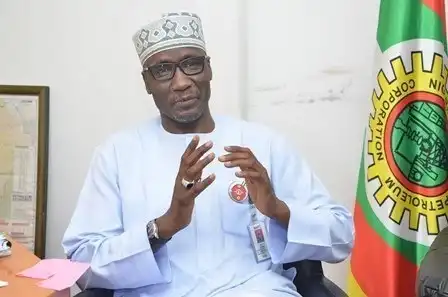
NNPC GMD, Engr. Mele Kyari
Responding to the issues raised by the Panel on the alleged underpayment of lease renewal fees on Oil Mining Leases (OMLs) 67, 68, and 70 by ExxonMobil, Kyari said the company paid $600m which was their equity contribution of 40% of the Joint venture agreement after which NNPC was to pay the remaining 60% but it became unnecessary as it represented the government.
“Ordinarily, NNPC would have contributed the balance of 60% of the amount which literally meant government paying monies to itself. There was no need for that,”Kyari enthused.
On the alleged breach of government’s Treasury Single Account (TSA) policy, the GMD said the NNPC has no secret account, emphasizing that “there is no single account NNPC is operating that is unknown to the Federal Government. Any account(s) outside the TSA platform are partner accounts which we have obtained due approvals from the government.’’, he noted.
Mele Kyari, who observed that all monies belonging to the corporation were domiciled with the Central Bank of Nigeria (CBN), added that the Corporation’s account managers remain the CBN and the Accountant General of the Federation.
Shedding more light on the alleged non-remittances of taxes and royalties by the Nigerian Petroleum Development Company (NPDC), NNPC’s upstream arm, Mele Kyari stated there were outstanding payments which arose as a result of the pillage that occurred before 2015.a
He, however, assured the Panel that this administration has made concerted efforts to reconcile every payment due to the Federation on taxes and royalties.
“The only outstanding payment is the $600m and we have a pre-payment plan with the Department of Petroleum Resources (DPR) such that by mid-2020, we will have money left to be paid”, he noted.
On alleged non-remittances by some oil companies operating in the country, the NNPC boss said it was the responsibility of the Federal Inland Revenue Service (FIRS) and the Department of Petroleum Resources (DPR) to collect taxes and royalties from oil companies, including those on Joint Venture (JV) and Production Sharing Contract (PSC) arrangement.
Kyari further noted that the NNPC would provide the necessary support to the agencies concerned in that regard though it has no legal obligation to do so. “As an enabler organization, we will support them because we see our roles beyond our immediate responsibility,” he said.
While affirming the Corporation’s commitment to transparency and accountability, Kyari said the Corporation is one of the most accountable public institutions in the country, saying ‘’this is the only company that publishes its operations and financial reports monthly. I’m not aware of any company that does that in the world.”
Earlier in his remarks, the Chairman of the Presidential Panel, Chief Okoi Obono- Obla said their visit was to seek synergy with the NNPC towards reforming the country and particularly to clear the air on issues relating to the operations of the Corporation.
He expressed the Panel’s satisfaction with NNPC’s “frank and honest responses on the issues raised, describing the Corporation “as a very important and transparent national institution with a GMD who has a track record of accountability and transparency in his public career.”
“The GMD has a reputation of being an apostle of accountability and transparency. I feel very happy that somebody like him is coming out to clarify the key issues. Nigerians have been misled, it behoves on every organization to tell Nigerians the truth to engender transparency in the entire polity”.

The Nigeria Democratic Congress (NDC) has announced its decision to boycott a security meeting convened by the Inspector-General of Police, accusing the Nigeria Police Force of failing to protect its members amid escalating political violence across the country.
The party said it no longer had confidence in the ability of the police and other security agencies to guarantee the safety of its members, alleging that attacks against its supporters had continued without adequate intervention or accountability.
In a statement dated November 23, 2026, and signed by its National Publicity Secretary, Osa Director, Esq., the NDC said it would not participate in a meeting organised by a police force it accused of failing to protect opposition members.
SEE MORE: ‘No Political Ambition Is Worth One Nigerian’s Life – Obi Condemns Attacks on NDC Supporters in Delta
The party declared that it would not lend legitimacy to what it described as a security process that had failed to address the repeated attacks against its supporters.
The NDC cited incidents in Benue, Edo, Calabar, Enugu and Delta states as evidence of what it described as a growing pattern of political violence against its members.
It specifically alleged that its presidential candidate, Peter Obi, was prevented from entering Benue State by thugs loyal to the ruling All Progressives Congress (APC) government.
The party also revisited the killing of four of its members in Delta State, alleging that the incident occurred in the presence of police officers and other security personnel who were expected to protect lives and maintain order.
Describing the situation as disturbing, the NDC accused the police of showing bias in their handling of attacks against opposition members.
“Presently, the Nigeria Police has become an APC Police sustained by taxpayers’ money,” the statement alleged.
The party further accused security agencies of failing to conduct proper investigations into the incidents and ensure that those responsible were brought to justice.
It maintained that political campaigns should provide an opportunity for democratic engagement rather than become battlegrounds where supporters face threats, attacks and killings.
The NDC called on the international community to put pressure on President Bola Ahmed Tinubu and the APC-led government to uphold internationally accepted democratic standards and protect opposition political activities.
“Democracy cannot survive where opposition members are hunted, attacked, and killed with impunity while state institutions look the other way,” the party stated.
Despite its decision to boycott the IGP’s meeting, the NDC reaffirmed its commitment to peaceful and issue-based campaigns, insisting that it would not be intimidated or forced out of Nigeria’s democratic space.

Sahara Group, through Asharami Synergy Kenya Limited, is developing a 30,000-metric-tonne common-user Liquefied Petroleum Gas (LPG) import, storage and handling terminal in Changamwe, Mombasa, to strengthen supply and support access to affordable cooking gas for 10 million homes by 2028.
Scheduled for completion by 2028, the facility will occupy 23.19 acres at the Kenya Petroleum Refineries Limited (KPRL) site and support Kenya’s LPG Growth Strategy and wider clean-cooking ambitions.
At the groundbreaking ceremony, Bayo Sotomi, Country Manager, Asharami Synergy Kenya, said the additional storage would enable larger LPG cargoes, improve vessel discharge efficiency, and help reduce shipment and demurrage costs.
“The 30,000-metric-tonne LPG storage facility is a major economic boost that will accelerate the energy supply chain. It will ensure lower prices for distribution of clean energy in schools and hospitals and restore forests from firewood cutting,” he said.
According to Sotomi, Asharami will work with the government, regulatory authorities, and local technical institutions to support internships, industrial attachments, and training in LPG handling, engineering, and safety,” he said.
Sotomi added that the terminal could strengthen Mombasa’s role as an LPG gateway for East and Central Africa, serving markets including Uganda, Rwanda, Burundi, South Sudan, and eastern Democratic Republic of Congo.
READ ALSO: FG Tackles Transportation Costs with 5 New CNG Stations in Lagos
Also speaking, the Principal Secretary for the State Department for Petroleum, Harsama Kello, said the investment will revolutionise the energy sector supply chain.
Kello said 70 percent of Kenyans are still relying on kerosene, charcoal and firewood, but through the National LPG Growth Strategy Programme, the government will ensure all Kenyans have access to clean energy.
He said employment from the project will go to local people in Changamwe, and the investment will lower the cost of gas in households.
“By 2028 we want to make that a reality in homes. Launching Asharami LPG is one of the plans to make Kenya self-sufficient in gas supply,” he said.
Tom Mailu, General Manager, Kenya Petroleum Refineries Limited (KPRL) said: “We shall ensure that we comply with environmental requirements. Residents will benefit big in the project that will take 24 months.”
KPRL Board Chair, Lillian Mahiri Zaja, said the facility will ensure the company’s assets are protected.
“The future of the energy sector will be shaped by institutions we build for the country and for the future of our people,” said Zaja.
EPRA Director General, Eng. Edward Kinyua, said the multi-billion-shilling facility will spur the economy.
“We are losing 25,000 lives because of indoor pollution; therefore, this is about saving lives,” Kinyua said. The project supports the government’s agenda to move from biomass to LPG.
From Nigeria to Côte d’Ivoire, Senegal, Tanzania, and Ghana, Sahara continues to invest in LPG shipping, storage, and distribution infrastructure. This is designed to improve supply reliability and give more households and businesses access to cleaner energy, local economic opportunity, and regional energy security.

The Nigerian film industry, Nollywood, has recorded several losses in 2026, with veteran actors, actresses and younger performers dying at different times throughout the year.
The deaths have affected different generations of entertainers, including celebrated figures who helped shape Nigerian cinema and television, as well as emerging talents whose careers were still developing.
Among those who died were veteran actors Olu Jacobs, Francis Duru, Taiwo Hassan, popularly known as Ogogo, and Kola Oyewo, alongside younger performers such as Alexx Ekubo and Temitope Osoba.
ALSO READ: BREAKING: Nollywood Star Alex Ekubo Reportedly Dies at 40 After Health Battle
The latest loss was veteran actor Diewait Ikpechukwu, whose death was confirmed by the National President of the Actors Guild of Nigeria (AGN), Abubakar Yakubu, on November 6.
Below is a compilation of 18 Nollywood actors and actresses whose deaths were reported in 2026.
See list below
1. Diewait Ikpechukwu – November 6
Veteran Nollywood actor Diewait Ikpechukwu died at the age of 71 after a prolonged illness.
His death was confirmed on November 6 by the National President of the Actors Guild of Nigeria, Abubakar Yakubu, who paid tribute to the late actor.
Ikpechukwu was particularly recognised for portraying traditional rulers, elders and authoritative characters in Nigerian movies.
He featured in productions including Evil Men, The Guilty, Python King, Omera and The August Meeting. He also served as the pioneer chairman of the AGN Enugu State chapter.
2. Francis Duru – October 23
Veteran Nollywood actor Francis Duru died at the age of 57 following a brief illness.
His family announced his death on October 23 in a statement shared on his verified Instagram account.
Duru was one of the recognisable faces of Nollywood, having built a career spanning more than three decades.
He gained widespread recognition for his portrayal of Ahanna in the 1995 film Rattlesnake. He also featured in several productions, including Blood Money and Merry Men.
The actor won the Best Actor in a Leading Role (Igbo) award at the 2020 Best of Nollywood Awards for his performance in Mboputa.
3. Olu Jacobs – September 16
Veteran actor Oludotun Baiyewu Jacobs, popularly known as Olu Jacobs, died on September 16 at the age of 84.
His death was announced by his wife, actress Joke Silva, and their son, bringing an end to the life of one of Nigeria’s most celebrated screen personalities.
Jacobs had a career spanning more than five decades across theatre, television and film.
He appeared in numerous Nigerian and international productions and became widely respected for his versatility and commanding screen presence.
Alongside his wife, he was also associated with the Lufodo Academy of Performing Arts, which contributed to the training of emerging talents in the entertainment industry.
4. Atinuke Remilekun Kareem – September 1
Nollywood actress Atinuke Remilekun Kareem died after battling breast cancer.
Her death was announced on September 1 by the Ogun State chapter of the Theatre Arts and Motion Pictures Practitioners Association of Nigeria (TAMPAN).
Before her death, Kareem had publicly appealed for financial assistance to support her cancer treatment.
Her passing added to the losses recorded in the Yoruba movie industry during the year.
5. Taiwo Hassan – August 23
Veteran Yoruba actor Taiwo Hassan, popularly known as Ogogo, died on August 23 at the age of 66 following a battle with stage-four cancer.
His death was confirmed through a burial announcement by fellow actor Jide Kosoko, while his family had earlier appealed for financial assistance towards his medical treatment.
Ogogo spent more than four decades in the Nigerian film industry and became one of the most recognisable figures in Yoruba cinema.
He featured in hundreds of productions and earned recognition for his performances in traditional, contemporary and action-themed Yoruba films.
6. Temitope Osoba – August 5
Actress and filmmaker Temitope Osoba died on August 5 at the age of 40.
She began her acting career in 2005 and featured in several Yoruba-language productions, including Ogun Mi, Gucci Girls, Igboro Ti Daru and Accident.
Apart from acting, Osoba worked as a dancer and film producer.
She had previously spoken publicly about her battle with breast cancer, with her death prompting tributes from colleagues and fans.
7. Taiwo Adeshina – June 29
Veteran Yoruba actor Taiwo Adeshina, popularly known as Elegbeje Ado, died on June 29 following a brief illness.
His death was confirmed by filmmaker Seun Oloketuyi and actor Kunle Afod.
Adeshina spent more than two decades in the Yoruba movie industry and was known for his performances in traditional and historical productions.
His film credits included Akeke, Oko Abiku, Kadara Mi and Ageku Abela.
8. Kola Oyewo – June 12
Veteran actor, dramatist and academic Kola Oyewo died on June 12 at the age of 80.
His death was confirmed by fellow actor Kunle Afod and his son, Adetoyese Oyewo.
Oyewo began his acting career in 1964 with the Oyin Adejobi Theatre Group and later became one of the influential figures in Nigerian theatre and cinema.
He was particularly remembered for his portrayal of Odewale in Ola Rotimi’s stage classic The Gods Are Not to Blame.
His film credits included Saworoide, Koseegbe and O Le Ku.
9. Omooba Oluwasegun Oyeyemi – June 10
Actor Omooba Oluwasegun Oyeyemi died on June 10.
He was particularly known for his role as Flora’s husband in the Mount Zion Christian film series Abattoir.
His death was announced by the Bowen University Alumni Association, which described him as a cherished alumnus and drama minister.
The association also appealed for prayers and support for his family following his death.
10. Okiki Adeshina – June 2
Yoruba actor Okiki Adeshina, popularly known as Janmole, died following injuries sustained in a road accident.
His death was announced by the President of TAMPAN, Bolaji Amusan, popularly known as Mr Latin.
Adeshina was known for his performances in Yoruba-language films and had also ventured into TikTok content creation.
His movie credits included Agunbaniro, Iyawo Asante and Ogbon Inu.
11. Fesogboye Oyewole – May 29
Veteran Yoruba actor Fesogboye Oyewole, popularly known as Feso Oyewole, died on May 29.
His family confirmed his death, while TAMPAN President Bolaji Amusan also paid tribute to the late actor.
Oyewole spent several years in the Yoruba movie industry and was recognised for his contributions to indigenous cinema.
12. Patrick Okoye – May 2026
Actor, lecturer and theatre practitioner Patrick Okoye, popularly known as Energy, died in May at the age of 41.
His death was announced through a post on his Instagram page, while fellow actor Ken Erics also confirmed the development.
Okoye was a lecturer in the Department of Theatre Arts and Film Studies at Nnamdi Azikiwe University, Awka, Anambra State.
He was also a singer, dancer and choreographer, with appearances in productions including Midnight Love, Old School, Finding a Wife and The Jagaban.
13. Alexx Ekubo – May 13
Popular Nollywood actor Alexx Ekubo died at the age of 40 following complications arising from advanced metastatic kidney cancer.
His family announced his death on May 13 in a statement shared on his verified Instagram page.
Ekubo rose to prominence after emerging as the first runner-up in the 2010 Mr Nigeria competition before establishing himself as a recognised actor.
He featured in several productions, including The Bling Lagosians, Omo Ghetto: The Saga, The Blood Covenant and Afamefuna: An Nwa-Boi Story.
His death generated widespread reactions across the entertainment industry, with colleagues and fans paying tribute to his contributions.
14. Oby Kechere – April 27
Nigerian actress and film director Cecilia Oby Kechere died on April 27 following a prolonged illness.
The Directors Guild of Nigeria announced her death in a statement signed by its National President, Uche Agbo.
Kechere was widely recognised for playing Ms Koi Koi in the 2002 comedy classic Aki na Ukwa.
She joined Nollywood in 2001 and also featured in productions including August Meeting, Aki na Ukwa 2, Final Surrender and Women Affair.
Beyond acting, she was a member of the Directors Guild of Nigeria and served as Vice Chairman of its Abuja chapter.
15. Solomon Akiyesi – April 26
Nollywood actor and producer Solomon Akiyesi died on April 26.
His death was confirmed by the National President of the Actors Guild of Nigeria, Abubakar Yakubu, who disclosed that the actor died in his sleep.
Akiyesi joined Nollywood in the late 1990s and built a career spanning more than two decades.
He featured in over 100 films, including Marry Who You Love, Kiss My Pain, Heart of a Saint, Deadly Affair and Desperate Ladies.
16. Davis Ofor – April 6
Veteran actor Davis Ofor, popularly known as Clarus, died on April 6 at the age of 85.
His death was announced by fellow actor Tony Akposheri, who paid tribute to him on social media.
Ofor became famous for his portrayal of Clarus Mgbeojikwe in the popular Nigerian television comedy series The New Masquerade.
His performance in the programme made him one of the memorable characters in Nigerian television history.
17. Bamidele Oluwatope – February 24
Actor and content creator Bamidele Oluwatope, popularly known as Okemesi, died on February 24.
He was known for his comic performances and distinctive use of Yoruba, English and the Ekiti dialect in his acting and online content.
His death was mourned by colleagues and fans, particularly within the Yoruba movie industry.
18. Ajara Lasisi – February 5
Yoruba actress Ajara Lasisi, popularly known as Aunty Ajara, died on February 5 following a prolonged illness.
Her death was announced by filmmaker Tobi Oladele, popularly known as Tee Mony, and subsequently confirmed by her brother, Ridwan Lasisi.
She was known for her comic and supporting roles in Yoruba-language productions and was buried on the day of her death in accordance with Islamic rites.
Nollywood remembers its departed stars
The deaths recorded in 2026 have left a significant gap in Nigeria’s entertainment industry, with performers from different generations passing away.
While some of the deceased spent decades building their careers and shaping Nigerian cinema, others were younger talents whose contributions were still unfolding.
Their deaths have also drawn attention to the challenges faced by entertainers, including prolonged illnesses, the cost of medical treatment and road accidents.
Despite their absence, their performances, creative contributions and influence on Nigerian cinema remain part of Nollywood’s history.

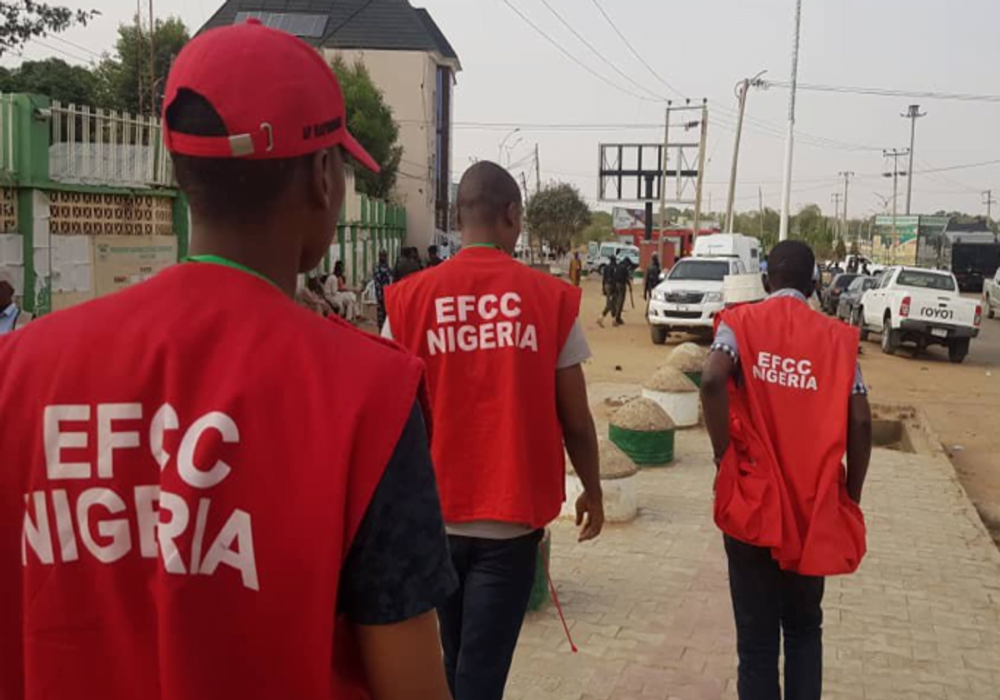
₦7.8m Fraud: Sales Girl Sentenced to Six Months in Prison

Ughelli Killings: PDP Accuses Tinubu, APC of Fueling Political Violence

NDC Boycotts IGP’s Security Meeting, Accuses Police of Failing to Protect Members
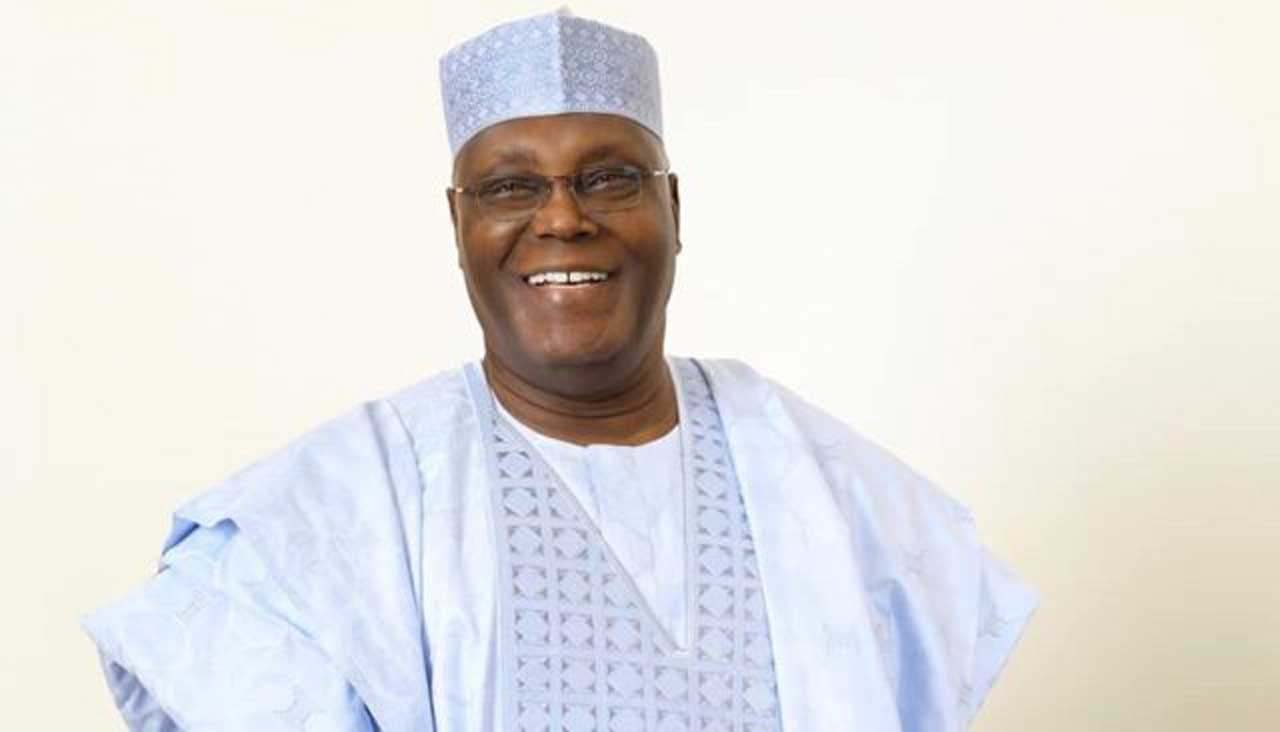
‘Tinubu Must Go’: Atiku Storms Kogi, Pushes Affordable Life Agenda at ADC Rally

Eyesan Hinges Meeting 3mbpd Target on Education, Research

‘No Political Ambition Is Worth One Nigerian’s Life’ – Obi Condemns Attacks on NDC Supporters in Delta

Trump’s Family Unveils New Cryptocurrency Platform
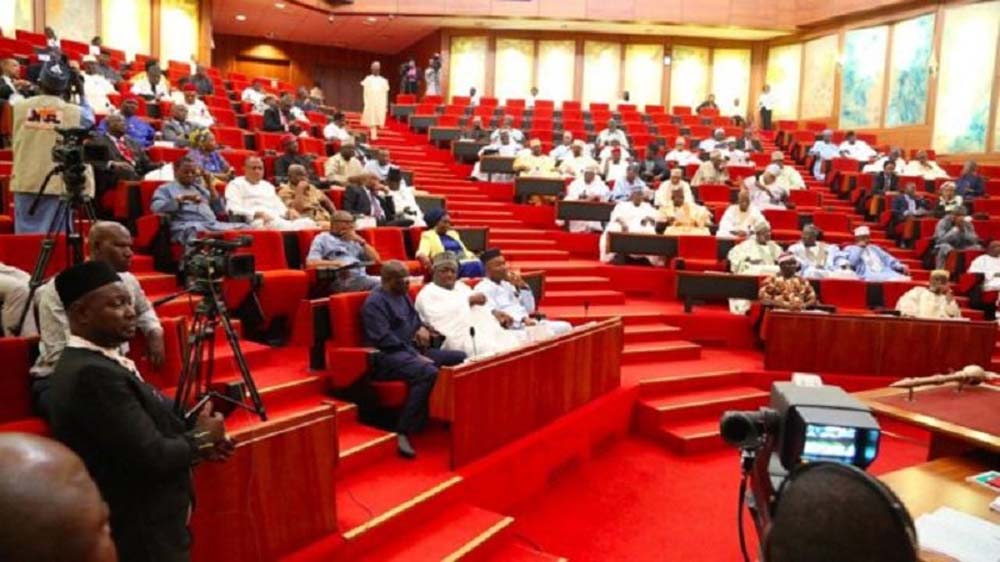
Senate Denies Receiving Petitions Against Tinubu’s Ambassadorial Nominees

Dangote Cement Lights Up Benue Host Communities With CSR Initiatives

Reps Recommend 3-year Jail Term For Aviation minister

Tems Sets New Record On Billboard Hot 100 Chart