
Energy
NNPC Secures Tinubu’s Approval for $20bn FID on Bonga Deepwater Project


The Nigerian National Petroleum Company Limited NNPC (NNPC Ltd) has announced that it had secured presidential approval for a targeted fiscal incentive package aimed at unlocking the long-delayed Final Investment Decision (FID) on the Bonga Southwest Aparo (BSWA) deepwater project.
This was detailed in a statement in Abuja by NNPC Ltd’s spokesman, Andy Odeh, who stressed that the development is expected to attract about $20 billion in Foreign Direct Investment (FDI) and revive large-scale offshore oil investments in the country.
ALSO READ: Dangote Refinery Cuts Petrol, Diesel Prices
The approval, granted by President Bola Tinubu, it said, is designed to resolve long-standing fiscal and commercial bottlenecks that stalled the project for nearly two decades and pave the way for a major expansion of Nigeria’s deepwater oil production.
The Bonga Southwest Aparo development, operated by Shell through its Nigerian deepwater subsidiary, is expected to deliver about 150,000 barrels of crude oil per day and 140 million standard cubic feet (Scf) of gas daily once fully operational.
According to the statement, the presidential approval followed months of technical and commercial engagements involving the national oil company, the Nigeria Revenue Service (NRS), the Special Adviser to the President on Energy, Olu Verheijen, and the global leadership of Shell.
“His Excellency, President Bola Ahmed Tinubu, has approved a targeted fiscal incentive designed to unlock the long awaited Final Investment Decision (FID) on the Bonga Southwest Aparo (BSWA) deepwater project, marking a milestone in Nigeria’s ongoing drive to attract strategic investments and accelerate sustainable economic growth. The project is estimated to attract about $20 billion in Foreign Direct Investment and position Nigeria for a new era of deepwater production.
“The approval followed months of intensive technical and commercial negotiations involving NNPC Limited as the concessionaire, the Nigeria Revenue Service (NRS), the Special Adviser to the President on Energy, Olu Verheijen, and the Shell CEO Mr. Wael Sawan,” it stated.
According to the statement, it represents the culmination of the President’s directive, issued during a courtesy visit by Shell CEO, Sawan, to fast-track the enablers required to move this strategic national asset to FID. Besides, the national oil company said it signals renewed confidence in Nigeria’s policy direction and its resolve to translate reform momentum into tangible investment outcomes.
The NNPC said the approval represented a significant milestone in Nigeria’s effort to reposition itself as a competitive destination for global energy investment, particularly in the capital-intensive deepwater segment.
Group Chief Executive Officer of NNPC, Bayo Ojulari, described the development as a major breakthrough for the country’s oil and gas sector.
He noted that the project had remained stalled for almost two decades due to fiscal and commercial uncertainties but said the latest approval reflected the government’s commitment to unlocking strategic investments.
Ojulari added that the milestone underscored the company’s commitment to leveraging partnerships with international oil companies to unlock Nigeria’s vast hydrocarbon potential.
“This approval is a testament to the President’s leadership, NNPC’s disciplined execution and our ability to structure complex, bankable transactions that deliver value for Nigeria. For nearly two decades, the Bonga Southwest project remained stalled. Today, under President Tinubu’s reform-driven leadership and through NNPC’s sustained advocacy, we have broken that logjam. This is what partnership, persistence, and policy clarity can achieve.
“This milestone further affirms NNPC’s commitment, under the President’s leadership, to unlocking Nigeria’s vast energy potential through partnerships, disciplined innovation and execution excellence,” the NNPC GCEO stressed.
The Bonga Southwest Aparo project will become the first deepwater final investment decision on a Production Sharing Contract (PSC) asset in Nigeria since 2008, signalling renewed confidence among international investors in the country’s policy environment.
Central to the breakthrough is the fiscal package approved by the President, which includes an enhanced Production Tax Credit as well as the resolution of issues arising from the 2021 dispute settlement agreement between the government and contractors.
The NNPC said the revised fiscal framework was designed to strike a balance between protecting Nigeria’s long-term revenue interests and ensuring the project remains commercially viable for investors.
As concessionaire, the national oil company said it worked closely with Shell Nigeria Exploration and Production Company (SNEPCo) and other contractor parties to design alternative fiscal structures capable of addressing structural challenges that had hindered progress on the project.
The proposal subsequently underwent evaluation by the NRS before recommendations were forwarded to the presidency for final approval. NNPC noted that the breakthrough aligns with its broader strategy of pursuing partnership-driven growth, particularly in high-capital offshore developments that require collaboration between the national oil company and global energy majors.
The company added that aligning policy reforms with investor expectations is essential to unlocking large-scale investments capable of generating jobs, boosting government revenues and strengthening Nigeria’s long-term energy security.
Once the final investment decision is taken by the project partners, the multi-billion-dollar development is expected to transform Nigeria’s deepwater production profile while creating significant economic benefits.
The NNPC estimates that the project will generate over 5,000 direct and indirect jobs during construction and operations. It could also signal the beginning of a new cycle of offshore investments in Nigeria, especially as global oil companies increasingly seek stable fiscal environments before committing capital to large deepwater projects.
With presidential approval now secured, NNPC and its partners are expected to move toward the formal FID, which would trigger the full-scale capital deployment required to develop the offshore field.




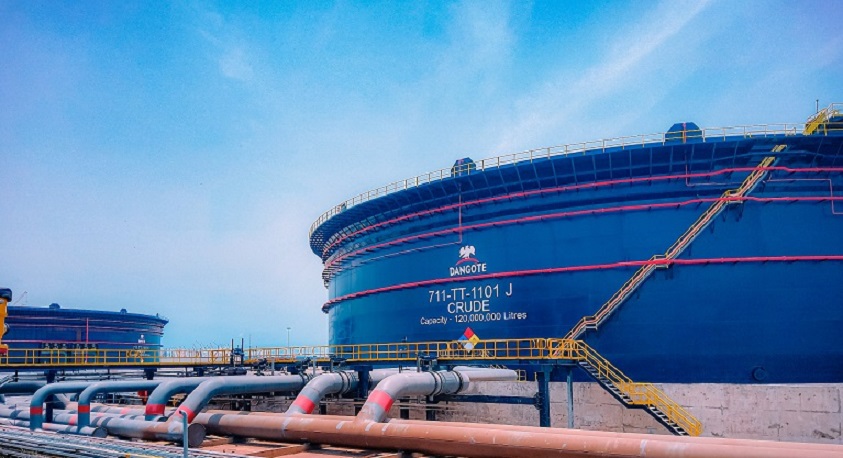
The global impact of the hostilities involving Iran, the United States of America and Israel continues to impact Nigeria’s domestic energy sector as the Dangote Petroleum Refinery and Petrochemicals on Tuesday announced reductions in its petrol and diesel gantry and coastal prices.
This follows Monday’s oil price slump to $90 per barrel from previous $115.
According to a new pricing template released by the refinery on Tuesday, the gantry price of petrol has been reduced by N100, dropping from N1,175 to N1,075 per litre.
ALSO READ: CNG: Tinubu Orders Deployment of 100,000 Kits in Three Weeks
The Dangote Refinery also stressed that the price of petrol for coastal supply would now be N1,050 per litre, saying the difference in price reflects additional costs linked to maritime distribution.
Similarly, the price of Automotive Gas Oil (diesel) has been reduced to N1,430 per litre at the gantry, down from the previous N1,620 per litre. This represents a decrease of N190 per litre.
The refinery noted that these gantry prices do not include regulatory charges from the Nigerian Midstream and Downstream Petroleum Regulatory Authority (NMDPRA).
The Dangote Refinery had raised its gantry PMS price to N1,175 per litre — the third upward adjustment in seven days.
The refinery communicated the new ex-depot price to marketers and depot operators, up N180 from the N995 per litre announced last week Friday, an 18.1 per cent increase in three days.
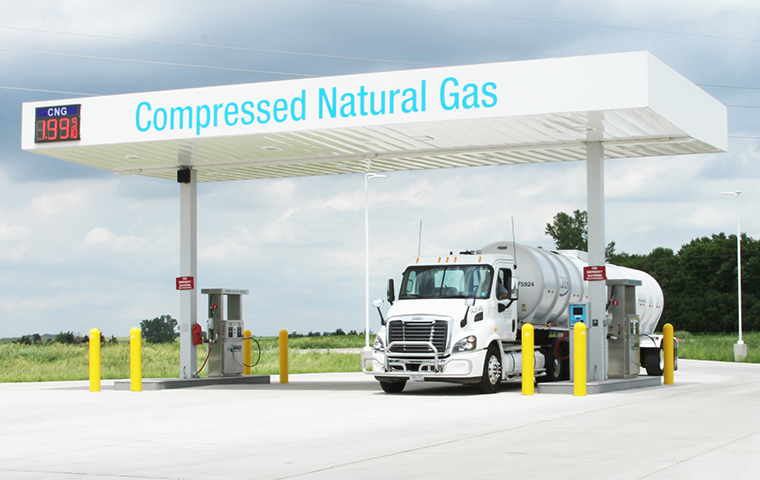
In the bid to cushion the impact of rising petrol and diesel costs, Nigeria’s president, Bola Ahmed Tinubu has directed the immediate deployment of 100,000 Compressed Natural Gas (CNG) conversion kits within a maximum of three weeks.
The Executive Chairman of the Presidential Initiative on CNG, Ismaeel Ahmed, made the disclosure on Tuesday after meeting with the President at the State House, Abuja.
Ahmed said the directive was informed by the ongoing war in the Middle East and its impact on global petroleum prices, which have increased transportation costs for Nigerians.
“The President, as usual, is always trying to get information on what is going on, and especially with the war in the Middle East and the rising cost of petrol and diesel.
“The President wanted to know what we are doing at the Pi-CNG and EV to scale up the availability of gas and CNG everywhere in the country so that people would have less cost of transportation,” Ahmed stated.
He revealed that Tinubu gave a direct mandate for the mass deployment of conversion kits to make natural gas more accessible as an alternative to petrol and diesel.
“So the President has given a direct mandate that we should immediately deploy about 100,000 kits.
“We are working with so many other stakeholders that would incentivise and get it into the market immediately and be able to convert a lot of vehicles and tricycles for people to be able to access gas,” the Pi-CNG boss said.
Ahmed emphasised that the deployment would commence within two to three weeks, with conversion centres expected to be “bustling with a lot of conversion activities.”
He disclosed that the initiative includes plans to deploy vehicles and tricycles equipped with bi-fuel CNG and electric mobility capabilities.
The President also directed the Pi-CNG to fast-track infrastructure development for gas refilling stations and electric vehicle charging points across the country, with particular focus on the Northern corridor.
“He also gave a directive that we must be able to fast-track the infrastructure in bringing gas and CNG, and electric mobility charging infrastructures to every part of the country, especially within the Northern Corridor, so that a lot of people will be able to access this,” Ahmed said.
The Pi-CNG chairman revealed that 77 refilling stations are currently at different stages of development nationwide, with significant progress recorded in Kano State.
“In Kano right now, we have about two LCNG stations and about five, six daughter stations that are coming up as well,” he stated.
Ahmed disclosed that the Northern corridor, stretching from Lokoja through Abuja, Kaduna, Zaria, Kano, and all the way to Maiduguri, will be equipped with multiple refuelling units to ensure seamless access to CNG for motorists.
“Along the corridors, from Lokoja all the way to Abuja, Kaduna, Zaria, Kano, all the way to Maiduguri, these are all places that we are going to litter with a lot of refuelling units. So it’s something that we’re looking forward to,” he said.
The Pi-CNG boss emphasised that the President wants results delivered quickly to ensure Nigerians can access CNG and electric mobility options.
“The President wants results delivered very quickly so that Nigerians will be able to access the CNG and electric mobility,” Ahmed stated.
On local manufacturing, Ahmed disclosed that the initiative is partnering with domestic manufacturers and attracting international manufacturers interested in setting up assembly lines in Nigeria.
“Absolutely, that’s where we’re dealing with partnering with a lot of local manufacturers, and even international manufacturers want to set up assembly lines in Nigeria.
“That is the goal, because it’s about job creation, it’s about availability,” he said.
He revealed that the Pi-CNG is collaborating with the Rural Electrification Agency to deploy solar-powered charging stations across the country.
“We’re partnering with REA, that’s the Rural Electrification Agency, to be able to supply solar where we can set up charging stations across,” Ahmed stated.
ALSO READ: How Dangote’s Full Refinery Capacity Could Push Naira Below ₦1,000 — Otedola
He noted that Nigerians are already importing electric vehicles independently, and the government’s responsibility is to provide adequate infrastructure to support their use.
“Nigerians are already bringing in their electric vehicles regardless.
“What you have to do for them now is to be able to make sure that there is enough infrastructure for them to work with this, especially off-grid,” Ahmed said.

Modupe ASUDO
The Nigerian Content Development and Monitoring Board has reiterated its commitment to advancing gender inclusion and sustainable capacity development in Nigeria’s oil and gas industry, spotlighting a $20m Women in Oil and Gas Intervention Fund.
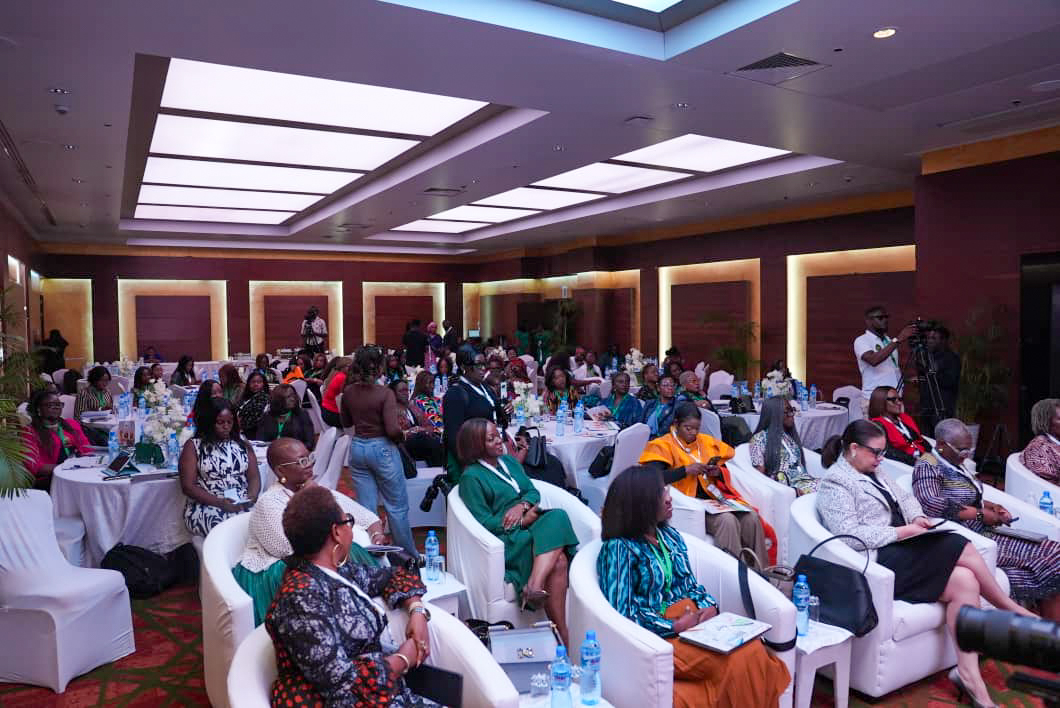
The Board made this known at the 3rd edition of the Diversity Sector Working Group’s Women in Oil and Gas Conference and Mentorship Programme, held on March 3, 2026, at Eko Hotels and Suites, Lagos.
The conference, organised in collaboration with the Nigerian Content Consultative Forum, was themed ‘Breaking Barriers, Shaping the Future’, with a strong focus on building bridges and empowering women for a sustainable energy future.
Delivering his goodwill message, the Executive Secretary of NCDMB, Engr Felix Omatsola Ogbe, described women’s empowerment as a strategic lever for strengthening Nigeria’s energy ecosystem, particularly at a time the global industry was undergoing profound structural change.
He explained that the sector’s navigation of energy transition, rapid technological innovation and rising sustainability expectations increasingly requires broader perspectives, adaptive leadership and inclusive participation to remain competitive and resilient.
Represented by the General Manager Midstream PCAD, Ms. Lekoma Phimia, the Executive Secretary framed inclusion not as social advocacy but as sound economics, stressing that diversity consistently delivers measurable performance outcomes across industries.
“Inclusive organisations are more innovative, more resilient and more profitable. When women thrive, industries thrive. When women lead, economies grow. When women are empowered, communities prosper,” he stated.
To illustrate this point, the Executive Secretary referenced the leadership impact of Ms. Oritsemeyiwa Eyesan, Executive Chairman of the Nigerian Upstream Petroleum Regulatory Commission, describing her tenure as clear evidence of women’s capacity to drive sector-wide transformation at the highest levels.
According to him, such leadership exemplifies how competence and inclusion are helping to steer the industry through a period of accelerated change.
While acknowledging the progress recorded, Ogbe observed that systemic barriers had continued to limit the full participation of women across segments of the oil and gas value chain, stressing that addressing the constraints requires deliberate, structured and sustained interventions.
At the centre of NCDMB’s empowerment showcase, the Executive Secretary highlighted the Women in Oil and Gas Intervention Fund, a landmark $20m initiative established in partnership with the Nigerian Export-Import Bank to provide affordable financing exclusively to women-owned businesses operating within Nigeria’s oil and gas sector.
He explained that the fund offers single-digit interest rate loans with repayment tenors of up to three years, targeted at eligible companies with approved industry contracts. According to him, the initiative is designed to accelerate local capacity and enable women entrepreneurs to transition from peripheral participation to ownership and leadership across the oil and gas value chain.
Ogbe further disclosed that a complementary intervention, implemented in partnership with the Bank of Industry, extends structured business training and additional access to capital to women-owned enterprises. He noted that many beneficiaries have expanded from small service providers into competitive vendors now supporting major oil and gas operators nationwide, particularly in logistics and marine services, safety equipment supply and environmental management — segments where female entrepreneurs have historically faced limited access to financing.
Beyond financing, the Executive Secretary highlighted NCDMB-supported skills development programmes executed in collaboration with institutions such as the Petroleum Training Institute and accredited industrial training centres in Rivers and Bayelsa states. He cited the training of women in welding and fabrication, noting that many graduates are employed in fabrication yards and contribute directly to major oil and gas projects.
“These women are earning dignified livelihoods, breaking stereotypes and inspiring a new generation,” Ogbe said, emphasising that collaboration remains critical to scaling impact, citing partnerships with financial institutions, development partners, training institutions and industry stakeholders.
He commended the NCCF Diversity Sector Working Group for sustaining advocacy and dialogue on inclusion. “We must move beyond inclusion towards leadership — more women in technical leadership roles, executive positions and industry boards,” he added.
In her remarks, the Chairman of NCCF Diversity Sector Working Group, Dr Alero Onosode, described the conference as a celebration of progress, leadership and possibility, noting that NCDMB’s sponsorship reflects its strong institutional commitment to inclusion and shared prosperity. She observed that convening the conference in March — International Women’s Day month — was symbolic, coming at a time of renewed activity and reform across Nigeria’s oil and gas industry.
“Alongside this momentum, we are seeing the rise of women into visible and influential leadership roles — regulators, CEOs, directors, engineers and policymakers shaping strategy and transforming spaces that were once dominated by a single voice,” Onosode said.
She explained that the conference theme challenged stakeholders to move from representation to impact, urging deliberate collaboration across sectors, generations and perspectives.
“Building bridges means women and men working together, turning diversity into strength and collaboration into results,” she stated, calling on industry leaders to prioritise mentorship, sponsorship and intentional partnerships.
The conference concluded with a renewed call for inclusive capacity development, with NCDMB reaffirming its commitment to empowering women, strengthening Nigerian content and ensuring that Nigeria’s energy future is sustainable, inclusive and economically transformative.






NNPC Secures Tinubu’s Approval for $20bn FID on Bonga Deepwater Project

Dangote Refinery Cuts Petrol, Diesel Prices
CNG: Tinubu Orders Deployment of 100,000 Kits in Three Weeks
Fuel Price Shock: Nigerians May Soon Pay ₦1,500 Per Litre – Marketers Warn

Political Earthquake in Zamfara as Gov Lawal Dumps PDP for APC

Court Pushes Malami, Son’s Terrorism Financing Trial to April 15

Trump’s Family Unveils New Cryptocurrency Platform

Reps Recommend 3-year Jail Term For Aviation minister

Senate Denies Receiving Petitions Against Tinubu’s Ambassadorial Nominees

Dangote Cement Lights Up Benue Host Communities With CSR Initiatives

Things To Know About Threads, Zuckerberg’s Twitter-like App
