
Energy
NUPRC Aims for 5.13bn Barrels Deepwater Oil Reserves

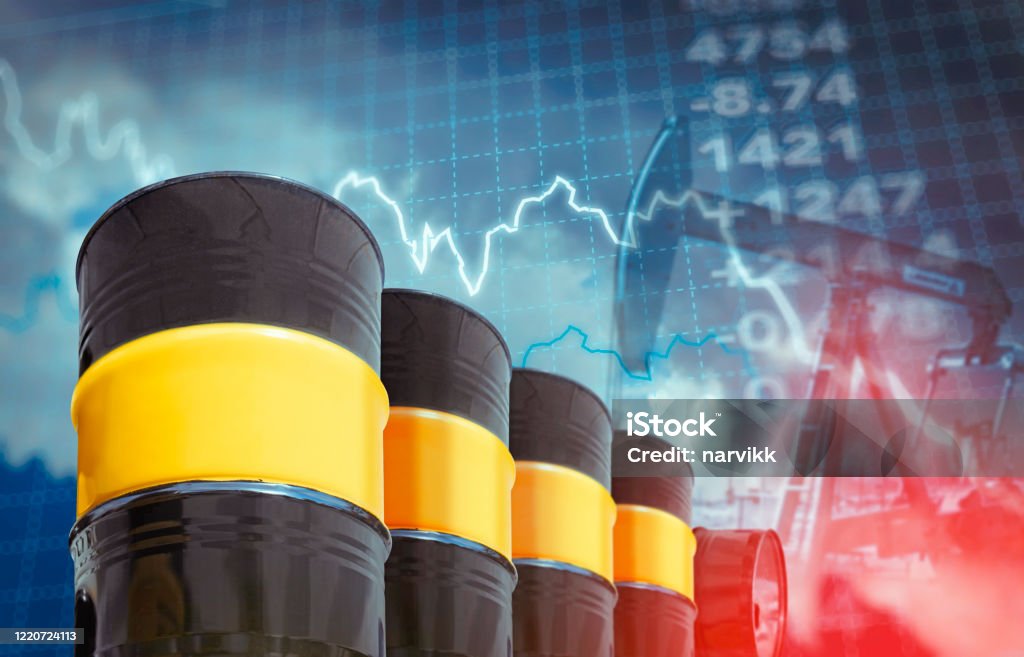
The Nigerian Upstream Petroleum Regulatory Commission (NUPRC) aims to unlock 5.13 billion barrels of deepwater oil reserves, with a goal to boost Nigeria’s oil production by an additional 810,000 barrels per day (bpd).
According to Chief Executive of the NUPRC, Gbenga Komolafe, Nigeria aims to rejuvenate its offshore oil production and reinforce its standing as a key player in the global energy landscape.
He bared his mind at a stakeholders’ workshop on deep/shallow water cluster/nodal development in Abuja on Thursday.
Komolafe who was represented by the executive commissioner for Economic Regulation and Strategic Planning, Babajide Fashina, said the plan was conceived in response to the industry’s dwindling offshore output and the need to harness untapped reserves for sustainable growth.
ALSO READ: Okpebholo’s Construction Palliatives Reach Edo North
He highlighted the significant untapped potential within the country’s deepwater fields. While Nigeria’s offshore exploration has been successful with major fields such as Banga, Agbami, Erha, and Egina, deepwater production has declined from its 2016 peak of 800,000 bpd to less than 500,000 bpd, currently contributing about 26 per cent of total national output.
“The data shows more than 5.13 billion barrels of oil and 13.53 trillion cubic feet of natural gas remain undeveloped in our deepwater reserves,” Komolafe said. “Embedded in this are 3.59 billion barrels of proven and probable oil and condensate reserves along with approximately 13.53 trillion cubic feet of non-associated gas.”
To capitalise on this vast opportunity, NUPRC has set up the Shallow and Deepwater Cluster Development Committee, tasked with working alongside operators like Star Deepwater, ESSO, Nigeria Agip Exploration, Shell Nigeria Exploration and Production Company, and Total Energies to accelerate cluster or nodal developments in deepwater fields.
Execution of approved Field Development Plans (FDPs) alone could yield an increase of up to 810,000 bpd in peak production.
Currently, Nigeria averages 1.75 million barrels per day in oil and condensate output, which falls short of the technical potential of 2.2 million bpd. The Commission called on industry stakeholders to intensify collaboration and innovation to bridge this production gap.
“The Commission is committed to unlocking these deepwater resources in a safe, productive, and sustainable manner to secure our nation’s energy future and economic prosperity,” Komolafe said.
The event was themed, “Harnessing the potential of deep/shallow water, oil and gas accumulations through clusters/nodal development in Nigeria.”
“At the peak of our deepwater oil production in 2016, Nigeria was producing about 800,000 barrels of oil per day. Sadly, that figure has now dropped to below 500,000 barrels per day,” he said.
“Our data shows that we have over 5.13 billion barrels of oil and 13.53 trillion cubic feet of gas still sitting untapped in our deepwater acreages. Of this, 3.59 billion barrels fall under 2P reserves, meaning they are proven and probable but yet undeveloped,” Komolafe explained.
He disclosed that a preliminary regulatory deep-dive through the Field Development Plan approvals indicates that current developments-in-view could unlock around 1.55 billion barrels of oil and condensate and another 1.49 trillion cubic feet of associated gas.
“Once these approved FDPs are executed, we could see peak oil production rise by as much as 810,000 barrels of oil per day. The question we must ask is: what’s holding us back, and how can we overcome the barriers together?” he queried.
The Commission boss said a new Shallow and Deepwater Cluster Development Committee had been inaugurated within the NUPRC to work closely with international oil companies and indigenous producers to identify and mature these opportunities.
“Our goal is not just more production, but more value. Through this collaborative approach, we want to maximise returns from existing assets, ramp up volumes, and reduce unit technical costs,” he noted.
Komolafe lamented that deepwater fields, despite their huge potential, had become underutilised due to challenges such as funding gaps, infrastructure limitations, regulatory bottlenecks and delayed project sanctions.
“Our eight FPSOs, Floating Production Storage and Offloading units, are grossly underutilised today. We can do more if we work together,” he said.
He added that deep offshore reserves currently account for 18 per cent of Nigeria’s total oil and condensate reserves, with major discoveries such as Bonga, Agbami, Egina, and Erha fields leading the way.
“Today, we have cumulatively produced over 4.4 billion barrels from our deepwater operations, thanks to companies like Shell, ExxonMobil, TotalEnergies, Agip and Chevron. But we must now move beyond the past and look toward unlocking future barrels,” Komolafe said.
While commending industry stakeholders for their cooperation, he stressed the need for faster project development timelines, saying: “It is time for kinetic interventions, practical steps that will bring results, not more rhetoric.”
The NUPRC boss also disclosed that Nigeria’s average year-to-date crude oil and condensate production currently stands at 1.75 million barrels per day, which is below the country’s technical potential of 2.2 million bpd.
“We believe Nigeria can do much more. This cluster development framework is a realistic step toward bridging the gap and achieving our production targets,” he said.
Komolafe urged operators to embrace the Commission’s collaborative model and commit to delivering results that would drive energy security, economic stability, and prosperity for all stakeholders.
“It’s not just about barrels; it’s about shared value creation. Through strategic development of our shallow and deepwater assets, we can lift the entire economy,” he added.
In his technical presentation, the Executive Commissioner for Development and Production at NUPRC, Enorense Amadasu, said unlocking the production would rely on executing already-approved Field Development Plans and adopting new cost-saving frameworks.
“Execution of the approved development plans in deep offshore fields is expected to bring in an additional 810,000 barrels per day,” Amadasu stated. “This is not just theoretical. We already have projects like Bonga North that have taken Final Investment Decisions, and several more are in view—Owowo, Zaba Zaba, Eta, NAE, and others.”
Amadasu noted that while Nigeria has offered 31 deepwater blocks between 2022 and 2024, including seven deep offshore blocks in the 2022 mini-bid round and 24 licenses with two continental shelf awards in 2024, actual production volumes have failed to reflect the potential.
He said multiple challenges including high technology costs, uneconomic standalone developments, and delays in Final Investment Decisions have slowed progress.
“Suboptimal project economics mean that many of these assets are not viable if developed in isolation. That’s why we’re pushing for cluster or nodal development, where operators collaborate to share infrastructure, reduce cost, and deliver value,” he explained.
The NUPRC has already set up a Deepwater Cluster Development Committee, made up of technical and commercial experts, to identify viable groupings of assets and map out a path toward joint development. According to Amadasu, a wider industry-wide committee will be inaugurated soon with subcommittees focused on infrastructure, subsurface validation, economics, and policy needs.
“We have identified over 20 key deepwater assets, Owowo, Nsiko, Bolia, Aparo, Bonga South West, Doro, Sheki, Akpo West, and others. While some may lack scale individually, they can become viable if developed together,” he said.
On government incentives, Amadasu cited ongoing interventions, including zero hydrocarbon tax on deepwater fields under the Petroleum Industry Act, as well as Presidential Directives 40, 41 and 42. These directives respectively addressed tax incentives for non-associated gas, accelerated local content compliance, and cost reductions in contracting cycles.
“Despite fiscal reliefs such as zero per cent hydrocarbon tax on deepwater assets and reduced rates for other lease types, 15 per cent for PPLs and 30 per cent for BMLs, we still haven’t unlocked the full value,” he said. “That’s why this collaborative workshop is critical.”
“Let’s be honest, without deepwater volumes, we cannot lift our national production. If we don’t act now, in the next five years, we’ll struggle badly as an upstream nation,” he warned.







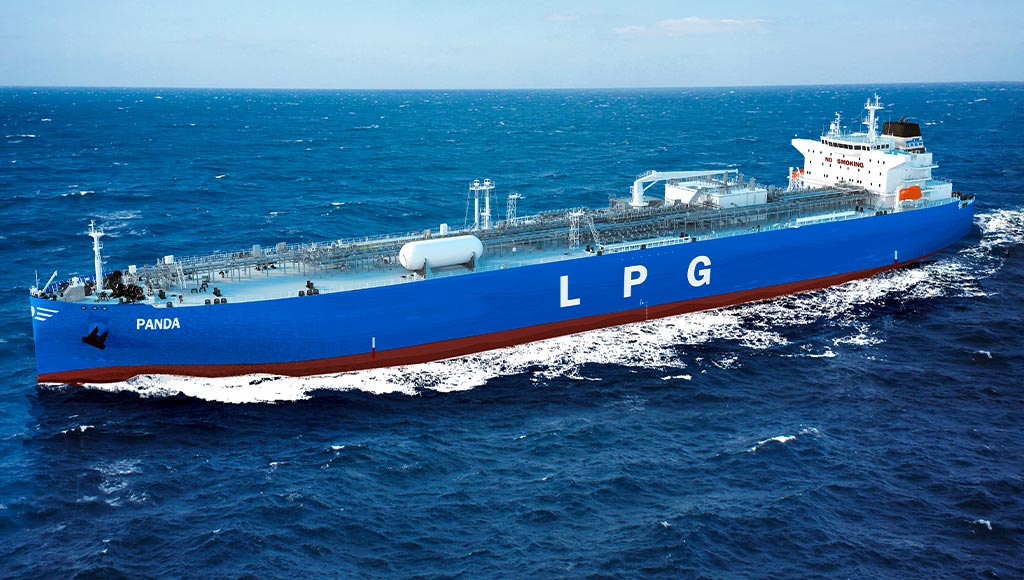
The Nigerian Association of Liquefied Petroleum Gas Marketers (NALPGAM) has urged operators in Nigeria’s liquefied petroleum gas (LPG) industry to strengthen safety standards, improve regulatory compliance and adopt digital technologies to reduce operational losses and drive business growth.
The association said improved operational practices would help protect investments, enhance efficiency, build consumer confidence and support the sustainable expansion of C.
The call followed its 2026 webinar, themed “Downstream LPG Operational Excellence and Compliance,” which brought together industry operators, regulators and other stakeholders to discuss safety risks, market volatility, operational inefficiencies and regulatory requirements in the downstream LPG sector.
Speaking at the event, NALPGAM National President, Edu Inyang, said the industry’s long-term growth would depend on more than increased consumption and supply volumes, stressing the need to embed safety and operational efficiency in everyday business practices.
“The future of Nigeria’s LPG industry cannot be achieved by increasing volumes alone. We must grow safely, responsibly, efficiently and sustainably. Safety is not an occasional campaign; it must become a continuous industry culture,” he said.
READ ALSO: Tinubu Promises to Boost Local Production with NNPC Refineries
A major outcome of the webinar was a proposal for a NALPGAM Standard of Operational Excellence, anchored on four principles: safe and well-maintained facilities, competent and adequately trained operators, regulatory-compliant processes, and consumer protection.
Participants urged operators to integrate safety into routine operations, strengthen preventive maintenance and comply with licensing and incident-reporting requirements.
They also called for an end to unsafe practices, including unauthorised propane blending and illegal decanting, warning that such activities could expose businesses and consumers to avoidable risks.
Inyang said compliance should be viewed as a means of strengthening business performance rather than merely fulfilling regulatory obligations.
“Compliance is not merely a regulatory burden; it is a business advantage. Well-managed LPG operations reduce accidents, improve efficiency, protect investments and strengthen public confidence in our industry,” he said.
The webinar also highlighted the role of digital technologies in improving operational efficiency and accountability across the LPG value chain.
Participants identified smart filling systems, automated tank gauges, load cells, flow meters and vehicle-tracking systems as practical tools for monitoring product movements, reducing losses and improving inventory management.
Wider adoption of these technologies, they said, could help operators strengthen operational controls, minimise discrepancies and improve the reliability of LPG distribution.
The discussions come as Nigeria seeks to expand LPG consumption to approximately five million tonnes annually by 2030, a target that will require increased investment, stronger distribution networks and wider consumer access.
Stakeholders called for greater industry participation in the Decade of Gas LPG penetration programme, alongside stronger collaboration to expand access, improve cylinder traceability and promote certified local manufacturing.
The NALPGAM also urged regulators and programme coordinators to involve its members more actively in implementing LPG penetration and cylinder recirculation initiatives.
According to the association, its members’ nationwide presence and proximity to consumers could help improve the reach and effectiveness of programmes designed to increase LPG adoption.
Reiterating the association’s position, Inyang said the industry must establish clear operational standards that protect consumers while supporting efficient and sustainable business practices.
“Our aspiration is clear: every LPG facility must be safe and properly maintained, every operator competent and adequately trained, every process compliant, and every customer protected. This is the standard of operational excellence we must collectively pursue,” he said.
The NALPGAM reaffirmed its commitment to working with government agencies, regulators and industry stakeholders to develop a safer, more efficient and competitive LPG market.
The association maintained that embedding safety, strengthening compliance and deploying appropriate technologies would be critical to improving operational performance and supporting the long-term growth of Nigeria’s LPG industry.
Fears of renewed US military strikes on Iran and escalating threats to energy infrastructure across the Middle East heightened concerns about global crude supplies have pushed-up crude oil prices in the global market.
These factors pushed crude oil prices over $117 a barrel in the global market, even as oil theft and pipeline losses in Nigeria fell by 82.9 percent in five years, from 102,900 barrels per day (bpd) in 2021 to 17,600 bpd in the first seven months of 2026, amid fresh concerns about further increases in lost volumes after years of decline.
Nigeria’s oil benchmark, Brent crude, climbed by about 3.5 percent to cross $117 a barrel during trading before easing to just above $116, still up approximately 2.7 percent.
READ ALSO: Navy Uncovers 132,000 Litres of Stolen Crude Oil in Bonny
The latest rally followed reports that Washington was considering fresh military strikes against Iran after the November 3 midterm elections, raising concerns that the conflict, now in its eighth month, could escalate further rather than move towards a diplomatic resolution.
Iran had threatened to attack oil facilities, undersea cables, data centres and artificial intelligence infrastructure across the Gulf if the United States and Israel launched a new offensive against the country.
Recall that Brent crude traded at about $72 a barrel in February, before the war began, but surged to about $126 a barrel by the end of April as the conflict intensified and concerns mounted over supply security.
Tensions rose again during the week following claims by Iran’s Islamic Revolutionary Guards Corps (IRGC) that it struck four commercial vessels in the Strait of Hormuz on Wednesday.
The US ordered some diplomats and family members of American government employees to leave Saudi Arabia, which had faced continued attacks by Houthi rebels operating from Yemen.
From January to September 2026, the domestic refineries in Nigeria received 156.52 million barrels of crude oil.
Of the volume, 125.85million barrels (80.4 percent) were sourced from in-country while 30.66 million barrels (19.6 percent) were imported.
This was contained in the Nigerian Midstream and Downstream Petroleum Regulatory Authority (NMDPRA) Factsheet September 2026 released on Thursday.
The Factsheet specifically revealed that in September 2026, 38.7 million litres of the Premium Motor Spirit PMS (petrol) were received per day, crashing from the 50.5million litres per day received in August by 23 percent.
READ ALSO: Thor Empowers Host Communities with 10 Cassava, Palm Oil Processing Plants
Stock sufficiency in September was 23.9 days, declining below the 30-day threshold.
The NMDPRA stressed that while 28.7million litres were supplied per day from domestic sources, declining by 21 percent from the previous month, 10.2 million litres were imported, reducing imported petrol by 30 percent in the period under review.
According to the Factsheet, “Domestic refining contributed about 65 percent of the national petrol requirement (consumption) in September 2026, and about 74 percent of receipts, supplemented by 26 percent of imports”.
The Dangote Refinery and Petrochemicals Company (DPRP) is the only domestic refinery which currently produces petrol in Nigeria.
The report added that the DPRP produced 47.22 million litres per day of PMS in September, supplying 28.50 million litres per day to the domestic market and exporting (35.2 percent) 15.47 million litres per day.
On capacity utilization, the refinery recorded 105.98 percent of its 650,000 barrels per day capacity in the period under review.
The Factsheet disclosed that 8.7million litres of diesel were consumed in the month under review.
The NMDPRA revealed that modular refineries supplied 4.3 percent of domestic diesel consumption in September.
Aradel and OPAC, said the Factsheet, operated below optimal capacity due to feedstock challenges and maintenance shutdowns.
September diesel receipts, according to the NMDPRA, were the lowest of the 13 months, driven by low imports and low domestic evacuation amid high prices.
The Factsheet said, “Nigeria’s energy-sector transformation is progressing. Domestic refining contributed about 65 percent of the national petrol requirement (consumption) in September 2026, and about 74 percent of receipts, supplemented by 26 percent of imports.
“Priority gas projects have reached significant mileage, with the AKK pipeline at 84 percent completion as of September 2026,” the Factsheet pointed out.






Dangote Refinery Pioneers Honeywell’s AI Technology

Standard Chartered Inks Deal for Shell Gas Sale
NALPGAM Preaches Innovation, Safety to LPG Operators

Tinubu Promises to Boost Local Production with NNPC Refineries

INEC Opens Online Access to Voters’ Register After Public Outcry

ADC Replies Alake, Says APC’s ‘Falsehood’ Cannot Hide Tinubu’s Failures

Trump’s Family Unveils New Cryptocurrency Platform

Senate Denies Receiving Petitions Against Tinubu’s Ambassadorial Nominees

Dangote Cement Lights Up Benue Host Communities With CSR Initiatives

Reps Recommend 3-year Jail Term For Aviation minister

Tems Sets New Record On Billboard Hot 100 Chart

83sapf
6rxgmo
xi63f6
F*ckin’ remarkable things here. I am very glad to see your post. Thanks a lot and i’m looking forward to contact you. Will you please drop me a mail?
I like this weblog very much, Its a very nice billet to read and incur information.
I wish to show my affection for your generosity in support of men and women who have the need for help on this one concept. Your special dedication to passing the message up and down had been particularly significant and have constantly allowed some individuals much like me to attain their goals. Your own invaluable guide means much to me and much more to my colleagues. With thanks; from all of us.
Youre so cool! I dont suppose Ive read something like this before. So nice to search out any person with some authentic ideas on this subject. realy thanks for beginning this up. this website is something that’s needed on the internet, somebody with just a little originality. helpful job for bringing one thing new to the internet!
Hello my friend! I wish to say that this article is amazing, nice written and include almost all significant infos. I¦d like to peer extra posts like this .
I truly enjoy reading on this website , it contains great content. “The longing to produce great inspirations didn’t produce anything but more longing.” by Sophie Kerr.
Hello.This article was really remarkable, particularly because I was searching for thoughts on this matter last Monday.
Hi, I think your website might be having browser compatibility issues. When I look at your website in Ie, it looks fine but when opening in Internet Explorer, it has some overlapping. I just wanted to give you a quick heads up! Other then that, very good blog!
Great write-up, I am regular visitor of one’s site, maintain up the excellent operate, and It is going to be a regular visitor for a lengthy time.
Utterly pent articles, thanks for selective information. “The last time I saw him he was walking down Lover’s Lane holding his own hand.” by Fred Allen.
You have remarked very interesting points! ps nice web site. “I didn’t attend the funeral, but I sent a nice letter saying that I approved of it.” by Mark Twain.
Hello there, just became alert to your blog through Google, and found that it’s truly informative. I am gonna watch out for brussels. I’ll be grateful if you continue this in future. Many people will be benefited from your writing. Cheers!
I have been exploring for a bit for any high-quality articles or blog posts on this kind of space . Exploring in Yahoo I eventually stumbled upon this web site. Studying this information So i¦m satisfied to exhibit that I’ve a very excellent uncanny feeling I found out exactly what I needed. I such a lot indisputably will make certain to do not overlook this website and give it a look on a continuing basis.
I don’t even know how I ended up here, but I thought this post was great. I do not know who you are but certainly you are going to a famous blogger if you are not already 😉 Cheers!