
Energy
Nigeria Attracts $791.49m CNG Investments in Two Months – Report

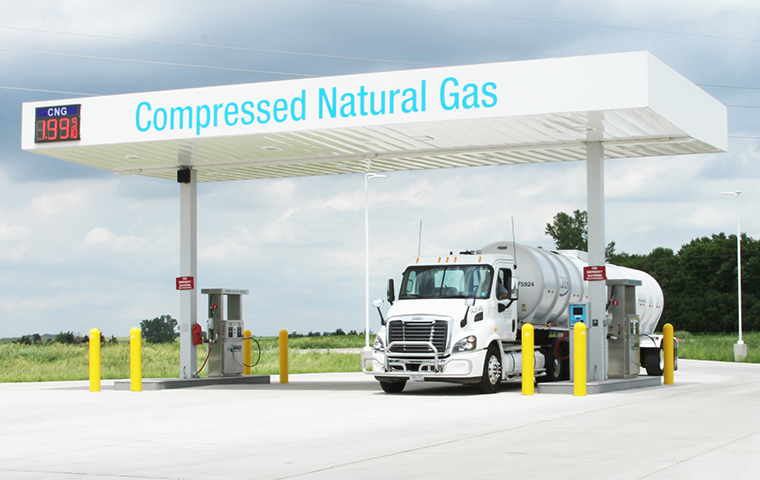
Nigeria’s drive to deepen the adoption of Compressed Natural Gas as an alternative transport fuel has taken a further step, with the Federal Government attracting over $791.49m in investments between May and June 2025.
According to The PUNCH, it has also ramped up its push for compressed natural gas adoption in the transport sector, mobilising over $980m in investments and deploying more than 100,000 CNG kits within 12 months as part of the Presidential CNG Initiative.
This was disclosed in a document obtained from the Presidential Initiative on Compressed Natural Gas Secretariat on Wednesday in Abuja.
ALSO READ: Dangote Cement to Commission 3Mta Grinding Plant in Côte d’Ivoire
“Between May and June 2025 alone, we mobilised over $791.49m in private sector investments into the CNG ecosystem, covering infrastructure, conversion kits, logistics, and platforms. This surge reflects growing investor confidence in Nigeria’s clean energy transition and the bankability of the PCNGI model.”
“This sharp rise in investment is a direct result of renewed investor confidence, stronger policy direction, and proof of concept seen in the ongoing nationwide deployment,” it said.
The document revealed that over 1,440 vehicles have so far been converted across 20 states, with 807 CNG-powered buses and over 5,000 tricycles procured to deepen clean energy adoption and reduce transportation costs.
The Federal Government also plans to facilitate the conversion of one million vehicles and train at least 25,000 autogas technicians by 2027, with 250,000 new bi-fuel vehicles expected to hit the roads within that period.
Describing fuel subsidy as an “albatross”, the PCNGI noted that Nigeria had spent about N1tn on petrol subsidies in 2023, despite sitting on vast gas reserves.
According to the secretariat, “Nigeria continues to subsidise the importation of over 75 million litres of petrol daily despite producing 1.2 million barrels of crude oil per day. The country is sitting on a wealth of natural gas that must be harnessed for sustainable mobility.”
So far, 65 mother refuelling stations and 300 new conversion centres have been deployed nationwide, with 260 in advanced development, while 175 daughter stations are under construction, 30 of which are now operational.
The initiative, which operates under the Office of the Special Adviser to the President on Energy, is being powered by partnerships with state governments, private investors, and financiers such as NIPCO Gas and the Ministry of Finance.
Breakdown of recent procurement activities shows that out of 23,845 CNG kits ordered in 2023, 17,346 have been received while 16,672 have already been deployed. In 2024, 27,100 kits and 53,000 cylinders are already in supplier warehouses awaiting delivery. In total, 125,000 vehicle conversions are being targeted this year alone.
A total of 5,213 tricycles and 531 petrol-CNG buses were ordered, with 391 buses and all tricycles already received. Similarly, 40 electric buses have also been delivered.
PCNGI is currently active in 20 states with another 11 expected to join the national gas mobility footprint within the next six to nine months. The initiative targets 1,000 auto-gas conversion workshops by 2027, with a capacity to convert 250,000 vehicles annually and create over 300,000 indirect jobs.
“The goal is not only cleaner, cheaper fuel but also economic empowerment,” the secretariat stated. “Already, over 5,500 conversion technicians have been trained, and over five incentive programmes have been launched, including fare reduction, refuelling on-lend, and consumer subsidy models.”
In its economic impact outlook, PCNGI projects a CO₂ emissions reduction of over 57 per cent and cumulative fuel cost savings of more than N500bn if fully implemented.
The report also flagged infrastructure and gas availability as key challenges but noted that “proactive planning, strong teams, rapid response, and clear policy direction” have mitigated early risks.
“Only one incident during adoption is too much,” it warned. “Safeguards must be guided by strict quality control, technology-based monitoring, and effective enforcement.”
With global natural gas vehicle penetration led by China, Iran, and India, the federal government is banking on CNG to revolutionise mass transit, inter-city and intra-city transportation, and reduce the impact of fuel deregulation.
Already, standards for refuelling, engine compatibility, and vehicle conversions have been launched with the Standards Organisation of Nigeria, while the Nigeria Gas Vehicle Monitoring System is under development.






Joseph Ambakederimo, convener of the South-South Reawakening Group, has questioned the accountability of Nigeria’s crude oil forward sales, demanding clarification on the volume of crude lifted, outstanding balances and the use of upfront payments.
Speaking during an interview on Arise TV on Sunday, Ambakederimo expressed concern over the monitoring of crude oil transactions, questioning who was responsible for tracking deliveries and providing feedback on the arrangements.
“We don’t even know who is monitoring and giving us the feedback of the barrels of crude that have been lifted on forward sales basis,” he said.
SEE MORE: South-South Group Opposes Coastal Road Alignment With East-West Road
He challenged the Nigerian National Petroleum Company Limited (NNPC) to provide details of the transactions, including the quantity of crude already lifted, the outstanding balance and whether the agreed deliveries had been completed.
“Today, can we get this from NNPC? How much have they lifted? What is the balance remaining? Have they been completed?” he asked.
Ambakederimo also questioned how the money collected upfront under the arrangements had been spent, demanding an explanation of its use.
“That money that was collected upfront, what was the use of the money? Can you justify it?” he asked.
He argued that Nigeria should make better use of its natural resources to accelerate infrastructure development and improve living conditions.
Citing land reclamation projects in the United Arab Emirates, Ambakederimo said Nigeria could explore similar opportunities to create additional land for residential and other developments.
He recalled seeing a signpost while travelling from Dubai to Abu Dhabi describing a project to reclaim land from the sea, using the example to highlight the development possibilities he believes Nigeria could explore.
The South-South Reawakening Group convener also argued that Nigeria could reclaim land in suitable areas, provided environmental concerns were properly managed.
He called for the country to translate its natural resource wealth into infrastructure and improved living conditions, stressing the need for greater accountability in crude oil transactions.
Oil output from the United Arab Emirates (UAE) rose to record levels in September, underscoring its resilience even amidst the Middle East crises and liberation from OPEC+ limits.
The International Energy Agency (IEA) issued the data in its monthly report, adding that Abu Dhabi raised total oil production, including condensates, by 400,000 bpd to 5.3 MMbpd.
According to the IEA, the UAE bolstered crude output to more than 4.4 MMbpd, nearing its maximum capacity, which surpasses the previous highs for total oil in August, and crude oil in June.
READ ALSO: Africa’s Energy Security Conversations Pull Industry Executives Together
The UAE has been one of the most successful among regional producers in restoring flows through the Strait of Hormuz, by drawing on a fleet of tankers to discreetly shuttle cargoes through the chokepoint and then transfer them onto other vessels. In addition, the country’s decision to leave the Organization of the Petroleum Exporting Countries (OPEC) as of May has freed it from the group’s output caps, a source of frustration for years.
Its gains contributed to a wider recovery in flows from Gulf producers, which reached more than 75% of pre-war levels in September, led by Saudi Arabia, according to the Paris-based IEA.
Still, it’s unclear how far the regional rebound has withstood a new wave of Iranian attacks on tankers transiting Hormuz, and escalating hostilities carried out by the Houthi rebel faction in Yemen.
The UAE depleted its observable above-ground inventories at a record pace of more than 270,000 bpd in September, drawing them to an all-time low, according to the IEA.
Africa’s gas potential and strengthening the continent’s energy security would take centre stage at the Africa Interviews Sustainability Forum (AISF 2026) scheduled for Wednesday, October 21, in Lagos.
Biztellers reports that top officials of Oando Plc and Renaissance Africa Energy Company Limited, Ayotola Jagun and Tony Attah, respectively, will be leading other industry leaders in the discussion.
Jagun, Oando’s Executive Director, Chief Corporate Services and Sustainability Officer, and Attah, Managing Director and Chief Executive Officer of Renaissance Africa Energy Company Limited, will participate in a panel discussion alongside Lamé Verre of Lean In Equity & Sustainability (LiNES) and Dapo Filani, Managing Director and Chief Executive Officer of Waltersmith.
The panel will examine Africa’s energy security and the role of natural gas in the continent’s energy transition.
READ ALSO: 30 Nigerians Bag Postgraduate Scholarship from NNPC Ltd, Eni
The forum, launched in 2024, is holding its third edition under the theme, “Energy Security and Africa’s Energy Transition: Defining the Role of Gas.”
This year’s gathering will explore how African countries can strengthen energy security, attract investment in gas development and balance growing energy demand with sustainability objectives.
Verre, a London-based energy and sustainability executive, is Co-founder and Chair of the Advisory Board of LiNES. She will bring her international experience in sustainability, decarbonisation and low-carbon development to the discussion. Her work spans low-carbon initiatives across sectors, including marine, the built environment, forestry, land and agriculture.
Jagun brings extensive experience in corporate governance, regulatory compliance, enterprise risk management and sustainability. Her contribution will provide a corporate sustainability and governance perspective on the relationship between energy development, environmental responsibility and Africa’s transition priorities.
Attah, a former Managing Director and Chief Executive Officer of Nigeria LNG Limited, has extensive experience in the oil and gas industry, particularly in natural gas development and major energy operations.
Filani leads Waltersmith, an indigenous Nigerian energy company with interests across the oil and gas value chain. His participation will highlight the role of indigenous energy companies in strengthening domestic energy capacity and supporting economic development.
The panel will consider what is required to unlock greater investment in Africa’s gas sector, how natural gas can support industrial growth while advancing sustainability, and what practical measures could help translate the continent’s energy ambitions into tangible outcomes.
Beyond the panel discussion, AISF 2026 will provide opportunities for engagement among senior energy executives, policymakers, investors and business leaders.





APC Campaign Council Sets Inaugural Meeting for Tuesday Ahead of Kaduna Flag-Off

Renaissance Capital Sees Significant Upside in Dangote Refinery, Lifts Valuation by 33.4%

Dangote Refinery IPO Elicits Participation in 90 Countries Globally

Makinde Fires Back at Presidency, Insists on ₦9tn NLNG Dividend Shortfall

‘NELFUND Is Not an Excuse for School Fees Hikes’ – NANS Warns Universities

NANS Threatens to Shut Down AE-FUNAI Over School Fees Hike

Trump’s Family Unveils New Cryptocurrency Platform

Senate Denies Receiving Petitions Against Tinubu’s Ambassadorial Nominees

Dangote Cement Lights Up Benue Host Communities With CSR Initiatives

Reps Recommend 3-year Jail Term For Aviation minister

Tems Sets New Record On Billboard Hot 100 Chart

i1f95i
he blog was how do i say it… relevant, finally something that helped me. Thanks
This design is wicked! You obviously know how to keep a reader amused. Between your wit and your videos, I was almost moved to start my own blog (well, almost…HaHa!) Great job. I really loved what you had to say, and more than that, how you presented it. Too cool!
You need to participate in a contest for probably the greatest blogs on the web. I will recommend this website!
Its good as your other articles : D, thanks for putting up.
Greetings! Very helpful advice on this article! It is the little changes that make the biggest changes. Thanks a lot for sharing!
You really make it seem so easy with your presentation but I find this topic to be actually something which I think I would never understand. It seems too complex and very broad for me. I am looking forward for your next post, I’ll try to get the hang of it!
I believe that is one of the such a lot significant info for me. And i’m satisfied studying your article. But want to commentary on few general things, The website taste is wonderful, the articles is actually excellent : D. Just right process, cheers
It is truly a nice and useful piece of information. I’m happy that you shared this useful information with us. Please stay us informed like this. Thanks for sharing.
fantastic post, very informative. I’m wondering why the opposite experts of this sector do not notice this. You must continue your writing. I am confident, you have a great readers’ base already!
Hi my friend! I wish to say that this article is awesome, nice written and include approximately all important infos. I’d like to see more posts like this.
This is a topic close to my heart cheers, where are your contact details though?
Hey this is somewhat of off topic but I was wanting to know if blogs use WYSIWYG editors or if you have to manually code with HTML. I’m starting a blog soon but have no coding skills so I wanted to get advice from someone with experience. Any help would be greatly appreciated!
Helpful information. Fortunate me I discovered your web site by accident, and I am shocked why this coincidence didn’t took place in advance! I bookmarked it.
Hey there! I know this is kinda off topic however , I’d figured I’d ask. Would you be interested in exchanging links or maybe guest authoring a blog article or vice-versa? My site covers a lot of the same subjects as yours and I believe we could greatly benefit from each other. If you happen to be interested feel free to shoot me an email. I look forward to hearing from you! Awesome blog by the way!
Magnificent website. Plenty of useful info here. I’m sending it to some friends ans also sharing in delicious. And of course, thanks in your sweat!