
Business
NUPRC Resorts to Technology to Reduce Emissions by 60%

As part of efforts to achieve Nigeria’s 60 percent methane emissions reduction target by 2035, a technology-driven platform designed to improve methane monitoring, reporting and regulatory enforcement, the Nigerian Oil and Gas Industry Emission Tracker (NOGIET), has been handed over to the Nigerian Upstream Petroleum Regulatory Commission (NUPRC).
The Commission Chief Executive of the NUPRC, Oritsemeyiwa Eyesan, performed the handing over of NOGIET at the Commission’s headquarters in Abuja.
This was revealed in a statement the NUPRC Head of Media and Corporate Communications, Eniola Akinkuotu, issued on Thursday.
According to the statement, the Executive Commissioner, Health, Safety, Environment and Community (HSEC), Captain John Tonlagha, who represented the Chief Executive, disclosed that the initiative forms part of the Commission’s efforts to intensify the implementation of its 2022 Guidelines for the Management of Fugitive Methane and Greenhouse Gas Emissions in the Upstream Oil and Gas Sector.
READ ALSO: U.S. to Tweak LNG Safety Rules for Foreign Markets
The guidelines require operators to transition from estimation-based to measurement-based emissions reporting by the first quarter of 2027.
Eyesan said the platform aligns with the Commission’s digital transformation agenda and Nigeria’s broader commitment to reducing methane emissions, eliminating routine gas flaring and achieving net-zero emissions by 2060.
“NOGIET integrates satellite-based methane plume detection, regulatory mapping of oil blocks and pipelines, and facility-level emissions measurements to help regulators identify emission hotspots, detect discrepancies in reported data, prioritise inspections and strengthen compliance monitoring,” the CCE said.
She emphasised that the effective integration of NOGIET into the Commission’s regulatory monitoring and data management systems would strengthen the credibility, consistency and reliability of emissions data.
The platform was developed through a partnership involving the Stakeholder Democracy Network (SDN), with financial and technical support from the Global Methane Hub (GMH).
It is designed for use by both the NUPRC and the Nigerian Midstream and Downstream Petroleum Regulatory Authority (NMDPRA), promoting a coordinated approach to methane management across the oil and gas sector.
Eyesan commended the Global Methane Hub for its financial and technical support and SDN for its leadership, coordination and commitment to delivering the initiative.
In his remarks, the Board Chairman of SDN, Inemo Samiama, noted that the platform’s ability to compare satellite observations with facility-level measurements would help regulators identify potential discrepancies and take evidence-based enforcement action. EyeSamiama said, “SDN hands over NOGIET in full, front end and back end, at no cost to the Commission.
The platform will move from its temporary home at nogiet.ng to the Commission’s own subdomain. Because methane does not stop at the boundary between upstream and downstream, NOGIET is designed as one platform for the whole oil and gas sector.”




Nigeria must be surefooted to attract the right investment to harness her full potential in the oil and gas industry.
At the 32nd Nigerian Economic Summit (NES) during a panel session titled, “Unlocking Nigeria’s Oil Potential: The Push for More Oil”, in Abuja, the Managing Director and Chief Executive Officer of NLNG, Adeleye Falade, decried the lack of certainties in the investment environment in Nigeria’s oil industry.
He traced Nigeria’s inability to attract sufficient financing for major oil and gas projects to uncertainties over investment terms, project execution and guaranteed markets for output.
According to Falade, investors and lenders must be confident that contractual agreements will be honoured, projects will deliver as planned and buyers will be available to purchase production before committing billions of dollars to capital-intensive energy developments.
READ ALSO: OTL Africa Urges ECOWAS to Adopt Regional Standardisation
He cited the financing of NLNG’s Train 7 expansion as evidence that investment certainty, a proven delivery record and credible commercial agreements could unlock substantial funding, even under challenging global economic conditions.
Falade explained that projects requiring huge upfront capital and 20 to 30 years to recover investments depend on confidence that the terms underpinning them will remain stable throughout their lifespan.
According to him, lenders assess not just the quality of an oil or gas resource but also the durability of the investment framework, the predictability of future earnings and the capacity of project sponsors to meet their obligations.
Falade pointed to the $3 billion in external financing secured from 31 local and international financial institutions for Train 7 in 2020, at the height of the COVID-19 pandemic, as proof of the importance of a credible investment proposition.
The project is being financed through a combination of internally generated cash flows and external funding, underpinned by NLNG’s record of developing six operating trains and repaying the loans used to finance their construction.
He said that track record gave lenders tangible evidence of the company’s capacity to execute complex projects and honour financial commitments, reducing the uncertainty that often discourages investment in capital-intensive developments.
He noted that each successful expansion strengthened NLNG’s credibility and positioned it to secure subsequent financing on more competitive terms.
He identified three fundamental questions that lenders seek answers to before financing major energy projects: “Who buys the product? Who carries the risk? Who stands behind the project?”
For NLNG, he said, long-term sales and purchase agreements, some spanning 20 years, provide the commercial foundation required to secure funding before a final investment decision is taken.

A call has gone to West African countries to adopt uniform fuel specifications, strengthen testing capacity, address infrastructure gaps and improve enforcement systems to facilitate more effective regional petroleum trade.
This formed the bulk of the submission of petroleum regulators at a panel session during the 20th OTL Africa Downstream Energy Week that ended in Lagos.
It is the considered opinion of the regulators that inconsistencies in standards across the region remain a huge disservice to fair competition. Therefore, they expressed a common view that putting in place an acceptable standard will ensure a harmonised fuel quality, improve infrastructure and stronger regulatory coordination which will facilitate cross-border trade and reduce market barriers across the region.
Speaking at the session themed: “Regulatory Convergence in African Oil and Gas Markets,” the Authority Chief Executive (ACE), Nigerian Midstream and Downstream Petroleum Regulatory Authority (NMDPRA), Rabiu Umar, argued that differences in fuel specifications across countries made it difficult to compare products and ensure fair competition.
READ ALSO: NUPRC Resorts to Technology to Reduce Emissions by 60%
For instance, he explained that the disparity between diesel specifications of 50 parts per million (ppm) and 1,500 ppm, presents a complication in efforts to harmonise standards across the region.
To this end, the ACE said the sub regional countries needed common product specifications and coordinated production rules to facilitate trade and promote competition.
Umar also advocated the establishment of a West African reference price for petroleum products, saying regional markets needed to strengthen trade among African producers.
On his part, the Chief Executive Officer of Ghana’s National Petroleum Authority (NPA), Godwin Tameklo, said that inadequate infrastructure was a major constraint to regional petroleum trade.
According to him, countries needed to address infrastructure gaps, regulatory differences and market constraints to improve the cross-border movement of petroleum products.
For instance, he disclosed that Ghana’s port and storage facilities could not always accommodate volumes delivered by larger vessels, forcing operators to consider smaller shipments or alternative arrangements.
Tameklo also stressed the need for clear implementation timelines to ensure that regional harmonisation initiatives translated into practical results.
In a similar vein, the Director of Water, Petroleum and Electricity at The Gambia’s Public Utilities Regulatory Authority (PURA), Musa Njie, highlighted the importance of laboratory facilities in testing petroleum product quality.
Njie identified the absence of a laboratory for petroleum product testing as one of the challenges facing The Gambia, and stressed the need to strengthen national quality assurance systems.
He said that harmonisation efforts should protect public health and the environment while improving market efficiency.
Njie also called for stronger coordination between regional frameworks and national regulatory institutions to ensure effective implementation of agreed standards.
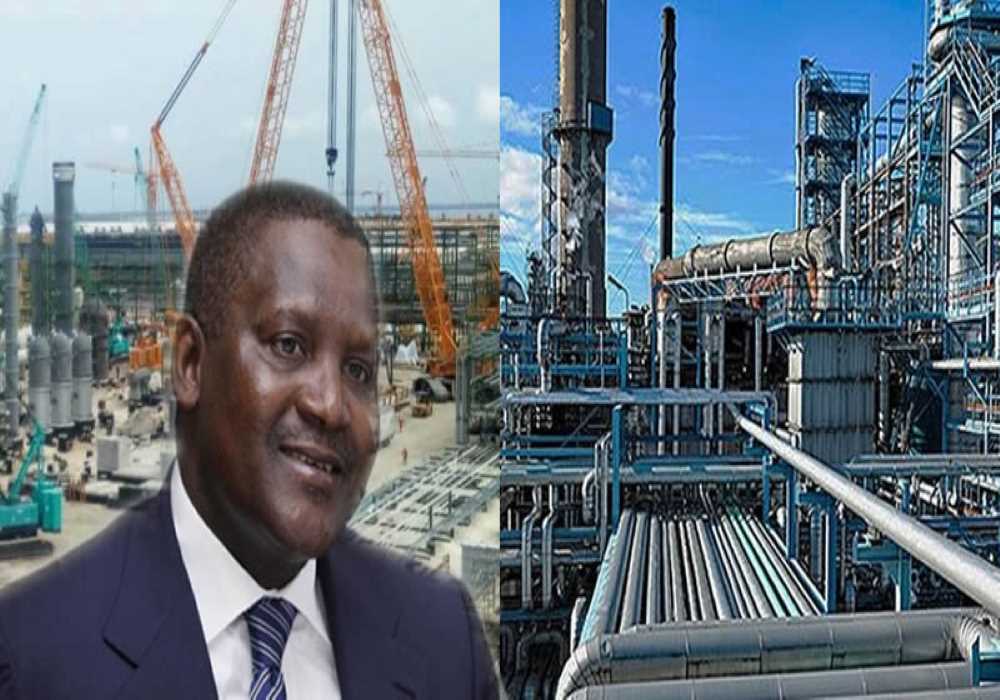
The Dangote Petroleum Refinery and Petrochemicals (DPRP) has successfully concluded its landmark Initial Public Offering (IPO), attracting investor applications from 120 countries across the world, including all of Africa’s 54 countries.
A company statement describes it as an unprecedented demonstration of the continent’s capacity to mobilise capital and broaden ownership of strategic industrial assets.
The historic offering, widely described as The People’s IPO, achieved 100 percent geographical coverage of Africa, bringing together investors from across the continent and beyond in a transaction that could redefine the scale, accessibility and international reach of African capital markets.
READ ALSO: Dangote Refinery Pioneers Honeywell’s AI Technology
More than a conventional fundraising exercise, the IPO has emerged as a landmark in financial inclusion, demonstrating how digital technology, coordinated financial institutions and innovative distribution channels can connect millions of potential investors to opportunities previously dominated by institutional and high-net-worth participants. The transaction was supported by an extensive network of commercial banks, stockbroking firms, fintech platforms, capital market institutions and distribution partners, whose collaboration expanded access to the offer across national boundaries and created new pathways for retail participation.
For the Dangote Industries Limited (DIL), the conclusion of the IPO marks a defining moment in its industrial journey, transforming the refinery’s ownership proposition from an investment driven by a single entrepreneurial vision into an opportunity for broader African participation. President and Chief Executive of the DIL, Aliko Dangote, described the outcome as a powerful affirmation of African confidence, enterprise and the continent’s ability to mobilise its own resources for development.
“When we set out to build this refinery, many doubted that a project of this scale could be delivered by Africans. We proved that Africa could build it. Today, through this historic IPO, we have demonstrated something equally important: Africans are ready to own and participate in the prosperity created by their own industries.
“To have investor applications from all 54 African countries is deeply significant to me. It tells us that our people do not simply want to consume what Africa produces; they want to invest in it, own it and share in its future. This is the Africa we have always believed in,” he said. “We did not undertake this IPO simply because we needed to raise capital. We wanted to open the doors of ownership, give ordinary Africans an opportunity to participate in an enterprise of global significance and establish a new culture of shared prosperity. The refinery was built in Africa, by African determination, and its future must create opportunities for Africans. Today, we have made history together. But the greater achievement will be the generation of African investors, entrepreneurs and industrialists that this transaction inspires. Our ambition is not merely to build successful businesses. It is to help build a prosperous, self-reliant Africa whose people are participants in its economic destiny. As we advance our expansion programme and Vision 2030 strategy, we remain committed to strengthening our operational performance, deepening our contribution to Africa’s energy security and building an enterprise that rewards the confidence placed in it”
The IPO’s geographical reach is particularly significant for a continent where capital markets have historically been fragmented by national boundaries, differing regulatory environments and limited retail investor participation. By attracting applications from all 54 African countries, the transaction has demonstrated the potential for a more connected investment ecosystem in which Africans can participate in major industrial opportunities beyond their domestic markets. The offering also highlights the growing importance of digital financial infrastructure in widening investment access. Through partnerships involving traditional financial institutions and technology-driven investment platforms, the transaction created multiple channels through which eligible investors could express interest and submit applications.
Managing Director and Chief Executive Officer of DPRP, David Bird, said the international response reflected confidence in the refinery’s operating capabilities, industrial scale and long-term growth prospects.
“The successful conclusion of this IPO is a remarkable milestone for Dangote Petroleum Refinery and Petrochemicals. Investor applications spanning 120 countries demonstrate the extraordinary international interest in our business and the confidence that investors are placing in the future of this refinery. We have built one of the world’s most significant refining and petrochemical complexes, and our focus remains on translating that industrial scale into operational excellence, sustainable growth and long-term shareholder value,” he said. “What makes this transaction particularly meaningful is the breadth of participation. The opportunity to own a stake in a major African industrial enterprise has reached investors across every African country and all six inhabited continents. That is a powerful endorsement of the refinery’s potential and of Africa’s growing relevance in global investment markets.”
The refinery’s IPO opened on September 14, 2026, offering 4.1 billion ordinary shares at N525 per share, representing a proposed capital raise of approximately N2.15 trillion. Initially scheduled to close on October 13, the offer was extended to October 27 following approval by the Securities and Exchange Commission, allowing additional time for investors across Africa and other international markets to participate. The extension reflected the Group’s stated ambition to prioritise the breadth of ownership alongside the financial objectives of the transaction. Beyond the industrial significance of the refinery itself, the IPO has also established a model for collaboration across Africa’s financial services ecosystem. Its distribution network brought together institutions operating across banking, securities trading, financial technology and investor engagement, demonstrating how coordinated infrastructure can expand access to large-scale investment opportunities.
On his part, the Group Chief Financial Officer, DIL, Murat Erden, on the execution and wider significance of the offering, said the transaction had established an important precedent for the continent’s capital markets.
“The Dangote Refinery People’s IPO represents much more than a landmark capital-raising exercise. It marks a defining moment in the evolution of African capital markets, demonstrating our continent’s ability to mobilise domestic savings, connect investors across borders and broaden ownership of strategic industrial assets. Reaching investors in 120 countries, including all 54 African nations, is an extraordinary achievement and a powerful testament to the growing investment appetite across our continent. By bringing together banks, capital market institutions, stockbrokers, fintech platforms and innovative digital distribution channels, we have demonstrated that African capital markets can transcend national boundaries and connect millions of people to investment opportunities previously beyond their reach,” he said. “Importantly, this transaction is underpinned by exceptional industrial and financial fundamentals. With US22.5 billion in revenue and US5.52 billion in EBITDA in the first nine months of 2026, Dangote Refinery combines world-class industrial scale, strong profitability and significant long-term growth potential. Our greatest achievement is not simply the capital we mobilise, but the doors we open and the foundation we lay for future generations of African investors, entrepreneurs and businesses. We believe the People’s IPO will be remembered not only as a landmark transaction in African capital market history, but as a blueprint for a more inclusive, interconnected and globally competitive African financial ecosystem — one in which Africans increasingly finance, own and share in the prosperity created by their continent’s industrial transformation.”
The successful conclusion of the offer comes as Dangote Petroleum Refinery and Petrochemicals pursues an ambitious programme to expand its refining and petrochemical operations, strengthen its distribution network and support greater energy security across Africa. Located in Lagos, the refinery represents one of the continent’s largest private industrial investments and a major effort to reduce dependence on imported refined petroleum products while building domestic processing capacity.






NLNG: Nigeria’s Oil Ambitions Require Investor Guarantees
OTL Africa Urges ECOWAS to Adopt Regional Standardisation

No Deal to Share Legislative or LG Seats with APC – Adeleke

NUPRC Resorts to Technology to Reduce Emissions by 60%

U.S. to Tweak LNG Safety Rules for Foreign Markets

2027 Election: Allowing Sowunmi’s Wife to Head INEC Electoral Operations Is ‘Rigging Beforehand’ — Okonkwo

Trump’s Family Unveils New Cryptocurrency Platform

Senate Denies Receiving Petitions Against Tinubu’s Ambassadorial Nominees

Dangote Cement Lights Up Benue Host Communities With CSR Initiatives

Reps Recommend 3-year Jail Term For Aviation minister

Tems Sets New Record On Billboard Hot 100 Chart
