
Business
OTL Africa Urges ECOWAS to Adopt Regional Standardisation


A call has gone to West African countries to adopt uniform fuel specifications, strengthen testing capacity, address infrastructure gaps and improve enforcement systems to facilitate more effective regional petroleum trade.
This formed the bulk of the submission of petroleum regulators at a panel session during the 20th OTL Africa Downstream Energy Week that ended in Lagos.
It is the considered opinion of the regulators that inconsistencies in standards across the region remain a huge disservice to fair competition. Therefore, they expressed a common view that putting in place an acceptable standard will ensure a harmonised fuel quality, improve infrastructure and stronger regulatory coordination which will facilitate cross-border trade and reduce market barriers across the region.
Speaking at the session themed: “Regulatory Convergence in African Oil and Gas Markets,” the Authority Chief Executive (ACE), Nigerian Midstream and Downstream Petroleum Regulatory Authority (NMDPRA), Rabiu Umar, argued that differences in fuel specifications across countries made it difficult to compare products and ensure fair competition.
READ ALSO: NUPRC Resorts to Technology to Reduce Emissions by 60%
For instance, he explained that the disparity between diesel specifications of 50 parts per million (ppm) and 1,500 ppm, presents a complication in efforts to harmonise standards across the region.
To this end, the ACE said the sub regional countries needed common product specifications and coordinated production rules to facilitate trade and promote competition.
Umar also advocated the establishment of a West African reference price for petroleum products, saying regional markets needed to strengthen trade among African producers.
On his part, the Chief Executive Officer of Ghana’s National Petroleum Authority (NPA), Godwin Tameklo, said that inadequate infrastructure was a major constraint to regional petroleum trade.
According to him, countries needed to address infrastructure gaps, regulatory differences and market constraints to improve the cross-border movement of petroleum products.
For instance, he disclosed that Ghana’s port and storage facilities could not always accommodate volumes delivered by larger vessels, forcing operators to consider smaller shipments or alternative arrangements.
Tameklo also stressed the need for clear implementation timelines to ensure that regional harmonisation initiatives translated into practical results.
In a similar vein, the Director of Water, Petroleum and Electricity at The Gambia’s Public Utilities Regulatory Authority (PURA), Musa Njie, highlighted the importance of laboratory facilities in testing petroleum product quality.
Njie identified the absence of a laboratory for petroleum product testing as one of the challenges facing The Gambia, and stressed the need to strengthen national quality assurance systems.
He said that harmonisation efforts should protect public health and the environment while improving market efficiency.
Njie also called for stronger coordination between regional frameworks and national regulatory institutions to ensure effective implementation of agreed standards.

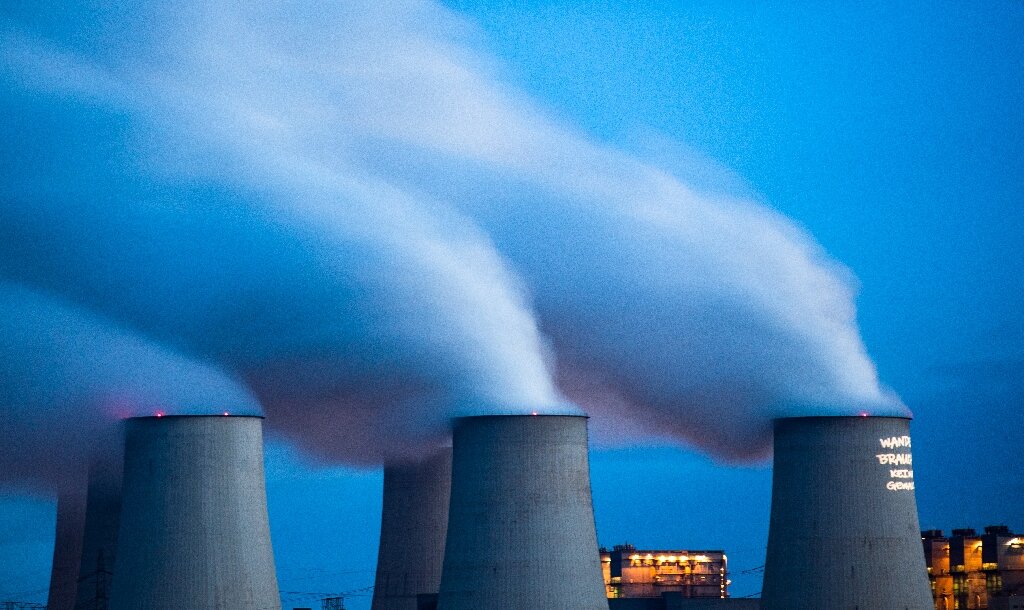




Deployment of advanced technology, sustained exploration and local expertise have led to improved hydrocarbon discovery around a local oil player’s operating assets, strengthening prospects for unlocking new oil and gas reserves in Nigeria.
Renaissance Africa Energy Company Limited made the disclosure following its recent JK-004 exploration success in Oil Mining Lease (OML) 74, where it confirmed multiple light-oil-bearing reservoirs close to existing infrastructure.
The company made this known at the 44th Annual International Conference and Exhibition of the Nigerian Association of Petroleum Explorationists (NAPE), held in Lagos, where it also received three awards for its participation.
Renaissance’s Vice President, Exploration, Dr Johnbosco Uche, said the JK-004 discovery demonstrated that mature basins still hold significant opportunities when supported by strong subsurface knowledge, technology, disciplined investment and effective execution.
“The real lesson from JK-004 is that discovery should not be the finish line. We should be thinking about delivery before the exploration well is drilled,” Uche said during a fireside chat titled, “From Discovery to Delivery: Leadership Lessons in Unlocking Nigeria’s Next Billion Barrels.”
READ ALSO: EFCC Arraigns Woman over Alleged N1.1 bn NNPC Ltd Appointment Fraud
He said Nigeria’s oil and gas industry must increasingly integrate exploration decisions with development and commercial considerations to translate the country’s resource potential into additional production.
The NAPE conference was themed, “Unlocking More Barrels: Driving Reserves Growth through Exploration, Local Capabilities and Adaptive Technology.”
Uche said Renaissance’s strategy aligned with the conference theme, highlighting the company’s focus on exploration, technology deployment, talent development and strengthening indigenous technical capabilities.
At the conference exhibition, Renaissance showcased technologies and data-driven approaches deployed to optimise asset performance and identify additional hydrocarbon opportunities.
The company received the Overall Best Exhibitor award and Best Company with Novel Technology award, while emerging First Runner-Up for Best Technical Paper Presentation.
Renaissance said the awards reflected its commitment to technical excellence, innovation and operational performance.

The social impact vehicle of Sahara Group, the Sahara Group Foundation (SGF), has commissioned its 23rd Sahara Go Recycling Hub at the Sam Ethnan Air Force Base in Ikeja, Lagos.
Biztellers reports that this reinforces the group’s commitment to environmental sustainability, community empowerment and inclusive economic growth.
The new hub advances the SGF’s efforts to transform recyclable waste from an environmental liability into an economic asset, creating income opportunities for households through targeted waste-to-wealth programmes.
It also marks another step towards strengthening sustainable waste recovery systems and empowering host communities across Nigeria.
READ ALSO: WEC Points Investors to Gas Infrastructure in Africa
Speaking at the commissioning ceremony, Director of Sahara Group Foundation, Chidilim Menakaya, highlighted the Foundation’s continued investment in practical, community-focused solutions that deliver lasting environmental and socio-economic benefits.
“This initiative aligns with our sustainability and development priorities by transforming waste into valuable resources, reducing environmental impact, supporting climate action and creating livelihood opportunities. It demonstrates how communities can advance environmental responsibility while promoting inclusive economic growth,” she said.
Air Commodore M.A. Imam, Commander of 651 Base Services Group, commended the Foundation’s investment in environmental sustainability and emphasised the importance of collective action in addressing waste management challenges in rapidly growing communities.
Also speaking, Kingsley Okotie, Head of Corporate Communications at Ikeja Electric, said the company was delighted to join forces with the SGF to promote responsible environmental stewardship and sustainability at the Air Force base.
He reaffirmed Ikeja Electric’s commitment to building sustainable relationships, enhancing seamless power supply, and supporting the well-being of customers, institutions, businesses and communities.
Reiterating the Foundation’s broader vision, Menakaya noted that Sahara Go Recycling demonstrates the transformative potential of collective action in building cleaner, more resilient communities.
“Through collaboration, innovation and community participation, we are driving long-term environmental impact while improving livelihoods and strengthening community ownership of sustainable practices,” she added.
The ceremony brought together representatives of Sahara Group and Sahara Group Foundation, the Commandant of 651 Base Services Group, Sam Ethnan Air Force Base, Air Force officials, community leaders, volunteers and residents, reflecting the importance of collaboration in delivering sustainable solutions.
Since its inception, Sahara Go Recycling has facilitated the recycling of more than 1,000 tonnes of recyclable waste and directly and indirectly supported over 2,000 livelihoods across collection, sorting, logistics and community-based enterprise activities.
Through strategic partnerships and community engagement, the initiative continues to promote recycling, unlock economic value from waste and encourage sustainable lifestyles.
It was gathered that the SGF will continue expanding the Sahara Go Recycling in line with its mission of building sustainable communities through EXTRApreneurship.

Verdant Capital, the pan-African private capital investment manager and investment bank, has been recognised twice at the 2026 Africa Global Funds (AGF) Awards, winning Best Advisory Firm – Private Equity – Pan-Africa and SME Financier of the Year.
The awards build on a consistent run of AGF recognition. Verdant Capital was named AGF’s Best Advisory Firm -Private Equity in each of 2022, 2023, 2024 and 2025, and retains the SME Financier title it first won in 2025. Together, the two accolades recognise both sides of the firm: its corporate finance advisory practice and its investment management business focused on inclusive finance across the continent.
Best Advisory Firm – Private Equity – Pan-Africa
Verdant IMAP advisory practice spans mergers and acquisitions, debt and equity capital raising, financial institutions and restructuring. The firm has transacted in more than 30 African countries, reflecting its extensive pan-African reach and specialist expertise. Between the second half of 2025 and early 2026, Verdant Capital executed notable transactions across M&A, equity and debt.
Highlights from the period include a USD 65 million debt capital raise and offtake arrangement for a gold mining company, a USD 23.4 million equity capital raise for a leading logistics tech company, and the acquisition of a South African chrome mining complex for a leading Indian chemical group. The firm also advised on the acquisition of a South African data centre portfolio and several business sales. The firm has continued to deepen its sector expertise, building a dedicated six-person metals and mining team covering debt, equity, royalty-streaming and offtake arrangements.
The firm was also ranked second in South Africa for M&A advisory to unlisted companies by DealMakers Africa in the first quarter of 2026.
SME Financier
The SME Financier award recognises Verdant Capital’s work through the Verdant Capital Hybrid Fund (VCHF), which provides hybrid capital to inclusive financial institutions across Africa. These institutions serve micro-entrepreneurs at the “bottom of the pyramid” and SMEs in the “missing middle”, with job creation and improved livelihoods forming the fund’s primary development objectives.
VCHF hybrid capital mandate is designed to “crowd in” senior lenders, expanding the overall financing available to local financial sectors and strengthening the African impact investment ecosystem. The fund’s portfolio includes investments in asset financiers, digital lenders and other technology-enabled non-bank financial institutions.
READ ALSO: FG Eyes 167 CNG Stations as Investments Hit $2.6bn
The principal developmental objective of the fund is to create jobs by supporting micro entrepreneurs and SME. The fund recently released its first impact report which reported a total of 316 000 jobs created as per estimates prepared by consultant 60 Decibels.
Impact and governance are central to Verdant Capital’s investment strategy. VCHF is aligned with the 2X Challenge, with women representing 40% of its investment committee and decision-making body. The fund has also joined the 2X Challenge certification pilot programme. Its environmental and social framework, validated by anchor investor KfW, incorporates international standards including the IFC Performance Standards and ILO Core Labour Standards. A dedicated Technical Assistance Facility supports investees in measuring job creation, improving impact measurement and developing gender-smart lending approaches for women-led MSMEs.






Renaissance Unlocks New Oil, Gas Reserves with Technology

Fuel Supply Fears Spike on Renewed Middle East Crisis

EFCC Arraigns Woman over Alleged N1.1 bn NNPC Ltd Appointment Fraud

Adeleke Approves Prince Adewumi Olusola Adeniyi as New Owamiran of Esa-Oke

SGF Commissions Another Go Recycling Hub

WEC Points Investors to Gas Infrastructure in Africa

Trump’s Family Unveils New Cryptocurrency Platform

Senate Denies Receiving Petitions Against Tinubu’s Ambassadorial Nominees

Dangote Cement Lights Up Benue Host Communities With CSR Initiatives

Reps Recommend 3-year Jail Term For Aviation minister

Tems Sets New Record On Billboard Hot 100 Chart
