
Business
Obajana: We Followed Due Process – Dangote

*Says Kogi has no equity interest in firm
By Edozie Obasi-Eze
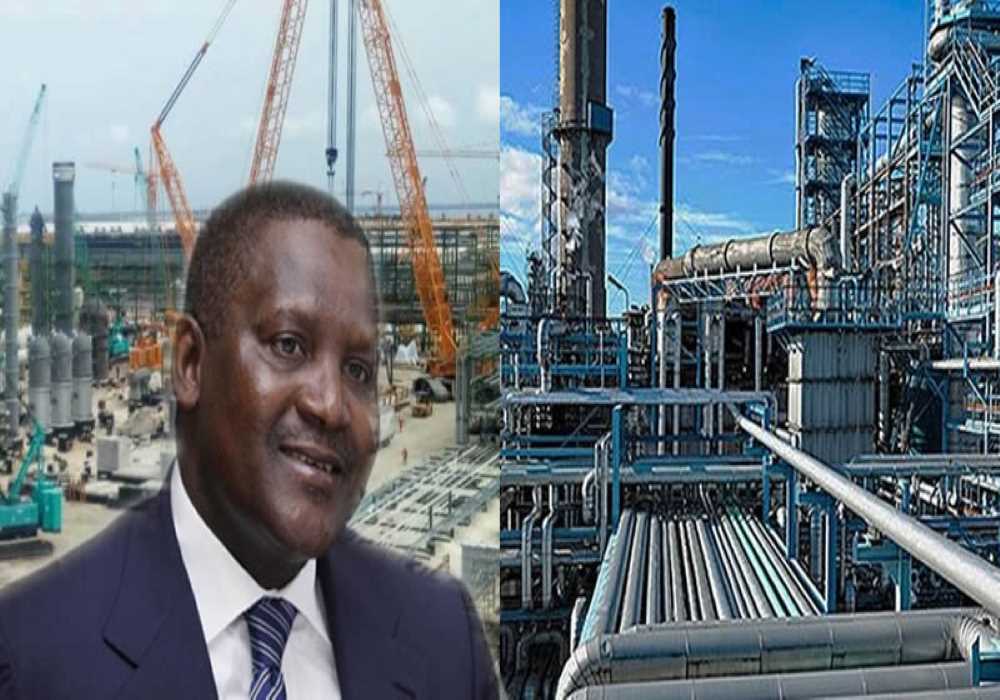
The battle for the soul of Obajana Cement Plc between the Kogi State Government and Dangote Industries Limited, which has seen interventions by the legislature, armed vigilante and other stakeholders is still unravelling.
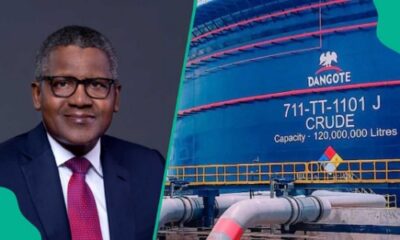
The management of Dangote, on Tuesday night released a statement in which it claimed that it followed due process in its dealing on the cement company, while it has been fulfilling its tax obligations to the KSG.
The corporate communications department of the conglomerate in the statement titled, ‘Obajana Cement Plant: Separating Facts from Fiction.’ That the “Kogi State government has no equity interest in Obajana Cement Plc.”
It also averred it has been paying relevant taxes, levies and charges to the KSG since 2007, when production commenced in the acquired cement plant.
Read also>>>National Honours: Wabote Lauds Sylva for Transforming Oil & Gas industry
The statement read, “This is a statement issued for the sole purpose of addressing the concerns and apprehensions of the stakeholders of Dangote Cement Plc (DCP) especially the over twenty-two thousand people it employs directly, and more indirectly, as well as thousands of contractors, wholesalers, users of our products, our financiers and shareholders.
“At a time of significant economic challenges that we face as a nation, we believe all must be done to keep our economy running effectively, our people employed, businesses that depend on us thriving and not discourage those who take the risks of needed, lawful and significant investments in our economy. The shutdown of our plant has materially jeopardised the economic wellbeing of our country without any regard for its significant consequences.
“Whilst reserving our rights to proceed to arbitration in accordance with the extant agreement, we have reported the unlawful invasion by KSG and the consequential adverse effects of same to all the relevant authorities, including the Federal Government of Nigeria who has now intervened in the matter. It is hoped that the dispute resolution process we have initiated will quickly resolve the disputes and allow us to focus on our business without distraction and continue our significant contribution to our national economy. It is in this context that we state in brief as follows.
“The Obajana Cement Plant is one of the most critical components of economic activity in the nation, being one of the highest taxpayers, and vehicle for one of the largest companies invested in by thousands of Nigerian and foreign investors. Its most important assets are (1) its land, the plant and machinery thereon, and (2) the vast limestone deposit covered by mining leases issued under licence by the Federal Government of Nigeria (FGN).”
“The land on which the Obajana Cement Plant is built was acquired solely by Dangote Industries Limited (DIL) in 2003, well after it had acquired the shares in Obajana Cement Company in 2002, following the legally binding agreement it entered into with KSG to invest in Kogi State. DIL was issued three Certificates of Occupancy in its name after payment of necessary fees and compensation to landowners.
“The plant and machinery were conceived, designed, procured, built, and paid for solely by DIL, again, well after it acquired the shares in Obajana Cement Company. The limestone and other minerals used by the Obajana Cement Plant, by the provisions of the Nigerian Constitution belonged to the Federation, with authority only in the FGN and not the State in which the minerals are situated, to grant licences to extract and mine the resources”, the company explained.
“After the agreement with the KSG, DIL applied for and obtained mining leases over the said limestone from FGN, at its cost and has complied with the terms of the leases since inception. The Government of Kogi State had no minerals to give, had no assets to give, and only invited DIL as most responsible governments do to come into the State and invest in a manner that will create employment, develop the State, and earn it taxes.
“In 1992, the Kogi State Government incorporated Obajana Cement PLC (OCP) as a public limited liability company. Sometime in early 2002, about 10 years after the incorporation of the OCP (which still had no assets or operations as of that time), KSG invited Dangote Industries Limited (DIL) to take the opportunity of the significant limestone deposit in the State by establishing a cement plant in the State.
“Following several engagements and assessment of the viability of the proposed opportunity, DIL agreed that it would establish a cement plant in Kogi State and provide the entirety of the substantial capital required for the investment.
“DIL also agreed, following a specific request by KSG, to use the OCP name (albeit only existing on paper as of that time, and without any assets or operations) for the time being, as the vehicle for this investment. On 30 July 2002, KSG and DIL entered into a binding agreement to document their understanding. The agreement was amended in 2003 and remains binding on, and legally enforceable by, the parties to same.
”It was agreed, inter alia, that: DIL would establish a cement plant with a capacity of 3,500,000 metric tonnes per annum; DIL shall hold 100% of the shareholding in OCP, and source for all the funds required to develop the cement plant; KSG shall have the option to acquire 5% equity shareholding in OCP within 5 years; and KSG shall grant tax relief and exemption from levies and other charges by KSG for a period of seven (7) years from the date of commencement of production.
“Consistent with the terms of agreement, DIL sourced for 100% of the funds that was used to develop the plant without any contribution from KSG. In line with its rights, ensuring alignment with the Dangote Brand, as part of internal restructuring and for better market recognition the name of OCP was changed to Dangote Cement Plc in 2010, and a number of other significant cement companies (such as the Benue Cement Company) owned by DIL were merged with OCP to become the enlarged Dangote Cement Plc.
“DIL assiduously and at significant cost met all the terms of the agreement between it and KSG in relation to OCP. It built the cement factory, much bigger and better than envisaged.
“KSG could not meet its financial obligations of contributing to the funding the plant in any form; neither could KSG fund acquisition of 5% equity shares in OCP when it was asked on a number of occasions to exercise the purchase option.
“KSG also did not meet its obligations to grant waiver of taxes, charges and levies that it could charge the operations, affairs and activities of OCP. Rather despite being entitled (under the terms of the agreement with KSG) to tax relief and exemption from charges and levies by KSG for a period of seven (7) years from the date of commencement of production, OCP (and now DCP) has paid all due sub-sovereign taxes, levies and charges to KSG since it commenced production in 2007.
“KSG does not have any form of investment or equity stake in OCP, so no dividend or other economic and/or shareholding rights whatsoever could have accrued to it from the operations of the company.
“After the agreement between DIL and KSG in 2002, DIL in 2003, applied to KSG for the acquisition of land for the plant site, and this application was granted with the issuance of three Certificates of Occupancy to DIL. DIL to the knowledge of KSG, paid substantive compensation to Obajana Farmland Owners located within the two (2) square kilometres plant site.
“Subsequently, in September 2004, DIL, in good faith, applied to the State Governor for the statutory consent for DIL to assign the plant site to OCP being DIL’s investment vehicle. This consent request was granted by the State Governor and the appropriate consent fees were paid by DIL.
“The investment of DIL in Kogi State through OCP was at the instance of the duly constituted government of Kogi State, done in accordance with the law of the State and all enabling laws in that regard, and the transaction documents were effectively, lawfully and duly executed by the Governor and Attorney General of the State (at the time), after internal approvals were obtained within the government.
“Since the inception of Alhaji Yahaya Bello’s administration in 2016, and regardless that government is a continuum, we have had series of enquiries about the ownership structure of the Dangote Cement PLC as it relates to the alleged interest of KSG; and had several engagements with the officers of the State government including Governor Yahaya Bello. At all of these engagements we have provided all the details and information supported by relevant documents, required by the Government and the State House of Assembly to confirm our lawful investment.
“For instance, in 2017, we were invited by the Judicial Commission of Inquiry, and we made our submission to the commission with relevant documents to support our position. We are yet to receive any feedback from the Judicial Commission of Inquiry. While still waiting to hear of the report of the Inquiry, we were invited by the State House of Assembly on the same matter earlier this year, and again, we provided evidence in support of our position that KSG does not have any equity or other interest in OCP or DCP.
“On Wednesday 5 October 2022, hundreds of dangerously armed men, other than law enforcement officers, attacked our cement plant in Obajana, Kogi State, destroyed our property, inflicted grievous injuries on many of our employees, and shutdown operations at the plant. KSG has admitted that the armed invaders acted on its instructions, and in furtherance of the recent enquiry by the Kogi State House of Assembly in connection with the ownership of the Obajana Cement Plant.
“Curiously, on 6 October 2022, a day after the shutdown of our facility in Obajana on the orders of KSG, Governor Bello addressed the public and announced that a Specialised Technical Committee which was set up as part of the recommendations of the Judicial Commission of Inquiry had just presented its recommendations, which have been accepted by KSG. This statement makes it abundantly clear that the shutdown of DCP’s plant occurred regardless of the Governor’s own confirmation that implementation of the recommendations of the Specialised Technical Committee was still pending.
“Whilst we do not want to speculate on the motivation for the spurious claims being made by KSG in relation to the ownership of the Company, which have resulted in the unfortunate unlawful forcible closure and damage of our plant, and injury of several people, we condemn in strongest possible terms, the unlawful shutdown of our plant by KSG sponsored armed-thugs, the damage to our property (including the looting of large sum of money kept in the office), and grievous injury inflicted on our employees by them.
“This disruption of operations at the plant has caused loss of revenue not only to our company and its customers but has also adversely impacted revenue due to both the Federal and State governments. It has also occasioned loss of jobs for the teeming youths who are daily paid workers that throng our plant for their daily sustenance.
“We implore all our stakeholders, namely shareholders, customers, suppliers, employees, and the entire community of Obajana and Kogi State at large to remain calm while we follow the legitimate and lawful process to resolve this matter. We shall keep our stakeholders duly updated whilst we remain confident that the statutory and contractual rights of DIL shall be upheld by these legal processes which we have initiated.”






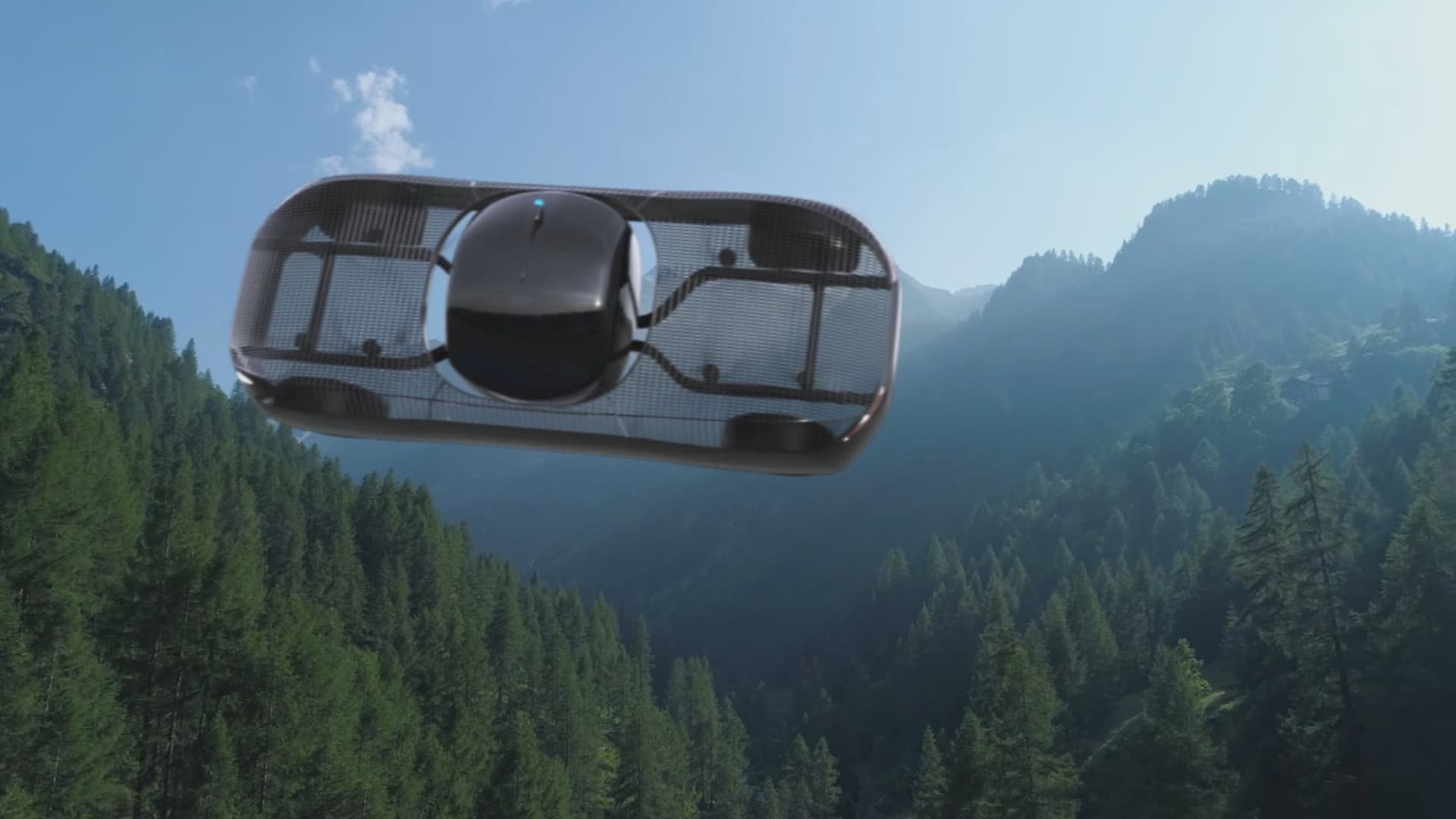
Tesla has set a 2028 commercial production date for its new Roadster sports car that can briefly rise into the air using rocket technology.
According to CNN, the date was revealed when the manufacturers demonstrated its functionality on Thursday at a SpaceX testing facility in Texas, United States, where the two-seater vehicle performed a series of manoeuvres, including driving upside down before making a short airborne movement.
The prototype was operated without a driver during the test, with Musk saying the decision was taken “to make sure we don’t kill anyone.”
“Success is not guaranteed. I mean that. It’ll probably work, but if it doesn’t work, we’re at a safe distance,” he said.
READ ALSO: 2027 Election: ‘Your Future Is More Valuable’ — IGP Warn Youths Against Political Violence
CNN reported that the vehicle uses 10 nozzles and high-pressure air tanks to generate thrust, with Musk claiming it could accelerate from zero to 60 miles per hour in less than a second.
The Tesla boss attributed the development to cooperation between the electric vehicle manufacturer and SpaceX, the rocket company he also leads.
He described the project as “the results of what happens when you have a collaboration with the world’s best car company and the world’s best rocket company.”
Musk also sought to assure spectators that the demonstration was genuine, saying, “We need an audience to prove that it’s not AI or SI. So you guys can tell people you saw it with your eyes, because what you see with your eyes, you will not believe.”
Despite the display, questions remain about whether the vehicle can achieve sustained flight and how practical it would be for everyday transportation.
Roger Conner, curator for vertical flight at the Smithsonian’s National Air and Space Museum, told CNN that combining the requirements of road vehicles and aircraft presented significant engineering challenges.
“Aircraft are extremely sensitive to weight, whereas with ground vehicles you want them to have bumpers and crumple zones and all that,” he said.
“Inevitably, something that is a hybrid between the two is going to be a poor performing aircraft and a poor performing vehicle, and also quite expensive,” he added.
Conner questioned whether the demonstration amounted to flying in the conventional sense.
“We’re not talking about sustained flight. We are literally talking about hopping,” he said.
However, Jim Dukhovny, chief executive of flying car startup Alef, said the technology was achievable, while pointing to the difficulties involved in making such vehicles transition safely from vertical take-off to forward flight.
“It absolutely is 100% feasible,” he told CNN.
“That being said, the hardest part on all eVTOLs, and for us, it’s a transition from (rising) vertical to (moving) forward. It needs to be extremely careful, making sure you do not lose lift, and making sure it’s very stable,” he added.
CNN also reported that Alef’s prototype weighs about 254 pounds, uses eight propellers and is designed to carry one person.
Musk said Tesla intended to begin production of the new Roadster in 2028.
CNN reported that the latest display adds to Musk’s ambitions to push Tesla’s vehicle technology beyond conventional electric cars, although the prototype’s ability to operate as a practical flying vehicle has yet to be established.
The Petroleum Products Retail Outlets Owners Association of Nigeria (PETROAN) has urged the Federal Government to add its member-stations to the petrol discount programme.
It cautioned that the current arrangement could limit the reach and deny vast consumers in underserved communities the benefits of the 30-day discount window.
The PETROAN also urged the FG to allocate at least 30 percent of the discounted petrol volume to outlets operated by its members.
READ ALSO: Tanzania Nears Completion of $42bn Equinor, Shell-Led LNG Project
The calls followed last week’s announcement by the Minister of Finance and Coordinating Minister of the Economy, Taiwo Oyedele, of a petrol discount at Nigerian National Petroleum Company Limited (NNPC Ltd) retail outlets, with priority given to public transport operators nationwide.
According to the National Publicity Secretary, Independent Petroleum Marketers Association of Nigeria (IPMAN), Chinedu Ukadike, the exclusion of independent marketers could undermine the programme’s effectiveness, particularly in communities where NNPC retail outlets have limited presence.
He argued that independent marketers, with their extensive nationwide distribution networks, were better positioned to extend the benefits of the intervention to consumers in remote and underserved areas.
“Independent oil marketers have over 90 percent coverage and presence in the nooks and crannies of this country. You are giving NNPC that is situated only in the town. So how do the poor masses, whom you intend to ensure that this petroleum product will alleviate their sufferings, how would they now get it?” Ukadike asked.
He said the association was not opposed to the government’s policy but insisted that independent marketers should be included to ensure wider access to the discounted product.
“But it’s government policies; we are not against government policies, but let it be all-inclusive; let independent marketers be part of it,” he said.
Ukadike also urged the government to extend the discount period to 60 days, citing logistical challenges that could delay the movement of petrol from coastal depots to other parts of the country.
“And the 30 days should be extended to 60 days. Because of the circulation of petroleum products, most times it takes two weeks for a truck to leave Apapa and get to Gombe, Maiduguri, because of the bad road and all the rest of them and loading process,” he added.
Similarly, PETROAN National President, Billy Gillis-Harry, urged the Federal Government to allocate 30 per cent of the discounted petrol volume to the association’s retail outlets to facilitate broader national distribution.
In the bid to transform Tanzania into the East African regional energy hub, the country is on the verge of concluding an agreement with a consortium of energy companies, including a $42 billion LNG project.
It was gathered that the project is designed to tap the 47.13 tcf of gas discovered in Tanzania’s deep offshore fields, part of the country’s estimated 57.54 tcf in total discovered reserves, the sixth-largest in Africa, behind Nigeria, Algeria, Senegal, Mozambique and Egypt.
READ ALSO: Shell Identifies Keys to Nigeria’s Energy Future
Equinor and Shell would be the lead operators, alongside involvement from ExxonMobil Pavilion Energy and Medco Energi, while state oil major, the Tanzania Petroleum Development Corporation (TPDC), would also hold an equity stake in the project.
“It’s almost there,” Khamis Mussa Omar, Tanzania’s finance minister, told Reuters.






Showunmi Urges South-East to Judge Tinubu by Projects, Not Propaganda

2027: ‘North Has No Reason to Break Agreement’ — Gov Yusuf Backs Tinubu

Aircraft Averts Crash, After Losing Door Mid-Air in Abuja

Bandits Kill 70-Year-Old Man in Katsina, 27 Victims Rescued

‘Nigeria Is Doomed Under Tinubu’ — Kenneth Okonkwo Backs Atiku for 2027

Lagos: LASTMA Announces Traffic Restrictions Along Route to Toll Gate

Trump’s Family Unveils New Cryptocurrency Platform

Senate Denies Receiving Petitions Against Tinubu’s Ambassadorial Nominees

Dangote Cement Lights Up Benue Host Communities With CSR Initiatives

Reps Recommend 3-year Jail Term For Aviation minister

Tems Sets New Record On Billboard Hot 100 Chart
