
Politics
Obong Victor Attah Accuses Obasanjo Of Blocking Power Distribution In Akwa Ibom

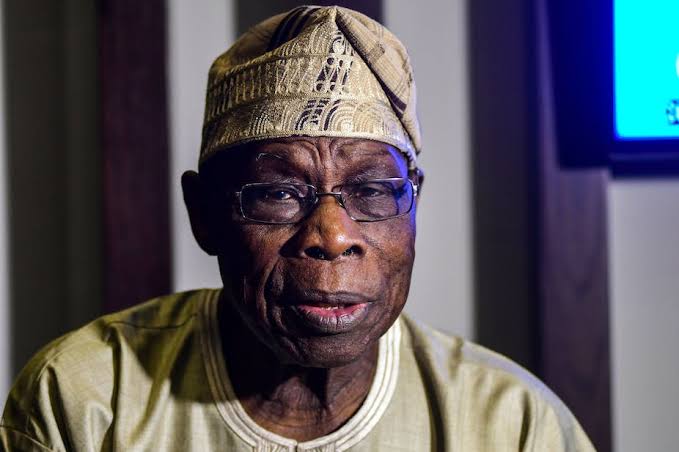
Obong Victor Attah, former Governor of Akwa Ibom State, has accused ex-President Olusegun Obasanjo of halting his efforts to distribute electricity generated by a power plant he built in the state.
Attah, who served as governor from 1999 to 2007 during Obasanjo’s presidency, revealed that despite the approval of the project by Obasanjo, the then president later imposed a law requiring that the electricity generated by the Akwa Ibom power plant be added to the national grid rather than being used to supply the state.
READ MORE: “I Owe Less Than ₦30 Million” — Ubi Franklin
Attah made the allegations during an appearance on Inside Sources with Laolu Akande, a socio-political program aired on Channels Television on Friday.
He criticized the existing constitutional framework, stating that a new constitution and federal arrangement would empower states to be more autonomous and less subordinate to the central government.
“I decided I want to give Akwa Ibom State power. The president said no. The Federal Government is providing power for the country. I said: ‘I want to give Akwa Ibom State power’ and then I succeeded in building that power station,” Attah recalled.
“The president came and I saw that he was happy about what I was doing. He commissioned the power station but went back to Abuja and brought a law that if you generate, you cannot distribute it.”
Attah lamented that despite using state funds to build the power station, he was barred from distributing the generated electricity within Akwa Ibom.
Instead, it had to be added to the national grid, which he described as inefficient and prone to frequent failures.
“I used Akwa Ibom money (to build the plant) but I cannot distribute power to Akwa Ibom people? I have to put it in the National Grid that is failing all the time. That was how that ended,” he said, expressing his frustration that Akwa Ibom, like many other states, still lacks 24-hour reliable power.
Attah further explained that his actions were not driven by political party lines, as he was a member of the Peoples Democratic Party (PDP) at the time.
He noted that Obasanjo’s opposition was more about the structural flaws of Nigeria’s federal system, which he believes stifles progress.
“It does not say much about party politics; it says much about the constitution that we have — the non-federal constitution that we have,” Attah said.
“If we have a true federal constitution it would never have happened. I would have built my power station. Whatever party I belong to won’t have mattered. What is fundamentally wrong with us is the nature of the constitution that we have today — it is not a federal constitution and unless and until we go federal, we will not make progress.”
Reflecting on the persistent challenges of the power sector, Attah criticized Nigeria’s inefficient national grid and highlighted the missed opportunity for states to take charge of their own energy needs.
“We generate power and put it in the national grid – the inefficient national grid that is always collapsing…Every kobo that was spent was in Akwa Ibom money to build that power station but a faulty constitution and constitutional arrangement makes it possible for a president to say even this power station, I’m taking it from you and I’m putting it in the national grid.”
Attah also welcomed the recent amendment to the Electricity Act of 2023, which now allows states to generate, distribute, and regulate electricity.
He expressed confidence that the new law would enable Akwa Ibom to have its own power company that could meet the state’s energy needs.
“Now that the new law has been brought out, our governor (Umo Eno) is working very hard to make sure that we now have an Akwa Ibom power company that not only generate but distribute power to the people,” Attah said.
For decades, Nigeria has grappled with chronic power supply issues, which hinder economic productivity and development.
Despite efforts to privatize the sector, electricity generation, transmission, and distribution have remained plagued by policy inconsistency and insufficient investment.
In 2024, the Nigerian Electricity Regulatory Commission (NERC) approved an increase in electricity prices, while the costs of petrol and diesel—common alternatives to power supply—have also surged, further exacerbating the challenges faced by consumers.
In a move to decentralize the electricity market, NERC granted licenses to several states, including Enugu, Ekiti, Ondo, Imo, Edo, Kogi, Oyo, and Lagos, to independently generate and distribute power.






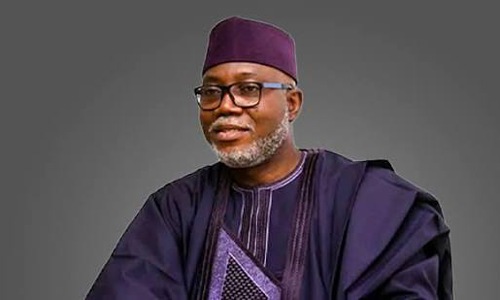
The Court of Appeal in Abuja has handed a significant setback to Ondo State Governor Lucky Aiyedatiwa, dismissing his appeal challenging a Federal High Court ruling that questioned his eligibility to contest the upcoming governorship election.
A three-member panel delivered a unanimous judgment on Monday, affirming that the trial court acted correctly when it allowed Dr Akindele Egbuwalo, the plaintiff, to amend his originating summons.
ALSO READ: No Shake-Up in Ondo: Aiyedatiwa Denies Plot To Remove Deputy Gov
Justice Uchechukwu Onyemenam, who read the lead judgment, said the governor failed to show that the High Court’s decision caused any miscarriage of justice or denied him a fair hearing.
The appeal was therefore dismissed for lacking merit, and the court awarded ₦2 million in costs against Aiyedatiwa.
The ruling reinforces the November 24, 2025, Federal High Court decision in Akure, which granted Egbuwalo permission to challenge Aiyedatiwa’s eligibility for re-election.
Earlier, the Court of Appeal also rejected an application by Aiyedatiwa to set aside a January 27, 2026, order staying proceedings in the case before the Federal High Court.
The appellate court clarified that the stay was a lawful exercise of its jurisdiction aimed at protecting the integrity of the proceedings.
The panel further emphasized that attempting to overturn its own order would be akin to sitting on appeal over its own decision.
The governor’s remaining option, the court noted, is to challenge the ruling at the Supreme Court. Another ₦2 million in costs was awarded against Aiyedatiwa.
The crisis rocking the Peoples Democratic Party has deepened following a ruling by the Court of Appeal in Abuja which upheld a ban on the party’s proposed national convention in Ibadan, Oyo State.
A three-man panel of the appellate court on Monday dismissed an appeal filed by a faction of the party led by former Minister of Special Duties, Kabiru Turaki, challenging the jurisdiction of the Federal High Court to hear a suit concerning the controversial convention.
The Turaki-led faction had approached the Court of Appeal after a Federal High Court barred the party from holding its planned national convention scheduled for November 14 and 15, 2025.
SEE MORE: Fubara Moves to Rebuild Cabinet as R/Assembly Screens Nine Commissioner Nominees
The lower court also restrained the Independent National Electoral Commission from recognising or validating the proposed convention.
However, delivering judgment, the appellate court ruled that the Federal High Court had the authority to entertain the case, rejecting the argument that the matter was purely an internal affair of the party.
According to the court, the appellants could not present what it described as a clear violation of the party’s constitution and the Constitution of the Federal Republic of Nigeria as merely an internal party issue.
The panel subsequently dismissed the appeal and awarded a cost of N2 million against the appellants.
The ruling is part of judgments delivered in nine harmonised appeals filed by the Turaki-led faction over the dispute surrounding the convention.
The latest court decision is expected to further intensify the internal wrangling within the opposition party as it continues to grapple with leadership disputes and preparations ahead of the 2027 general elections.

The Rivers State House of Assembly on Monday began the screening of nine commissioner nominees submitted by the Governor of Rivers State, Siminalayi Fubara, as part of efforts to reconstitute the state’s Executive Council.
The nominees arrived at the Assembly complex around 10 a.m. and were ushered into the chamber to undergo the screening exercise conducted by lawmakers.
Those screened include Datonye Alasia, Tonye Bellgam, Temple Nwofor, Peters Nwagor, Mrs. Charity Deemua, Tamuno Williams, Lekue Kenneth, Otonye TKD Amachree, and Amairigha Hart.
SEE ALSO: APC Sweeps Both Rivers Assembly Seats Despite Low Turnout
During the session, each nominee mounted the podium to introduce themselves and respond to questions from members of the Assembly.
The proceedings were broadcast live on Arise TV.
Governor Fubara had earlier forwarded the list of nominees to the Assembly on March 5, 2026, following his dissolution of the State Executive Council in a move aimed at forming a new cabinet to assist in running the affairs of the state.
Prior to the screening, the Assembly directed the nominees to submit 40 copies of their curriculum vitae, photocopies of their academic credentials, and evidence of tax compliance as part of the confirmation process.
The directive was contained in a notice signed by the Clerk of the House, Dr. Emeka Amadi.
The screening exercise comes months after political activities resumed fully in the state following the lifting of a state of emergency by Bola Tinubu, the President of Nigeria.
The emergency rule, which was imposed on March 18, 2025, led to the suspension of Governor Fubara, his deputy, and the state legislature amid a prolonged political crisis linked to a power struggle between the governor and his predecessor, Nyesom Wike, who currently serves as the Minister of the Federal Capital Territory.
However, the six-month emergency rule was lifted on September 17, 2025, paving the way for the restoration of democratic governance and legislative activities in the oil-rich state.






African Club Football Gets Major Financial Boost as CAF Hikes Prize Money

Abramovich Clashes with UK Gov’t Over £2.35bn Chelsea Sale Funds

Global Crisis: Attacks on Schools Skyrocket 166% – UN Sounds Alarm on Children’s Safety

Appeal Court Deals Major Blow to Aiyedatiwa’s Re-election Hopes in Ondo

After Turbulent Elections, Portugal Swears In Seguro as President

JUST IN: Nigerians Reeling as Dangote Sparks Another Spike in Fuel Prices

Trump’s Family Unveils New Cryptocurrency Platform

Reps Recommend 3-year Jail Term For Aviation minister

Senate Denies Receiving Petitions Against Tinubu’s Ambassadorial Nominees

Dangote Cement Lights Up Benue Host Communities With CSR Initiatives

Things To Know About Threads, Zuckerberg’s Twitter-like App
