
NEWS
Off-cycle Elections: SERAP Drags INEC To Court Over Offenders In Bayelsa, Kogi, Imo States

Socio-Economic Rights and Accountability Project (SERAP) has filed a lawsuit against the Independent National Electoral Commission (INEC) “over the failure to arrest and prosecute suspected perpetrators of grave electoral offences in the recently concluded off-cycle governorship elections in Kogi, Imo and Bayelsa States.”
In the suit number FHC/ABJ/CS/1694/2023 filed last Friday at the Federal High Court in Abuja, SERAP is seeking: “an order of mandamus to direct and compel INEC to probe the allegations of electoral offences including electoral violence, in the off-cycle governorship elections in Kogi, Imo and Bayelsa states.”
SERAP is seeking: “an order of mandamus to compel INEC to promptly and effectively prosecute suspected perpetrators of these grave electoral offences, and bring to justice anyone who sponsored, aided and abetted them.”
SERAP is also seeking: “an order of mandamus to compel INEC to disclose spending details on the off-cycle governorship elections in Kogi, Imo and Bayelsa States, including the specific amount spent to conduct voter and civic education and details of the activities carried out in the three states.”
In the suit, SERAP is arguing that: “There is a legitimate public interest in ensuring accountability for the grave electoral offences in Kogi, Imo and Bayelsa States. Granting the reliefs sought would compel INEC to live up to its constitutional and statutory responsibilities and end the impunity of electoral offenders.”
SERAP is also arguing that, “The recurring cases of electoral bribery and violence make a mockery of Nigeria’s electoral process and participatory democracy. The electoral offences in Bayelsa, Kogi and Imo states show that INEC has learnt little or nothing from the well-documented problems during the 2023 general elections.”
According to SERAP, “Unless INEC is compelled to arrest and prosecute suspected electoral offenders and their sponsors in the elections Kogi, Imo and Bayelsa States, perpetrators would continue to enjoy impunity for their crimes.”
SERAP is arguing that, “Many years of allegations of electoral offences and the impunity of perpetrators and their sponsors have continued to undermine public trust and confidence in the electoral process and citizens’ right to participation.”
SERAP is also arguing that, “Electoral integrity is critical to a legitimate democracy. When the integrity of that process is compromised, the legitimacy of the government and the public confidence in public institutions is seriously undermined.”
The suit filed on behalf of SERAP by its lawyers, Kolawole Oluwadare and Andrew Nwankwo, read in part: “INEC has constitutional and statutory duties to ensure accountability for electoral offences in the country, and to guarantee the effective enjoyment of the citizens’ right to vote in future elections.
“The right to vote is fundamental and is the essence of a democratic society, and any restrictions on that right strike at the heart of representative government. Nigerians should have the final say in the election of governmental officials.
“Persistent cases of electoral offences in the country’s elections gravely violate Nigerians’ right to vote, which is central to the effective participation of every citizen.
“Unless INEC is compelled to arrest and prosecute suspected electoral offenders and their sponsors, impunity for these crimes against the Nigerian people will continue. And citizens will continue to lose confidence in the electoral process.
“Nigerians have the right to know how INEC is spending public funds in the discharge of its constitutional and statutory responsibilities. It is in the public interest to compel INEC to publish spending details on the elections in the three states.
“Electoral bribery and violence and other electoral offences undermine the ability of INEC to discharge its responsibilities under Section 153 of the Nigerian Constitution and paragraph 15(a) of the third schedule of the Constitution, and the Electoral Act.
“Allegations of electoral offences during the off-cycle governorship elections in the three states are contrary to the Nigerian Constitution, the Electoral Act and international standards.
“The Nigerian Constitution provides in Section 14(1)(c) that, ‘the participation by the people in their government shall be ensured in accordance with the provisions of this Constitution.’
“Sections 121 and 127 of the Electoral Act prohibit electoral bribery and undue influence before, during and after any election. Section 145(2) provides that, ‘a prosecution under this Act shall be undertaken by legal officers of the Commission or any legal practitioner appointed by it.’
“Under section 2(a) and (b), the commission ‘shall have power to conduct voter and civic education and to promote knowledge of sound democratic election processes.’
“The crisis confronting the country’s elections and lack of public trust and confidence in the electoral process can be addressed if impunity for electoral offences is combated through the arrest and prosecution of suspected perpetrators.
“According to our information, the governorship elections in Kogi, Imo and Bayelsa States witnessed cases of electoral offences including electoral violence, vote-buying, conspiracy, and undue influence.
“There are reports of specific cases of pre-completed result sheets including in five local government areas of Kogi State – Adavi, Ajaokuta, Ogori/Magongo, Okehi and Okene.
“Suspected political thugs reportedly harassed journalists covering the governorship election in Omuma Community in Oru East Local Government Area of Imo State. INEC official in the Oguta Local Government Area (LGA) of Imo State also alleged that some men invaded her polling unit and carted away result sheets.
“According to the Centre for Democracy and Development (CDD), there were several reports of electoral violence and vote buying across the three states. For example, there were reports of incidents in PU 1, Ward 8 and PU 11, Ward 1 in Sagbama LGA in Bayelsa West.
“In Bayelsa Central, vote trading was reported in PU 16, Ward 6 in Yenegoa LGA, PU 22, PU 30 and 31, Ward 13 in Southern Ijaw LGA with reports of voter inducements ranging from N5,000 – N22,000, and items such as wrappers and rice were also reportedly shared to buy votes.
“In Kogi, there were reports of vote buying in PUs 004, 038 and 039 in Ward A of Lokoja LGA, where party agents were allegedly sharing out money to voters upon confirmation that they voted for their party candidates.
“In Imo, the two major parties’ agents reportedly engaged in vote buying, sharing between N2000 to N3000. INEC officials were reportedly bribed. Electoral violence was reported in Dekini LGA, town where a thug was reportedly shot and killed by military officials while fleeing in an attempt to snatch a ballot box.
“INEC presiding officer was also reportedly abducted in Bayelsa while on his way to the Registration Area Centre – 06 (Ossioma) in Sagbama Local Government Area.
“There are reports of thugs attacking several polling units in the three states.”
No date has been fixed for the hearing of the suit.









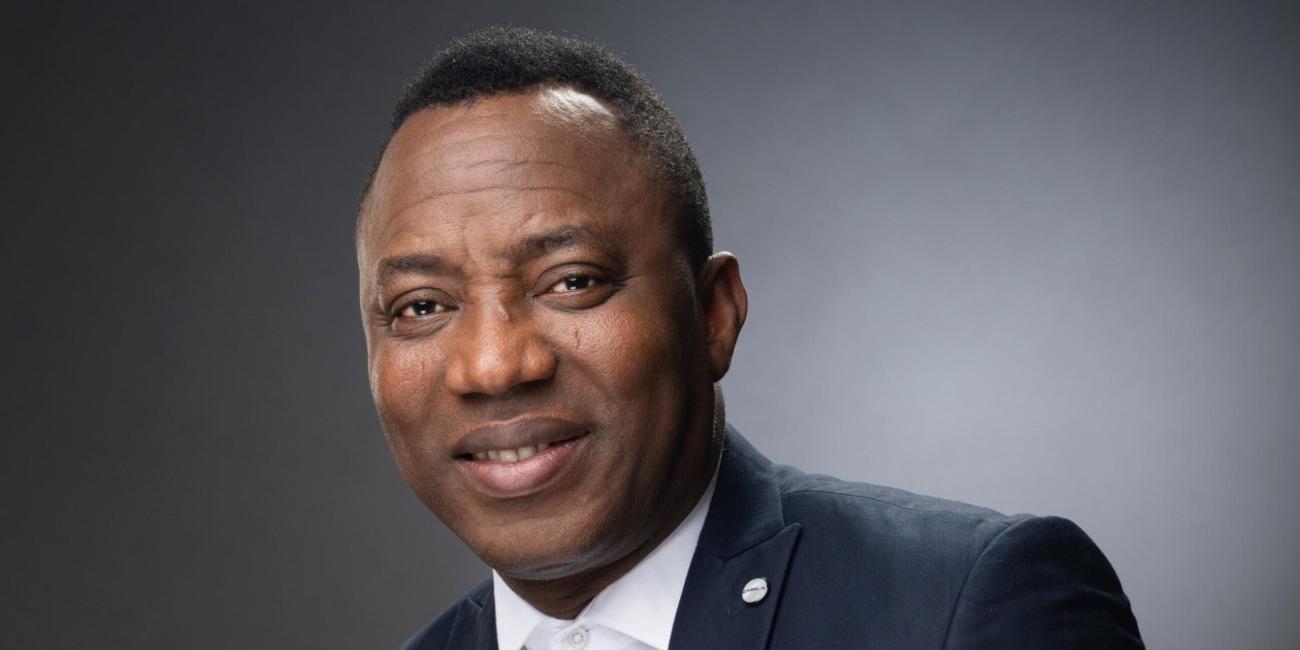
Omoyele Sowore, presidential candidate of the African Action Congress (AAC) for the 2027 presidential election, has declared that his proposed administration would not introduce new taxes if he becomes Nigeria’s president.
Sowore made the clarification following reactions to his interview on African Independent Television (AIT) on Saturday, October 10, 2026, during which he discussed expanding Nigeria’s tax base and bringing more economic activities into the tax system.
In a statement shared on his X account on Monday, the activist said the headline of the interview had created a misleading impression about his position on taxation.
READ ALSO: Nigeria@66: ‘You Wrecked Livelihoods’ — Sowore Fires Back at Tinubu
“Contrary to the misleading impression created by the headline of my recent @AIT_Online interview, let me state categorically that a #Sowore2027 administration has NO plans to introduce new taxes!” he said.
He added, “Nigerians are already overburdened by economic hardship. Our agenda is to create prosperity, not impose additional tax burdens on struggling citizens.”
Sowore also urged Nigerians to watch the video clip of his interview to understand his position directly.
During the interview, the AAC presidential candidate explained that his proposed approach would involve expanding the tax base rather than introducing new taxes.
“We are not going to introduce new taxes, but we would expand the tax base relative to GDP ratio,” he said.
He argued that Nigeria’s tax collection remained relatively low compared with some other African countries.
“Nigeria is probably a poor tax country,” Sowore said, citing Ghana and South Africa as examples in his discussion of tax-to-GDP ratios.
Clarifying his position on taxation, he said, “No. But you see, no, no, no. I’m not taxing Nigerians. We’re expanding the tax base. Are you getting it?”
He explained that the proposed expansion would cover economic activities that were not adequately captured by the existing tax system, including informal businesses and traders operating in markets and on the streets.
“Yeah, as long as they’re making money, all right? And you are supposed to pay tax and ensure that government can do what it say it would deliver to you,” he said.
The AAC presidential candidate also argued that Nigeria could generate additional revenue by recovering money allegedly owed to the government rather than placing additional tax burdens on citizens.
He questioned the recurring concern over how the government would raise funds to provide public services.
“How do you get money? Because that’s always been the, that’s always been, you know, the question thrown at Nigerians. ‘Ah, where are we going to get the money?’” he said.
Sowore claimed that more than $62 billion in royalties was owed to the Nigerian state by oil operators.
“There are, as I speak to you today, over $62 billion in unpaid royalties to the Nigerian state from people that we gave free oil blocks and are making billions from it. They don’t pay royalties,” he said.
He further argued that royalties should be considered part of the broader system of government revenue collection.
“All these revenues we are talking about, they fall under the category of tax. Are you getting my point? Royalties are taxes too,” he said.
He maintained that the government should ensure that those owing the money are assessed and held accountable.
Sowore maintained that recovering the alleged outstanding royalties could provide resources for public infrastructure and social services.
He proposed using the revenue to fund development projects, including roads and schools, while reducing government expenditure.
“We use it to do what we know, the roads we need to construct, the schools we need to build. And we cut down the cost of governance,” he said.

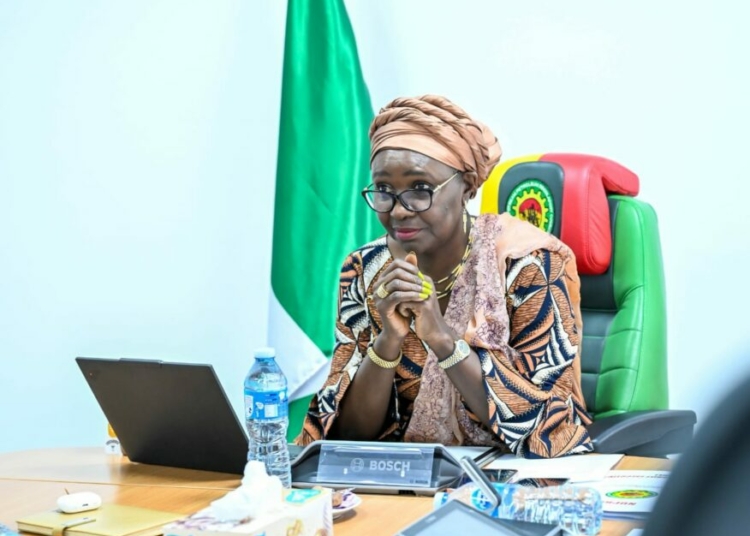
Licensed Oil and gas operators now have until October 31 to demonstrate compliance with their licence obligations or risk losing their acreages.
The Chief Executive of the Nigerian Upstream Petroleum Regulatory Commission (NUPRC), Oritsemeyiwa Eyesan, made the disclosure at an energy conference organised by the Harvard Business School Association of Nigeria in Lagos on Friday.
She cautioned that the regulator would enforce the drill-or-drop provisions of the Petroleum Industry Act (PIA) against operators that failed to develop their assets.
“Now the PIA has instituted the drill-or-drop mechanism. So, before you take the block, you know whether it’s a gas asset, you know whether it’s an oil and gas asset, and you must come up with concrete plans to unlock your resources,” Eyesan said.
READ ALSO: FG Lacks Capacity to Meet Dangote Refinery Crude Demand
She said the commission had issued a circular directing affected operators to respond before the deadline, warning that those who failed to do so would face regulatory action.
“And as a matter of fact, we’ve issued a circular, and we say by 31st of this month, for those who are not responsive, you can be rest assured that I am coming after you,” she threatened.
Eyesan also explained that operators holding onshore assets were expected to undertake the required work within the stipulated three-year period, warning that the commission would call up assets where companies failed to develop their acreages.
“For those onshore, you have three years. Within three years in the first instance, if you do nothing about those assets, we will call it up,” she said.
The commission’s warning comes as it moves to enforce work commitments attached to licences awarded through recent licensing exercises, with affected operators required to explain delays in executing their approved work programmes and show how they intend to address the challenges.

Strategy for unlocking Nigeria’s oil industry investment must focus on access to capital, technology, markets and regulatory certainty, in addition to physical assets.
These views were shared by the Heritage Energy Operational Services Limited (HEOSL) in a goodwill message at the Association of Energy Correspondents (NAEC) Energy Energy Conference 2026, in Lagos, themed: “Access to Assets: Empowering Players and Driving Growth.”
Delivering the message on behalf of the CEO, Ado Oseragbaje, General Manager, Government, Joint Venture & External Relations, Heritage Energy, Ohioze Unuigbe, commended the NAEC for convening what he described as a strategic platform for dialogue on issues shaping Nigeria’s energy sector.
READ ALSO: NCDMB, Renaissance Empower 60 with Oil & Gas Technical Skills
According to him, the conference theme is both timely and strategic at a period when the industry is seeking to increase production and attract investment.
“Access to assets must go beyond physical access to oil and gas resources. It must also include access to capital, infrastructure, technology, markets, skilled talent, regulatory certainty and strong partnerships. These are essential to unlocking investment, increasing production and strengthening Nigeria’s energy security,” he said.
Unuigbe noted that while access to an asset is critical, real value is created by how effectively, safely and responsibly the asset is operated.
He disclosed that Heritage Energy’s Operational Management System (OMS) provides the discipline for responsible operations, by bringing together People, Plans, Processes and Performance to embed operational excellence, strengthen accountability and manage risk.
This, he said, is particularly important in a complex environment such as OML 30, where sustainable performance depends on effective collaboration among staff, partners, regulators, host communities and other stakeholders.
He stressed that sustainable value creation goes beyond production to include safety, environmental stewardship, responsible asset management, local capacity development and meaningful host community engagement, alongside investment in infrastructure, technology and Nigeria’s gas resources.
“No operator can achieve this alone. Government, regulators, investors, operators, partners, host communities and the media all have important roles to play. Trust, transparency and constructive engagement must remain at the heart of these relationships,” he added.
The Heritage Energy GM also lauded the role of the energy media in promoting informed discourse, transparency and accountability, calling for continued collaboration to support accurate and balanced reporting.
“Nigeria’s energy opportunity is significant. Our collective task is to ensure that access to assets translates into access to opportunity, value creation and sustainable growth,” Unuigbe stated.
He reaffirmed Heritage Energy’s commitment to responsible operations, operational excellence and stakeholder collaboration in building a stronger and more sustainable Nigerian energy industry.





2027 Elections: INEC Debunks Fake Notice on Governorship Candidates in Six States

2027: No New Taxes Under My Gov’t If Elected – Sowore Clarifies
ADF Targets 5 Million Students, 2 Million Vulnerable Women

NUPRC Sets Revocation Date for Undeveloped Oil Licences

FG Lacks Capacity to Meet Dangote Refinery Crude Demand
Heritage Energy on Ways of Unlocking Oil Industry Investment

Trump’s Family Unveils New Cryptocurrency Platform

Senate Denies Receiving Petitions Against Tinubu’s Ambassadorial Nominees

Dangote Cement Lights Up Benue Host Communities With CSR Initiatives

Reps Recommend 3-year Jail Term For Aviation minister

Tems Sets New Record On Billboard Hot 100 Chart
