
Other News
‘Paying Bride Price For Non-Virgins Is Extortion – Omokri

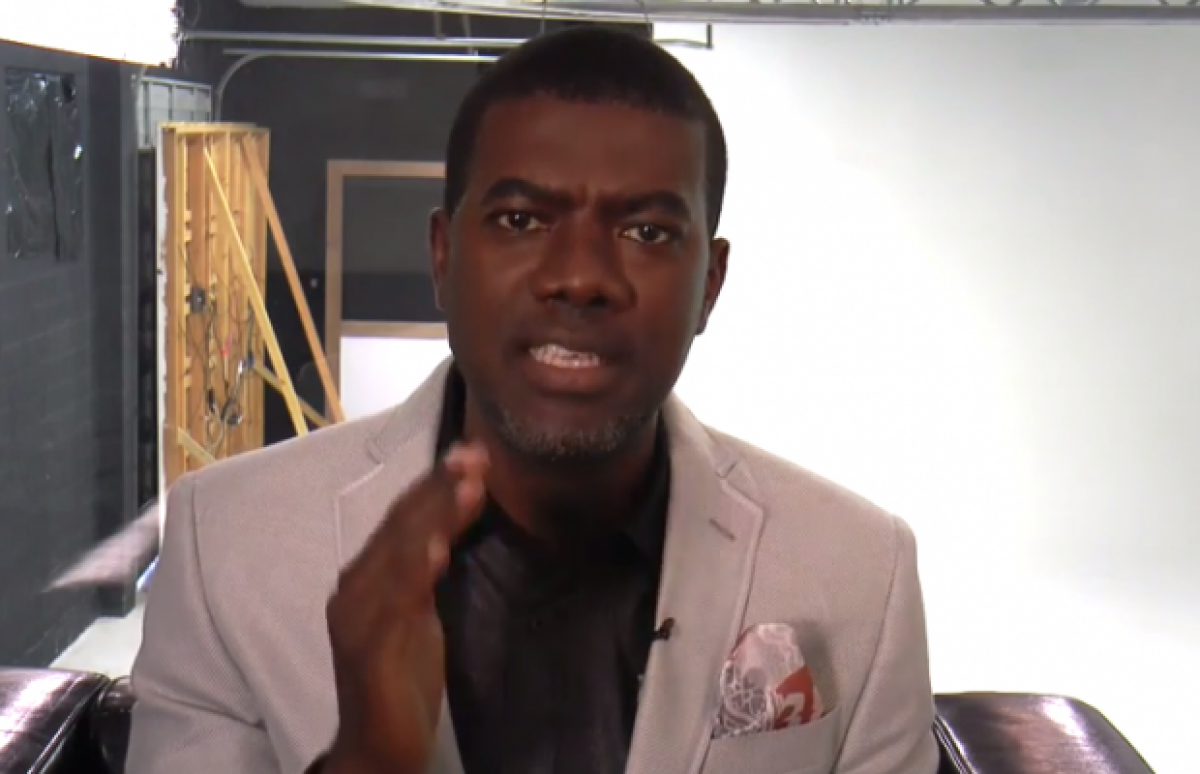
Former presidential aide and social commentator, Reno Omokri, has stirred heated debate across social media platforms following his controversial assertion that only virgin women deserve to have a bride price paid on them.
In a lengthy post shared via his verified X (formerly Twitter) handle on Sunday, Omokri argued that demanding bride price for a non-virgin is tantamount to “extortion” and not rooted in African tradition or biblical principles.
“There is a huge difference between a dowry and a bride price,” Omokri began, stressing that the two terms are often wrongly used interchangeably in Sub-Saharan Africa.
According to him, dowry practiced in Europe, Asia, and parts of the Middle East refers to property given by a bride’s family to her and her husband on the wedding day.
READ ALSO: Why I Now Support Tinubu’s Gov’t – Reno Omokri
Bride price, however, he maintained, originates from African and Jewish traditions and is specifically meant for virgins, as referenced in Exodus 22:17.
“A bride price is the money or property given by a man to the family of a virgin woman to marry her… If the bride’s virginity is not confirmed on the white cloth (aso funfun) after consummation, the marriage is not valid, and the bride price is returned,” he stated.
Omokri condemned what he described as the commercialisation of marriage, particularly when high amounts are demanded for women who are not virgins.
“The excessive demand for money and property by some Sub-Saharan African ethnicities for a woman who is not a virgin is neither legally nor technically a bride price it is extortion,” he said.
He cited biblical references including Isaiah 62:5, Jeremiah 2:32, and Song of Solomon 4:12, claiming they equate the term “bride” solely with virginity.
He also referenced King David’s marriage to Michal, for which he paid a bride price, contrasting it with his union with Abigail, for whom no bride price was mentioned.
“By African tradition and Scriptural law, a man may marry a woman who is not a virgin but such a woman is not a bride, and no bride price should be paid for her,” Omokri wrote.
Reno, known for his religious and cultural conservatism, warned that if African societies continue to abandon traditional values, they risk further moral and social decline.
“If we in Africa do not return to these time-honoured traditions… we will remain at the bottom rung of global development, plagued by high rates of sexually transmitted diseases and broken homes,” he warned.
He concluded by criticising the popular culture of white weddings in Nigeria, calling them a misrepresentation of European traditions and un-African.
“The White wedding is not African culture… In Europe, it is the bride’s father who pays for the wedding. Industrial Money Obtainers, I hope you have heard?” he added in a sarcastic jab.







Vice President Kashim Shettima has charged newly appointed Confederation of African Football (CAF) General Secretary, Samson Adamu, to protect and promote Nigeria’s interests while advancing the development of African football.
Shettima gave the charge on Tuesday at the Presidential Villa, Abuja, when he received Adamu, who was accompanied by a delegation led by the Chairman of the National Sports Commission, Shehu Dikko.
SEE ALSO: Sanwo-Olu Pledges Full Support as Lagos Prepares to Host 2026 CAF Awards
The Vice President congratulated Adamu on his appointment, describing his emergence as the first Nigerian to occupy the position in CAF’s 70-year history as a significant achievement for the country.
Conveying President Bola Tinubu’s goodwill, Shettima urged Adamu to approach his new responsibilities with integrity, diligence and a strong sense of national pride.
“The President is proud of you, Samson Adamu. Go and do a yo-man’s job. Go and promote, protect and project and preserve the interest of the Nigerian nation,” he said.
Shettima described football as an important instrument of national unity, noting that the sport brings Nigerians together irrespective of their differences.
“Anytime Nigeria plays, it tends to subsume all other identities. Football and sports generally is a source of unity for our country. What binds us together superseded whatever divides us,” he stated.
He attributed Nigeria’s achievements in sports to the quality of its people and the contributions of administrators, coaches, talent scouts and institutions responsible for identifying and developing sporting talents.
The Vice President also recalled the achievements of Nigerian football legends, including Rashidi Yekini, Austin ‘Jay-Jay’ Okocha and Finidi George, noting that their successes were supported by individuals and institutions that nurtured their abilities.
Earlier, Dikko thanked President Tinubu and the Federal Government for supporting sports development, saying the administration’s commitment had strengthened Nigeria’s international sporting profile and created opportunities for investment through sports.
He described Adamu’s appointment as a major milestone for Nigerian sports administration and disclosed that the Federal Government had approved Nigeria’s hosting of the CAF General Assembly in November and the CAF Awards in December 2026.
In his remarks, Adamu expressed appreciation to the Federal Government for its support, describing his appointment as a source of national pride.
He pledged to use his experience as CAF’s former Director of Competitions to strengthen the continental body’s administration and advance African football.
Adamu also promised to support Nigeria’s efforts to harness its football talents and maximise its potential in continental and global sports.
He was appointed CAF General Secretary on Sunday, November 1, 2026, following a recruitment exercise by the continental football governing body. He is expected to oversee CAF’s day-to-day administration.
The Economic and Financial Crimes Commission (EFCC) and the National Judicial Institute (NJI) have called for specialised judges, improved digital evidence management and legal reforms to accelerate the prosecution of corruption and other financial crime cases in Nigeria.
The recommendations were contained in a communiqué issued at the end of the 8th Capacity Building Workshop for Justices and Judges, held in Abuja from October 13 to 15, 2026.
The workshop, organised by the EFCC in collaboration with the NJI, was themed “Investigation and Prosecution of Economic and Financial Crimes in a Digital Age.”
SEE MORE: EFCC Arrests Enugu Estate MD Over Alleged N128m Land Scam
According to a statement signed by the EFCC’s Head of Media and Publicity, Dele Oyewale, the workshop brought together justices and judges from across the country, alongside EFCC investigators and prosecutors, for three days of lectures and deliberations.
Participants resolved that designating specialised judges and court staff to handle corruption cases, alongside targeted training, would help address delays in the administration of justice.
According to the communiqué, delays in resolving corruption cases “will be greatly reduced by designating specialised judges and court staff to handle such cases as well as equipping such judges and courts with necessary skills through training to ensure efficient, certain and consistent application of existing laws in the administration of justice.”
The participants also called for a balance between protecting the rights of defendants and ensuring the speedy administration of justice.
They said the criminal justice system “must strike the proper balance between fairness, efficiency and legal certainty in the protection of individual rights on one hand and the speedy administration of justice, on the other hand.”
To achieve this, they recommended reviewing relevant provisions of the Administration of Criminal Justice Act where necessary.
EFCC, NJI Seek Better Digital Evidence Management
The participants called for stronger investigation standards, including improved digital management protocols, to ensure that prosecutions rely on credible and admissible evidence.
They also recommended a more coordinated approach to obtaining confessional statements, stressing that institutionalising video recording and other necessary safeguards would protect suspects’ rights and preserve the integrity of investigations.
On asset recovery, the communiqué described Non-Conviction Based Asset Forfeiture proceedings as “an effective tool for recovery of stolen assets.”
However, participants stressed that its use “must follow extant legal protocols, adherence to human rights standards and strong institutional oversight.”
They also called for procedural reforms to allow extensions of time for freezing suspected proceeds of financial crimes.
Participants Recommend AI Guidelines for Judiciary
The communiqué further called on Ministries, Departments and Agencies in the anti-corruption sector to work with the National Assembly and the Judiciary to develop governance protocols and policy guidelines for adopting and deploying artificial intelligence in the administration of justice.
Participants also urged stakeholders to familiarise themselves with existing laws and regulations governing the investigation, prosecution and adjudication of financial crime cases involving virtual assets.
These include the Investment and Securities Act (2025), the Executive Order on Virtual Assets Coordination (2026), the Rules on Digital and Virtual Assets Operations (2026) and the Proceeds of Crime Act (2022).
The workshop also highlighted the need for increased investment in digital forensic laboratories, technology infrastructure and specialised training for investigators, prosecutors and judicial officers.
Participants called for continuous training to equip judicial officers and anti-corruption agencies with the skills required to address evolving economic and financial crimes in line with global best practices.
On the use of open-source intelligence, they said investigators, prosecutors and judicial officers should treat it primarily as a source of investigative leads and corroboration, while ensuring that evidence relied upon in court complies with applicable evidential rules.
NJI, NJC Urged to Develop Certification Courses
The communiqué recommended that the NJI, working with the National Judicial Council (NJC), develop accredited certificate and diploma courses to equip judges and other relevant stakeholders with the skills required to improve justice delivery, subject to any necessary legislative review.
Participants also called for sustained coordination among stakeholders in the administration of criminal justice, particularly in sharing information on emerging trends in the investigation and prosecution of economic and financial crimes in the digital age.
They urged heads of courts to use insights from the workshop to develop policies clarifying judicial practice on the technical issues discussed.
The workshop featured nine interactive sessions covering the admissibility of confessional statements, garnishee proceedings, abuse of court processes, asset forfeiture, artificial intelligence in investigations and prosecutions, virtual asset recovery and digital forensics.
Attendees included justices of the Supreme Court and Court of Appeal, judges of the Federal High Court, State High Courts and the High Court of the Federal Capital Territory, alongside other stakeholders in the judiciary and anti-corruption sector.
Participants expressed appreciation to President Bola Ahmed Tinubu, who was represented at the workshop by Vice-President Kashim Shettima, as well as other stakeholders and organisers who contributed to its success.

The Lagos State Traffic Management Authority (LASTMA) has alerted motorists to traffic delays along Ogunnusi Road towards Ojodu-Berger due to ongoing rehabilitation work.
LASTMA disclosed this in a post on its official X account on Sunday, stating that the road rehabilitation was being carried out by the Lagos State Public Works Corporation (LSPWC).
According to the agency, “The ongoing work is affecting traffic flow, with vehicles moving at a slower pace in both directions.”
ALSO READ: Chaos On Lagos-Ibadan Expressway As LASTMA Shuts Otedola Bridge
To ease the situation, LASTMA said a contraflow arrangement had been introduced for motorists travelling from Omole Junction towards Vis Junction.
“A contraflow arrangement is in place for vehicles coming from Omole Junction towards Vis Junction to facilitate the movement of traffic,” the agency stated.
LASTMA added that its personnel had been deployed to manage traffic and ensure the continuous movement of vehicles around the affected area.
“Our personnel are on ground managing the traffic situation and ensuring the continuous flow of vehicular movement,” the agency said.
The traffic management authority advised motorists to remain patient and exercise caution while the rehabilitation work continues.
“Motorists are advised to exercise patience and drive with caution while the rehabilitation work continues,” LASTMA stated.






Shettima Charges New CAF Secretary to Protect Nigeria’s Interests
Tragedy Hits Spanish Football As Tenerife Striker Jesus De Miguel Dies At 30

NUPRC Dangles 40 Oil Blocks Before Global Investors at ADIPEC

OPEC+ Retains Output at 30.9mbpd

Gas Infrastructure Fund Sets Terms for Indigenous Access to Funding

UN Engages NCDMB to Deepen Female Access to $40m Oil, Gas Fund

Trump’s Family Unveils New Cryptocurrency Platform

Senate Denies Receiving Petitions Against Tinubu’s Ambassadorial Nominees

Dangote Cement Lights Up Benue Host Communities With CSR Initiatives

Reps Recommend 3-year Jail Term For Aviation minister

Tems Sets New Record On Billboard Hot 100 Chart

xldpnw
868805 905878I believe other web site proprietors should take this internet site as an model, quite clean and superb user genial style . 233131
500652 488901Normally I do not read write-up on blogs, but I wish to say that this write-up extremely forced me to try and do so! Your writing style has been surprised me. Thanks, quite good post. 337976
356456 130352youre in point of fact a very good webmaster. The internet site loading velocity is remarkable. It seems that youre performing any distinctive trick. In addition, The contents are masterpiece. youve done an excellent activity on this subject! 715301