
Politics
PDP minority caucus asks Buhari to sign electoral act without delay


***Mocks APC over lack of BOT, trying to win FCT council polls by all means
*decries excessive loans, says APC has sold Nigeria to China
The minority caucus of the Peoples Democratic Party (PDP) in the National Assembly has demanded that President Muhammadu signed the reworked electoral bill into law without further delay
The Caucus also berated the All Progressives Congress ( APC ) for setting up 133- member campaign committee inclusive of 16 serving governors for the forthcoming Area Councils Election in FCT.
The leader of the caucus who is also the senate minority leader senator Enyinaya Abaribe and his counterpart in the House of representatives Honorable Ndidi Elumelu gave the indication on Tuesday during the caucus meeting with the PDP Board of Trustees.
According to Abaribe, “We are asking President Muhammadu Buhari to sign the electoral act which we have passed. We made sure that everything he complained about we have given it to him.”
“The President in rejecting the earlier one transmitted to him in November last year, said indirect and consensus mode of primary elections were added to the new one as requested by President Buhari .
“Now that we have bent backwards, no any excuse or reason should be given again. Provisions of the bill are very critical for expected credibility of the 2023 general elections ” , he said.
Honorable Elumelu during a vote of thanks alleged that some APC Governors are again plotting to stop President Muhammadu Buhari from assenting to the reworked electoral act.
“They said they wanted direct primaries, we said if it would mean giving Nigeriand a very sound electoral reform we accept, they came back again they said oh we have rejected it. They are the ones rejecting.
“They say okay, they want Indirect we say we agree but give Nigerians electoral reform. They came back again and said they want consensus, we have given them consensus, we have given them consensus again I am hearing that among them, those APC Governors are still plotting for the President not to sign the act
The Clerk to the National Assembly Mr. Olatunde Amos Ojo had on Monday, transmitted the authenticated copies of the Electoral Bill 2022 to President Muhammadu Buhari .
This was done in accordance with the provisions of Section 58 (3) of the 1999 Constitution of the Federal Republic of Nigeria (as amended) and the Acts Authentication Act Cap. A2 LFN 2004.
Mr. President had withheld assent to the Electoral Bill 2021 transmitted to him on 19th November 2021. The Electoral Bill was thereafter reworked by the National Assembly and both the Senate and the House of Representatives passed same on 25th January 2022.
For constituting 133- member campaign committee inclusive of 16 serving governors for the forthcoming Area Councils Election in FCT Elumelu berated the ruling APC.
“Let me say that, It is disheartening that APC, for just a small council election they have turned it to a battle ground
“Even those who could not win their polling units are finding themselves in FCT instead of administering their States, they have abandoned their states for just FCT council election.”
He reminded the ruling APC that in the last election the president lost his unit in the villa. “So I wonder why all of them are battling to come and take what they know they can never get, the FCT area Council election.”
“Let me also state that we are not like APC. Let me thank the BOT for finding it worthy to come and interact with us. We can never be like them. “They have promised
Nigerians so many things: N1 to $1 today it is N596 to a Dollar. They have Promised Nigeria that farmers would be able to go to farm and produce good food for us.
“Today no farmer to go to the various farms because of insecurity. They have promised Nigerians that they will give us good roads but today go to the Airport you see crowds because we don’t have good roads.
“The legacy left by PDP government is still what we are enjoying today because of failed promises by APC. “They are trying to mugage the future of our children by trying to get China to colonise us. Loan, Loan, Loan. APC is known for loan taking and that is very bad.
“The PDP BOT coming here to interact with us is something that a focused party can do. APC can’t do it, they set out to elect State officers they succeeded in electing 92 chairmen.
“They have not reconciled them in 36 States plus FCT and they said they are going to do convention. Let me take Kano for example, Ganduje is leading some, Shelarau is
leading some so I wonder which people are coming for the convention.
“It is going to be another promise like N$ to N1 and we can go on and on, we are not like them who will go to United Nation and lie that they have built specialists hospitals in 36 States, you know that it is a lie. “But for the President of Nigeria to get there and say such a thing, it is a big shame. We can also go on and on and we will not leave here.
“Let me tell the BOT that the two chambers PDP caucuses are doing very well
“Nigerians are tired of APC, so for coming here we are proud of you people. Your coming has further energized us to know that we are doing the right thing and we will never let you people down
He however sent a strong message to the PDP not to impose candidates
“Please tell our party, that this is the time that we should imbibe true democracy and there must be transparency in all the primaries that we are going to organise, let the popular people be chosen.
“The issue of imposition should be shunned by our party. This is what my colleagues asked me to tell you.”
As the PDP caucus were holding a meeting with it’s BOT, the APC caucus also met but in closed door.
When their meeting ended they failed to address the media






The African Democratic Congress (ADC) has challenged President Bola Tinubu’s administration to account for the ₦10 billion reportedly earmarked for Ebola emergency preparedness, demanding explanations over claims that the funds remain untouched despite a confirmed Ebola case in Abuja.
The party also questioned the government’s response to the reported case, calling for the publication of financial records and a detailed timeline of the emergency response.
In a press statement issued on Friday, October 23, 2026, Phrank Shaibu, Director of Strategic Communication of the ADC Presidential Campaign Council, criticised the All Progressives Congress (APC) for focusing on defending Tinubu against criticism by former Vice President Atiku Abubakar rather than addressing questions about the emergency fund.
ALSO READ: Why Ebola Outbreaks Keep Returning to Africa, Dr Jean Kaseya Explains
The statement recalled that the Presidency announced on June 9 that Tinubu had ordered the immediate release of ₦10 billion for Ebola emergency preparedness.
However, the ADC said the APC had subsequently described the fund as “untouched”, raising questions about whether the money was released and why it had not been utilised.
“Was the money released or was it not? If it was released, where is it held, who controls it, and why has it not been used for the preparedness President Tinubu announced?” the statement asked.
The party called on the government to publish the release documents, account records and expenditure reports of the task force responsible for the emergency response.
It maintained that the administration should provide documentary evidence to clarify the status of the funds.
ADC Questions Ebola Response Timeline
The ADC also questioned the timeline of the government’s response to the reported Ebola case, seeking clarification on when the disease was first suspected and when public health authorities were alerted.
Citing the World Health Organization’s account, the statement said the patient developed symptoms on October 7, sought treatment at a private health facility on October 11, and received laboratory confirmation on October 20.
Shaibu asked the government to explain when Ebola was first suspected, when testing was ordered, when public health authorities were notified and when contact tracing began.
The party also challenged the APC’s claim that surveillance systems alerted the government to the case, demanding details of the agency responsible and the actions taken following the alert.
“The APC claims surveillance ‘tipped off’ the government. Then publish the timeline. Name the agency that raised the alert, give the date and explain the action taken,” the statement said.
The ADC further noted that the 44 identified contacts mentioned in the response required adequate health protection and monitoring.
Party Calls for Protection of Health Workers
The opposition party emphasised the need to provide health workers involved in treating the patient and tracing contacts with adequate protective equipment and resources.
It said demands for accountability over the government’s preparedness should not be interpreted as criticism of the health workers carrying out their duties.
“Health workers treating the patient and tracing contacts deserve protection, equipment and every resource needed to act quickly,” the statement said.
The party also urged the Tinubu administration to ensure that public health measures were not used to interfere with political campaigns or voting.
It called for the publication of any proposed restrictions, their medical justification and the advice of relevant health authorities.
According to the ADC, public health guidelines should prioritise the protection of citizens and should not become political instruments.
ADC Demands Accountability Over ₦10bn Fund
The ADC maintained that the government and the APC owed Nigerians an explanation over the apparent contradiction between the Presidency’s June announcement and the subsequent claim that the funds remained untouched.
It urged the administration to provide records showing whether the money was released, where it was held and how it had been managed.
“President Tinubu ordered ₦10 billion released in June. His party now says it is untouched. That contradiction came from the Presidency and the APC. They should resolve it with records,” the statement said.
The party concluded by demanding transparency over the emergency fund, a clear account of the government’s response timeline and adequate protection for health workers and identified contacts.
“Show Nigerians where the money is. Explain the response timeline. Protect health workers. Trace every contact,” Shaibu said.
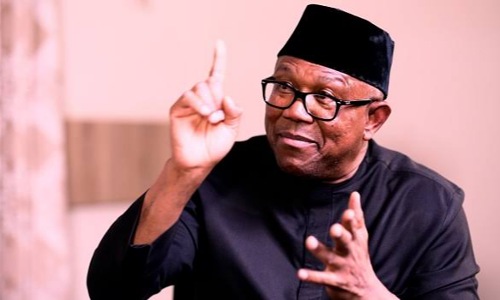
The presidential candidate of the Nigeria Democratic Congress (NDC), Peter Obi, has called for collective efforts to rebuild Nigeria, tackle corruption and end bad leadership, saying the country must work for everyone rather than a privileged few.
Obi made the call on in a statement titled “Rebuilding Nigeria” following his arrival in London from Basel, Switzerland, at 7 a.m. on Wednesday, October 21, 2026.
He disclosed that his busy schedule included several engagements and meetings with stakeholders in the United Kingdom, including British government officials and members of the Nigerian diaspora.
SEE ALSO: Peter Obi Slams Tinubu Over ₦7.7tn Debt Interest Against ₦6.2tn Revenue
According to him, he rounded off the day with an evening meeting organised by the COPDEM Chief and the NDC Director of Diaspora Affairs, which brought together other stakeholders in London.
Obi said the discussions centred on the collective responsibility of Nigerians to free the country from bad leadership, corruption and a lack of accountability, which he identified as challenges undermining national development.
He noted that these challenges had deprived millions of Nigerians of access to basic necessities, including quality healthcare, education and decent employment.
The former Anambra State governor stressed that Nigerians deserved a country where every life mattered, hard work was rewarded and citizens had a fair opportunity to succeed regardless of their backgrounds or connections.
“We must build a Nigeria where the child of nobody can become somebody without knowing anybody. A country that works for everyone, not just a privileged few,” he said.
Obi expressed optimism about the country’s future, declaring that “A New Nigeria is POssible.”
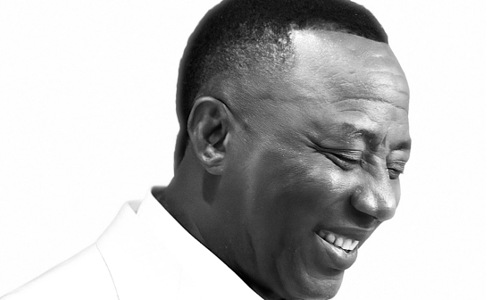
The African Action Congress (AAC) has asked President Bola Tinubu to approve the inauguration of its Presidential Campaign Council at the Presidential Villa, Aso Rock, Abuja, ahead of the 2027 general elections.
The party also requested food, drinks and other logistical support for 5,000 participants expected to attend the event from within and outside Nigeria.
The requests were contained in a letter dated October 21, 2026, and addressed to the President at the Presidential Villa. The party proposed November 11, 2026, for the inauguration ceremony.
SEE ALSO: 2027: Sowore Unveils Sweeping Agenda, Says AAC Will Transform Nigeria
In the letter, the AAC said its requests were based on the principles of multiparty democracy, political inclusiveness and equal treatment of political parties.
The party also referred to arrangements reportedly extended to the All Progressives Congress (APC) for a similar political engagement, arguing that its request should receive equal consideration.
The AAC said approving the requests would demonstrate the Presidency’s commitment to fairness and equal access to public institutions, regardless of political affiliation.
“We believe that granting this request would demonstrate the Presidency’s commitment to fairness, equal access, and the principle that public institutions must serve all Nigerians without partisan discrimination,” the letter stated.
The party further requested information on the applicable procedures and conditions for approval.
The letter was signed by the AAC National Secretary, Oshiokhue Philip Ikpeminoghena, on behalf of the party.
The proposed inauguration is part of the party’s preparations for the 2027 general elections.






Lagos CP Warns Officers Against Extortion, Brutality Ahead of 2027 Elections

‘Show Nigerians Where the Money Is’ — ADC Challenges Tinubu Over ₦10bn Ebola Fund

Nollywood Mourns as Veteran Actor Francis Duru Dies at 57

Why Ebola Outbreaks Keep Returning to Africa, Dr Jean Kaseya Explains

Peter Obi Meets UK Officials, Diaspora Stakeholders on Rebuilding Nigeria

Grains-Laden Truck Falls on BRT Lane in Lagos

Trump’s Family Unveils New Cryptocurrency Platform

Senate Denies Receiving Petitions Against Tinubu’s Ambassadorial Nominees

Dangote Cement Lights Up Benue Host Communities With CSR Initiatives

Reps Recommend 3-year Jail Term For Aviation minister

Tems Sets New Record On Billboard Hot 100 Chart
