
NEWS
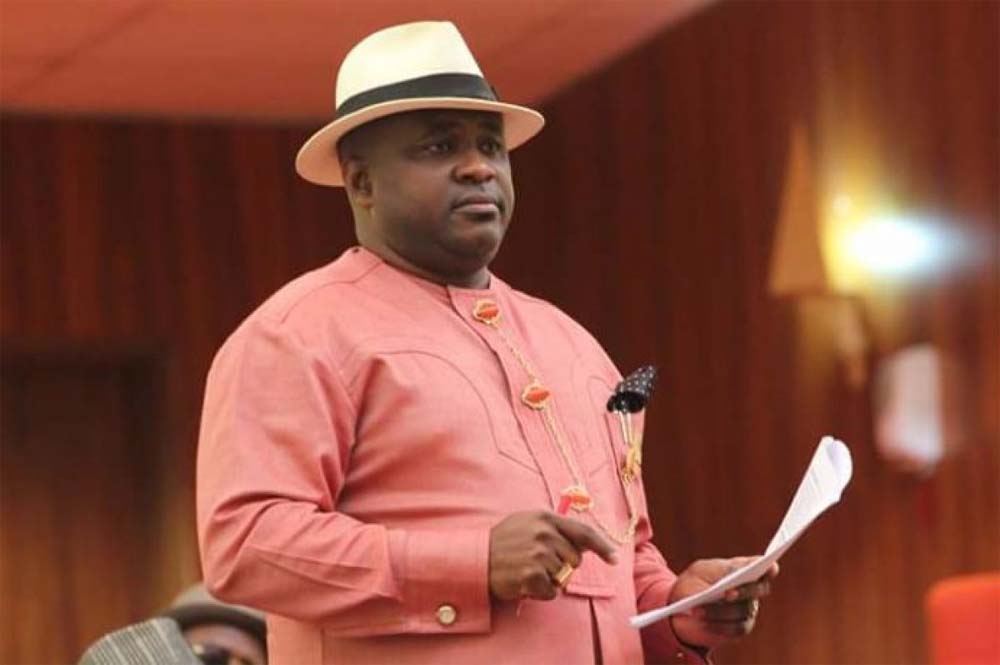
PDP’s Akwa-Ibom North East Senator, Bassey Akpan, defects to YPP

By John Danjuma
Senator representing Akwa-Ibom North East Senatorial District, Bassey Albert Akpan, has dumped the Peoples Democratic Party (PDP) for the Young Progressives Party (YPP)
A letter dated July 18, 2022/conveying his resignation as member of the PDP was read at the start of plenary on Wednesday by the Senate President, Ahmad Lawan.
Senator Akpan, who chairs the Committee on Petroleum Resources (Upstream), informed the upper chamber of his decision to join the Young Progressives Party (YPP).
He explained that his defection was against the backdrop of agitations amongst members of the party who were dissatisfied with the absence of a level playing field during the governorship primaries in the state.
Bassey’s defection to the YPP brings the number of serving Senators in the party to two.
The letter reads, “I write to notify Your Excellency, the President of the Senate, the Senate leadership and the entire Senate of my resignation from the Peoples Democratic Party (PDP) with effect from July 15, 2022.
“I must admit that the PDP has offered me the opportunity to serve several capacities in government over the years, including serving as a Senator of the Federal Republic of Nigeria and I remain grateful to the party to that extent.
“However, it is now clear to me and my supporters that the center can no longer hold in the Akwa-lbom state chapter of the PDP since the party hierarchy decided to adopt and favour only one preferred candidate before and during the governorship primaries.
READ ALSO: Osun: Buhari congratulates Adeleke on election victory, says people’s will must be respected
“The determination of the state chapter of the Party to support the preferred candidate could not even be halted by every attempt to call for a level playing field and its associated controversies.
“In view of the foregoing, the agitations have led to serious rancor and some steep differences in the ranks of the party and this had presented me with a compelling reason to consult my people on our future in the PDP.
“I must state that my supporters had earlier presented me with a nomination form after paying for same to encourage me to contest the party primaries for nomination of the Governorship candidate of the party but unfortunately, events leading to the party primaries for the governorship made it impossible for me to participate in the primaries.
“Therefore, I am constrained to bow to the wish of my people who have advice that in view of the state of affairs that exist now in the party, I should resign my membership of the party.
“As a result of the foregoing, I resigned my membership of the PDP and now joined the Young Progressives Party (YPP) which now becomes my new party.
“I thank you for your support and understanding. Please accept my sincere regards.”



Nigerian national Ekene Chukwuma has said he returned to Nigeria with assistance linked to Oseni Rufai rather than the Nigerians in Diaspora Commission (NiDCOM), while renewing allegations against the commission’s chairperson, Abike Dabiri-Erewa, over his travel documents.
Chukwuma made the remarks in an interview in which he explained how he returned to Nigeria after spending months at a deportation camp in India.
RELATED NEWS: Rufai Oseni Row: NiDCOM Breaks Silence on Nigerians Detained in India, Addresses Ekene’s Case
“My name is Kenneth Chukwu, from Enugu State,” he said, introducing himself before explaining how he returned to the country.
“I came back here with the assist of Osini Roufai, a good friend of him,” he said.
Chukwuma denied that NiDCOM facilitated his return, alleging that the commission had published false information about his case.
“NiDCOM made a lots of false, uh, news acquisition against me, which is still in Abike Dabiri handle in Twitter,” he said.
He also accused Dabiri-Erewa of sharing his expired international passport and a travel certificate he claimed was issued six months after he entered the detention camp.
“He also, she also posted my international passport that expired. He also, she also posted my TC that issued after 6 months,” he said.
His comments renew questions surrounding the handling of his case and the circumstances under which he obtained the documents needed to return to Nigeria.
Chukwuma’s detention in India previously sparked a public disagreement between ARISE News presenter Oseni Rufai and Dabiri-Erewa over NiDCOM’s response to reports of his situation.
Oseni raised concerns about Chukwuma’s detention and the commission’s handling of the case, while Dabiri-Erewa defended NiDCOM’s position and explained the process for submitting information to the commission.
NiDCOM subsequently issued its account of Chukwuma’s detention, stating that he had been arrested in India over a visa overstay and addressing the circumstances surrounding his travel documents.
The differing accounts prompted public debate about the commission’s response to Nigerians facing immigration difficulties abroad.
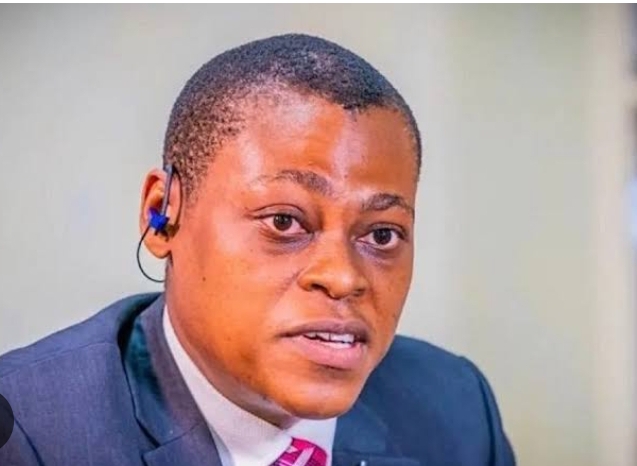
Rufai Oseni has challenged political analyst Olabode Sowunmi over the Federal Government’s 30-day petrol discount, questioning whether the intervention amounts to a return of fuel subsidy despite claims that the discount is being borne by the Nigerian National Petroleum Company Limited (NNPC).
The exchange occurred during an edition of The Morning Show on Arise News, where Oseni questioned Sowunmi about the financial implications of the petrol discount and other measures introduced to cushion the impact of fuel prices.
Oseni argued that several elements of the government’s intervention could be regarded as forms of subsidy, insisting that NNPC’s ownership structure must be considered when determining who ultimately bears the cost.
SEE MORE: ‘Another Speech to Tell Us, It Is Well’ — Oseni Rufai Reacts to Tinubu’s Address
“No matter how you try to explain it away, a subsidy is a subsidy,” Oseni said.
He challenged the argument that the discount should not be classified as a government subsidy simply because NNPC was responsible for providing it.
“We’re talking like NNPC is not owned by [the government] and heavily equity-based by the Ministry of Finance Incorporated,” he said.
Oseni identified the 30-day discount, forward sales of crude oil to domestic refineries, a proposed price ceiling, the removal of road levies and the consideration of an excess-profit tax among the measures he believed could amount to different forms of subsidy.
He argued that forward sales of crude oil to domestic refineries, with increased volumes as production grows, could help shield petrol pump prices from fluctuations in the international market.
Oseni also questioned the proposed negotiation of a price ceiling of ₦1,350 on landing and ex-country costs, arguing that government intervention to moderate prices contradicted the principle of allowing market forces to determine them.
“You are not supposed to come in to do this. Let me go back to your words: forces of market supply and demand should do this, but you have now come in to do this. That’s another form of subsidies,” he said.
He further cited the removal of road levies and cooperation with state governments under new tax laws as part of the measures requiring scrutiny.
After listing the interventions, Oseni demanded that Sowunmi explain their financial implications and identify who would ultimately pay for the petrol discount.
“But tie this with the most important question, actually, that you skipped: How much will this cost NNPC, and who pays for it? Don’t evade that question. Tell us the cost item and how much, who will pay for it,” Oseni said.
Sowunmi Defends His Position
In his response, Sowunmi argued that a government subsidy should be determined by whether the government bears the difference between the total cost of a product and its selling price.
He explained that a subsidy occurs when the government assumes the financial burden created by the gap between the cost of a product and the price at which it is sold.
“In the case of the discount that has been announced, it is borne by NNPC. So that cannot be…” Sowunmi said before Oseni interrupted.
Oseni challenged the distinction, insisting that NNPC’s ownership made it necessary to establish whether the cost could ultimately be linked to the government.
“Wait, not—who owns NNPC? Please answer. No, no, a straight question, and you can go ahead. Who owns NNPC?” Oseni asked.
Sowunmi responded that he had been invited to contribute to the discussion and should be allowed to complete his explanation.
“You asked, you asked NNPC because you believe—you asked me a question because you believe I have something to say. You cannot—you cannot tell me how to talk, so just be…” he said.
Oseni subsequently repeated his question about NNPC’s ownership, prompting Sowunmi to urge him to exercise patience.
“Basically, you need to be a bit patient and just…” Sowunmi responded.
The available transcript ends during the exchange, with no further explanation of the financial arrangements or conclusion to the discussion provided.
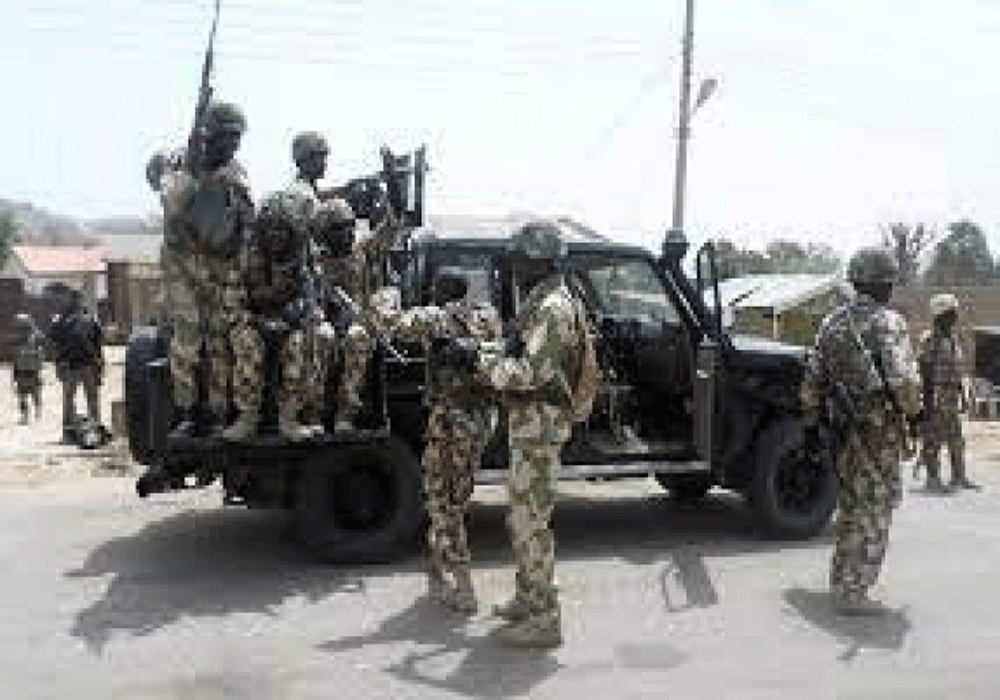
Human rights defender and Amnesty International volunteer, Lawrence Zongo, has been released from the custody of the Nigerian Army in Jos, Plateau State, after spending 10 days in detention.
His release comes after Amnesty International and the Take-It-Back (TIB) Movement demanded his immediate release, raising concerns over his alleged incommunicado detention at the Nigerian Army’s 3 Division headquarters in Jos.
ALSO READ: How Troops Forced Kidnappers to Abandon Abducted Army Lieutenant Colonel in Enugu
“Zongo is out,” a source privy to the information said on Thursday.
Zongo was arrested on October 5 while visiting relatives receiving treatment at a military hospital within Maxwell Khobe Cantonment, Rukuba Barracks, the headquarters of the Army’s 3 Division.
He had reportedly gone to the facility to assist family members who were attacked by gunmen in Meyango, Bassa Local Government Area of Plateau State, on Sunday night.
Sources familiar with the incident said one of Zongo’s first cousins died from injuries sustained in the attack before he arrived at the hospital late Monday morning.
Following his arrest, sources alleged that Zongo was held without charge and denied access to his lawyers and family members.
Sources also claimed that he was wearing Ray-Ban Meta smart glasses when he visited the military facility, suggesting that this might have contributed to the soldiers’ decision to detain him. However, the claim had not been independently verified.
On October 8, Amnesty International raised the alarm over what it described as the arbitrary and incommunicado detention of its member, demanding that the military either release him immediately or hand him over to the appropriate civilian authorities.
The organisation said efforts to gain access to Zongo had been unsuccessful and called on the Army to clarify the circumstances surrounding his arrest and detention.
On October 13, the Take-It-Back Movement’s Plateau State chapter also demanded his release, alleging that he remained in military custody without a clear explanation.
The movement said its members and executive committee representatives had discussed the matter during an appearance on JayFM Jos, insisting that the military should disclose the offence Zongo was suspected of committing and provide evidence justifying his continued detention.
The group also called for respect for Zongo’s fundamental rights and urged the Army to follow established legal procedures if there were allegations against him.
His release comes after days of pressure from rights advocates and activists over the circumstances surrounding his arrest and detention.
The Nigerian Army’s reasons for detaining Zongo and the circumstances surrounding his release were not immediately available.






‘The Entire North Has Made Up Its Mind for Tinubu’ — APC Chieftain

‘Tinubu Has Procured Proxies’ — Sam Amadi on President’s 2027 Campaign Strategy

Tesla Aims for 2028 Commercial Production of Flying Car

Corruption Trials: EFCC, NJI Push Specialised Judges, Digital Evidence Reforms

‘It Is Morally Wrong’ — PDP Chieftain Questions North’s Bid for Another Eight Years

2027 Election: ‘Your Future Is More Valuable’ — IGP Warn Youths Against Political Violence

Trump’s Family Unveils New Cryptocurrency Platform

Senate Denies Receiving Petitions Against Tinubu’s Ambassadorial Nominees

Dangote Cement Lights Up Benue Host Communities With CSR Initiatives

Reps Recommend 3-year Jail Term For Aviation minister

Tems Sets New Record On Billboard Hot 100 Chart
