
International News
Petro Warns Colombia Is Heading Toward Civil War After Alleged Election Fraud

Colombia’s outgoing President, Gustavo Petro, has warned that the country could descend into civil war following what he described as widespread fraud in the recent presidential election.
Speaking at a press conference on Monday, Petro claimed that the June presidential runoff was tainted by “algorithmic, systemic electoral fraud” involving a massive number of votes, insisting the results were manipulated against his political ally, Ivan Cepeda.
SEE MORE: Osun Election: Gunmen Invade PVC Centre, Cart Away Voter Cards
“We are facing fraud and an undoubtedly profound institutional problem, namely the inauguration of an illegitimate president,” Petro said.
The outgoing leader alleged that “foreign money and foreign companies with the capacity to manipulate algorithms” interfered in Colombia’s electoral process, accusing external actors of influencing the outcome of the election.
Petro’s remarks come just days before president-elect Abelardo de la Espriella is due to be sworn into office on Friday in the southwestern city of Cali, a departure from the longstanding tradition of holding presidential inaugurations before Congress in the capital, Bogota.
The Colombian leader also claimed that De la Espriella, who received the endorsement of United States President Donald Trump before the election, plans to extradite him to the United States on what he described as false charges.
Warning of the potential consequences, Petro said, “It’s crystal clear what a civil war in Colombia could look like,” arguing that public resistance to the incoming administration’s actions could trigger widespread unrest.
The political crisis has deepened further after the left-wing bloc in Congress, led by Cepeda, announced it would boycott De la Espriella’s inauguration and called for nationwide mobilization against the president-elect.
Observers have also raised concerns that Colombia could witness a return to violent street protests similar to those experienced between 2019 and 2021, which left dozens dead.
Despite having no prior political experience, De la Espriella has pledged to boost private investment, shrink the size of government by 40 percent, and intensify military operations against guerrilla groups and drug cartels as the country battles its worst surge in violence in a decade.
His inauguration is scheduled for Friday amid heightened political tensions and growing uncertainty over Colombia’s future.
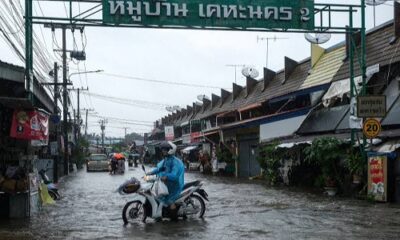










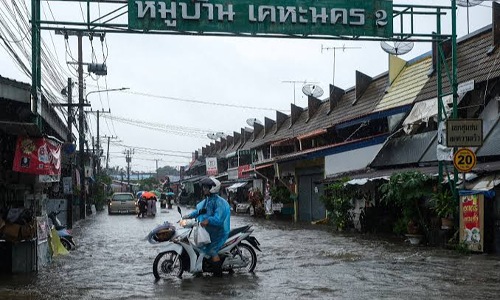
Heavy rains have triggered severe flooding across parts of Bangkok, Thailand, forcing nearly 4,900 residents to evacuate to shelters as floodwaters swept through roads and residential areas.
The flooding has disrupted movement across parts of the Thai capital, with motorists and pedestrians forced to navigate submerged roads and seek alternative routes.
SEE ALSO: NAFDAC Warns Nigerians As Fake Cowbell Milk Floods Market
According to the Bangkok Metropolitan Administration, about 52,000 households have been affected by the flooding, prompting authorities to declare a flood disaster and intensify emergency response efforts.
Emergency teams have been deployed to assist affected communities and move residents from vulnerable areas to safer locations as water levels rise.
Bangkok is accustomed to seasonal heavy rainfall, but intense downpours can overwhelm drainage systems, particularly in low-lying areas, resulting in widespread flooding and disruption.
Authorities are continuing to monitor affected locations while coordinating evacuations and other emergency measures.
For thousands of residents, the immediate priority remains securing safe shelter and protecting homes and livelihoods as authorities work to manage the situation and restore normal activities once the floodwaters recede.
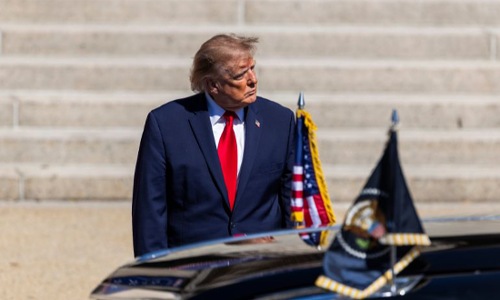
US President Donald Trump has explained his decision to reject Iran’s latest proposal to reopen the Strait of Hormuz, saying Tehran was seeking an agreement because it was losing revenue.
Speaking to reporters at the White House, Trump said Iran wanted to immediately reopen the strategically important waterway but argued that the proposal was not acceptable to his administration.
“They want to make a deal, and I think that’s fine. I like making a deal, too, but that deal would not be acceptable,” Trump said.
SEE ALSO: How the Strait of Hormuz Attack Could Trigger a Fresh Global Oil Shock
According to the US president, Iran’s push to reopen the strait was driven by the economic pressure it was facing.
“What they want to do is immediately open the Hormuz Strait. Do you know why? Because they are dying,” Trump said.
“You know why they’re dying? Because they have no money coming in, because they get their money from the Hormuz Strait.”
Trump also claimed that the US had established an unprecedented naval blockade against Iran, describing it as “a wall of steel.”
“So they outsmarted themselves. We put up the greatest blockade ever in military history. It’s a wall of steel,” he said.
“And guess what? They don’t have any money now because they wanted to close the strait.”
The Strait of Hormuz is a major global energy shipping route, and disruption to traffic through the waterway has significant implications for international oil markets and countries that depend on energy imports.
Trump’s remarks came amid continued tensions between Washington and Tehran over the reopening of the strategic waterway and negotiations involving Iran.
International News
‘Another Oil Shock Is Coming’ — Badenoch Calls for North Sea Drilling Amid Middle East Supply Disruptions

Conservative Party leader Kemi Badenoch has warned that another global oil shock could be looming amid disruptions to key energy infrastructure and shipping routes in the Middle East.
Badenoch made the warning in a post on X on Sunday, September 20, while pointing to the recent drone attack on Saudi Arabia’s East-West oil pipeline, restrictions affecting the Strait of Hormuz and threats to shipping around the Red Sea.
“Saudi Arabia’s East-West oil pipeline has been damaged by drone attacks. The strait of Hormuz is restricted, Houthi bandits threaten shipping routes into the Red Sea. Another oil shock is coming,” Badenoch wrote.
SEE MORE: Middle East Crises Pump Fuel Prices Upwards with Attacks on Iran, Saudi Arabia
She criticised the UK government’s handling of the situation and argued that Britain should increase domestic oil and gas production.
“Yet our Prime Minister and his Cabinet are behaving like a flock of ostriches, heads buried so deep in the sand they could strike oil themselves,” she added.
“The answer is simple: DRILL OUR OWN OIL AND GAS IN THE NORTH SEA.”
Saudi oil pipeline hit by drone attack
The warning comes after Saudi Arabia’s critical East-West oil pipeline was damaged in a drone attack earlier this month.
The 1,200-kilometre pipeline, operated by Saudi Aramco, transports crude oil across Saudi Arabia to the Red Sea port of Yanbu, providing an alternative export route when shipping through the Strait of Hormuz is disrupted.
Saudi officials said the September 11 attack involved drones coming from Iraq. No group had claimed responsibility for the attack in initial reports.
A subsequent Reuters analysis of satellite imagery found that three pumping stations, rather than two previously identified, had been damaged.
Industry sources disclosed that repairs could take between five and six weeks, although partial operations could resume sooner.
The pipeline had been carrying around 4 million to 5 million barrels of crude oil per day, equivalent to approximately 4% to 5% of global oil supply. Its shutdown has therefore raised concerns about additional pressure on already-disrupted global energy supplies.
The attack also affected Saudi oil exports.
Reuters reported on September 18 that Saudi Aramco had informed at least two European refining customers that they would receive no Saudi crude deliveries in October, following the pipeline disruption.
Hormuz and Red Sea disruptions
The pipeline attack has occurred against the backdrop of continuing disruption around the Strait of Hormuz, a major route for global oil shipments.
The East-West pipeline had become particularly important because it allowed Saudi Arabia to move crude to the Red Sea without relying entirely on the Strait of Hormuz. Reuters reported that the pipeline had served as a major alternative route while the strait was largely shut by the ongoing conflict.
Shipping through the Red Sea is also facing renewed security concerns following advances and attacks by Yemen’s Iran-aligned Houthi movement.
According to report on September 17, there is continued tensions involving the Houthis and Saudi Arabia were adding to concerns over regional energy infrastructure and shipping.
Earlier today, there are fresh Houthi claims of missile and drone attacks targeting strategic sites in Riyadh, with the developments contributing to renewed pressure on Saudi and Gulf markets.





Heritage Energy on Ways of Unlocking Oil Industry Investment

NCDMB, Renaissance Empower 60 with Oil & Gas Technical Skills

Fuel Discount: Presidency Explains Why Atiku’s Production Subsidy Proposal May Fail

‘Don’t Rush the Refinery’ – Kenyan Presidential Candidate Warns Dangote

2027 Election: ‘Look Beyond the Noise’ – Showunmi Urges Nigerians to Give Tinubu More Time

NLC Ultimatum: Wage Demands Can Be Resolved in Two Weeks – HR Expert

Trump’s Family Unveils New Cryptocurrency Platform

Senate Denies Receiving Petitions Against Tinubu’s Ambassadorial Nominees

Dangote Cement Lights Up Benue Host Communities With CSR Initiatives

Reps Recommend 3-year Jail Term For Aviation minister

Tems Sets New Record On Billboard Hot 100 Chart
