
International News
Race Tied: Harris, Trump Split Evenly At 47% In Final CNN Poll

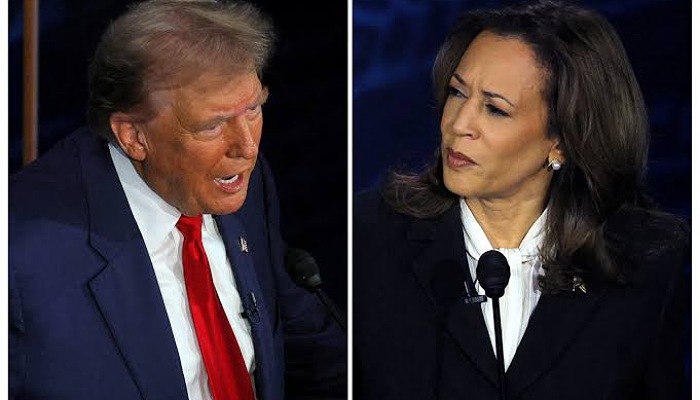
In the final CNN/SSRS poll ahead of the 2024 election, the presidential race remains a dead heat, with both Vice President Kamala Harris and former President Donald Trump drawing 47% of support among likely voters.
The poll underscores the highly polarized nature of this year’s election, with both candidates maintaining steady support throughout a shortened and intense campaign.
Stable Support Throughout the Campaign
CNN’s polling has consistently shown a tight contest between Harris and Trump. In September, likely voters split at 48% for Harris and 47% for Trump, echoing today’s figures.
READ MORE: Senator Dino Melaye Warns Elon Musk Over Kamala Harris ‘Harassment’
Even over the summer, shortly after President Joe Biden withdrew from the race and endorsed Harris, the candidates’ numbers remained close. In that survey, Trump held a narrow edge with 49% support from registered voters, compared to Harris’s 46%.
This election marks a departure for Trump, who has not trailed outside the margin of error in CNN polling since Biden’s departure from the race.
In his previous campaigns, Trump regularly trailed his opponents by larger margins at different points in the election cycle.
Few Undecided Voters, Deep Commitment to Candidates
The poll shows that 85% of likely voters made up their minds early about which party they would support, with just 15% switching their choice along the way.
As the campaign draws to a close, only 2% of likely voters remain undecided, while another 9% say they could still change their minds. Voters who have locked in their decisions are nearly evenly divided, with 50% backing Harris and 49% Trump.
Those open to switching tilt slightly toward Trump and include a larger share of minor-party and independent candidates (38% Trump, 31% Harris, 30% other).
Motivation among voters also varies. Among those committed to their candidate, 70% are “extremely motivated” to vote, compared to just 27% among those who might change their minds.
Harris Leads Among Early Voters, Trump Gains Among Election Day Voters
The poll, conducted October 20-23, highlights a significant trend as early voting and absentee ballots are underway.
About 20% of likely voters report having already cast their ballots, and among them, 61% support Harris while 36% support Trump.
However, among those who have yet to vote, Trump holds a 50% to 44% edge.
Mixed Reviews of Biden Presidency and Public Mood
The election season is unfolding amid negative views on President Biden’s term and a pervasive sense of dissatisfaction with the country’s direction.
Nearly half (49%) say they are worse off financially than a year ago, a notable rise from 41% who said the same earlier this year. Only 32% believe things in the U.S. are going well—a low not seen since 2008, when the country was in economic crisis.
Biden’s approval ratings are also underwater at 36%, while 64% disapprove. Among likely voters who disapprove of Biden’s performance, 19% say they will support Harris—a level of loyalty rare for vice presidents running for the top office.
Favorability Challenges for Both Candidates
Registered voters view both candidates unfavorably overall, with Harris holding a 41% favorability rating and Trump close at 41%, both with higher unfavorable ratings (52% for Harris, 54% for Trump).
The candidates’ running mates, JD Vance for Trump and Tim Walz for Harris, are less familiar to the public, with Walz viewed evenly (34% favorable, 34% unfavorable) and Vance viewed more negatively (33% favorable, 43% unfavorable).
Harris supporters are mostly motivated by a positive view of her (54%), though 45% are voting mainly to oppose Trump—a figure that has grown by 5 points since September.
Trump’s base is more consolidated, with 73% saying their vote is to support him directly rather than to oppose Harris.
Voter Opinions on Candidate Qualities and Issue Handling
Voters give Harris an edge on qualities like caring about people (43% Harris, 37% Trump), honesty and trustworthiness (41% Harris, 29% Trump), and putting the country’s interests above her own (45% Harris, 39% Trump).
Trump, however, holds a lead on delivering change (44% Trump, 38% Harris) and sharing voters’ vision for the country (43% Trump, 39% Harris).
Notably, 29% of voters believe neither candidate is honest, with those voters breaking for Trump 58% to 25%.
Harris, meanwhile, leads among voters who say neither candidate would bring necessary change (52% Harris to 23% Trump).
Voters remain divided on Trump’s temperament (56% cite it as a reason to vote against him) and the criminal charges he faces (51% cite as a concern).
Harris is viewed more positively on these fronts, with 45% citing her temperament as a reason to vote for her.
Trump’s record as president is seen nearly evenly as a reason to vote for (45%) or against him (43%), and he maintains a positive perception for his business record.
Key Issues Show Sharp Divides
Trump holds a strong lead on handling the economy (50% to Harris’ 37%) and immigration (50% to 34%), while Harris is more trusted on abortion (52% to 31%) and protecting democracy (45% to 41%).
Voters who see abortion as a deciding factor rose to 31% this poll, compared to 26% who view immigration the same way.
Demographic Divides and Congressional Outlook
Harris leads with women (50% to 44%), younger voters under 35 (51% to 41%), and people of color, including a wide 79% to 13% lead among Black voters. Suburban voters lean Harris by a narrow 52% to 44%, especially suburban women (55% to 41%).
Trump is supported by men (51% to 45%), white voters (55% to 41%), rural communities (64% to 31%), and those who did not vote in 2020 (50% to 40%). White voters without a college degree back Trump 62% to 34%, while those with a degree are nearly split.
Looking toward Congress, the poll shows no clear advantage, with 48% supporting the Republican candidate in their district compared to 45% for Democrats.
The CNN/SSRS poll was conducted online and by phone October 20-23, surveying 1,704 registered voters nationwide with a margin of error of +/- 3.2 percentage points for the full sample and 3.1 points for likely voters.













Federal agents raided the Washington, D.C., home of Democratic Congresswoman Ilhan Omar early Monday morning as part of an ongoing federal criminal investigation, the United States Department of Justice (DOJ) has confirmed.
Homeland Security Investigations agents arrived at the Minnesota congresswoman’s residence at about 6:00 a.m. Eastern Time, according to a report by Fox News.
SEE MORE: Trump Sparks Outrage With Shock Proposal to Rename New Mexico
The report said both the Department of Homeland Security (DHS) and the DOJ are involved in the investigation.
A DOJ spokesperson confirmed the operation, stating: “Today in the Washington, D.C. area, Homeland Security Investigations executed a judicially authorized search warrant secured by the Department of Justice.”
The spokesperson added: “This enforcement action is part of an ongoing federal criminal investigation.”
Details later……….

Heavy rains have triggered severe flooding across parts of Bangkok, Thailand, forcing nearly 4,900 residents to evacuate to shelters as floodwaters swept through roads and residential areas.
The flooding has disrupted movement across parts of the Thai capital, with motorists and pedestrians forced to navigate submerged roads and seek alternative routes.
SEE ALSO: NAFDAC Warns Nigerians As Fake Cowbell Milk Floods Market
According to the Bangkok Metropolitan Administration, about 52,000 households have been affected by the flooding, prompting authorities to declare a flood disaster and intensify emergency response efforts.
Emergency teams have been deployed to assist affected communities and move residents from vulnerable areas to safer locations as water levels rise.
Bangkok is accustomed to seasonal heavy rainfall, but intense downpours can overwhelm drainage systems, particularly in low-lying areas, resulting in widespread flooding and disruption.
Authorities are continuing to monitor affected locations while coordinating evacuations and other emergency measures.
For thousands of residents, the immediate priority remains securing safe shelter and protecting homes and livelihoods as authorities work to manage the situation and restore normal activities once the floodwaters recede.
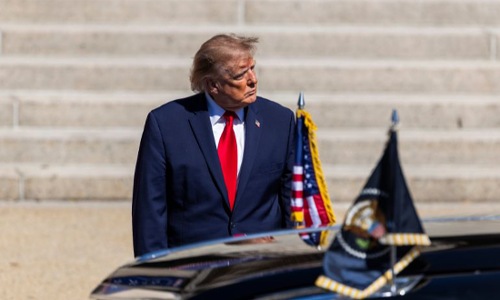
US President Donald Trump has explained his decision to reject Iran’s latest proposal to reopen the Strait of Hormuz, saying Tehran was seeking an agreement because it was losing revenue.
Speaking to reporters at the White House, Trump said Iran wanted to immediately reopen the strategically important waterway but argued that the proposal was not acceptable to his administration.
“They want to make a deal, and I think that’s fine. I like making a deal, too, but that deal would not be acceptable,” Trump said.
SEE ALSO: How the Strait of Hormuz Attack Could Trigger a Fresh Global Oil Shock
According to the US president, Iran’s push to reopen the strait was driven by the economic pressure it was facing.
“What they want to do is immediately open the Hormuz Strait. Do you know why? Because they are dying,” Trump said.
“You know why they’re dying? Because they have no money coming in, because they get their money from the Hormuz Strait.”
Trump also claimed that the US had established an unprecedented naval blockade against Iran, describing it as “a wall of steel.”
“So they outsmarted themselves. We put up the greatest blockade ever in military history. It’s a wall of steel,” he said.
“And guess what? They don’t have any money now because they wanted to close the strait.”
The Strait of Hormuz is a major global energy shipping route, and disruption to traffic through the waterway has significant implications for international oil markets and countries that depend on energy imports.
Trump’s remarks came amid continued tensions between Washington and Tehran over the reopening of the strategic waterway and negotiations involving Iran.






Why Ebola Outbreaks Keep Returning to Africa, Dr Jean Kaseya Explains

Peter Obi Meets UK Officials, Diaspora Stakeholders on Rebuilding Nigeria

Grains-Laden Truck Falls on BRT Lane in Lagos

Ogun Police Chief Urges POWA to Turn Skills Centre into Industrial Hub

Thor Empowers Host Communities with 10 Cassava, Palm Oil Processing Plants

FG Puts Daily Gas Output at 8bcf

Trump’s Family Unveils New Cryptocurrency Platform

Senate Denies Receiving Petitions Against Tinubu’s Ambassadorial Nominees

Dangote Cement Lights Up Benue Host Communities With CSR Initiatives

Reps Recommend 3-year Jail Term For Aviation minister

Tems Sets New Record On Billboard Hot 100 Chart
