
International News
S’African Gov’t Not Confiscating Any Land – Ramaphosa To Trump

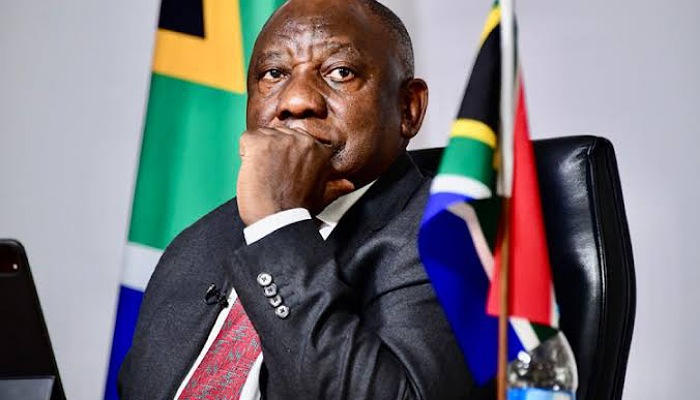
President Cyril Ramaphosa has refuted claims by U.S. President, Donald Trump that South Africa is “confiscating” land, insisting that the country’s land reform policies are legally and constitutionally guided.
In a statement on Monday, Ramaphosa responded to Trump’s remarks, which suggested the South African government was seizing land without compensation and “treating certain classes of people VERY BADLY.” Trump also threatened to cut U.S. funding to South Africa.
“The South African government has not confiscated any land,” Ramaphosa said. “The recently adopted Expropriation Act is not a confiscation instrument.”
READ MORE: Why Burkina Faso Is Assuaged From Ravaging Trump Effect -Hundeyin
The legislation, signed into law last month, allows the government to expropriate land in specific circumstances with “nil compensation” in cases deemed to be in the public interest.
Land ownership remains a sensitive issue in South Africa, where white landowners still hold the majority of farmland despite the end of apartheid three decades ago.
Critics, including South African-born billionaire Elon Musk, a close Trump ally, have condemned the policy.
However, Ramaphosa defended the act as a “constitutionally mandated legal process that ensures public access to land in an equitable and just manner as guided by the constitution.”
Despite Trump’s warning about cutting U.S. funding, Ramaphosa’s office downplayed the potential impact, stating that apart from the PEPFAR anti-HIV/AIDS initiative—which contributes 17% of South Africa’s HIV/AIDS funding—”there is no other significant funding that is provided by the United States in South Africa.”
Ramaphosa emphasized the importance of maintaining strong ties with Washington, stating, “The US remains a key strategic political and trade partner for South Africa.”
He also expressed willingness to engage with Trump’s administration to clarify South Africa’s land reform policies. “We look forward to engaging with the Trump administration over our land reform policy and issues of bilateral interest.
“We are certain that out of those engagements, we will share a better and common understanding over these matters.”










Federal agents raided the Washington, D.C., home of Democratic Congresswoman Ilhan Omar early Monday morning as part of an ongoing federal criminal investigation, the United States Department of Justice (DOJ) has confirmed.
Homeland Security Investigations agents arrived at the Minnesota congresswoman’s residence at about 6:00 a.m. Eastern Time, according to a report by Fox News.
SEE MORE: Trump Sparks Outrage With Shock Proposal to Rename New Mexico
The report said both the Department of Homeland Security (DHS) and the DOJ are involved in the investigation.
A DOJ spokesperson confirmed the operation, stating: “Today in the Washington, D.C. area, Homeland Security Investigations executed a judicially authorized search warrant secured by the Department of Justice.”
The spokesperson added: “This enforcement action is part of an ongoing federal criminal investigation.”
Details later……….
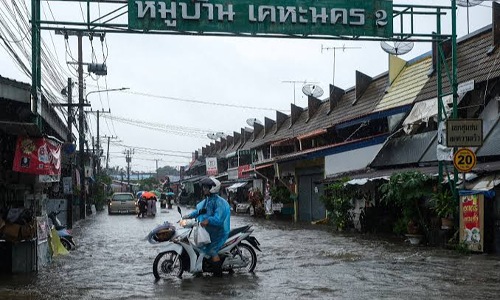
Heavy rains have triggered severe flooding across parts of Bangkok, Thailand, forcing nearly 4,900 residents to evacuate to shelters as floodwaters swept through roads and residential areas.
The flooding has disrupted movement across parts of the Thai capital, with motorists and pedestrians forced to navigate submerged roads and seek alternative routes.
SEE ALSO: NAFDAC Warns Nigerians As Fake Cowbell Milk Floods Market
According to the Bangkok Metropolitan Administration, about 52,000 households have been affected by the flooding, prompting authorities to declare a flood disaster and intensify emergency response efforts.
Emergency teams have been deployed to assist affected communities and move residents from vulnerable areas to safer locations as water levels rise.
Bangkok is accustomed to seasonal heavy rainfall, but intense downpours can overwhelm drainage systems, particularly in low-lying areas, resulting in widespread flooding and disruption.
Authorities are continuing to monitor affected locations while coordinating evacuations and other emergency measures.
For thousands of residents, the immediate priority remains securing safe shelter and protecting homes and livelihoods as authorities work to manage the situation and restore normal activities once the floodwaters recede.
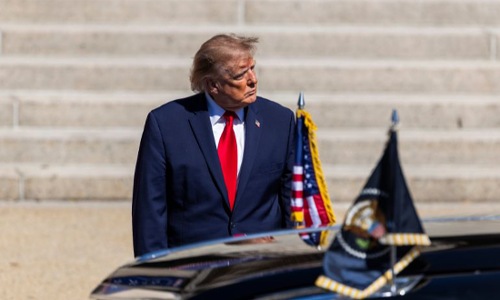
US President Donald Trump has explained his decision to reject Iran’s latest proposal to reopen the Strait of Hormuz, saying Tehran was seeking an agreement because it was losing revenue.
Speaking to reporters at the White House, Trump said Iran wanted to immediately reopen the strategically important waterway but argued that the proposal was not acceptable to his administration.
“They want to make a deal, and I think that’s fine. I like making a deal, too, but that deal would not be acceptable,” Trump said.
SEE ALSO: How the Strait of Hormuz Attack Could Trigger a Fresh Global Oil Shock
According to the US president, Iran’s push to reopen the strait was driven by the economic pressure it was facing.
“What they want to do is immediately open the Hormuz Strait. Do you know why? Because they are dying,” Trump said.
“You know why they’re dying? Because they have no money coming in, because they get their money from the Hormuz Strait.”
Trump also claimed that the US had established an unprecedented naval blockade against Iran, describing it as “a wall of steel.”
“So they outsmarted themselves. We put up the greatest blockade ever in military history. It’s a wall of steel,” he said.
“And guess what? They don’t have any money now because they wanted to close the strait.”
The Strait of Hormuz is a major global energy shipping route, and disruption to traffic through the waterway has significant implications for international oil markets and countries that depend on energy imports.
Trump’s remarks came amid continued tensions between Washington and Tehran over the reopening of the strategic waterway and negotiations involving Iran.





‘Oseni Rufai Helped Me, Not NiDCOM’ — Ekene Chukwuma on Return to Nigeria

‘Who Owns NNPC?’ Rufai Grills Olabode Sowunmi Over Fuel Subsidy
JUST IN: Amnesty Volunteer Lawrence Zongo Regains Freedom After 10 Days In Custody

2027: Tinubu Won’t Abandon Governance for Campaigns, Says Aide

Atiku Launches ‘Ask AA’ Portal, Invites Nigerians to Question His Record
Adamawa SSG Identifies Three Priorities for Tackling Nigeria’s Security Challenges

Trump’s Family Unveils New Cryptocurrency Platform

Senate Denies Receiving Petitions Against Tinubu’s Ambassadorial Nominees

Dangote Cement Lights Up Benue Host Communities With CSR Initiatives

Reps Recommend 3-year Jail Term For Aviation minister

Tems Sets New Record On Billboard Hot 100 Chart
