
Oil
Samsung HI must be investigated for fraud over Egina FPSO – NYPF


By Crest Okamgba and Modupe Asudo
THE Egina Floating Production Storage and Offloading, FPSO, the world’s largest vessel of its kind has since sailed to its final destination offshore Rivers state south-south Nigeria, but it has left in its trail unending controversies which has continued to take center stage around discussions.
Samsung Heavy Industries the contractor saddled with the responsibility of building this very strategic vessel has currently dragged both its local content partner Ladol and the operator the company that awarded the contract Total before a court of competent jurisdiction over claims of unpaid fees.
In this interview however, the Nigerian Young Professionals Forum, NYPF insists that Samsung or SHI has violated the Nigerian content laws amidst other shady deals which centers on fraud and as such the Korean company must be investigated and brought to book to serve as a deterrent to other foreign companies with intentions of winning contracts only to short-change Nigeria and Nigerians at the end. The Forum’s Chairman, Moses Siloko Siasia in this interview told Biztellers that the NYPF is ready to mobilize tens of thousands of Nigerian youths to the Presidential villa if there is an attempt to sweep this unfolding issue under the carpet.
Excerpts:

Chairman NYPF, Moses Siloko Siasia
BT: There have been reports of controversies surrounding the Egina FPSO, and your group has also been in the news lately over this issue. Can you walk us through this development?
I feel elated that you in the media have shown interest in these developments, especially to hear more from us about our position and stand on this issue. What is happening in the country today is very sad, despite the fact that this is a project that could put smiles on the faces of Nigerians. 200,000 barrels per day is not a joke, hence I will describe the Egina project as project that has come to uplift the standards of operations in the upstream sub-sector of the oil and gas industry. A lot of foundational issues actually went on with that project which we believe needs to be properly addressed.
BT: What do you mean by foundational issues?
The foundation of every issue really matters, and the foundation of this issue is that the lowest bidder for the Egina FPSO contract was Hyundai Heavy Industries Ltd.
Samsung was never the lowest bidder but somewhere along the lines, something happened and the lowest bidder lost to Samsung, and there was no form of explanation to the public as to why the lowest bidder in the Egina contract still lost the bid. Maybe there were some levels of interest, what is that interest? Till date no one knows.
Even stakeholders in the industry, saddled with governments responsibility to protect the sovereignty and interest of the country also compromised in the course of that project, but then it’s ok, that was a foundational problem. Now the job was awarded to Samsung Heavy Industries or SHI. This company now came with a local partner according to our laws, now based on our investigations, that contract must have been awarded to them because they had a local content partner called Ladol.
Now, if they had no local partner with proven capacity there was no way they could have won the job. But now you can also see the controversies between SHI and Ladol.
It has been revealed to us that Samsung did not fulfill its local content obligations. There were lots of abuses and irregularities, and we had a lot of young people from the NYPF who worked on that project, and they fed us with reports.
But at that point we didn’t want to rock boat especially as the project was of national interest, but along the line, as soon as the project was completed all the issues we had been managing became overheated, so we have no choice but to come out now and speak up against the mistakes they have made, while also putting suggestions forward to them.
30,000 man-hours were supposed to be done in country on the Egina project and I don’t think they have achieved up to 10 percent of that.
BT: Can this be substantiated?
Of Course! We had people working on the project! This isn’t hearsay, we have people, our members both young men and women who worked on that project. Less than ten percent man-hours was done in Nigeria and any government agency or institution doubting our claim should come forward with counter facts as we have our facts before coming out publicly.
At the Nigerian Young Professionals Forum we don’t just come out and speak, we carry out due diligence and research on any subject matter that is of interest to the public and to us. We are not guided by sentiments or emotions rather by facts.
In several places where we’ve been invited, we have received several commendations just for putting out the facts.
BT: do you have figures from the government side as regards the man-hours done in-country as well the level of direct and indirect employment locally?
No! We have no statistics from the government; we are re-acting based on our independent investigations and verifications.
BT: We posed that question to you because of the general notion that almost 50% of the fabrications were done in-country. What’s your take on this?
Are there facts and figures to this effect? Is not just by verbal pronouncements, we need to see verifiable facts to substantiate this claim. We are aware that almost all the jobs were done in South Korea with just about two or three modules done in Ladol facility, and we have empirical evidence to also prove that the modules done in South Korea were far below the few ones done in Nigeria.
The problem is that Nigerians are not asking questions or carrying out necessary investigations on these people.
BT: There is an agency of government saddled with the responsibility of monitoring the Nigerian content implementation of projects of this nature, that Agency is the NCDMB. Now aren’t they aware of this flagrant disregard of the Nigerian content law? And if they did what was their reaction?
Well you are a Nigerian and see what is happening in various establishments of government. The only way for us as Nigerians to achieve success and sustainable growth is for us to start speaking truth to power. People have actually compromised the standard of professional process that we have in our country today.
While government agencies are giving the project a pass mark are you aware that there were several Koreans that came into the country with a visiting visa on account of this project? And these ones were coming in to work but with tourist visas. Rather than check to correct this anomaly, immigration officers were collecting Samsung Tv sets. We have all these facts.
BT: Recently your group issued a press release and also petitioned the Presidency and the EFCC over this matter. What has been the outcome so far?
We have been engaging with EFCC and we have been getting some level of assurances from the villa stating that the president is looking into some of the allegations we have raised on this project. What we are doing is that we want investors, the right kinds of investors to come in accordingly, we have nothing against them, all we are saying is when they come to Nigeria, and they should help us.
In the course of our engagement with Samsung for instance it was gathered the foreigners made it clear to us that it isn’t their own fault but rather the Nigerian official. It is the way you lay your bed that determines how people will lie on it. We have very corrupt people in our system and they allow all these while the foreign companies simply play along. So we must learn to lend our voices against these irregularities for posterity sake.
We are talking now so that in the near future when another FPSO project is coming up, for example the Zabazaba project is coming up which is estimated at over US$5 billion, it will be clearly stated which company is getting the job and what was the process, what is the in-country man-hours on the project? How many jobs is it providing?
We are dealing with capital flight at the moment as Nigeria currently has over 75% youth unemployment rate! This is absurd and unacceptable!! That’s why you’re having all the militancy across the country including Boko-Haram.
I met a PhD Holder who is a Taxi driver in Abuja and I felt like crying for my country.
Someone who has invested so much in his educational pursuit, parents that have invested so much in their children, they come out of the universities, no job and we are saying we have spent US$3.8 billion for an investment in the oil industry that did not employ our people. What are we talking about as a nation? Who are we protecting?
BT: I saw the last time you held a press conference on this issue and I could relate with the emotional angle of the matter at hand. What we heard in the industry was that this was a success story for Nigerian content and we have continued to accept this as the true state of affairs, but today it is a shock that even Ladol, the local content partners to the project are also in court with SHI. That also speaks volume especially as it was SHI that took Samsung to court.
Now what were your expectations from Nigeria as an oil producing country with regards to this behemoth of a project?
I had expected this project to be a huge pride for Nigeria and indeed the African continent because Nigeria is the largest crude producer. Look at Angola with 1.7 million barrels, Algeria and Egypt with less than a million barrels but do you know the amount of direct and indirect jobs the countries are creating for their youths from their oil and gas sector? But in Nigeria today, if I may ask, how many jobs have we created from the sector. Its easier to come out and praise the project to high heavens but where are the figures and the facts? This is the reason we are still where we are in Africa. If you look at the Whitman, he comes out on issues of this nature and reels out verifiable facts figures, but in this case now where are those figures? When we started this campaign for transparency and fairness on the Egina project we received lots of abuses and threats but we never gave in.
The NYPF is not just any organization, we have international NGO’s as our partners, we receive foreign grants from international institutions and as you know we cant just get to that point without these international governments and organisations identifying us as a worthy resource group.
It is not just we, there is also Connected Development, CODE, and they call them follow the money. When government budget for projects in rural communities CODE follows it to ensure implementation. So these are not boy scouts organisations or national youth council. We are professionals with a lot of research work. So when people keep claiming Egina was so big a project and Nigerians benefited that is simply false.
Now after all the threat calls we have received after we spoke out on this issue with people claiming we are going to truncate a very positive first for Nigeria, we have now been vindicated as the same SHI has taken Ladol their local content partner to court! So we have been vindicated.
BT: so in all of this what do you make of companies who come into Nigeria to carry out jobs that Nigerians are also capable of performing? And in the long run where does that leave our economy?
As a trustee of prosperity I can tell you that I am very concerned about the issue you just raised now because it is glaring that the country as it stands now is not ready to create employment for the teeming youths
Our young people have also been so docile over the years. I can tell you that a lot of jobs are given out annually to foreign companies and no one is asking them how much jobs they would be creating locally from the contract they are getting. Right now we have also created enormous jobs through our directorate of employment of the Nigerian Young professionals Forum in partnership with Connected Development and we are working with three major industries, oil and gas, maritime and the power industries. Any contracted awarded to a foreign company that is above $10 million must also be clear to us on how many jobs it wishes to create for Nigerian youths.
This is our own initiative and we aren’t getting any form of support from government. Its been privately done even as we continue to face some bottlenecks but this is our generation and we must protect, preserve and contribute our own quota to the national development especially as employment is part of the Millennium development goals.
We have written to all the establishments involved, consultants and government agencies to ensure they adhere to this and come clear to us in concrete terms on the issue of job creation per contract award.
BT: What obligation do these government agencies have to your group?
I pay my tax as a Nigerian and as a group we de have a right to know.
BT: So under what law are you making these demands?
The freedom of information bill! We can’t force them, we are simply persuading and appealing to them, especially as we have very insensitive people in the system and the level of joblessness has become alarming.
In neighboring Angola companies like SHI and all other top companies in the world both European, Chinese and American cant just go over there and do whatever they like or desire, they have laws out there and they also have people who know that the sovereignty of their nation must be protected and they are ready to discharge their responsibilities without fear or favour. But over here it’s a dumping ground because of corruption.
So our appeal is that, a responsible government with this level of outcry from its citizens should not keep mute. If it were to be other countries, I know by now their governments would have stepped in. Let me ask you this, can a Nigerian company go to South Korea and get a job of this magnitude? See, we are not fighting for any personal gains but for the collective interest of young people in Nigeria.
BT: But there is the notion that Nigerians don’t have the technical capabilities for major projects like the Egina FPSO?
I disagree with you. Nigerian professionals are some of the best anywhere in the world. Today you are seeing the news all over that a 26-year-old boy is the highest paid robotic engineer in the USA. There are lots of such people in Nigeria. We have a lot of Steve Jobs and Mark Zuckerberg in Nigeria, but the lack of conducive environment, especially a government that is proactive to project the collective interest and abilities of their citizens to make them achieve their goals in life. If Mark Zuckerberg were to be in Nigeria his dreams of Facebook would have died, if Steve Jobs were in Nigeria his dreams of the computer age would have died and Apple would have remained just a fruit.
I’ve said it earlier that the modules that were done in Nigeria were of better quality than the ones done in Korea. We have people working on that project and we know this for a fact. So why is that we are not encouraging our own? They programed management processes to ensure that those topside modules were not checked.
Contracts were given to foreign companies and they bring in stuffs without due checks from our government agencies. Even on this Egina project a lot of Filipinos and South Koreans were brought in and when the Senate committees or relevant agencies of government comes for inspections these undocumented workers would be hidden in toilets and vessel underground and when the inspectors leave they bring them out.
Just ask around and do your investigations, these South Koreans will tell Nigerian Engineers who are even more qualified than them to kneel down and raise their hands. It got so bad that they will tell some of them to lie down while they pee on them.
All these happened in Samsung Yard inside Ladol facility. Do your investigation and speak to young people who work on that project to corroborate these facts or otherwise. A lot of young people resigned, as they were not being paid properly. Ladol facility was shutdown by the workers if Samsung in the early part of the year.
That protest happened due to our intervention. Did anyone bothered to even ask why the protest took place? Where was NCDMB when these workers were protesting?
Now they will tell you the project has sailed albeit quietly. Do you know why that project sailed away in that manner without any fanfare or celebration?
BT: That was a question we were planning to pose to you. For a vessel of that magnitude is it ok to sail away like that?
In other countries this would have been a legacy. A celebration of huge success with all the fanfare, sending messages to other oil producing nations that Nigeria has succeeded in investing in the largest FPSO in the world.
Do you know that this SHI has collected over 20 percent variation on that project? And this was done with no local content element in it. And Samsung still claims they needed to be paid US$500 million before the project can sail.
So I will tell that they not smart enough and the people of NNPC, Total and their partners were smarter, but the truth to note is that Samsung has done more harm than good to our people in getting this project. If you realize the level of monies that has exchanged hands just to keep some matters quiet, it is alarming. Some have equally approached us to give us money so we can keep quiet. They have tried to induce us and we told them not to waste their time and they have also seen that they cannot.
BT: Now how do we move forward in all of this? Did you engage or petition the Minister of state for petroleum Dr. Ibe Kachikwu or the NCDMB or even the NNPC on this issue?
We have made submissions to several agencies of government operating im the industry and some will now as a way of reaction start using other people to reach us when they see our publications. We have leaders who are not sensitive. NCDMB has a professional as the head.
Simbi Wabote is a tested and trusted professional and I know him personally but what we are doing is beyond him, and the NCDMB should also realize that we are also helping them because local content cannot be every where due to shortage of manpower.
So when we have cries like this then the NCDMB will now look further into the issue and ask relevant questions, but sadly they’re not doing that. So it is beyond Simbi Wabote. This not a personal or institutional fight rather what we are doing is to protect the collective interest of the young Nigerians and our indigenous companies.
Look at Ladol, are you aware of the amount of money Samsung is owing them? Has that been confirmed? Even the Local content is also crying that Samsung is owing them so who are the big masquerade behind Samsung?
So there are lots of controversies surrounding this project, so we are saying that Samsung should fulfill all obligations including the staff members that were sent away, I understood that some of them have been paid off while others are still waiting.
Even now that the project has sailed to the field offshore Rivers, they continue to smuggle people into the vessel from Cameroun, while the immigration seem helpless as I really do not know what they’re doing. They’re sneaking Asians through the sea to the Egina station on the sea for work purpose. These are undocumented fellows, so again where is our immigration?
We have pictures and empirical evidence. Our people have compromised severely.
They don’t even understand these are some of the fastest ways we can turn the windows of challenges in our country into one of opportunities.
We cannot be having this kind of enormous opportunities and be wasting it. There is frustration in the land and people are committing suicide. I am not looking for a job but I’m doing this to protect the interest of my brothers and sisters who do not have a job or k now that they have an enormous opportunity to take part in the local content process.
In the President anti-corruption crusade, this is actually one of the projects he would have used as a lesson to many people that there is a clampdown on corruption in Nigeria.
We have also issued a statement to put the government on notice that we are mobilizing a minimum of 10,000 young people both those who are unemployed to the presidential villa very soon to seek redress from the President over this Egina FPSO matter and also over the matter of youth unemployment especially how the country is awarding contracts worth billions of dollars and jobs are not being created out of those for young Nigerians.
BT: So on a final and positive note. What are your expectations going forward? Especially now that the vessel has sailed away, what are you expecting from the president?
The president can play a re-conciliatory role (cuts in)
BT: agreements have been signed mind you
He is the President and commander in chief of this nation, the sovereignty of the country is on his shoulders and that’s why we are not abusive in all our remarks and statements but I believe in the President’s integrity in his fight for corruption.
He should reconcile all parties, check the books and create an independent committee to carry this investigation and allow blames be accorded with chances to correct these anomalies. This is sought of a forensic audit on the entire contracting process for the Egina FPSO.
Modupe ASUDO
The Nigerian Content Development and Monitoring Board has reiterated its commitment to advancing gender inclusion and sustainable capacity development in Nigeria’s oil and gas industry, spotlighting a $20m Women in Oil and Gas Intervention Fund.
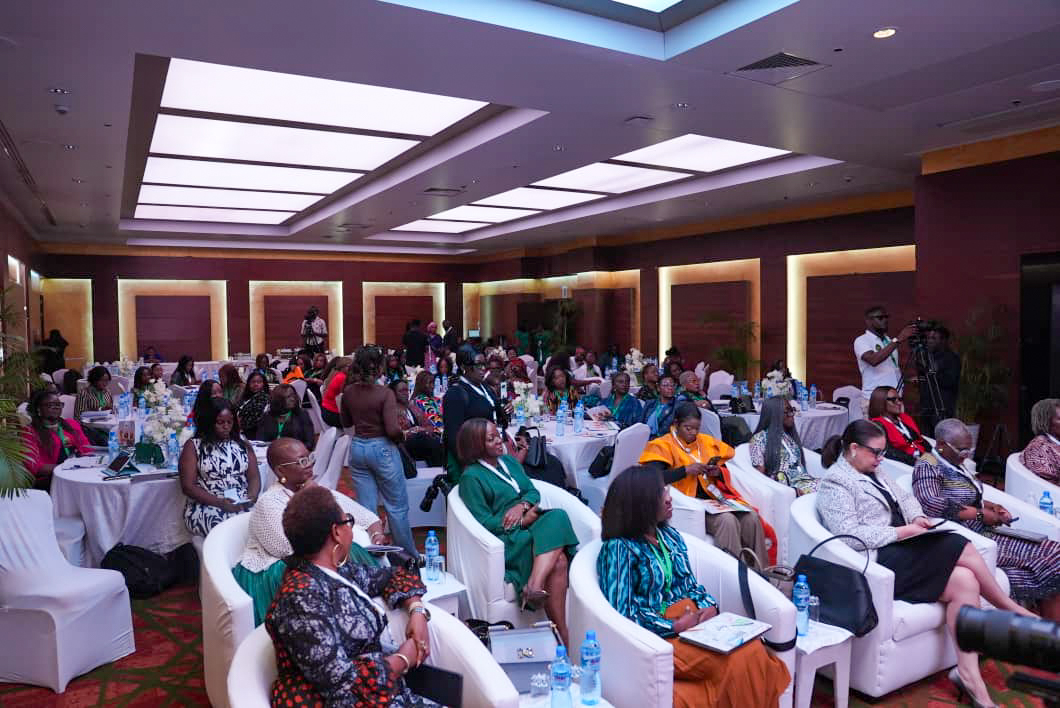
The Board made this known at the 3rd edition of the Diversity Sector Working Group’s Women in Oil and Gas Conference and Mentorship Programme, held on March 3, 2026, at Eko Hotels and Suites, Lagos.
The conference, organised in collaboration with the Nigerian Content Consultative Forum, was themed ‘Breaking Barriers, Shaping the Future’, with a strong focus on building bridges and empowering women for a sustainable energy future.
Delivering his goodwill message, the Executive Secretary of NCDMB, Engr Felix Omatsola Ogbe, described women’s empowerment as a strategic lever for strengthening Nigeria’s energy ecosystem, particularly at a time the global industry was undergoing profound structural change.
He explained that the sector’s navigation of energy transition, rapid technological innovation and rising sustainability expectations increasingly requires broader perspectives, adaptive leadership and inclusive participation to remain competitive and resilient.
Represented by the General Manager Midstream PCAD, Ms. Lekoma Phimia, the Executive Secretary framed inclusion not as social advocacy but as sound economics, stressing that diversity consistently delivers measurable performance outcomes across industries.
“Inclusive organisations are more innovative, more resilient and more profitable. When women thrive, industries thrive. When women lead, economies grow. When women are empowered, communities prosper,” he stated.
To illustrate this point, the Executive Secretary referenced the leadership impact of Ms. Oritsemeyiwa Eyesan, Executive Chairman of the Nigerian Upstream Petroleum Regulatory Commission, describing her tenure as clear evidence of women’s capacity to drive sector-wide transformation at the highest levels.
According to him, such leadership exemplifies how competence and inclusion are helping to steer the industry through a period of accelerated change.
While acknowledging the progress recorded, Ogbe observed that systemic barriers had continued to limit the full participation of women across segments of the oil and gas value chain, stressing that addressing the constraints requires deliberate, structured and sustained interventions.
At the centre of NCDMB’s empowerment showcase, the Executive Secretary highlighted the Women in Oil and Gas Intervention Fund, a landmark $20m initiative established in partnership with the Nigerian Export-Import Bank to provide affordable financing exclusively to women-owned businesses operating within Nigeria’s oil and gas sector.
He explained that the fund offers single-digit interest rate loans with repayment tenors of up to three years, targeted at eligible companies with approved industry contracts. According to him, the initiative is designed to accelerate local capacity and enable women entrepreneurs to transition from peripheral participation to ownership and leadership across the oil and gas value chain.
Ogbe further disclosed that a complementary intervention, implemented in partnership with the Bank of Industry, extends structured business training and additional access to capital to women-owned enterprises. He noted that many beneficiaries have expanded from small service providers into competitive vendors now supporting major oil and gas operators nationwide, particularly in logistics and marine services, safety equipment supply and environmental management — segments where female entrepreneurs have historically faced limited access to financing.
Beyond financing, the Executive Secretary highlighted NCDMB-supported skills development programmes executed in collaboration with institutions such as the Petroleum Training Institute and accredited industrial training centres in Rivers and Bayelsa states. He cited the training of women in welding and fabrication, noting that many graduates are employed in fabrication yards and contribute directly to major oil and gas projects.
“These women are earning dignified livelihoods, breaking stereotypes and inspiring a new generation,” Ogbe said, emphasising that collaboration remains critical to scaling impact, citing partnerships with financial institutions, development partners, training institutions and industry stakeholders.
He commended the NCCF Diversity Sector Working Group for sustaining advocacy and dialogue on inclusion. “We must move beyond inclusion towards leadership — more women in technical leadership roles, executive positions and industry boards,” he added.
In her remarks, the Chairman of NCCF Diversity Sector Working Group, Dr Alero Onosode, described the conference as a celebration of progress, leadership and possibility, noting that NCDMB’s sponsorship reflects its strong institutional commitment to inclusion and shared prosperity. She observed that convening the conference in March — International Women’s Day month — was symbolic, coming at a time of renewed activity and reform across Nigeria’s oil and gas industry.
“Alongside this momentum, we are seeing the rise of women into visible and influential leadership roles — regulators, CEOs, directors, engineers and policymakers shaping strategy and transforming spaces that were once dominated by a single voice,” Onosode said.
She explained that the conference theme challenged stakeholders to move from representation to impact, urging deliberate collaboration across sectors, generations and perspectives.
“Building bridges means women and men working together, turning diversity into strength and collaboration into results,” she stated, calling on industry leaders to prioritise mentorship, sponsorship and intentional partnerships.
The conference concluded with a renewed call for inclusive capacity development, with NCDMB reaffirming its commitment to empowering women, strengthening Nigerian content and ensuring that Nigeria’s energy future is sustainable, inclusive and economically transformative.
Modupe ASUDO
The Nigerian Content Development and Monitoring Board (NCDMB) has said that its 10-year strategic roadmap was designed to strengthen Nigeria’s industrial base by retaining 70 per cent of oil and gas industry spending within the country by 2027, while creating employment opportunities for about 300,000 Nigerians across the oil and gas value chain and its linkage sectors.
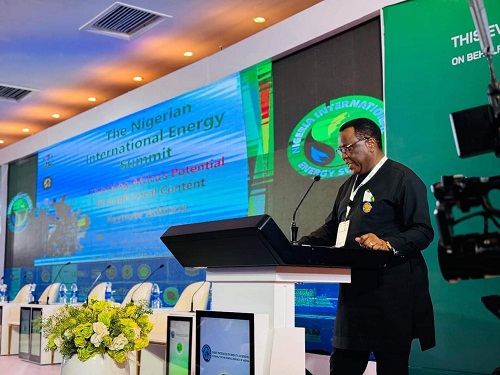
This position was made known during a high-level panel session at the maiden West Africa Industrialisation, Manufacturing and Trade Summit and Exhibition, held in Lagos under the theme “Accelerating West Africa’s Sustainable Industrial Revolution for Economic Prosperity”.
The session focused on maximising human capital as a catalyst for competitive and resilient industries in the region.
Speaking on behalf of the Executive Secretary of the NCDMB, Engr. Felix Omatsola Ogbe, the General Manager, Human Capacity Development, Mr. Esueme Kikile, congratulated the organisers for convening the summit, noting that “the theme strongly aligns with the Board’s long-standing mandate in the oil and gas sector.”
He explained that NCDMB’s core responsibility is to build the capacity of Nigerians and Nigerian companies to participate actively in the oil and gas industry, stressing that industrialisation, manufacturing and trade were critical drivers of sustainable economic growth.
To achieve this, Kikile said the Board launched a 10-year strategic roadmap in 2017 aimed at developing in-country fabrication and integration capacity, while strengthening local manufacturing capabilities.
According to him, the oil and gas industry alone is capital-intensive and limited in direct employment, but its linkage sectors provide vast opportunities to absorb Nigeria’s growing youth population.
“Our plan is to ensure that at least 70 per cent of Nigerian oil and gas spend is domiciled in-country by 2027. That is why fabrication, manufacturing and industrialisation are so critical. Through this approach, we project employment opportunities for about 300,000 Nigerians, not just in oil and gas, but across its supporting industries,” he said.
Moderating the panel, the Head of Operations at Jobberman Nigeria, Ms Samantha Ifezulike, set the tone by raising concerns about whether West Africa has sufficient human capital to sustain rapid industrial scale-up, both at entry and senior levels. She challenged the panelists to examine barriers to talent deployment and the role of collaboration between industry and government.
In response, Kikile described West Africa’s population of over 450 million people, nearly 60 per cent of whom are young, “as a significant demographic advantage that remains largely untapped due to structural constraints.”
He identified policy fragmentation across borders as a major barrier, and noted that limited mobility of skills within the sub-region restricted optimal use of available talent.
He also pointed to the disconnect between academia and industry, observing that many education systems still prepared graduates for civil service roles rather than practical, industry-driven careers.
He called for deeper collaboration between universities and industry to align curricula with real-world needs, including technology-driven and hands-on training.
On technical and vocational education, Kikile stressed the need to revive and modernise training institutions to meet the demands of the Fourth Industrial Revolution, recalling how vocational pipelines once fed directly into industrial and oil and gas hubs.
He further advocated policies that enabled innovation and entrepreneurship, allowing students to translate viable ideas into businesses, supported by streamlined regulatory frameworks.
Highlighting the NCDMB’s role in talent development, Kikile said human capacity development was central to the Board’s mandate, especially in correcting decades of overreliance on expatriate labour in the oil and gas industry. He noted that the steady growth of indigenous companies over the years reflected the impact of Nigeria’s local content policy.
He said the NCDMB was implementing an Oil and Gas Field Readiness Programme designed to train 10,000 young Nigerians in critical skill areas identified through industry studies, addressing significant skill gaps in the sector. The programme combines classroom learning with compulsory six-month on-the-job training to ensure participants are truly industry-ready.
“We rolled out this programme recently and are already working with operating companies. The goal is not just certification, but field-ready talent. Properly trained Nigerians should be able to compete locally and globally as industry leaders,” he said.
Kikile concluded by emphasising three priorities: strengthening regional capacity and absorptive ability, ensuring industry actively co-creates curricula with government, and enforcing compliance with well-designed policies and regulations.
Wrapping up the session, Ifezulike underscored the need for stronger alliances, effective policy development and practical implementation, calling for broader stakeholder participation to translate discussions into measurable outcomes.
The industry leadership panel reinforced the growing recognition that unlocking West Africa’s human capital is essential to achieving sustainable industrialisation, trade expansion and long-term socio-economic transformation across the region.
Modupe ASUDO
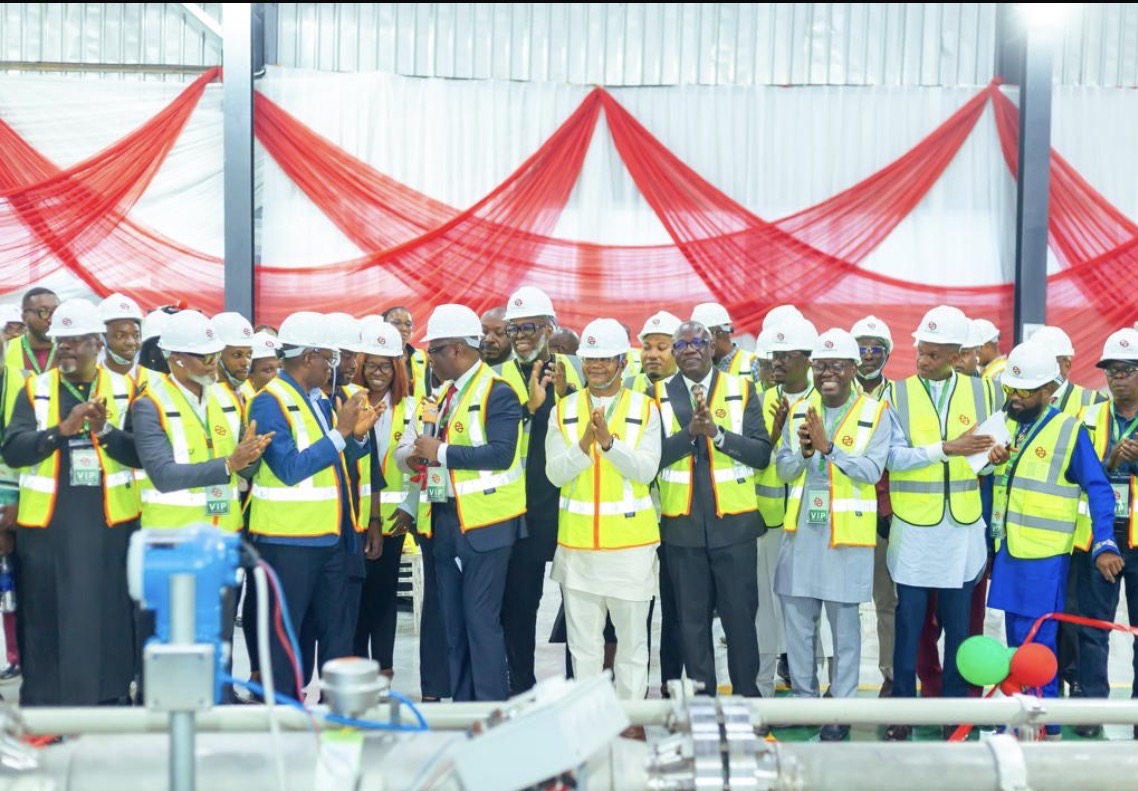
A world-class Gravimetric Flow Metering Calibration Laboratory, the first in Africa, was on Tuesday commissioned at the operational base of Engineering Automation Technology Limited (EATL) at Eket, Akwa Ibom State, with all oil and gas industry regulatory agencies and leading operators in attendance.
The facility, which is engineered to accommodate diverse flow regimes and fluid properties, guarantees accurate and reliable measurement of product transmission through industry pipelines. It incorporates what industry experts describe as “temperature and pressure conditioning, traceable reference standards, and automated data capture,” and would solve problems of flow meter factorisation and recertification.
In a keynote address at the commissioning ceremony, the Executive Secretary of the Nigerian Content Development and Monitoring Board (NCDMB), Engr. Felix Omatsola Ogbe, described the facility as a strategic breakthrough in Nigeria’s oil and gas industry, noting that “For decades, critical calibration and metering services were largely executed outside our shores, resulting in capital flight, increased project timelines, and limited knowledge transfer.”
He said the Gravimetric Multifaceted Flow Metering Laboratory is firmly aligned with the objectives of the Nigerian Oil and Gas Industry Content Development (NOGICD) Act, 2010, on local asset ownership, capacity building, and value retention. Itsstrategic importance, he noted, extends to revenue assurance and regulatory compliance, cost optimisation for industry operators, technology transfer and skills development, and industrialisation of the Niger Delta.
According to Engr. Ogbe, accurate calibration ensures transparency in hydrocarbon accounting and thus strengthens confidence across operators and regulators. Operators, too, would benefit from in-country calibration and metering servicesin terms of reduced logistics costs and turnaround time, while Nigerian engineers, technicians, and metering specialists now have a world-class training ground.
The Executive Secretary said Engineering Automation Technology Limited is among carefully selected corporate entities under NCDMB’s Project 100 Companies Initiative – a strategic programme designed to nurture high-potential indigenous companies into globally competitive champions. The strategy of the Board, he explained, has evolved beyond monitoring to enabling, which involves provision of access to finance, capacity development, infrastructure, co-investments and research and innovation support.
Represented by the Acting Director, Monitoring and Evaluation, Mr. Silas Ajimijaye, the NCDMB boss acknowledged the leadership role of the Nigerian Upstream Petroleum Regulatory Commission (NUPRC) in ensuring that regulatory frameworks continue to support technological advancement while maintaining global standards.
He charged EATL to maintain international quality standards, pursue accreditation and global certifications, invest continuously in research and human capital, and explore regional and continental markets. “Let this facility become a West African hub for flow calibration excellence,” he exhorted.
In her own address, the Commission Chief Executive (CCE) of the Nigerian Upstream Petroleum Regulatory Commission (NUPRC), Mrs. Oritsemeyiwa Eyesan, expressed profound joy at the completion and commissioning of the Calibration and Metering Laboratory, which she declared would be Nigeria’s “national standard.”
“Flow labs in the country’s oil industry will bring their Master Meters here for calibration,” she assured, noting that the NUPRC gave its “very best to support EATL” and would continue to do so.
Represented by the Commission’s Deputy Director, Development, Engr. Manuel Ibifuroko, the CCE said the NUPRC is a business enabler, adding, “We want to be very stringent, but we also have to enable business.” She pointed out that the Commission was determined “to co-create solutions and to ensure costs in the industry are reduced.”
In a welcome address, the Managing Director and Chief Executive Officer of Engineering Automation Technology Limited, Dr. Emmanuel Okon, thanked all the organisations – regulators, industry operators and others who facilitated the transition from “aspiration to operational capability.”
He said EATL was “a vision conceived in 2020 shortly after the inauguration of the second batch of NCDMB’s Project 100 by the then Executive Secretary, a support we are still enjoying from the current Executive Secretary of the NCDMB.”
He pointed out that “NUPRC, NCDMB and NUIMS [National Upstream Investment Management Services, an arm of the NNPCL] form the foundational pillars of this facility,” while inviting the regulatory agencies and all industry stakeholders to engage with the laboratory, “scrutinize its data, and adopt it as a shared benchmark.”
He also acknowledged the exceptional support and invaluable partnership of Renaissance Africa Energy Company Limited throughout the commissioning process, particularly “for providing the Meter Under Test, without which the milestone would not have been achieved.”
The Chief Upstream Investment Officer of the Nigerian National Petroleum Company Limited, represented by the Deputy Manager, Production Sharing Contracts (PSC), Engr. Paul Duke, commended Engineering Automation Technology Limited for its “vision, dedication and technical excellence demonstrated in conceptualizing and delivering a world-class system.”
He noted that with the facility now in place, Nigeria strengthens its capacity for accurate measurement, improved hydrocarbon accounting, and enhanced regulatory compliance, which he described as “critical pillars for transparency and value optimization across the upstream and midstream value chains.”
Engr. Duke expressed appreciation for the collaboration among stakeholders, notably, regulators, operators, service providers, and technical teams, whose collective efforts have brought the initiative to fruition. He said the facility “aligns fully with NNPC Ltd.’s mandate to drive accountability, efficiency, and sustainability in Nigeria’s hydrocarbon operations.”
In related comments, Project Director in the Group Chief Executive Officer’s Office, NNPCL, Mr. Adokiye Charles, said the gathering was not just to activate the facility. According to him, “We are gathered here today to commission accountability; we are gathered here today to commission integrity… and to commission trust.” He expressed great delight at the landmark development.
For his part, the immediate past Executive Commissioner, Development and Production, NUPRC, Engr. Amadasu Enorense, said the commissioning marked a defining milestone in Nigeria’s industrial journey. According to him, “To have the first Flow Metering Calibration Laboratory in Africa is indeed a major milestone.”
In a detailed explanation of the benefits the facility would bring to Nigeria, he pointed out that, “By establishing this in-country calibration laboratory, we are declaring that precision will no longer be outsourced; competence will no longer be imported, and value will no longer be exported unnecessarily.”
He revealed that hitherto, calibration services of such technical complexity required sending equipment – and capital – overseas, resulting in “foreign exchange outflows, project delays, and lost opportunities for our engineers and technicians to develop world-class expertise.” “Today,” he remarked, “We reverse that trend.”
He urged industry operators to support the facility, utilize it, and partner the company to strengthen it. To Nigeria’s young engineers, his message was, “This Laboratory represents opportunity; master the science, uphold integrity and innovate endlessly.” According to him, “The future of our industry will be defined not just by [oil and gas] reserves in the ground but also by knowledge.”
From a major partner in the project, Emerson Automation, were words of assurance of continued support and collaboration. According to the company’s Area Director, West Africa and Angola, Engr. Chukwuma Ossaiga, “If we create value we can impact the next generation.” He urged oil and gas industry players to patronise the facility.
From a representative of Renaissance Africa Energy Company Limited, Mr. Enobong Ekanem, was a firm assurance of full patronage of the facility. The NNPCL and other operators all affirmed their confidence in the facility and assured the Management of their preparedness to continue to do business with the company






With Crude at $111, IEA Sees Prolonged Crisis
NCDMB Joins Hand with Manufacturers to Boost Local Oil, Gas Components Production

Dangote Preaches Ambition, Africa First to Nigerian Creatives

Protest Against Oil Company’s Vessel in Rivers Takes 10 Lives

FRSC Warns Drivers After Brake Failure Kills Two in Kano Crash

AAC Seeks Tinubu’s Approval, Logistical Support for 5,000 at Campaign Event

Trump’s Family Unveils New Cryptocurrency Platform

Senate Denies Receiving Petitions Against Tinubu’s Ambassadorial Nominees

Dangote Cement Lights Up Benue Host Communities With CSR Initiatives

Reps Recommend 3-year Jail Term For Aviation minister

Tems Sets New Record On Billboard Hot 100 Chart
