
NEWS
Senate Committee, NCDMB Hold Inaugural Meeting, To Collaborate On Local Content Implementation

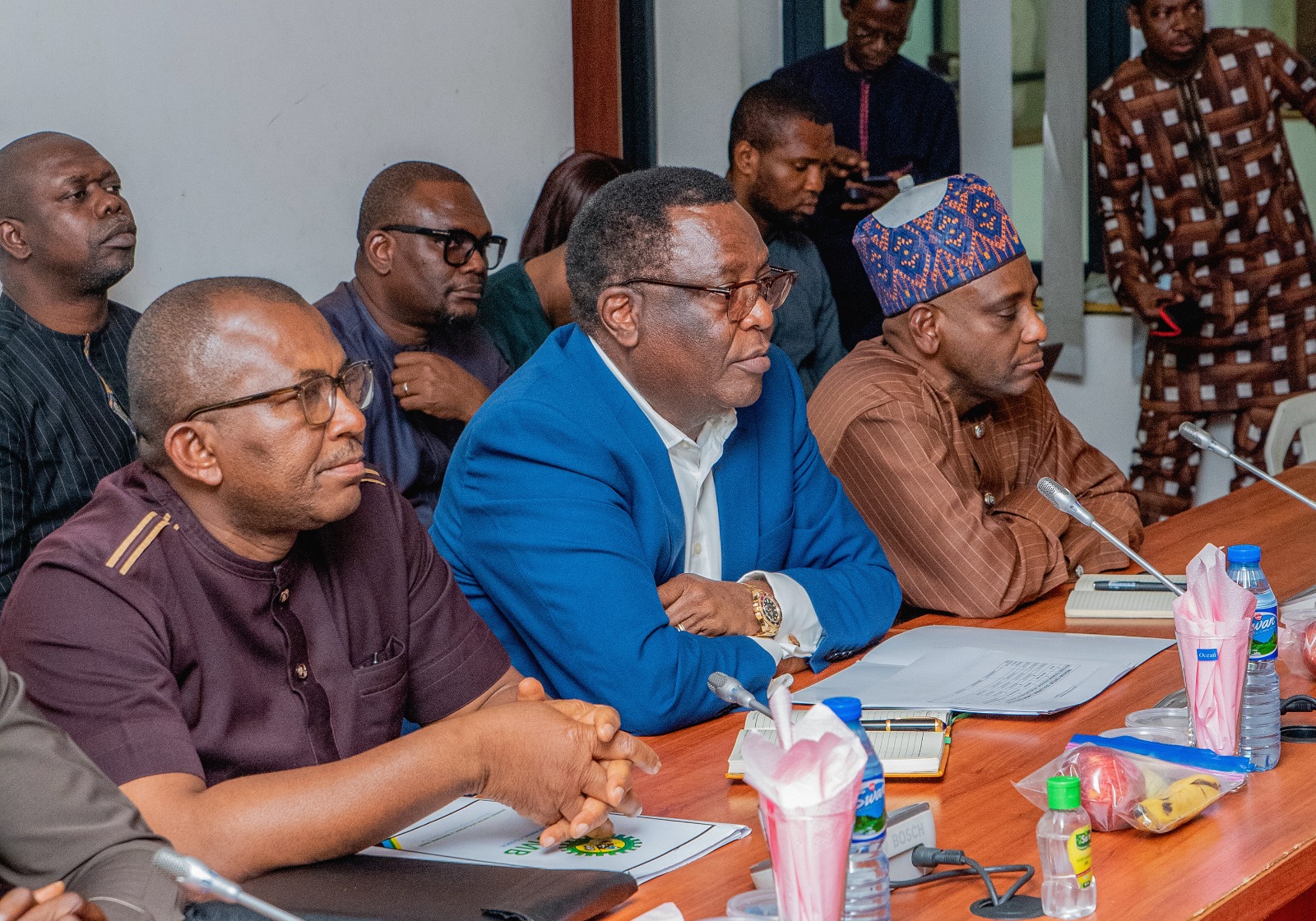
The Senate Committee on Local Content on Wednesday held the first interactive session with the leadership of the Nigerian Content Development and Monitoring Board (NCDMB) at the Senate Building at Abuja and resolved to collaborate and deepen the implementation of local content in the oil and gas industry and linkage sectors.
The Chairman of the Committee, Senator Natasha Akpoti-Uduaghan moderated the meeting and assured that the committee would not antagonize the Board and other entities under its supervision but would collaborate towards effective implementation of the Board’s mandate for the benefit of Nigerians.
She expressed concern over the parlous state of the economy, particularly the alarming level of unemployment which has fuelled an increase in criminality.
She emphasised the need to deepen the implementation of the Nigerian Oil and Gas Industry Content Development (NOGICD Act, to create employment opportunities from the activities in the oil industry and catalyse other sectors of the economy.
She requested the Board to submits performance reports on the implementation of the NOGICD Act, specifically on the Board’s third-party investments, capacity building programmes, expatriate quota management and research and development.
She also requested the Board to recommend sections of the Nigerian Oil and Gas Industry Content Development (NOGICD) Act that needed to be amended by the National Assembly.
Other questions raised by the committee concerned the status of the Nigerian Content Development Fund (NCDF) and the performance of the Nigerian Content Intervention Fund (NCI Fund).
The Committee Chair criticised the international oil companies (IOCs) in Nigeria for not investing in the petrochemical sub-sector and other associated manufacturing activities, whereas IOCs in other oil producing jurisdictions make such investments and contribute significantly to those economies.
She announced that the committee would invite the IOCs and other relevant agencies of Government, with a view to compel the companies to create tangible value in the Nigerian economy beyond the extraction and sale of crude oil.
She said, “We need to get them around the table and tell them what we want as a country as against watching them export crude oil only.”
In his comments, the Executive Secretary NCDMB, Engr. Felix Omatsola Ogbe thanked the committee for adopting a cooperative approach and assured that the Board would provide all the requested documentations and partner effectively, to achieve the mandate of the committee and that of the Board.
On the Board’s performance, the Executive Secretary stated that the Nigerian Content level for 2022 and 2023 stood at 54 percent and the Board is on course to accomplish the 70 percent target for 2027, as set in the Nigerian Content roadmap.
On international oil companies’ model of operation in Nigeria, the Executive Secretary explained that most oil conglomerates have different arms, which includes the downstream companies which make such investments in the petrochemical and linkage sub-sectors.
He, however, noted that most operating companies in Nigeria do not have such subsidiaries in the country, hinting that the Board is willing to support indigenous firms that are interested in such ventures.
He added that the Board lacked the mandate to compel the IOCs to change their business model in Nigeria but was collaborating with some oil companies to develop the Nigerian Oil and Gas Parks Scheme (NOGaPs), which is designed to manufacture oil and gas equipment and components as well as other manufacturing and research and technology programmes.
The Director Finance and Personnel Management, NCDMB, Dr. Obinna Ofili provided clarity on the performance of the Nigerian Content Intervention Fund (NCI Fund) and the Nigerian Content Development Fund (NCDF).
He explained that the NCI Fund is managed by the Bank of Industry (BoI) on behalf of the Board, and US$300m was deposited with the BOI.
He clarified that the NCI Fund is a portion of the NCDF – which is pooled from the 1% percent of every contract awarded in the upstream sector of the Nigerian oil and gas industry, as specified in section 104 of the NOGICD Act.
He also revealed that BoI had loaned out US$330m to 70 qualified oil and gas companies, with the additional $30m accruing from the interests from the loans. He mentioned that another Fund created by the NCDMB is the US$50m domiciled with the Nigerian Export-Import Bank and it is broken into $30m for working capital and capacity building and $20m for Women in Oil and Gas.
Dr. Ofili indicated that eight firms have accessed the $30m working capital and capacity building fund, while three firms have successfully accessed the Women in oil and gas fund.
He said, “We want serious minded women entrepreneurs in the oil and gas industry to step forward and access this fund. That is the only way it can make impact in the economy.”
The Director asserted that the NCI Fund is the most successful fund scheme in the country, basing his assessment on the faithful repairment by the beneficiaries and the growth of the fund.
He mentioned that the Bank of Industry carries out quarterly project monitoring on the loan beneficiaries, while the NCDMB holds an annual monitoring review on the fund scheme and beneficiaries.
On the proposed amendment of the NOGICD Act, the Director Monitoring and Evaluation, Mr. Abdulmalik Halilu explained that concerted efforts were made during the tenure of the 9th National Assembly to review the legislation and the Board developed a compendium on areas that it believed should be amended. He promised that the Board would submit the compendium to the Senate so it could become the reference point for further discussions and considerations.







Oil marketers have warned that Nigerians may soon pay as much as ₦1,500 per litre for Premium Motor Spirit (PMS), commonly known as petrol, as global oil prices surge following the escalating conflict involving Iran in the Middle East.
The National President of the Petroleum Products Retail Outlets Owners Association of Nigeria (PETROAN), Dr. Billy Gillis-Harry, issued the warning on Tuesday while speaking on a television programme on the impact of the global crisis on fuel prices.
According to him, the current volatility in the international oil market has already pushed petrol prices above ₦1,000 per litre at the depot level, with the ex-depot price from the Dangote Petroleum Refinery now standing at about ₦1,175 per litre.
He explained that once logistics, transportation, and other operational costs are added, the final pump price could rise significantly, possibly reaching ₦1,500 per litre in the near future.
Despite concerns about the rising cost of fuel, Gillis-Harry noted that steady availability of petroleum products from the Dangote Refinery remains a major relief for Nigeria, stressing that consistent supply is better than a nationwide fuel scarcity.
He added that the refinery’s production capacity is helping to stabilize supply across the country at a time when global markets remain highly unstable.
The latest price adjustment by the Dangote Refinery marks the fourth review within two weeks. Petrol prices increased from ₦995 per litre to ₦1,175 per litre, while diesel rose from ₦1,430 to about ₦1,620 per litre.
The development comes amid a sharp spike in international crude oil prices triggered by fears of supply disruptions due to the ongoing Middle East conflict.
Brent crude recently climbed above $102 per barrel, while West Texas Intermediate (WTI) rose to around $101 per barrel.
Industry analysts say the rising oil prices are already having a ripple effect on Nigeria’s downstream petroleum sector, forcing depot operators and fuel marketers to adjust their prices in response to the global market trend.
Meanwhile, the management of Dangote Petroleum Refinery has stated that although Nigeria introduced a crude-for-naira arrangement to support local refineries, the facility still purchases crude oil at international market prices, leaving it exposed to global price fluctuations.
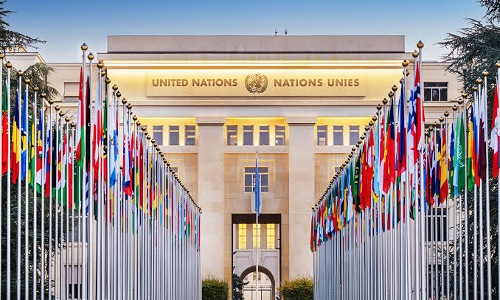
The United Nations has raised the alarm over a dramatic surge in attacks on schools worldwide, reporting a 166% increase between 2021 and 2024.
The rise highlights the escalating dangers faced by children in conflict zones.
United Nations Deputy High Commissioner for Human Rights, Nada Al-Nashif, revealed the figures during the annual meeting of the UN Human Rights Council on the rights of the child on Monday.
The session, themed “Mainstreaming the Rights of Children in Armed Conflict: Prevention and Protection,” focused on protecting children amid global conflicts.
Al-Nashif noted that the attacks were particularly concentrated in Sudan, Ukraine, the Gaza Strip, Myanmar, and Ethiopia, where children remain among the most vulnerable victims.
“In 2024, armed conflict directly affected nearly one in six children globally—about 470 million children,” she said. “Years of lost education, trauma, and lasting mental scars shape societies for generations. Long after the fighting subsides, children continue to face deadly risks.”
She highlighted Gaza as having the world’s highest number of child amputees per capita, warning that the impact of war goes far beyond immediate violence.
In Lebanon, government figures show that more than 450,000 people were displaced in less than a week, with at least 394 fatalities, including 83 children, during the 2024 conflict with Israel.
Al-Nashif also stressed the disproportionate risks for displaced children, who are more likely to die from disease linked to unsafe water and sanitation than from direct violence.
In the Democratic Republic of Congo, a 2025 cholera outbreak killed 340 children, underscoring the long-term consequences of conflict.
She called on states to uphold their international obligations to protect children, insisting that protecting children is “both a legal obligation and a humanitarian moral imperative.”
Also speaking at the council, Vanessa Frazier, Special Representative of the UN Secretary-General for Children and Armed Conflict, warned that violence against children continued at extreme levels in 2025.
She urged mainstreaming child protection across peace, security, humanitarian, human rights, and development efforts, emphasizing that children should actively participate in shaping policies designed to safeguard them.
Frazier highlighted her office’s global campaign, “Prove It Matters,” aimed at amplifying children’s voices in conflict resolution and peacebuilding.
The UN report underscores the urgent need for coordinated international action to protect children and ensure their safety in conflict zones worldwide.
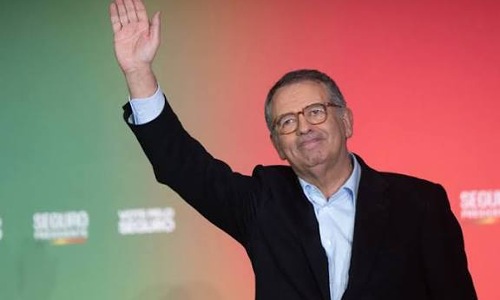
Portugal officially inaugurated its new president, Antonio Jose Seguro, on Monday, pledging to bring stability to a nation shaken by political uncertainty and natural disasters.
Seguro, the centre-left candidate, won last month’s presidential run-off against far-right rival Andre Ventura, following weeks of catastrophic storms that killed at least seven people and caused approximately €4 billion ($4.6 billion) in damage.
Speaking at his swearing-in ceremony in Lisbon’s parliament, Seguro emphasized cooperation with the minority right-wing government and vowed to end the country’s “electoral frenzy.”
SEE MORE: Spain, Portugal Plunge Into Darkness Amid Widespread Power Outage
“I will do everything I can to put an end to this electoral frenzy,” he said, pointing to the inability of previous governments to complete their terms.
Amid global crises, including conflicts in the Middle East and a more isolationist US approach under President Donald Trump, Seguro stressed the importance of multilateralism.
“The force of law has been replaced by the power of the strongest,” he remarked.
Seguro succeeds Marcelo Rebelo de Sousa, a conservative who leaves office at 77 after serving two five-year terms.
While the Portuguese presidency is largely ceremonial, Seguro’s leadership signals a commitment to political stability and international engagement.





Fuel Price Shock: Nigerians May Soon Pay ₦1,500 Per Litre – Marketers Warn

Political Earthquake in Zamfara as Gov Lawal Dumps PDP for APC

Court Pushes Malami, Son’s Terrorism Financing Trial to April 15

African Club Football Gets Major Financial Boost as CAF Hikes Prize Money

Abramovich Clashes with UK Gov’t Over £2.35bn Chelsea Sale Funds

Global Crisis: Attacks on Schools Skyrocket 166% – UN Sounds Alarm on Children’s Safety

Trump’s Family Unveils New Cryptocurrency Platform

Reps Recommend 3-year Jail Term For Aviation minister

Senate Denies Receiving Petitions Against Tinubu’s Ambassadorial Nominees

Dangote Cement Lights Up Benue Host Communities With CSR Initiatives

Things To Know About Threads, Zuckerberg’s Twitter-like App

4192 686437Really clean site , thanks for this post. 386022